
Meningioma Treatment
A meningioma is a tumor that begins in the meninges, the thin layers of tissue that surround and protect the brain and spinal cord. Most meningiomas are benign (noncancerous), but some can be atypical or malignant and behave more aggressively.
Meningioma is one of the most common types of primary brain tumors, accounting for approximately 30 to 40 percent of all diagnoses. Scientists believe it develops when cells in the meninges undergo harmful changes that cause them to grow uncontrollably and form tumors.
In many cases, the underlying cause of meningioma is unclear. Risk factors may include prior radiation treatment delivered to the head and certain genetic conditions, such as neurofibromatosis type 2 (NF2). Additionally, meningioma affects more women than men, suggesting a possible hormonal link. The condition is most frequently seen in adults, particularly those 50 and older.
The warning signs of meningioma can vary depending on the size and location of the tumor. Some meningiomas grow slowly and may not cause noticeable symptoms for several years. When symptoms do occur, they may include headaches, hearing loss, memory problems, seizures, vision changes and numbness or weakness in the arms or legs.
-

30 to 40%
of primary brain tumors are classified as meningioma
-

Adults 50 and older
meningioma is most frequently seen
Meningioma is often highly treatable and, in many cases, can be cured, especially when detected early. Treatment decisions are generally based on several factors, including the size, location, growth rate and symptoms of the tumor and the patient’s overall health. Options may include:
Watchful waiting for meningioma
In some cases, immediate treatment for a meningioma is unnecessary. Watchful waiting, also known as active surveillance, involves closely monitoring the tumor with periodic imaging and clinical evaluations rather than initiating treatment right away.
This approach may be appropriate if:
- The tumor is small and not causing symptoms
- The meningioma is slow-growing or discovered incidentally
- The risks of treatment outweigh the potential benefits
- The patient prefers to delay intervention
During active surveillance, the patient will typically undergo regularly scheduled magnetic resonance imaging (MRI) scans to allow the healthcare team to track the tumor and check for any changes. If the meningioma begins to grow or cause symptoms, active treatment—such as surgery or radiation therapy—may then be recommended.
While watchful waiting avoids immediate treatment-related side effects, it requires ongoing observation and may cause anxiety for some patients. There is also a possibility that the tumor could grow or become symptomatic over time, necessitating intervention.

ACS Surgical Quality Partner for 30+ Years
Continuously Accredited by the American College of Surgeons Commission on Cancer since 1989 for our commitment to providing comprehensive, high-quality and multispecialty patient-centered care.
Surgery for meningioma
Surgery is often the mainstay of treatment for meningioma. The goal is to remove the entire tumor while preserving neurological function. If the meningioma is located too close to a nerve or the spinal cord to allow for a complete resection, the surgeon will typically remove as much tumor tissue as safely possible, then work with the patient’s healthcare team to select additional treatments, such as radiation therapy, to target any abnormal cells that may remain.
In general, surgery for meningioma may be considered if:
- A definitive diagnosis is needed
- The meningioma is accessible without significant risk to critical brain structures
- The tumor is growing or causing symptoms
Common surgical approaches for meningioma include:
- Craniotomy – Removes a portion of the skull to access and remove the tumor
- Endonasal endoscopy – Uses a minimally invasive approach to access and remove select skull base tumors through the nasal passages
- Microsurgery – Uses specialized instruments and high-powered magnification to remove the tumor with enhanced precision
As with any brain surgery, meningioma surgery carries certain risks, including anesthesia-related reactions, infection, bleeding, swelling and neurological deficits, such as weakness, speech difficulties or visual disturbances. Recovery time can vary based on the complexity of the procedure. Depending on the location of the tumor, some patients may also experience temporary or, less commonly, lasting changes in memory, personality or other cognitive functions.

Florida's Cancer Center of Excellence
Moffitt is a Cancer Center of Excellence by the state of Florida. The designation recognizes providers that exceed service standards and excel in providing quality, comprehensive and patient-coordinated care.
Radiation therapy for meningioma
In many cases, radiation therapy is used after meningioma surgery to help reduce the risk of recurrence. It may also serve as the primary treatment if surgery is not feasible. This well-established treatment approach uses focused high-energy beams, such as X-rays, to destroy tumor cells or inhibit their growth.
Radiation therapy may be appropriate if:
- The tumor cannot be completely removed surgically
- The meningioma is located near critical structures or in a difficult-to-access area
- The condition recurs after surgery
- The tumor is atypical or malignant
Radiation delivery techniques for meningioma include:
- Fractionated stereotactic radiotherapy (FSRT) – Delivers highly precise radiation in multiple small doses over several sessions, helping to minimize damage to surrounding healthy tissues while effectively targeting the tumor
- Intensity-modulated radiation therapy (IMRT) – Uses advanced computerized planning to modulate the intensity of the radiation beams, allowing for precise targeting of complex tumor shapes while protecting nearby critical structures
- Proton therapy – Uses proton beams instead of traditional X-rays to deliver radiation directly to the tumor with minimal exit dose, reducing exposure to surrounding healthy tissues and lowering the risk of side effects
- Stereotactic radiosurgery (SRS) – Delivers a single high dose or a few highly focused doses of radiation directly to the tumor, often used as a noninvasive alternative to traditional surgery for small or well-defined meningiomas
Though used less commonly for meningioma than EBRT, internal radiotherapy may be considered in select cases, usually during or after surgery. Also known as brachytherapy, this approach involves placing a small radioactive source either inside the meningioma or near the tumor site, allowing for the delivery of a high dose of radiation directly to the meningioma while limiting exposure to nearby healthy tissues.
Side effects of radiation therapy for meningioma may include fatigue, skin irritation, hair loss at the treatment site and swelling in the brain. Some patients may also experience cognitive changes, hormonal imbalances or delayed effects, such as a rare risk of secondary tumor development, depending on the treatment area and dose.

Chemotherapy for meningioma
Chemotherapy is a systemic treatment that uses powerful medications to target and destroy rapidly dividing cells throughout the body. Although it is not commonly used for benign meningiomas, which typically grow slowly, it may be considered in certain clinical scenarios.
In general, chemotherapy for meningioma may be appropriate if:
- The tumor is rapidly growing or malignant
- Other treatments have been ineffective
- The meningioma cannot be treated with surgery or radiation therapy
- The tumor has recurred after initial treatment
Systemic agents that may be used for meningioma treatment include:
- Hydroxyurea – An oral chemotherapy drug that works by slowing or stopping the growth of tumor cells
- Interferon alfa-2b – A biologic therapy that can help regulate the genes involved in inhibiting tumor cell growth and proliferation
- Sandostatin (octreotide LAR) – A long-acting formulation that targets somatostatin receptors on tumor cells and may help control the growth of certain recurrent meningiomas, often with relatively mild side effects compared to traditional chemotherapy
- Temozolomide – An oral alkylating agent that interferes with tumor cell DNA replication, helping to slow or stop tumor growth
- Bevacizumab – A monoclonal antibody that binds to and inhibits the activity of vascular endothelial growth factor (VEGF), preventing the formation of new blood vessels that tumors need to grow
Side effects of chemotherapy for meningioma can vary depending on the specific drug regimen, but may include fatigue, nausea, hair loss, low blood cell counts and an increased risk of infection.
Hormone therapy for meningioma
Hormone therapy for meningioma is based on the scientific understanding that some tumors express hormone receptors, particularly progesterone receptors, which may influence tumor growth. For this reason, researchers have explored therapies that block or modify hormonal activity as a potential way to slow meningioma progression.
Although this approach has shown some promise in select cases, its overall effectiveness remains under investigation. Therefore, hormone therapy is not currently considered a standard first-line treatment for meningioma. Instead, it is typically reserved for specific clinical scenarios, often after all other appropriate treatment options have been exhausted.
More specifically, hormone therapy for meningioma may be considered if:
- Hormone receptor expression is present or suspected
- The tumor is recurrent or continues to grow despite conventional treatments
- The patient is not a candidate for additional surgery or radiation therapy
Examples of hormone-related treatments for meningioma include:
- Mifepristone – A progesterone receptor antagonist that may help block hormone-driven tumor growth
- Tamoxifen – A selective estrogen receptor modulator that has been studied for its potential to influence tumor behavior
Side effects of hormone therapy for meningioma can vary depending on the specific medication and patient factors, but may include fatigue, hormonal imbalances, hot flashes and mood changes. Some patients may also experience changes in menstrual cycles, weight fluctuations or other endocrine-related effects. Ongoing monitoring is important to evaluate both treatment response and tolerability.
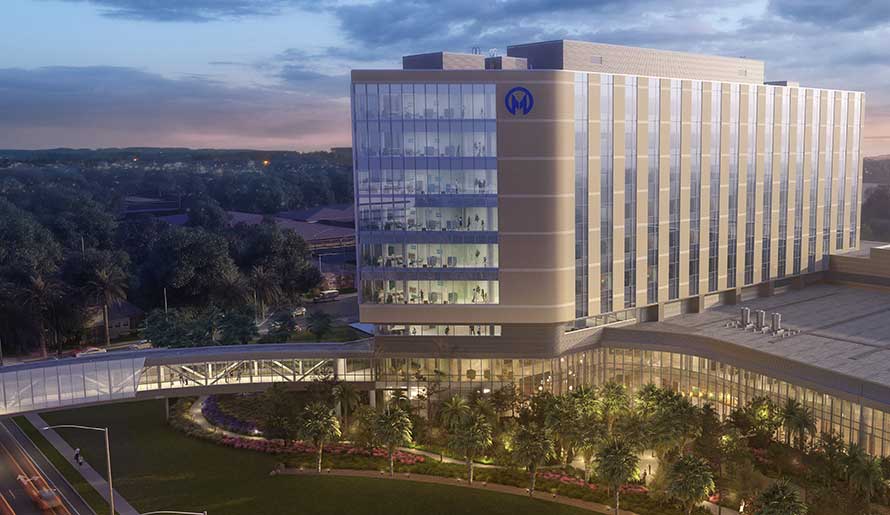
#1 Cancer Hospital in Tampa
Schedule an AppointmentTargeted therapy for meningioma
Targeted therapy for meningioma focuses on the specific molecular pathways and biological processes that drive tumor growth. Unlike traditional chemotherapy, which affects both cancerous cells and healthy cells that naturally divide rapidly, targeted therapy is designed to act more selectively, helping to disrupt tumor development while limiting damage to normal tissues.
Currently under active study, this treatment approach may be considered for an aggressive, recurrent or treatment-resistant tumor. As research continues to expand the knowledge base about meningioma, targeted therapy is playing an increasingly important role in individualized treatment strategies. For instance, it may be considered if:
- The tumor has identifiable genetic or molecular characteristics
- Meningioma has recurred or continues to progress despite standard treatments
- Surgery or radiation therapy is not feasible or effective
Examples of targeted drugs that may be used for meningioma treatment include:
- Bevacizumab – A monoclonal antibody that blocks VEGF from binding to its receptors, helping to prevent the formation of new blood vessels needed for tumor growth
- Tyrosine kinase inhibitors – Drugs such as sunitinib can block the signaling pathways that promote tumor cell growth and survival
Side effects of targeted therapy for meningioma can vary depending on the specific therapy and patient factors, but may include high blood pressure, fatigue, diarrhea and skin changes. Some patients may also experience an increased risk of bleeding, delayed wound healing or blood clots. Because targeted medications can affect multiple biological pathways, careful monitoring is important to manage potential side effects and ensure safe, effective treatment.
Immunotherapy for meningioma
Immunotherapy is designed to help the body’s immune system recognize and destroy tumor cells. By enhancing or modifying this response, the treatment can improve the ability of immune cells to detect and attack abnormal cells that might otherwise evade detection.
Although immunotherapy is not yet a standard treatment for most meningiomas, it is an active area of research, particularly for recurrent, aggressive and treatment-resistant tumors. Much of the current focus is on immune checkpoint inhibitors, which work by “releasing the brakes” on the immune system, allowing immune cells to mount a stronger and more effective response against tumor cells.
Immunotherapy for meningioma may be considered if:
- The tumor is recurrent or continues to grow despite other treatments
- The meningioma is aggressive or not responding to standard therapies
- The patient is eligible for participation in a clinical trial
Side effects of immunotherapy for meningioma can vary depending on the specific therapy and patient factors, but may include fatigue, skin reactions and flu-like symptoms. Because immunotherapy stimulates the immune system, it can also cause inflammation in healthy tissues. This may affect organs such as the lungs (pneumonitis), liver (hepatitis), intestines (colitis) or endocrine glands, leading to hormone-related changes. During immunotherapy, careful monitoring is essential to identify and manage these effects early.
Clinical trials for meningioma
Clinical trials are carefully monitored research studies designed to evaluate the effectiveness of emerging treatments as well as novel combinations of existing therapies. These studies play a vital role in advancing care for patients with meningioma, particularly those with complex, recurrent or treatment-resistant tumors, where standard treatment options may be limited.
Through ongoing research, scientists are exploring novel targeted therapies, immunotherapies and radiation delivery techniques, all aimed at improving outcomes while minimizing side effects. Participation in a clinical trial may provide the patient with:
- Access to promising therapies that are not yet widely available
- Close monitoring and support from a multispecialty healthcare team
- The opportunity to contribute to advances in brain tumor care
Eligibility for a clinical trial is determined based on several factors, including the type and grade of the meningioma and the patient’s prior treatment history and overall health. The healthcare team can help determine whether a clinical trial is an appropriate option and guide the patient through the selection and enrollment process.
Frequently asked questions (FAQs) about meningioma treatment
Many patients with meningioma have questions about their diagnosis and the available treatment options. The answers below address some of the most common concerns.
When is “watchful waiting” recommended for a meningioma?
A watchful waiting approach may be considered for a small, slow-growing meningioma that is not causing symptoms. During active surveillance, the healthcare team will monitor the tumor with periodic imaging to track any changes before recommending treatment.
Can a meningioma be treated without traditional brain surgery?
Yes. In some cases, meningioma can be treated without open surgery. One option may be stereotactic radiosurgery, such as Gamma Knife®, which delivers highly focused radiation beams directly to a tumor in the brain, allowing for precise treatment without the need for an incision. This noninvasive approach can effectively target certain tumors, particularly smaller or hard-to-reach lesions.
What are the chances of a meningioma recurring after treatment?
The risk of meningioma recurrence can vary depending on several factors, including the location and grade of the tumor and how completely it was removed. Benign meningiomas that are fully resected have a lower likelihood of returning, while atypical or malignant tumors may have a higher recurrence rate and require additional treatment.
Will meningioma treatment affect my memory or personality?
Some meningioma treatments, particularly brain surgery and radiation therapy, may affect cognitive function depending on the location of the tumor and the treatment site. Possible changes include memory difficulties and shifts in mood or behavior, although many of these effects are temporary and can improve over time. The healthcare team will carefully plan treatment to minimize these risks.
Benefit from world-class care at Moffitt Cancer Center
Moffitt’s comprehensive Neuro-Oncology Program brings together a multispecialty team with significant experience in managing rare and complex brain tumors, including meningiomas. By collaborating across specialties, our team leverages advanced technologies—such as sophisticated imaging tools and minimally invasive, robot-assisted surgical techniques—to support accurate diagnoses and effective treatment planning. Moffitt is also widely recognized for its leadership in brain tumor research, offering patients access to innovative therapies through a robust portfolio of clinical trials.
If you would like to learn more about meningioma treatment, you can request an appointment with a specialist in the Neuro-Oncology Program at Moffitt by calling 1-888-663-3488 or submitting a new patient registration form online. We do not require referrals.
Treatment