
Surgery for Pancoast Tumor
Surgery can be an important part of treatment for a Pancoast tumor, a rare type of non-small cell lung cancer that develops at the very top of the lung, an area known as the pulmonary apex or superior sulcus. If the tumor can be completely removed, surgery is generally used with curative intent as part of a treatment plan that also includes chemotherapy and radiation therapy. Surgery alone is usually not the standard treatment approach.
Whether a Pancoast tumor can be treated surgically depends on several factors, including the cancer’s stage, whether it has spread to lymph nodes or distant organs, which nearby structures are involved and whether the patient is healthy enough for a major lung operation. When complete removal is possible, surgery can provide an opportunity for long-term cancer control and potentially a cure, although no treatment can guarantee that the cancer will not return.
Pancoast tumor surgery is particularly complex because the pulmonary apex is crowded with structures that control movement, sensation and blood flow in the upper body. A tumor may extend into the upper ribs, chest wall, brachial plexus nerves, vertebrae or subclavian blood vessels. Depending on the tumor’s location and extent, thoracic surgeons may work alongside neurosurgeons, vascular surgeons and other specialists to remove the cancer while preserving critical structures whenever oncologically and technically possible.
Quick facts: Pancoast tumor surgery
- The primary goal is complete tumor removal. When surgery is appropriate, the objective is to remove the Pancoast tumor along with the involved lung tissue and any adjacent structures necessary to achieve cancer-free surgical margins.
- An upper lobectomy is typically part of the operation. The surgeon generally removes the upper lobe containing the tumor along with involved portions of the chest wall and nearby lymph nodes, although the exact procedure depends on how far the tumor extends into surrounding structures.
- Surgery is usually one component of treatment. For many patients with a resectable Pancoast tumor, chemotherapy and radiation therapy are given before surgery to treat the cancer and improve the likelihood of complete removal.
- Complex involvement does not always rule out surgery. At a highly specialized cancer center, selected tumors involving structures such as the chest wall, vertebrae or major blood vessels may be treated with extensive resection and reconstruction after careful evaluation by multiple surgical specialists.
Moffitt Cancer Center’s Thoracic Oncology Program specializes in Pancoast tumors and other uncommon and complex cancers of the chest and lungs. Moffitt has a high-volume thoracic surgery center, and our multispecialty team has extensive experience in combined thoracic-neurosurgical-vascular procedures, complex chest wall and vertebral resections and reconstruction and minimally invasive techniques.
Before recommending surgery, Moffitt’s specialists will review the patient’s case collectively. Thoracic surgical oncologists, medical oncologists, radiation oncologists, pulmonologists, radiologists, pathologists and other experts consider the tumor’s stage, location and relationship to nearby structures along with other clinical characteristics to develop an individualized treatment plan.
ACS Surgical Quality Partner for 30+ Years
Continuously Accredited by the American College of Surgeons Commission on Cancer since 1989 for our commitment to providing comprehensive, high-quality and multispecialty patient-centered care.
Types of Pancoast tumor surgery
Unlike many other lung tumors, a Pancoast tumor often cannot be removed by taking out lung tissue alone. Because these tumors arise where the lung meets the upper chest wall, the operation is planned according to precisely which tissues the cancer involves. The goal is generally an en bloc resection, meaning the tumor and affected neighboring tissues are removed together when feasible to help achieve cancer-free surgical margins.
Upper lobectomy with chest wall resection
For many resectable Pancoast tumors, surgery includes a lobectomy to remove the upper lobe of the affected lung. The surgeon also removes the portion of the chest wall involved by the tumor, which may include one or more upper ribs and surrounding soft tissue.
Removing these structures together can help the surgeon obtain a clear margin around the cancer. Depending on the size and location of the resulting chest wall defect, reconstruction may be performed to maintain stability and protect structures inside the chest.
Nearby hilar and mediastinal lymph nodes may also be removed and examined for cancer cells. The results provide important pathological staging information and, together with other surgical and pathology findings, help guide treatment decisions after surgery.
Resection of involved nerves or blood vessels
Some Pancoast tumors extend into the brachial plexus, the network of nerves that carries signals between the spinal cord and the shoulder, arm and hand. If a portion of the plexus is involved, highly specialized surgical planning is needed to determine whether the tumor can be completely removed while preserving sufficient arm and hand function.
A tumor can also involve the subclavian artery or other blood vessels near the top of the lung. In selected cases, an involved segment of a blood vessel may be removed and reconstructed to maintain blood flow. These operations may require collaboration among thoracic, vascular and neurosurgical specialists.
Vertebral resection and reconstruction
When a Pancoast tumor grows into part of a nearby vertebra, surgery may still be possible for carefully selected patients. The operation can involve removal of the affected portion of the vertebra along with the lung and chest wall tumor.
Because vertebral resection can affect the stability of the spine, a neurosurgeon or spine surgeon may participate in the procedure and reconstruct or stabilize the spine as necessary. Moffitt’s Thoracic Oncology Program specifically offers complex lung, chest wall and vertebral resections and reconstruction for superior sulcus tumors.

Services and features at Moffitt McKinley Hospital include:
- Surgery operating and recovery rooms
- Radiology/diagnostic imaging
- Pathology and laboratory
- Publix Pharmacy
- Ancillary clinical services
- Patient and Family Center
- Café and cafeteria
- Gift shop
Open and minimally invasive surgical approaches
The surgical approach is determined by the tumor’s exact location. Some Pancoast tumors require an open incision through the chest, or thoracotomy, to give the surgical team sufficient access to the lung, ribs, nerves, blood vessels or spine. Tumors involving the front of the thoracic inlet may require a different incision than tumors extending primarily toward the back.
Moffitt’s thoracic surgeons also have extensive experience with minimally invasive and robotic techniques. The da Vinci Surgical System can be used for certain thoracic procedures through several small incisions, but the feasibility of a minimally invasive approach for a Pancoast tumor depends on the structures that must be removed and reconstructed. Complex chest wall, vascular, nerve or spinal involvement may make an open or combined approach more appropriate.
What to expect before, during and after Pancoast tumor surgery
Pancoast tumor surgery is a major operation, so careful preparation and coordinated postoperative care are essential. A multispecialty team that can include thoracic surgical oncologists, other surgical specialists, anesthesiologists, oncology nurses, respiratory therapists and rehabilitation professionals supports the patient throughout treatment and recovery.
The following information provides a general overview. The surgical team will provide individualized instructions based on the exact operation, the patient’s overall health and the extent of the tumor.
Preparing for Pancoast tumor surgery
Before surgery, the healthcare team needs to confirm both that the cancer can be removed and that the patient can safely tolerate the planned operation. The evaluation may include:
- Detailed imaging – CT, PET/CT and, in selected cases, MRI or vascular imaging may be used to define the tumor’s relationship to the chest wall, spine, brachial plexus and major blood vessels, plan the operation and check for cancer elsewhere in the body.
- Lymph node assessment – Depending on imaging findings and the clinical situation, a procedure such as endobronchial ultrasound-guided biopsy or mediastinoscopy may be used to obtain lymph node tissue and determine whether cancer has reached lymph nodes in the chest before a definitive operation.
- Pulmonary function testing (PFT) – By measuring how well the lungs are working, PFT helps determine whether the patient is likely to have adequate breathing capacity after part of a lung is removed.
- Cardiac assessment – An electrocardiogram (EKG) or other testing may be performed when appropriate to determine whether the heart can safely tolerate a major operation.
- Blood tests – Blood testing provides information about blood cell counts, kidney function, liver function and other factors that may affect surgery or anesthesia.
The surgical team will also review all prescription medications, over-the-counter drugs and supplements. Certain medications that increase bleeding risk may need to be temporarily stopped, but the patient should make changes only according to the healthcare team’s instructions.
The surgical team will provide instructions about eating and drinking before surgery to help ensure anesthesia safety. The exact cutoff for food, clear liquids and medications can vary, so the patient should follow these instructions rather than assuming nothing can be consumed after midnight.
Because Pancoast tumor surgery generally requires a hospital stay, it can be helpful to bring comfortable clothing for discharge, slip-resistant shoes, eyeglasses or hearing aids if needed and a current medication list. Valuable items should generally remain at home.
 Florida's First NCI-designated Comprehensive Cancer Center
Recognized for its scientific excellence, Moffitt is the state's longest-established National Cancer Institute-designated Comprehensive Cancer Center.
What happens during Pancoast tumor surgery?
Pancoast tumor surgery is performed under general anesthesia, so the patient remains unconscious and does not feel the operation. The anesthesia team continuously monitors breathing, heart rate, blood pressure, oxygen levels and other vital functions throughout the procedure.
The exact procedural sequence depends on the tumor’s anatomy. In general, the surgical team removes the affected upper lung lobe together with the tumor and involved chest wall structures. Lymph nodes are also removed for pathological evaluation. If the cancer involves a vertebra, major blood vessel or selected portions of the brachial plexus, additional surgical specialists may perform the necessary resection and reconstruction.
The tissue removed during surgery is sent to a pathologist for examination, including evaluation of the surgical margins. The final pathology report provides detailed information about whether cancer cells are present at the edges of the removed tissue and whether sampled lymph nodes contain cancer.
One or more chest tubes are generally placed to drain fluid and air from around the lung while it heals. The tubes remain temporarily after surgery and are removed when drainage and air leakage have decreased sufficiently.
What is the recovery process like after Pancoast tumor surgery?
Pancoast tumor surgery generally requires an inpatient hospital stay. An open thoracotomy for lung cancer may require approximately five to seven days in the hospital, although the length of hospitalization after a Pancoast resection can vary depending on the extent of the operation. Full recovery can take several weeks or longer, particularly when the procedure involves extensive chest wall, vascular, nerve or spinal surgery.
During the early recovery period, the healthcare team will focus on pain control, breathing and safe movement. The patient may be encouraged to sit up, walk and perform breathing exercises relatively soon after surgery to promote lung expansion and reduce the risk of complications.
Pain management may include a combination of medications and regional anesthesia techniques, depending on the procedure. Adequate pain control is particularly important after chest wall surgery because it can make it easier to breathe deeply, cough and remain mobile.
After discharge, recovery instructions may address:
- Activity and lifting restrictions – To help protect healing incisions, chest wall structures and any areas that required reconstruction, the surgical team will explain when lifting, driving, work and strenuous activity can safely resume.
- Breathing exercises and gradual walking – These activities can help restore endurance and lung function after a lobectomy and reduce the effects of prolonged inactivity.
- Incision care – To help lower the risk of infection, the patient will receive instructions for bathing, dressing changes and recognizing redness, drainage or other changes that should be reported.
- Physical or occupational therapy – When surgery affects the shoulder, arm, chest wall or nerves, rehabilitation may focus on mobility, strength and strategies for adapting to changes in arm or hand function.
- Follow-up appointments – The surgical team will assess healing, review the final pathology findings and determine the next steps in the treatment plan.
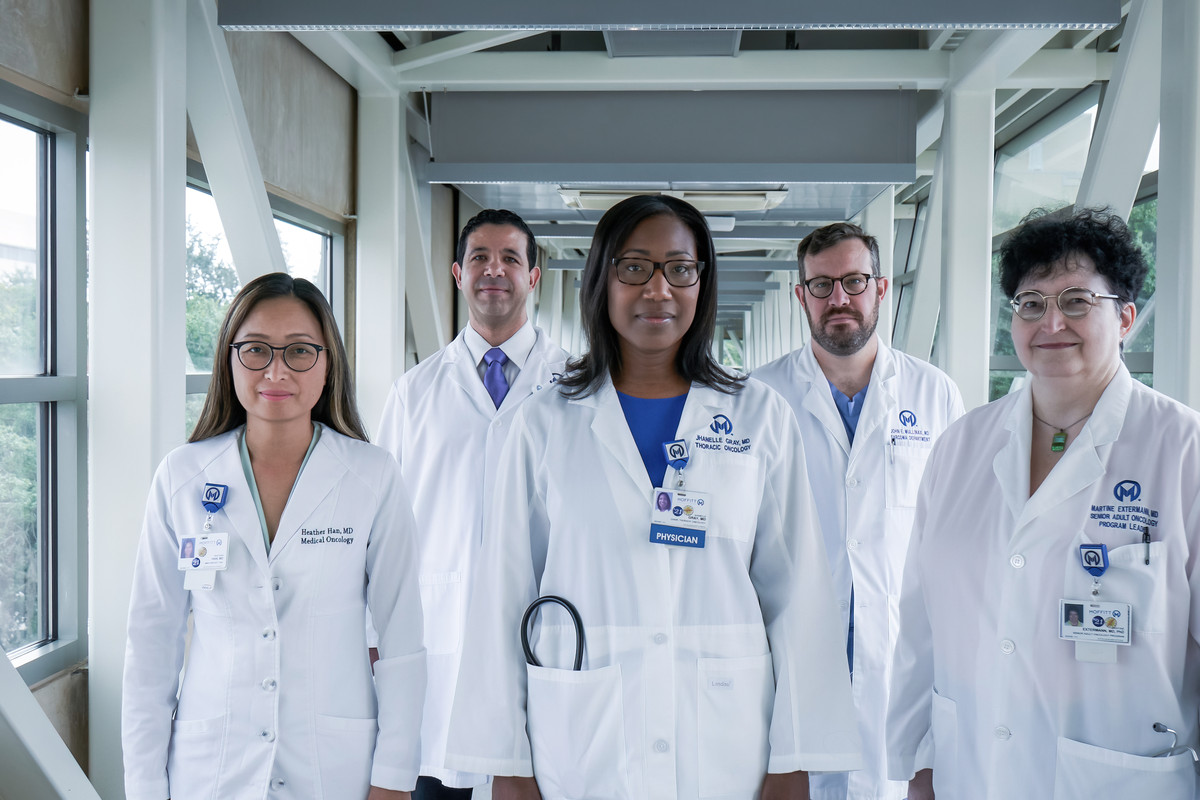
Florida's Top Choice for Cancer Care
Schedule an AppointmentPossible side effects of Pancoast tumor surgery
All major lung operations carry risks, but Pancoast tumor surgery has special considerations due to the tumor’s proximity to the chest wall, nerves, spine and major blood vessels. The healthcare team carefully weighs these risks against the potential benefits before recommending an operation.
Possible complications of Pancoast tumor surgery include:
- Pain and reduced shoulder mobility – Pain and limited movement can occur after removal of ribs or other chest wall tissue. Medication, early movement and rehabilitation can help control discomfort and restore function as healing progresses.
- Arm or hand weakness, numbness or altered sensation – These symptoms can develop if the tumor involves nerves of the brachial plexus that must be manipulated or removed. The surgical team evaluates nerve involvement carefully before surgery, and physical or occupational therapy may be incorporated into recovery when needed.
- Bleeding – Because Pancoast tumors can lie directly against major blood vessels, bleeding is an important consideration during and after surgery. Detailed preoperative imaging and, when necessary, participation by vascular surgeons help the team plan for safe tumor removal and vascular reconstruction.
- Air leakage from the lung – An air leak can persist temporarily after lung tissue is removed. Chest tubes allow air to escape while the remaining lung heals, and the surgical team monitors the amount of leakage during hospitalization.
- Pneumonia or other breathing complications – Respiratory complications can develop after major chest surgery. Early walking, respiratory therapy, coughing and deep-breathing exercises help keep the lungs expanded and clear secretions.
- Changes related to nerve involvement – Nerve involvement can lead to persistent pain, sensory changes or Horner syndrome, which can cause a drooping eyelid and a smaller pupil on the affected side. Some neurologic symptoms may have been caused by the tumor before surgery and may not completely resolve after it is removed.
- Chest wall or spinal stability issues – Stability problems can occur after extensive bone removal. When necessary, reconstruction or stabilization is incorporated into the operation to support the chest wall or spine.
Moffitt’s surgical and inpatient teams monitor closely for these and other complications during recovery. The patient will also receive instructions about symptoms that require prompt attention after discharge, such as worsening shortness of breath, fever, uncontrolled pain, increasing wound redness or drainage or new neurologic symptoms.
Clinical trials for Pancoast tumor at Moffitt Cancer Center
As a National Cancer Institute (NCI)-designated Comprehensive Cancer Center, Moffitt conducts extensive clinical research aimed at improving the treatment of lung cancer and other thoracic malignancies. Clinical trials may evaluate new combinations or sequences of treatment, radiation delivery techniques, systemic therapies and other strategies designed to improve cancer control while reducing treatment-related effects.
Because Pancoast tumors are rare, the clinical trials available may be broader lung cancer or thoracic oncology studies rather than those limited exclusively to Pancoast tumors. Eligibility depends on factors such as the tumor’s pathology, stage, molecular characteristics, previous treatment and the specific requirements of an active study.
A Moffitt specialist can review current clinical trial opportunities and explain whether participation could be incorporated into the patient’s individualized treatment plan.
Frequently asked questions (FAQs) about surgery for Pancoast tumor
The complexity of Pancoast tumor surgery can lead to many questions about eligibility, treatment sequencing and recovery. The surgical team can provide individualized answers based on the tumor’s precise anatomy and the patient’s overall treatment plan.
What makes Pancoast tumor surgery more complicated than other lung cancer surgeries?
Pancoast tumors develop at the top of the lung next to the ribs, vertebrae, brachial plexus and major blood vessels. Removing the cancer may therefore require surgery involving not only the lung but also the chest wall, nerves, blood vessels or spine, sometimes with several surgical specialists working together.
Will surgery for a Pancoast tumor relieve my arm and shoulder pain?
It may. Arm and shoulder pain can result from a Pancoast tumor pressing on or invading nerves and other structures at the top of the chest, so successful treatment of the tumor may reduce pain. However, nerve damage that occurred before surgery or nerves that must be removed during the operation can cause persistent pain, weakness, numbness or other changes.
Do I need chemotherapy or radiation before Pancoast tumor surgery?
Many patients with a resectable Pancoast tumor receive chemotherapy and radiation therapy before surgery. This combined approach can shrink or control the tumor before surgery and help improve the likelihood that it can be completely removed with cancer-free margins. However, the appropriate sequence of treatment depends on the cancer’s stage, lymph node involvement, the tumor’s anatomy and the patient’s overall health.
Can a Pancoast tumor be cured with surgery?
For selected patients whose cancer has not spread to distant parts of the body and can be completely removed, surgery as part of a combined treatment plan may offer the possibility of a cure. The likelihood of long-term cancer control depends on factors such as lymph node involvement, tumor extent, response to treatment given before surgery and whether cancer-free surgical margins can be achieved.
Can a Pancoast tumor involving the ribs or spine still be removed?
Sometimes. Involvement of the ribs is common in Pancoast tumors and can be addressed with chest wall resection. Even selected tumors involving part of the spine or major blood vessels may be surgically treated at a specialized cancer center with the expertise to perform complex resection and reconstruction.
Is robotic surgery an option for a Pancoast tumor?
It may be an option for selected components of surgery or carefully selected tumors. Moffitt’s thoracic surgeons perform robotic and other minimally invasive procedures, but extensive involvement of the chest wall, nerves, blood vessels or spine may require an open or combined surgical approach to safely achieve complete tumor removal.
How is surgical eligibility determined?
The healthcare team considers whether the tumor can be completely removed, whether lymph nodes or distant organs contain cancer and whether the patient has adequate heart and lung function for a major operation. Detailed imaging and, when appropriate, lymph node sampling and cardiopulmonary testing help answer these questions before surgery.
The Moffitt Cancer Center approach to Pancoast tumor surgery
Pancoast tumors are uncommon, and their critical location makes surgical expertise especially important. Moffitt is a high-volume thoracic surgery center with board-certified, fellowship-trained thoracic surgeons who have extensive experience in treating rare and complex cancers of the chest. Moffitt’s thoracic surgery fellowship program reports more than 1,000 major thoracic resections annually, reflecting the depth of surgical experience available at our cancer center.
For Pancoast tumors specifically, Moffitt offers complex lung and chest wall surgery, vertebral resection and reconstruction and combined thoracic-neurosurgical-vascular procedures. When appropriate, our surgeons can also incorporate advanced minimally invasive and robotic techniques.
Just as importantly, surgery does not take place in isolation at Moffitt. Specialists in our Thoracic Oncology Program work together to evaluate the tumor’s location, stage and relationship to critical structures and coordinate chemotherapy, radiation therapy and surgery when appropriate. A surgical second opinion at Moffitt can help clarify whether a Pancoast tumor is resectable, whether complex reconstruction may make surgery possible and which operative approach is appropriate for the individual patient.
To learn more about Pancoast tumor surgery, you can request an appointment with a specialist in Moffitt’s Thoracic Oncology Program by calling 1-888-663-3488 or submitting a new patient registration form online. We do not require referrals.
Treatment