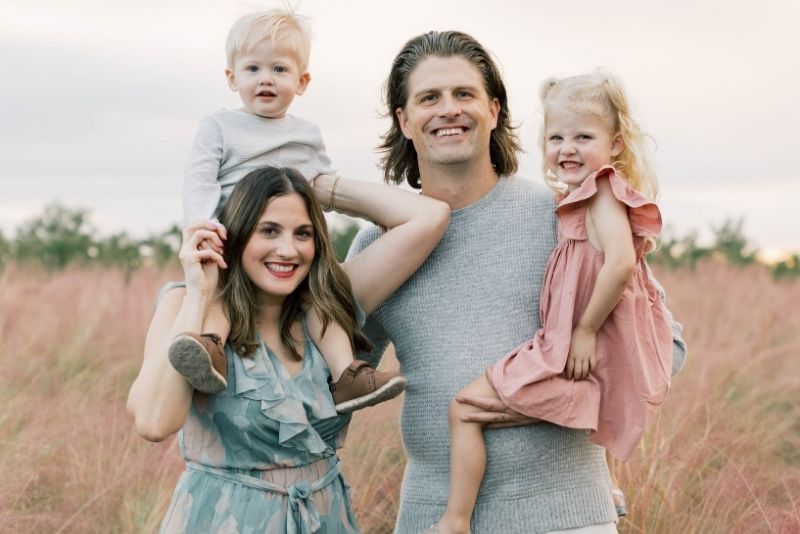
A Newborn and a New Diagnosis with Cayla Page
Cayla Page shares what it was like to care for her husband, Jordan, through two cancer diagnoses while welcoming a newborn and raising a toddler. She reflects on the chaos of new motherhood, surgeries, full‑time work and the fear of not knowing what their future would hold. Cayla also opens up about learning to accept help,
What You'll Learn From Cayla
-
How caregiving and parenting can overlap
-
Why accepting help can make caregiving sustainable
-
The value of community and shared experiences
-
How to keep life feeling “normal” for young children during a cancer journey.
-
Ways caregiving can change your perspective, focusing more on family, relationships and time together.
Thank you to our Guest: Cayla Page
Host: Donna DiClementi
Production Team: Jackie Beaushaw, Randy Isaacson (Family Advisor), Donna DiClementi, and Karen Caraballo
Music by: Lloyd Goldstein
For more stories, subscribe to "In It Together: A Podcast About Caregiving" wherever you get your podcasts.
Podcast Transcript
The Heart of the Story
-
Even in the middle of fear and uncertainty, small moments with family can bring light and perspective.
-
Caregivers often try to do everything alone, but strength sometimes means asking for help and allowing others to show up for you.
-
When life feels chaotic, focusing on what matters most, your loved ones and the present moment, can help you move forward.
-
Hearing from others on a similar path can be powerful; knowing you’re not alone can ease the emotional weight of caregiving.
-
A cancer journey can shift how you see life, reminding you to cherish ordinary days and prioritize the people who matter most.
Donna: Hi. Welcome to In It Together: A Podcast About Caregiving from Moffitt Cancer Center. I'm Donna DiClementi, and I'm the manager of outpatient social work here at Moffitt Cancer Center. And I'm really excited to introduce to you today, Cayla Page. Cayla is a young wife, mother, and attorney, and her husband was diagnosed with cancer when they had a young child and another one on the way. Cayla shares with us all that they had to go through to navigate treatment, full time work, parenting. And I think that this episode is exceptional because we don't often hear about the younger couples and what they have to go through as they raise their children and have this complicated diagnosis as well to navigate. So I know that we will all benefit from hearing about Cayla and her husband's story, and so welcome.
Donna: Welcome to In It Together, a podcast about and for caregivers and the people they love. I'm Donna DiClementi, your host and manager of outpatient social work at Moffitt Cancer Center. In each episode, we'll dive deep with a wide range of caregivers to better understand the highs and lows of caring about someone with cancer. You'll meet the wives, husbands, partners, friends, children to hear what worked well and what didn't work well as they became a caregiver for their loved one with cancer. Our hope is that by listening to caregiver stories, you will learn valuable information plus feel supported, encouraged, and renewed. After all, we are in it together. Thanks for joining us.
Donna: Cayla, thanks again for being part of the podcast. Um, we're really excited to talk to you today. When you and I talked outside of the podcast, you shared a really interesting and connection to Moffett through your family and your husband's family. Can you share a little bit about that today?
Cayla: Sure. Thanks. Thanks for having me. But, um, I have been involved in one way or another with Moffitt for quite a while. My mom worked here for almost 30 years. So I spent a lot of time kind of growing up here. And actually, I don't know if Moffitt still has it, but at some point there was a daycare, um, that I went to while my mom worked here. Um, and on top of that, my mom was a patient here in 2017.
Donna: Okay. All right. And, uh, tell us about how you and your husband met.
Cayla: My husband and I met on a cruise. Um, I was actually a senior in college. I was going on spring break with my friends, and my husband was on a cruise with his family, spreading his dad's ashes. He had passed away from leukemia, and they, as a family, um, like, really enjoyed cruises. I had never been on one. I was kind of scared, like Titanic type of thing.
Donna: Uh huh.
Cayla: Um, and I met Jordan the first day. Um, it was actually a bet with our friends, and I kind of just walked up to him and said, do you want to help me win a bet? And then that was it. I mean, we were on very different cruises. Um, as you can expect, being on spring break versus spreading your, your parent's ashes here, very different emotions. But, um, we always said that his dad sort of brought us together in this strange way. Um, yeah. I haven't been on a cruise since then.
Donna: Wow, that is amazing. That's such an amazing story. Um, and when was that cruise?
Cayla: It was, uh, the first day was February 24th of 2013. Which I know because it's our anniversary, too, so.
Donna: Oh, okay. So you dated and clearly got married. When did you marry?
Cayla: We got married on February 24th of 2018. So we got married five years to the date that we met.
Donna: Okay.
Cayla: Yeah. So it's it's an easy one to remember for both of us. We can't forget our dating or when we met and when we got married.
Donna: Yeah. So tell us a little bit about what your family looks like now.
Cayla: Um, so Jordan and I have, uh, two kids. We have a four year old, and in a two year old, um, I think very busy parents. Our two year old is, uh, going through two year old emotions. So it's dealing with, you know, our full time jobs, on top of having two little kids going through lots of changes quickly. Um, we both work. We both work in Tampa. Um, we have a commute, 30 minutes, both of us each way. I'm a lawyer. I practice labor and employment. Um, defense work. So I represent companies. Um, I've been at my company for about almost nine years doing that.
Donna: Okay.
Cayla: I really enjoy that. It's always interesting. Never a, you know, a dull moment during that type of work.
Donna: Okay, great. So tell us about how you became a caregiver for your husband.
Cayla: Sure. So on our daughter's second birthday, um, Jordan was diagnosed with thyroid cancer, which we had some indication that he probably had cancer before that. Um, he had a lump in his neck, and we were kind of just waiting for the test results, which came out on his on our daughter's second birthday. Um. And the rest is kind of history. Thereafter, he was, um, diagnosed with stage one stomach cancer. So that's been, uh, our journey over the last two years, sort of fluctuating with what those different, um, cancers come with and the diagnoses.
Donna: So two separate cancer diagnoses. How far apart?
Cayla: Um, so he was diagnosed with thyroid cancer May 6th of 2023. And he probably was diagnosed with the stomach cancer maybe three, 2 or 3 months after that. Um, it I was home on maternity leave with our son. Um, as a background to that, I was eight months pregnant when my husband was diagnosed with, um, thyroid cancer. So I had our son and then I was home for 18 weeks. So sometime in the first couple months that he was diagnosed with, um, the stomach cancer.
Donna: Okay. So I want to make sure I have all of this correct. So your daughter's second birthday, your husband got the results back from pathology that he had thyroid cancer.
Cayla: That's right. Yeah.
Donna: And you were eight months pregnant at the time?
Cayla: Yes.
Donna: And then a few weeks later, you know, like a couple months later, he was diagnosed with a stomach cancer. So you had your a little over two year old daughter, um, a newborn. Your husband had been in the process of being treated for thyroid cancer and then was diagnosed with a stomach cancer.
Cayla: Yeah. That's right. So I was eight months pregnant. Our daughter's birthday's in May, our son's birthday's in June, the end of June, and he was diagnosed with a thyroid cancer. Two weeks after our son was born. He had, um, surgery to remove his thyroid.
Donna: Okay.
Cayla: And then he decided he wanted to do genetic testing because he has a familial history of different types of cancer. So we thought at that point this is probably related to something, but we don't know what it was. So he actually pushed for genetic testing.
Donna: Okay.
Cayla: Um, and then the genetic testing came back, and that's what told us he had a gene mutation. From there we had, um, he had biopsies. And that's what came back positive.
Donna: That he had the cancer?
Cayla: That he had the cancer. Yeah.
Donna: Okay, so really, what I'm hearing underneath everything you've said is just a lot of chaos in a household where you have two small children and you're working full time and you have these cancer diagnoses for your spouse and just all that that comes with that. I mean, our listeners are listening because they want to know about, um, other's caregivers journeys as well, because they're going through their own caregiver journey. And I'm hearing from you a young, you know, newly married couple, babies, cancer diagnoses. Uh, how was all of that for you?
Cayla: Yeah, I think it was a roller coaster. I mean, you already have emotion attached to a cancer diagnosis, and then you have emotion attached to having a new baby, and then a two year old who's, you know, going through the ups and downs of being a two year old. So it was just a lot of emotion at once. I think in some ways we were really fortunate, I think, to have it happen in a time where I was having a baby, which sounds probably weird to say, but it gave me time to be home where I might not. I might otherwise feel stressed about my job. Like, you know, I wanted to go to his appointments. I wanted to be there as much as I could. So in a very weird way, well, it was really emotional. It was kind of like maybe the best timing. And we also had a distraction of a new baby to focus on, where we didn't have to focus. I'm a… I'm like a doom scroller. I'm like a, you know, Negative Nancy for the most part, like a as an initial reaction to things. So I think having a baby there to like, distract from what was going on was really, I think, helpful to the two of us, probably to our family members. And definitely when we brought him here with us to Moffitt, like he just spread joy to other people.
Donna: When you brought the baby with you to appointments.
Cayla: Yeah. Um, you know, we would walk by with the baby and people just light up looking at him.
Donna: Sure.
Cayla: The two of us too. I mean, he was, you know, I had this picture of him making, like, a very silly face, like staring at this type of light and I’m pointing to the roof, but this type of, um, light for the. First time and he's all cross-eyed and just kind of like this brightness that you might not otherwise have in that type of situation.
Donna: Yeah, yeah. I love how you took a time that was really complicated. And, uh, even though you're saying that you tend to the negative and to the Doom Scroll, you know, doomsday, um, that you saw the positive and the joy and what the kids brought to the table for managing all of the emotions that come with a cancer diagnosis, but two cancer diagnoses.
Cayla: Yeah, I think it was it kind of worked back and forth because, you know, having a new baby is really hard. Having a two year old is really hard. Having a cancer diagnosis is incredibly hard. So I think. I always say that my. My postpartum experience with Max, my son was was, um, easier than with my daughter. And I don't know if it's because he's my second or because we had something else going on. So it was kind of worked in two ways. Like he made everything happier. And I think having this distraction with the cancer as well made my postpartum experience like a little sweeter with him. And um, I say sometimes, too I think I blacked out during that whole time because there was just, you know, so many mountains and peaks and valleys throughout that entire, you know, three or 4 or 5 months, however long it was.
Donna: Right. So it was a lot of running on adrenaline, I would imagine.
Cayla: I think it was.
Donna: And caffeine maybe.
Cayla: it's like, you know, hindsight's 20/20 looking back and being like, well, we did we actually go through all of that.
Donna: Mhm. Yeah. What do you think in addition to the kids. Um. Was so helpful to you at that time?
Cayla: Having family around, which not everyone is fortunate to have family around, but we my parents, live pretty close by and they were able to come and pick it up like my my daughter, pick her up from school and take her to to daycare. But she was going every day. So having especially after Jordan had his thyroid surgery and and I ended up having to have a C-section with our son, we both were limited with our mobility, so having family nearby that could actually pick her up from school, bring her home, um, we had people bring us meals, meal delivery services and gift cards.
Donna: Sure.
Cayla: Like, things that you I think you know, you have a friend who has a has a hard day and you send them a Starbucks gift card. Like it, it goes a long way just to have that little bit of help. Take one thing off your plate.
Donna: Mhm. Yeah. You were talking about hindsight. When you look back at it now with a little bit of distance. What was the most difficult part of the whole experience?
Cayla: That's a really good question. I don't know if I have a good answer for you. I think that, um. Probably. Initially, the hardest part was whether for I think for Jordan, I both, um, not really understanding at the beginning what it meant for our family. We were about to welcome a new baby. And then not knowing if… Sorry… Not knowing if I would have like a partner.
Donna: Mhm.
Cayla: Um. To be there through that, um, with me. And I think that was also scary for him. Um. Sorry.
Donna: It's okay. Yeah.
Cayla: That was definitely the hardest part for me.
Donna: Sure. A cancer diagnosis brings all of these, um, kind of life and death questions to the forefront. How could it not? And to be the age you were at. And just starting your family. I could imagine that the, um, fear was intense.
Cayla: Yeah. And I think for the two of us for a while, um. We got, like, bad news at every, every appointment. So it was like, it's probably not this. And then we would go and they'd be like, oh, it's actually this. And then it would be like, it's probably this type, because it would be very uncommon for it to be this type and it'd be like, oh no, it's actually, you know.
Donna: That type.
Cayla: That type.
Donna: Mhm.
Um, so that was a huge part of it too, is just managing like what your expectations were.
Donna: Mhm.
Cayla: Um, trying to stay like grounded but also know that like it could be um worse or better than you anticipate.
Donna: So you shared that having your family be supportive and taking care of, um, some child care duties and good friends that have, you know, rallied and provided some concrete services like meals were helpful as. As you look back on it. What are some of the other things that kind of just kept you moving forward when you were facing those uphill battles?
Cayla: I think, um, well, we've, we've talked about this, but I think really my kids - like putting your focus on your children - like you, especially little kids who, you know, like a two year old doesn't understand what's happening. And even if you say, like, “daddy's sick” or whatever it is, she's she can't understand the concept. So I think trying to make it as normal in our home as possible and still have like the, the joyful moments, um, was really something I think that probably - I speak for Jordan to - like, kept us, um, kept us going. Like having, you know, you come home, you see your kids, and they're just so sweet, and they they don't care what happened to you during the day. Like, they just want to see you. So those moments with our kids, I think, kept both of us going.
Donna: Yeah, that's really lovely. Yeah. Thank you, thank you, thank you for sharing that. Um. You know, caregiving is tiring. New parenting is tiring. Working full time.
Cayla: Mhm.
Donna: Um, you know, when you were able to go back to work. So how did you take care of you?
Cayla: I, I, um, when I, when our son when we found out the Jordan was diagnosed and then we found out subsequently that I was going to have to have a C-section, which I really didn't want to do, was very scared of doing that. Um, I'd had some friends who, um, who had hired, like, overnight care or nannies, like, while they were, were home. And when I had our daughter. Um, I'm very much like, try to be independent. So when we had our daughter and, you know, I heard people doing this, I was like that. That's not for me. I can take care of her myself. I allowed myself to open up the possibility of, like, actually needing help and, like, wanting to give that to myself. Um, and we were fortunate enough that we were able to afford doing that. Um, so something that I really did for myself and I think for Jordan, too, was we hired, uh, a night doula who would come like three nights a week and help us with our son at night, especially. The first day was Jordan's surgery day. She came for the first time that night, or maybe the night before, just to give you that peace of mind that someone could help you, like, get in and out of bed, would bring him right to us. I would nurse him in our bed, and then she would take him back and put him to sleep.
Donna: Mhm.
Cayla: Um, that was something I think like invaluable if I were to do that, if I were to have more kids that would do that again. Um, even not being in that situation, just giving yourself like the grace that you're healing too, my husband was healing. You have lots changing around you. Like allowing yourself to be like maybe actually I do need help from like an outside source.
Donna: So let's talk about that a little bit. And you, I think, probably have already identified yourself as somebody who's a doer and, um, probably and likes to take care of things on your own. Um, so how did you get from somebody who pretty much would want to manage things on your own to. Yeah, uh, I need help. And in fact, not just help from family and friends, but I might need to hire in help. How did you get from A to B?
Cayla: Yeah, I think, um, I'm not great with managing my own emotions. I don't like being, uh, showing, despite the fact that I'm crying. I'm crying on the podcast. I'm not comfortable with emotion. So I think it was the same thing, like getting to a point where I allowed myself to even face those emotions, realizing that they were there and like, they're not going to go away. Um, was a huge part of it. And, and probably a little bit of anxiety, like, how are we physically, both of us going to be able to get up and do these things? Um, and I think even in like interviewing during the process, I was still kind of like, I think I could still do this myself. But talking with the people, um, through the company, we used and just like understanding what how they're going to help us and just take that little piece off of my plate I think is really what pushed me over. Um, just really confronting. Like, I actually do need help and, like, it's okay to need help. It's okay to show emotion. It's okay to confront these things. You don't have to do them all by yourself.
Donna: Right.
Cayla: Um, just coming to, like, a mental place where I was able to, like, open that for myself and understand that, um, it's okay to accept help and and ask for it, too.
Donna: Yeah, that's that's beautiful. I hope that people listening kind of stop, rewind, listen to it again. And, you know, because that's really, I think an issue for a lot of caregivers is that they they feel like that this is something that they have to manage on their own. And, and you were able to identify that this isn't something that I can do.
Cayla: I think the unknown of everything too. You know it was so fresh and new. We didn't know what anything was going to look like that. That really allowing myself to see, like, I don't know, maybe I can do this by myself, but I don't know what this is going to look like. Um, facilitated the need for, like, to seek help and and accept it too.
Donna: Mhm. Good. Has that transferred to other, other parts of your life or have you found yourself more, um, easily able to accept help again?
Cayla: I think that's true. I think um I would rather like in my job, I think I would rather ask a question on the front end and know the answer than kind of do it and have to do it over again. Which is funny because I sometimes have difficulty applying that to my personal life. Um, but I do think, like, just being more open with myself and, um, trying to, you know, confront my feelings in the moment and say, this is what I need. Like, um, I've spent a lot of time over the last year trying to, as a almost 35 year old, understand my own emotions and how to deal with them. So I think, yes, I've definitely applied that to my life after two years ago.
Donna: Okay, good. Do you think that other people like would Jordan noticed that and you would?
Cayla: I hope so, I think like we talk a lot about that. I think, um, as a part of Jordan's journey, he, you know, talked with a few people and I think that was really beneficial to him. And, um, he does a lot of, like, self self-growth. He reads a lot of books on, on those topics, and I think he's hopefully seen a little bit of self self-growth in me. And that rubbing off maybe not quite as much as Jordan, but I also don't put in all the work that he does to do those things.
Donna: Yeah, yeah. So, um, Moffitt Cancer Center offers a lot of, um, assistance for, um, young patients. And, you know, our Adolescent and Young Adult program and, um, support groups and things like that. Did you or Jordan get involved in any of that? I did not, but Jordan, um, Jordan, did he, um, he was in contact with someone from Imerman angels, which is really nice at the beginning. Um, uh, being put in contact with someone who was diagnosed around the same age, who had young kids at the at the same time. Um, because that was a big thing for us. Like, we don't really know a lot of 35 year olds or I think it was 35 or 34, 35-year-olds with cancer. Also, this type of cancer wasn't very common for like a 35 year old man.
Donna: Mhm.
Cayla: Um, also, I don't have any friends who were 35 and had young kids. So having someone that he could talk to on that level of understanding, um, what it was like going through with little kids was, I think, very beneficial to him. He's also done, and I'm going to get the name wrong, but the AYA program, um, he over the summer, he went, um, kayaking in Montana, um, on a trip with them, which he really enjoyed and has sent me a few of the caregiver, uh, like links for the trips that they're doing, but I haven't I haven't done that yet, but, um, I'm looking into it.
Donna: Okay.
Cayla: I don't know how great I would be, like, swimming with sharks or doing something like that. Confronting those type of fears I'm not ready for yet, but sounds like a great program.
Editor: Quick pause from the editor. The organization Cayla is referring to here is called First Descents. It’s an organization that plans adventures for young adult cancer survivors. Moffitt’s Adolescent and Young Adult Program does not offer swimming with sharks, but does offer opportunities to connect with other young people dealing with cancer. To learn more about Moffitt’s AYA Program visit Moffitt.org/AYA.
Donna: Is there something that kind of kept you away from seeking some support in that way?
Cayla: I don't think so. I think that at least not intentionally, I think that I was focused on like our kids and just making sure that their their life was going or every day. I say, like during this whole period, I was just doing like, I just had to do this and then do that and just get through every day. So I think I was just mainly in probably autopilot, just making sure everything around me was working where I, I honestly probably didn't focus on myself enough. Um, but I think I was sufficient in what I needed to do to keep my family, like, you know, working every day.
Donna: Mhm. Yeah, yeah. Now. Do you listen to the podcast In It Together?
Cayla: I do, yeah.
Donna: And is there a specific, uh, podcast that was helpful to you?
Cayla: I really relate to Cassie. Um, I think we have parallel journeys, and, um, that was one of the first. I think maybe it was in the first three that came out. And I remember driving home thinking every time she was saying something like, wow, she was pregnant and she had a little kid, like it was. I related so much to her story and we have been on one other. I don't know if it's called a panel or some something together. And, um, it was funny. We both had kind of like, oh yeah, I went through the same thing, or I felt the same way.
Donna: Sure.
Cayla: Um, so I relate a lot to that, that episode and sort of her journey, even though our husbands have had different types of, of cancer diagnosis.
Donna: Mhm. Mhm. And so when you say that you were driving home and you were listening to the podcast and you were like oh, oh, you know, and you kind of noticed some similarities in your family structure but also in experiences. Did… you know how helpful was that to you to see that?
Cayla: I um, very helpful. I listened to it after Jordan had been diagnosed, and so it was kind of already going through it. But I think hearing her story, I have a very, I think, similar story in a lot of ways, like not wanting to accept help even, you know, before Jordan's diagnosis, people would say, oh, I'll take your daughter, I'll take Ada for a day, like, just let me know when. And I'd be like, okay, that sounds great. Knowing I was never going to call them. I would never put that on anyone to do. Um, and she kind of had the same thing, like, I'm not going to do that. And I still in a lot of ways am like that. If I, if I don't really, really need help, I'm not going to ask for it. But I'm willing now when I can recognize that I need help to say I need help, can someone, you know, take Max, take Ada, one of them, both of them. Give me a few minutes to myself. Um, so listening to her, her talk about those type of issues, I was like, okay, I'm not alone. I'm not the only one that's feeling this way. Um, it was, uh, really helpful, I think, to just know you're not by yourself.
Donna: Right. It's less isolating.
Cayla: Yeah.
Donna: definitely. Because you were saying you didn't have another friend relationships that looked similar to what your marriage was. You know, your family look like.
Cayla: Yeah.
Donna: Yeah, absolutely.
Cayla: And I did in some ways. And, you know, a little asterisk there. My, my brother-in-law, um, was going through kind of a similar journey. It wasn't a cancer diagnosis, but but, um, he had just a parallel journey that was happening. And we have two little kids, um, at the same age. My nephew is 16 or 17 days younger than my daughter, and my second nephew is 16 or 17 days younger than my, um, or older than my son. So they're both two and a half weeks apart.
Donna: Okay.
Cayla: Um, very like similar tracks in life. So having them around just to kind of bounce ideas off of was really, um, helpful to me, especially because it was within your family. And you can kind of I could text my sister-in-law and say anything and not feel any type of judgment, even though we weren't on the exact same path, just having someone who you could kind of say anything to and would be like, yeah, I'm feeling the same way. Or, you know, having the same type of reactions you you have is really reassuring when you're in that situation.
Donna: Yeah. Good, good. Uh, I think to highlight how important it is to be able to connect with somebody so you feel less isolated. And that's certainly helped you. And it certainly sounds like it helped Jordan when he reached out to Imerman Angels. So I kind of want to give a plug to Imerman Angels because it's not only for patients, but it's also for caregivers. And it's an international organization, and it can certainly connect, um, patients and caregivers with Imerman Angels to find that, uh, kind of partner, mentor, um, guide who has a similar cancer diagnosis or a loved one with a similar cancer diagnosis and similar age. And this is somebody you can reach out to and just be able to connect in, in that meaningful way that maybe you can't really do with somebody who hasn't walked the path.
Cayla: Absolutely. I think even, you know, what you're saying about finding someone who has a similar diagnosis to you makes all the difference. Because like I said at the beginning, my husband's, um, dad passed away of leukemia and he had been on a cancer journey in his family. But it looks completely different than than his own. Um, even, you know, down to the age, down to the type of cancer, down to the treatment. So having someone who has that same, you know, walked the same path and can tell you, you know, exactly what to expect or how they felt in those situations, I think is invaluable.
Donna: Yeah. Good. So I'm glad that that that was helpful to him. And, you know, for anyone listening, um, you know, you can reach out to Moffitt Cancer Center social workers to connect you to Imerman Angels. And, you know, the social work team also can connect you with our Moffitt Cancer Center adolescent, um, young adult program, where they have lots of opportunities for, um, people living with cancer in that age group to connect. Um, so looking back. And it's not really been all that long, but, how have you changed in addition to I feel more comfortable asking for help.
Cayla: Mhm.
Donna: Um. What other ways do you think that you have grown?
Cayla: Yeah, I think that, um. Obviously you love your family no matter what. You love your spouse. You love your kids. But knowing that things could change so fast, I think you you hold on to some of those moments, um, a little tighter than maybe you would have otherwise. So trying to cherish the time together that you have. And, you know, for me personally, like I said earlier, like I'm, I'm a negative Nancy. That's my first emotion. So trying to actively work on not doing that in this situation and across all, all aspects of my life, um, just trying to. Um, focus more on on your relationships and, and you know, those, um, how that sort of feeds into the rest of your life.
Donna: Yeah. Yeah. I appreciate your, um, sharing that in your vulnerability, sharing that people listening will be able to really resonate with those growth opportunities.
Cayla: Yeah, I think just knowing that for me, good, good and bad emotions are fine. Like having feeling your emotions and not pushing them down, whether or not that's, you know, anxiety before an appointment. You know, for us, it's for me personally, it's a lot of future looking anxiety like at any point Jordan's stomach skin could change, and then our whole lives could change.
Donna: Mhm.
Cayla: Um, which is true, I think every day you just don't think about it. You know, you don't go on your daily, you know. If you had not ever been touched by cancer, you'd probably walk around never thinking about it.
Donna: Mhm.
Cayla: Um, and something could happen at any moment. But understanding that it's okay and confronting like the anxiety of like this is just normal. Um, it doesn't have to be all black and negative. It can still… you can still have positive times. Knowing this in the back of your head, things could change. Like cherish those moments more.
Donna: Mhm. Yeah. Yeah. And I'm sure that changes your whole outlook of life. Um. At work. You know your relationships with friends, knowing that you have this moment to cherish.
Cayla: I think that's true. And also this experience with our cancer journey has also put in perspective in the same type of way that I'm talking about what's important. So where before I might have chosen, you know, to do an after-work activity through, you know, through my office or, um, felt compelled, like I needed to do that. I'm much more willing to say no now because it's like, this is my family and this is what's important. And I think about my job. I have, um, as an attorney, I have a billable requirement. I, I bill my time in 0.1 increments every six minutes. I'm writing down what I'm doing. And, you know, whereas before I wanted to bill, bill, bill, bill, bill. Now it's like, I just want to see my family at the end of the day. So being more productive at work so I can get home to see my family and understanding like my life is not about my job. My job helps my life, um, has been a big perspective shift for me coming out of our journey together.
Donna: Good. Good for you.
Cayla: Thank you. What about the kids? Do you have conversations with the kids? They're very young. But are you having conversations with the kids at all about cancer or about illness?
Cayla: Yeah, I think that I wouldn't necessarily say cancer because I don't. Like you said, they're so young. My son has no idea what's going on in the world, let alone, you know, and let our two-year-old, let alone, you know, uh, medical diagnosis. Um, we we have talked with our daughter a little bit, like, um, when Jordan had his surgery, it was very much like you could see his neck. He had a scar. So it was kind of teaching her, you know, be careful with him, those type of things. But not, um, not in terms of what the diagnosis is. Um, and we're lucky because at this point, Jordan's really just on monitoring. So we'll say, you know, oh, daddy had a doctor's appointment today, or if he had to get blood drawn, we'll kind of say those type of things, but I don't know that it has much effect on them at this point in their lives. Um, and we've done like, the miles for Moffitt. A couple years ago, we had a team for Jordan, and our kids were there with us.
Donna: That's great.
Cayla: Um, but again, they were, you know, two and a half and six years old or whatever it was. So they didn't really understand. But, um, trying to, like, make them aware in some ways, especially our four-year-old, but not in a way where it's scary for her or would affect her life in a, um, in a negative way that she wouldn't be able to understand.
Donna: Okay. Good, good. Have you ever been involved in any of the, uh, Moffitt Cancer Center family's first programs?
Cayla: I haven’t, and I should do more like having all these conversations. I'm like, I know that all of these programs are available to you. I just need to take, um, to take the initiative to actually become involved in them.
Donna: Okay.
Cayla: I think I'd benefit from them.
Donna: Yeah. Good, good. So I'll I'll make sure to get you information about, uh, some of these programs, but, uh, for you and for the listener, the family's first program is, uh, a program that's run by, um, social work in combination with Camp Kesem, um, which is run out of USF. Um, and we offer multiple activities throughout the course of the year where families come together and they have a lot of, uh, kind of therapeutic play time and we try and separate the kids to with the parents. So the parents have an opportunity to talk about issues that are happening as parents. Um, and the kids have a lot of fun with the social workers and the counselors from, uh, camp Kesem. Um, so it is a lot of fun. And we have a lot of, uh, educational books and games that we give children whose loved ones are going through a cancer journey to kind of help them to understand a little bit more.
Cayla: Mhm.
Donna: So, um, yeah, it's a it's a great opportunity for, uh, parents who are already struggling with very complicated issues to, to help them along. And they, I think kids pick up on what's going on even if they don't understand it. Like I, I can think of, uh, our daughter was two and a half and somewhere around two and a half, and she, my husband actually had to be admitted to the hospital here, and, um, she the next day at school, like, bit someone 3 or 4 times, which was age appropriate. But it was, it was, it was, um, I mean, I was like, crying at my desk. How do I fix this? Like, you know, how do I make this not happen? Um, and I thought to myself, you know, she I think Jordan and I even talked about it, like, she can sense something is going on and is, like, acting out and in, uh, response to that. So they definitely pick up on that. So talking I can see that being very helpful, talking with other parents about issues like that and kind of how do you cope with those situations.
Donna: Right.
Cayla: Um, and yeah, very beneficial.
Donna: Yeah. You're absolutely right. Children will behave, you know, they don't have the verbal skills to be able to talk about their emotions. So they're going to act out their emotions. And she clearly was unsettled because this is the first time she had bitten somebody at at school, right?
Cayla: Maybe.
Donna: Hopeful, hopefully.
Cayla: To that extent
Donna: Yeah, so um, you know, all good uh, resources to, um, think about. And it goes along to your original theme of seeking help.
Cayla: Right.
Donna: And accepting help.
Cayla: Yeah. Accepting it.
Donna: Mhm.
Cayla: I think too like, uh, you know, I could understand those programs being very helpful and we haven't we've talked about this privately but we haven't talked about this yet here. But with Jordan's um, stomach cancer is from a gene mutation. And both of our kids have a 50/50 chance of having it. Um, and they don't recommend testing them until they're, like, 18, unless they're having some type of medical, like, showing some type of medical symptoms. Um, but maybe having the opportunity to talk to other parents who might, you know, have a gene mutation. Maybe not the same one, but have that same thought in the back of their head that this could affect their their children too. I could see that being, um, really helpful to me.
Donna: Yeah, yeah. Good, good. Um, so. We've talked about a lot of things. Okay. So is there anything that we haven't discussed that you would like to share with other caregivers that are listening?
Cayla: I think that for me, uh, yeah. The theme, I think, is just that be willing to confront your feelings so you don't bottle them up. And I think that also includes, like we talked about, accepting help, um, not feeling weak in accepting help and and weak in asking for help. It's actually a very strong thing to do, to put yourself out there. It's vulnerable to, um, to even say, I think, as any parent, to ask for help by itself and then also to need help because you're going through a medical issue. Um, yeah. Ask the people around you, they're going to be willing to say yes, even if you you might not want to accept their help. Um, and if they don't say yes, that's okay. Sometimes that happens, but there's going to be someone else who's willing to, you know, put their hand up and help you, um, if you're willing to ask for it.
Donna: Absolutely. Absolutely. I really appreciate that. I think that so many caregivers. don't ask. And, um, they don't accept. And it's just so helpful for everybody who's wrapping themselves around them to provide care to the care giver. And it's so helpful to them to say, yes, I do need you to do something. I do need you to mow the lawn. I do need you to go pick up my child. I do need you to take them on Friday because of this. So. And that's giving your loved ones also purpose in in helping as well.
Cayla: Yeah. And I think. Asking for help again, if people say no or, um, you know, I don't know how much Jordan will love me sharing this, but I can think of an instance where he he had basically conveyed to people, you know, I'm okay. I don't really need anything from you. And then I think was a little bit hurt that people didn't try to help him a little bit more. So understanding that one, if you tell people that they might think that's where your boundary is and being okay with saying sometime later, like, actually, I do need help or um, you know, it hurt me that you didn't reach out about X, Y, and Z, um, so being able to confront those things again. So if you say no to someone, ask them again. If they say no, find someone else to ask. And also if you put up a boundary, be willing to to express yourself again
Donna: Right, to take it down.
Cayla: Yeah.
Donna: Yeah.
Cayla: Yeah.
Donna: Yeah. You know what I said no? That was then. This is now. And I do need the help. Are you open to helping me? You know, just because we say no once or twice, does it mean it always has to be no.
Cayla: Yeah.
Donna: Yeah, that's a great lesson. That's a great lesson. It was really great to talk to you today.
Cayla: Thanks for having me.
Donna: Yeah. Thank you so much for being here.
Cayla: Thank you.
Donna: Thank you for listening to In It Together: A Podcast About Caregiving. In It Together is brought to you by Moffitt Cancer Center's Patient Library and Welcome Center, in collaboration with our social work department. Special thanks to Lloyd Goldstein, musician in residence here at Moffitt Cancer Center's Arts in Medicine program for our music. And thanks goes to our producer Jackie Beaushaw, patient library supervisor, and Randy Isaacson, family advisor. For more information about the services mentioned in this episode, please view the show notes or visit the In It Together page on moffitt.org. Thank you for spending time listening and we hope that it was useful. Have a great day.