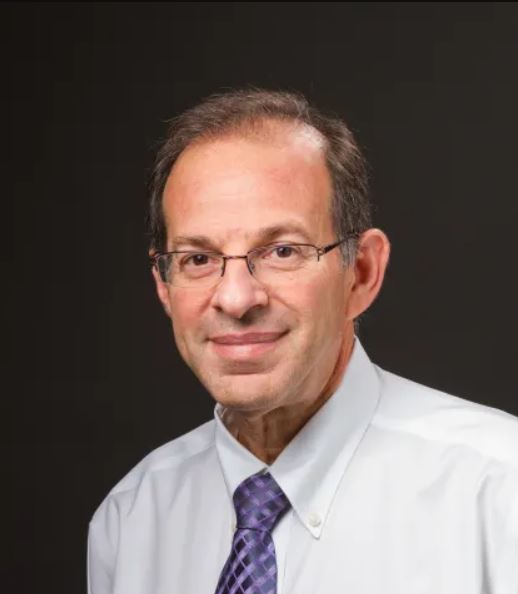
From Cytokines to Checkpoint Blockade: Advancing Cancer Immunotherapy, ft. Dr. Mario Sznol
Dr. Patrick Hwu welcomes Dr. Mario Sznol, professor of medicine at Yale School of Medicine and co-director of the Cancer Immunology Program at Yale Cancer Center. Dr. Sznol shares his journey from early work with high-dose interleukin-2 at the NCI to leading pivotal trials in checkpoint blockade and combination immunotherapies. He discusses the science behind cytokines, immune checkpoints, bispecific antibodies, and T-cell therapies, along with strategies for managing immune-related toxicities. Dr. Sznol also reflects on the collaborative, innovative spirit of the field and the next wave of therapies poised to further transform cancer treatment.
What You’ll Learn from Dr. Sznol
- How the earliest trials of interleukin-2 paved the way for modern immunotherapy
-
The inside story of developing and combining anti–PD-1 and anti–CTLA-4 checkpoint inhibitors
-
Why durable cures in metastatic melanoma and kidney cancer were once thought impossible — and how that changed
-
How scientists learned to manage immune-related toxicities and make combination immunotherapy safer
-
What’s next in the field: bispecific antibodies, T-cell engagers, and engineered cell therapies
-
The importance of collaboration, persistence, and even a little fun (“ImmunoTennis”) in advancing science
Podcast Transcript
Key Takeaways
-
Interleukin-2 therapy, developed in the 1980s, proved that the immune system could cure cancer, setting the stage for decades of innovation.
-
Checkpoint inhibitors (anti–PD-1 and anti–CTLA-4) transformed outcomes in melanoma, improving survival from ~10% to 50%.
-
Managing toxicities was key to expanding the reach of immunotherapy and ensuring patient safety.
-
Bispecific antibodies and T-cell engagers are among the most promising next-generation approaches. They have already shown success in solid tumors like uveal melanoma and small cell lung cancer.
- “We’re just scratching the surface” of what immune-based therapies can achieve.
Dr. Patrick Hwu:
Welcome to The ImmunoVerse, a podcast that brings the ever-expanding universe of immunotherapy to life through the voices of those advancing this groundbreaking field.
I’m Dr. Patrick Hwu, president and CEO of Moffitt Cancer Center and a career immunologist. In each episode, I sit down with pioneering experts who have shaped the past, present and future of immunotherapy — uncovering breakthroughs, challenges and the science driving this lifesaving innovation.
Today we’re joined by Dr. Mario Sznol, professor of medicine at Yale School of Medicine and co-director of the Cancer Immunology Program at Yale Cancer Center. With a career spanning decades in immuno-oncology, Dr. Sznol has led numerous clinical trials and been at the forefront of designing combination strategies that enhance anti-tumor immunity. He is especially known for his work in melanoma, renal cell carcinoma and early translational efforts to understand immune-related toxicities. His clinical insight, coupled with a deep understanding of trial design and patient care, has made him one of the field’s most trusted voices.
Welcome to The ImmunoVerse, Dr. Sznol.
Dr. Mario Sznol:
Thank you, Dr. Hwu. It’s always a pleasure to discuss science and clinical trials with you. I’m looking forward to this.
Hwu:
Tell us, how did you first get interested in immunotherapy?
Sznol:
It’s a long story. It started when I was at Mount Sinai as a fellow. At that time, Dr. James Holland was director of the Cancer Center — or the Department of Neoplastic Diseases. He was treating a patient with high-dose interleukin-2. That was my first experience with interleukin-2, and I became fascinated.
I later went to the National Cancer Institute to work with the Cancer Evaluation Program, or CEP, as a sort of drug monitor for immune therapies. That’s how I became involved in the earliest development efforts in interleukin-2.
Hwu:
Explain what CEP was and why it played such a critical role in those days.
Sznol:
The NCI really kept immunotherapy alive when few people believed in it. CEP was part of the extramural arm of the NCI, meaning it supported drug development and provided investigational drugs to cancer centers outside the institute. It also supported INDs for drug studies within the NCI itself.
Think of CEP as the clinical development branch of a drug company — but within the federal system. In those days, most of the major discoveries in immunology and the driving forces in clinical development of immunotherapy came from the NCI. Think about all the things Dr. Steven Rosenberg was doing.
Hwu:
I remember relying on your group back then to help run our clinical trials at the NCI. You were instrumental in helping us monitor and launch those studies.
You were there in the early days of cytokine therapy. For listeners, explain what cytokines are, how interleukin-2 works and what those early breakthroughs meant.
Sznol:
Cytokines are signaling proteins — hormones used by immune cells to communicate. There are many types, and their effects depend on the cell type and its state of differentiation. Cytokines drive activation, proliferation and function of immune cells. The immune system can’t function without them.
Interleukin-2 was a breakthrough. The first approved drug was interferon, but interleukin-2 soon followed. Back in 1985, high-dose interleukin-2 produced long-term, durable remissions in about 10% of patients with metastatic melanoma or kidney cancer. That was the proof of concept that immunotherapy could work.
The high-dose regimens were developed at the NCI by Dr. Rosenberg, and the results were remarkable. Some patients treated in 1985 and 1986 are still alive today. Without cytokine therapy, we may not have been able to keep the field of immunotherapy moving forward.
Some patients treated in 1985 and 1986 are still alive today. Without cytokine therapy, we may not have been able to keep the field of immunotherapy moving forward.
Hwu:
Later, you led many of the trials involving immune checkpoint blockade, including one of the first studies combining anti–CTLA-4 and anti–PD-1 therapies. Tell us how that came about.
Sznol:
When I was at the NCI, I saw Jim Allison’s initial publication on anti–CTLA-4 and became very excited. I knew I wanted to be involved when those drugs reached the clinic. Around the same time, I was familiar with the work of Lieping Chen, who was developing anti–PD-1 therapy. Both approaches looked promising.
When I joined Yale, we became involved in the first multidose trials of anti–PD-1 and accrued many patients. We saw amazing activity and knew that drug would change the world. The logical next step was to combine anti–PD-1 with anti–CTLA-4.
Alan Korman, then at Medarex and later Bristol Myers Squibb, was instrumental in bringing that combination to trial. Jed Wolchok and I led the study together. The activity we observed was remarkable — not orders of magnitude higher than anti–PD-1 alone, but clearly better.
These drugs have made a huge difference in cancer treatment. In melanoma, for example, the combination of anti–PD-1 and anti–CTLA-4 yields long-term survival in about 50% of patients — compared to 5% to 10% in 1995.
I recently treated a patient with a liver full of tumors and an LDH of 2,000, a very poor prognostic feature. After four doses of the combination, her liver and LDH normalized. I believe she’s cured. It’s remarkable.
Hwu:
It must be fulfilling to see a regimen you helped develop now FDA-approved and used across multiple cancers.
Sznol:
Absolutely. In our field, you’re lucky to work with one or two transformative drugs in your career. I feel privileged to have been part of these developments and to see patients cured by them. It’s deeply rewarding.
None of this would be possible without the science — the basic, translational and clinical research that drives progress.
Hwu:
That combination also came with toxicities, similar to what you saw earlier with high-dose interleukin-2. How did you learn to manage those side effects?
Sznol:
Much of the groundwork for managing immune-related toxicities came during anti–CTLA-4 development, led by colleagues like Dr. Hodi and Dr. Wolchok. With the combination therapy, the effects were more frequent and severe.
We worked closely with Bristol Myers Squibb to create treatment protocols — not to prevent side effects but to manage them. We still don’t fully understand the biology behind these toxicities, but we can now reverse most with steroids and immunosuppressants.
Ongoing research focuses on predicting which patients are at highest risk and developing strategies to prevent side effects without compromising efficacy.
Hwu:
You’ve also been involved in trials of bispecific antibodies and T-cell therapies. What excites you most about these new approaches?
Sznol:
The engineering behind these molecules is incredible. Not every cancer responds to checkpoint inhibitors; some patients don’t generate a T-cell response at all. Bispecific T-cell engagers can redirect T cells to kill tumors directly.
The engineering behind these molecules is incredible. Not every cancer responds to checkpoint inhibitors; some patients don’t generate a T-cell response at all. Bispecific T-cell engagers can redirect T cells to kill tumors directly.
Two T-cell engagers are already approved for solid tumors — tebentafusp for uveal melanoma and tarlatamab for small cell lung cancer, the first major advance in that disease in decades. Many more are in development.
We just need time, investment and patience. Some of these drugs may not show dramatic results alone, but in combination they could be game-changers.
Hwu:
With so many emerging agents, how do we make clinical trials more efficient?
Sznol:
That’s a huge challenge. Trials are expensive and complex. We need smarter designs, fewer regulatory burdens and more patient participation. It often takes multiple attempts to find the right dose, sequence or combination.
It took decades for immunotherapy to reach its current success. The same persistence will be required for T-cell engagers, cytokines and engineered cell therapies. But the science is moving fast.
Hwu:
Despite progress, cancer still causes 600,000 deaths a year in the U.S. and 10 million worldwide. Will immunotherapy continue driving those numbers down?
Sznol:
I’m optimistic. The next wave of therapies — T-cell engagers, improved cell therapies, macrophage modulation, regulatory T-cell targeting — will further reduce mortality. We’re just scratching the surface.
The next wave of therapies — T-cell engagers, improved cell therapies, macrophage modulation, regulatory T-cell targeting — will further reduce mortality. We’re just scratching the surface.
Hwu:
You also led the Society for Immunotherapy of Cancer, or SITC, as president during the pandemic. Tell us about that experience.
Sznol:
Yes — and you’re partly to thank for convincing me to run. SITC is an incredible organization devoted entirely to advancing cancer immunotherapy. It unites academia, government and industry to solve shared challenges.
Beyond science, the society plays a major role in educating clinicians on managing immunotherapy toxicities, which directly benefits patients. It’s been rewarding to help guide that mission.
Hwu:
One of the goals of this podcast is to show that science is not only important but also fun — and scientists are, too. You’re known for bringing that spirit to the field, even organizing “ImmunoTennis” matches at conferences.
Sznol:
(Laughs.) Yes, we call it ImmunoTennis. We play at nearly every meeting — people like Alan Korman, Tom Gajewski, Nacho Melero and others. I’m not sure I belong on the same court as those brilliant scientists, but we have a lot of fun.
Our field is uniquely collaborative. We don’t compete — we work together. That’s part of what makes cancer immunotherapy so special.
Our field is uniquely collaborative. We don’t compete — we work together. That’s part of what makes cancer immunotherapy so special.
Hwu:
Well said. Science is fun, and scientists are fun.
Dr. Sznol, thank you for joining us and for guiding us through the ever-expanding universe of immunotherapy.
To hear more episodes of The ImmunoVerse, subscribe on your favorite podcast platform.
[Music]