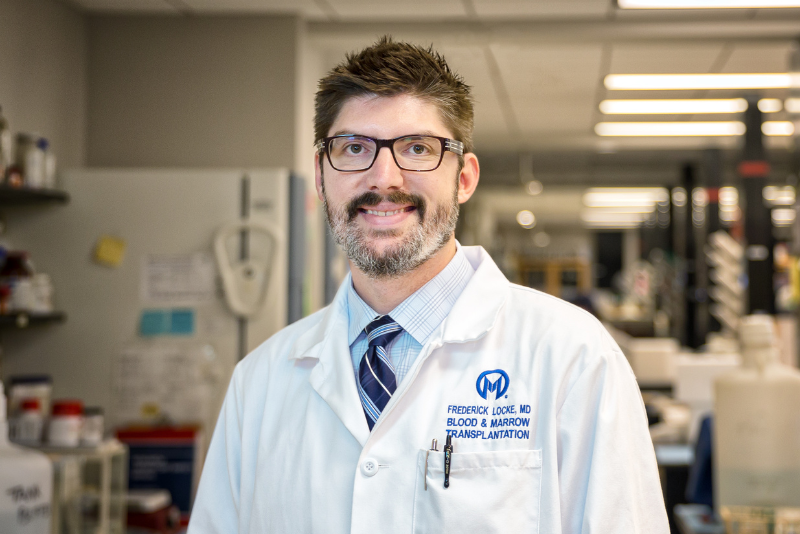
CAR T Therapy and the Future of Cellular Treatments, ft. Dr. Fred Locke
Dr. Patrick Hwu welcomes Dr. Fred Locke, chair of Blood and Marrow Transplant and Cellular Immunotherapy at Moffitt Cancer Center. Dr. Locke shares his personal and professional journey into CAR T-cell therapy, shaped in part by his own father’s cancer battle. A leader in pivotal clinical trials, Dr. Locke explains how engineered T cells are transforming lymphoma treatment — offering durable, sometimes curative responses. He discusses the science behind CAR T-cell manufacturing, trial design and its growing application to diseases like multiple myeloma, along with future innovations in cellular immunotherapy.
What You’ll Learn from Dr. Locke
-
How a personal family experience inspired Dr. Locke’s passion for immunotherapy
-
The story behind pivotal CAR T clinical trials (ZUMA-1 and ZUMA-7) and their FDA approvals
-
What makes CAR T therapy so effective in blood cancers — and the challenges with solid tumors
-
Innovative approaches on the horizon: donor-derived CAR Ts, TIL therapy, and engineered TCR therapies
-
Why diet, exercise, and prehabilitation may improve immune cell therapy outcomes
-
How Moffitt is scaling CAR T for outpatient treatment and community hospital access
Podcast Transcript
Key Takeaways
-
CAR T-cell therapy has revolutionized treatment for lymphoma, leukemia, and multiple myeloma — with durable remissions once thought impossible.
-
The ZUMA-7 trial was the first in 30 years to show a survival benefit for second-line lymphoma, marking a historic moment in cancer care.
-
While CAR T is now a standard of care for certain blood cancers, the next frontier is solid tumors, with over 30 trials underway at Moffitt alone.
-
Scalability is critical: the future may see CAR T manufacturing shift from large clean rooms to tabletop devices in community hospitals.
-
Lifestyle interventions like ketogenic diets and exercise could one day optimize patients’ T cells before treatment.
-
The field is only beginning to unlock the full potential of cell therapy — not just in cancer, but in autoimmune diseases as well.
Dr. Patrick Hwu:
Welcome to the ImmunoVerse, a podcast that brings the ever-expanding universe of immunotherapy to life through the voices of those advancing this groundbreaking field. I'm Dr. Patrick Hwu, president and CEO of Moffitt Cancer Center and a career immunologist. In each episode, I sit down with pioneering experts who have shaped the past, present and future of immunotherapy, uncovering breakthroughs, challenges and the science driving this lifesaving innovation. Today, we have with us Dr. Fred Locke, Department Chair of Blood and Marrow Transplant and Cellular Immunotherapy at Moffitt Cancer Center. Dr. Locke is a medical oncologist, translational researcher and clinical leader in the field of chimeric antigen receptor (or CAR T) cell therapy, acting as a national principal investigator for several pivotal trials of anti-CD19 CARs for lymphoma. His work bridges laboratory discoveries with clinical applications, translating findings into new cellular immunotherapies such as a whole protein survivin tumor vaccine for multiple myeloma. Dr. Locke is also Moffitt's current researcher of the year. Welcome to the ImmunoVerse, Dr. Locke.
Dr. Fred Locke:
Thank you Dr. Hwu, I'm really pleased to be here and speaking with you today.
Hwu:
Well, you're a leader in T-cell therapy, but tell us a little bit about how you got here. What got you interested in medicine and research and cell therapy?
Locke:
Absolutely. I mean, going way back to childhood, I was always fascinated by science and biology really gravitated towards school in those areas. And then my father was diagnosed with lymphoma when I was a teenager, and so I had that experience of being a family member with a loved one with a diagnosis. He received multiple rounds of therapies, chemotherapy treatments for his lymphoma, which didn't work. And he was fortunate to be enrolled on a clinical trial for his lymphoma. He received an immunotherapy actually, and that therapy worked. It was a radio labeled monoclonal antibody and he was in remission for over a decade. He relapsed and then was treated again with that same therapy, which at that point was then FDA approved. And so I really early on saw that we could really make a difference in the lives of patients and their families by testing out new therapies, developing and testing out new therapies for cancer. And so as I went through college, I always had that interest in medical school and explored other options, but really gravitated towards immunology, immunotherapy and to the point we're here today at Moffitt and really, really glad to be here.
My father was diagnosed with lymphoma when I was a teenager, and so I had that experience of being a family member with a loved one with a diagnosis. He received multiple rounds of therapies, chemotherapy treatments for his lymphoma, which didn't work. And he was fortunate to be enrolled on a clinical trial for his lymphoma. He received an immunotherapy actually, and that therapy worked.... And so I really early on saw that we could really make a difference in the lives of patients and their families by testing out new therapies, developing and testing out new therapies for cancer.
Hwu:
We've really been the leader of some pivotal studies that help get CAR T therapy FDA approved. Tell us about some of those studies.
Locke:
Yeah, very fortunate to be here at Moffitt and have opportunity to do translational work in the lab for patients with lymphoma and multiple myeloma. And when the success of CAR T-cell therapy was realized through individual center trials such as at the National Cancer Institute, Steve Rosenberg and Jim Kochenderfer trials at Baylor, at Fred Hutch, Memorial Sloan Kettering and University of Pennsylvania, it was clear that CD19 directed CAR T-cell therapy second generation CAR T-cell therapy, could lead to remissions for patients with B-cell cancers, B-cell malignancies like lymphoma and leukemia. And those therapies were then licensed, and they were licensed to pharmaceutical companies which wanted to develop those treatments to get them FDA approved and treat more people. And in 2013, I was fortunate to be able to go and participate in an investigator meeting in an advisory board for a company called Kite Pharma, which had licensed Steve Rosenberg's CAR T-cell therapy that he had created at the NCI.
And so back in 2013, over a decade ago now, I started working with Kite Pharma to develop what was the phase one trial and then phase two trial, which was called ZUMA -1 and ZUMA-1 tested out the Rosenberg CD19 CAR T using the company's manufacturing process and sort of the lympho-depleting chemotherapy. And so, by helping design the trial and treating the first patient on the trial and then treating a whole bunch of patients on the phase two study, being part of the steering committee, I helped co-lead that ZUMA-1 trial to gain FDA approval for CD19 CAR T-cell therapy alxicabtagene ciloleucel for diffuse large B-cell lymphoma. And so, from there, it's really been tremendous, almost exponential growth in the CAR T-cell field, both here at Moffitt and beyond. And we've grown a very large program for not just lymphoma patients, but using cellular therapy for many different cancers and have gone on to do the phase-3 randomized trial of axicel for lymphoma, which is the ZUMA-7 clinical trial. And that's really the first clinical trial to show a survival benefit in second-line lymphoma and over 30 years. So very excited to have participated and been able to lead that study as well.
Hwu:
Now, let's break it down a little bit for people, what a T cell is, how it works and what a chimeric antigen receptor is and why it's called that.
Locke:
Yeah, so essentially chimeric antigen receptor or CAR T-cell therapy is where we take out the T lymphocytes. So T cells, they circulate in our body and our blood, hang out in our lymph nodes. And T cells are immune cells that recognize infected cells within the body. And each T cell has a different sort of specificity. In fact, we have millions of different T cells that could, each one could recognize different things, different infections, different foreign things in the body. And with CAR T-cell therapy, we simply take some of them out of the blood, because they circulate, and then they're reprogrammed with a gene that gets put into the T cells. It's the patient's own T cells in most cases, and this is done outside the body in a very clean laboratory, the number of cells has expanded up. The cells are frozen in a preservative and shipped back to us, or in many cases we make them right here on site at Moffitt.
And then we give some chemotherapy not to get rid of lymphoma, but to lower the normal T cell counts temporarily so that when we thaw out those CAR T cells, we can infuse them back into the patient's vein. And now they're CAR T cells, they've all been reprogrammed against a single target on the surface of the tumor. And that's usually a protein called CD19 in the case of axicel and most of the FDA approved CAR T cells for lymphoma. And the cells know where to go, they know what to do and they see the cancer cells as abnormal, and then they go and destroy them. And the remission rates are pretty remarkable with adoptive T-cell therapy. That being said, most of the anti-cancer activity happens within the first month to three months after infusion. They expand and grow quite a bit, destroy most, and in many cases, all of the cancer and patients can be in remission and in some cases the cancer won't come back.
The remission rates are pretty remarkable with adoptive T-cell therapy. That being said, most of the anti-cancer activity happens within the first month to three months after infusion. They expand and grow quite a bit, destroy most, and in many cases, all of the cancer and patients can be in remission and in some cases the cancer won't come back.
Hwu:
So it's really been now a standard of care for a number of lymphomas. Lymphomas largely from our body's B cells, cancers that start from our bodies own immune B cells. But largely this is used widely now and some really tough lymphomas now are cured with this. Is that correct?
Locke:
Yeah, so one of the reasons that CAR T has been so successful in blood cancers in particular B cell and plasma cell cancers, is because we can actually live without those cells in our body. There's a higher risk for infection, but the CAR T cells actually target the healthy B cells and healthy plasma cells in the case of the myeloma-directed CAR T. And so that allows us to deplete not only the cancer cells, but as a byproduct, the normal cells are decreased. That creates a complexity if we're trying to treat let's say colon cancer, or other cancer, more solid tumor cancers because oftentimes the byproduct being targeted might not be as palatable, or the patient might not be able to tolerate, let's say if it's a colon cancer wiping out the normal cells of the colon, we can't really do that. So we have to get even more sophisticated in how we turn on and off those cells and target them when we get into the solid tumor space with CAR T cell therapy.
Hwu:
So largely the CAR Ts right now are being used for the blood cancers as you said, because we can do okay without our B cells. And so if you wipe out the B cells, you're still okay. So for B-cell malignancies like lymphoma as well as multiple myeloma, which is the plasma cells that make the antibodies, and so that's where CAR T is largely FDA approved. But we do need to get into the solid tumor space. So, what can we tell patients with colon cancer, breast cancer, lung cancer, what's on the way for them when it comes to T-cell therapy?
Locke:
Yeah, so as you said, we have FDA-approved CAR TS for diffuse large B-cell lymphoma, follicular lymphoma, mantle cell lymphoma, chronic lymphocytic leukemia and acute lymphoblastic leukemia and multiple myeloma. We don't have any current CAR T-cell therapies approved for solid tumors. We're working on those clinical trials here at Moffitt and beyond there are there different kinds of adoptive cell therapies that work and are approved by the FDA, but we're trying to get CAR T-cell therapies into solid tumor patients and we have some trials here at Moffitt that our team helps run and that we work with the scientists here at Moffitt to develop and I'm really excited. For example, there's a gamma delta CAR T-cell therapy for prostate cancer that we're testing.
We have a whole portfolio of over 30 clinical trials just using adoptive cell therapies like CAR T for solid tumors as well as a whole other portfolio for liquid tumors. And I think it's worth also mentioning those other FDA approved solid tumor adoptive cell therapies. So there's one for a sarcoma, a specific type of sarcoma that is gene modified. It's very similar to CAR T-cell therapy, but it uses a T-cell receptor. And that's important to understand because it requires a little bit of immune matching for the patient HLA matching. And so the number of patients who could be eligible is smaller, but the results are also remarkable. And so I expect to see more of those type of TCR T-cell receptor based therapies getting tested in solid tumors. And then we have something called, which you've been very much involved in tumor infiltrating lymphocyte therapy til therapy, which is FDA approved for melanoma, malignant melanoma where the T cells that reside within the tumor are taken out, grown up and given back to the patient and they can actually mediate and immune response and shrink the tumor. So lots of exciting avenues that are being tested for solid tumor cancers as well.
We have a whole portfolio of over 30 clinical trials just using adoptive cell therapies like CAR T for solid tumors as well as a whole other portfolio for liquid tumors.
Hwu:
That's great. So besides the CAR T, which is just one flavor of T-cell therapy, we also have the tumor infiltrating lymphocytes which are immune cells as you said, from the tumor itself growing to large numbers to give back for solid tumors as well as getting natural T-cell receptor genes and putting those into the T-cell to guide them for the solid tumors. And that sarcoma example is a great example that T-cell therapy can work for solid tumors.
Locke:
Absolutely, and as I said, the number of clinical trials and strategies we're testing we're using donor cells so-called off the shelf allogeneic CAR T cells, so they get gene modified so they don't get rejected or cause a graft versus host disease. The donor cells don't attack the patient's body, but that has a lot of promise that we could give these therapies to patients quicker. We're testing out here at Moffitt Gamma delta T-cell. So those are a specific type of T-cell that are less likely to be rejected by a patient if they come from a donor and less likely to have those donor cells attack the patient's body. We're really excited about all these different approaches, which in the future we expect to have a whole number of different treatments for solid tumor patients with adoptive cell therapy.
Hwu:
So would you say that we're just getting started in cell therapy?
Locke:
I absolutely think we're just getting started. I mean there's a huge amount of work to be done. We have a great team here at Moffitt, very fortunate to have a large team, probably over 500 people focused on cell therapy here at Moffitt, developing new cell therapies in the lab, administering them to patients, the shipping and receiving, we call it our Ice-T team, our immune cell therapy team. But as we get into the future, I think we need to think about how these therapies can be given in smaller hospitals and the community. And by making the treatment safer and working with these other centers, we think we can continue to increase the number of patients who could benefit from CAR T-cell therapy and other adoptive cell therapies for cancer. And frankly, even beyond cancer, we're starting to test them in autoimmune diseases as well.
Hwu:
Yes, your service that you run, the ICE-T service is probably the preeminent inpatient service for T-cell therapy in the world, I would say with pharmacists, nurses, doctors, everybody just doing cell therapy. So a lot of the new cell therapies are being tested on that service. At the same time, you're also innovating giving cell therapies as an outpatient, not even in the inpatient service. Is that correct?
Locke:
That's absolutely correct. And we recognize that we can't just admit every patient to the hospital. There are risks for toxicity with these therapies. They are immune based therapies; high fever can be common, but we can manage that. So we're transitioning these to be given in the outpatient setting more frequently and more and more of our CAR T patients and other immune cell therapy patients are being treated in the outpatient setting. And that's an important focus for us and the community at large. We need to be conscious of the cost of care and the cost of these therapies, especially as we want to treat more patients. And by shifting to the outpatient side, we can be doing it more efficiently and hopefully more effectively.
More and more of our CAR T patients and other immune cell therapy patients are being treated in the outpatient setting. And that's an important focus for us and the community at large. We need to be conscious of the cost of care and the cost of these therapies, especially as we want to treat more patients. And by shifting to the outpatient side, we can be doing it more efficiently and hopefully more effectively.
Hwu:
What do you say to people that imply cell therapy may not be scalable to the masses? Do you think this is a scalable therapy that we can treat many patients in the future with?
Locke:
Absolutely. I mean, there's no doubt this is a scalable therapy. Technology has a way of exponentially increasing over time. We've seen the advent of artificial intelligence and machine learning cell phones used to be a big box that only a few people had access to. We all have a cell phone in our pocket now, and I think over time, CAR T-cell and other adoptive cell therapies that are being manufactured in large clean rooms can be scaled down to small tabletop boxes that even could be housed at small community-based centers where you simply feed the patient's blood into the machine and it comes back out as a CAR T-cell down the road that's safer and being able to be administered in the community setting. So, I think there's a lot of recognition of the advantages of these therapies, and I expect that there'll be more advances to come.
There's no doubt this is a scalable therapy. Technology has a way of exponentially increasing over time. We've seen the advent of artificial intelligence and machine learning cell phones used to be a big box that only a few people had access to. We all have a cell phone in our pocket now, and I think over time, CAR T-cell and other adoptive cell therapies that are being manufactured in large clean rooms can be scaled down to small tabletop boxes that even could be housed at small community-based centers where you simply feed the patient's blood into the machine and it comes back out as a CAR T-cell.
Hwu:
And you're working with our engineers, we have the only engineering department in a cancer center, and you're working with them to do some of the scalability.
Locke:
I like to say I'm interested in all things CAR T, and in cell therapy, I want to spread the word and increase the patients who could benefit from these therapies. So one of the ways is to work with our bioengineers, our BioEngineering Department is looking to scale and manufacture CAR T-cells at a reduced cost, at a greater scale and at a faster pace. And so by working in my lab in collaboration with the bioengineers, we think we can do that. I also work with our Health Outcome and Behavior scientists because I am interested in how patients recover and deal with CAR T-cell therapy and other adoptive immune cell therapies. And so, interested in the recovery, the cognitive effects of CAR T-cell therapy. And of course, my lab works to develop new CAR T-cell therapies. And we do that by collecting samples from our treated patients and studying them to figure out why the CAR T-cell therapy works or doesn't. And then once we know that, we can then engineer the CAR T-cells to work better and develop new CAR T-cell therapies. So all things CAR T-cell therapy, from delivery to the patient and family effects, to the manufacturing, to making new therapies. I'm interested to partner with all the people here at Moffitt and beyond, who want to do that.
Hwu:
Your team is even doing an interesting study on diet and nutrition and whether you change your diet for a few weeks before you get your immune cells to put the CAR T in might matter. Right? And so why don't you tell us about that study?
Locke:
So we know that diet and exercise can impact health, right? Not only does it condition the body, but it can actually condition the immune system. And there was actually a great plenary abstract session at the ASH Annual Meeting this year, demonstrating that a ketogenic diet in mice could benefit those mice to make their T-cells healthier and make their mouse CAR T-cells better. So we're going to take that a step further. We're going to test out a ketogenic diet and a fasting diet in healthy donors and eventually patients to see if we can improve the T-cells in those patients before we collect them and turn them into CAR T cells. And we actually think that a simple intervention like a diet, even for a brief period, could improve outcomes for patients. And so that's just one example of how partnering with experts in diet, nutrition and even we're working on exercise and prehabilitation, is something that we do to help the outcomes for our patients.
We actually think that a simple intervention like a diet, even for a brief period, could improve outcomes for patients. And so that's just one example of how partnering with experts in diet, nutrition and even we're working on exercise and prehabilitation, is something that we do to help the outcomes for our patients.
Hwu:
Well, that's exciting and certainly that's a very scalable intervention, just changing the diet for a couple of weeks before you get your T-cells. Well, it sounds like T-cell therapy. CAR T therapy is approved right now for a lot of the blood cancers, lymphoma, myeloma, and there are other variations of T-cell therapy starting in the solid tumors for sarcoma and melanoma. But it just seems like we're just getting started.
The future is very bright and thank you. You're one of the leaders in the field. We appreciate what you do and your whole team to try to pave the way for future therapies so that our patients with both liquid and solid tumors can have much better treatment outcomes. So thank you. We want to thank Dr. Fred Locke for joining us today. And thank you for going on this journey with us through the ever-expanding universe of immunotherapy. To hear more episodes of the ImmunoVerse, make sure to subscribe on your favorite podcast platforms.