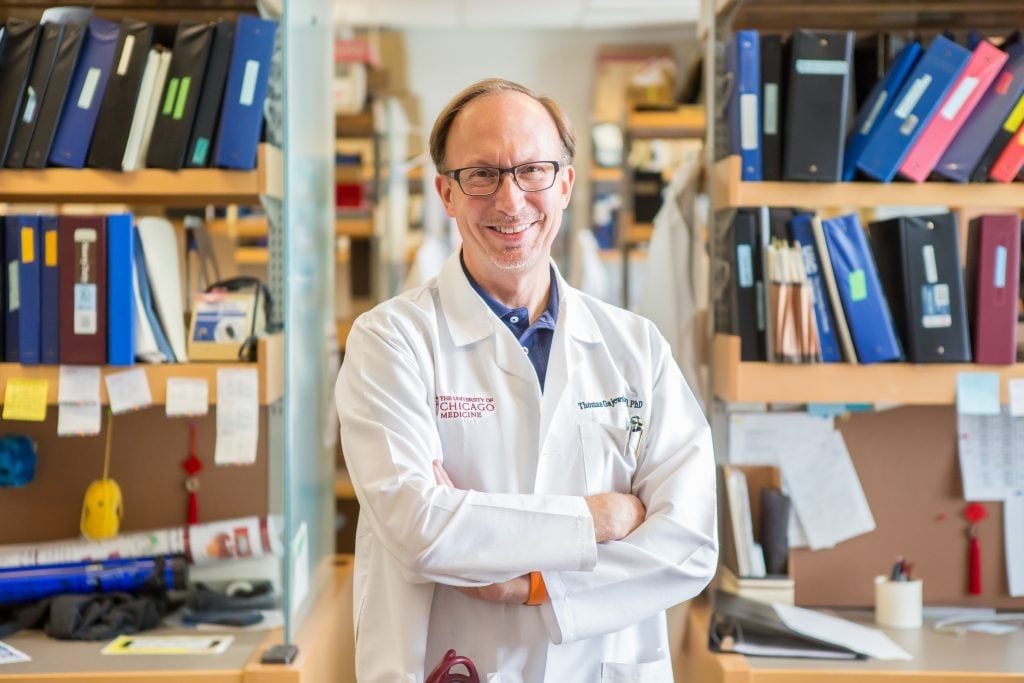
Hot vs. Cold Tumors: Decoding the Tumor Microenvironment, ft. Dr. Thomas Gajewski
Dr. Patrick Hwu sits down with Dr. Thomas Gajewski, a leader in tumor immunology at the University of Chicago. Dr. Gajewski discusses his pioneering work defining “hot” versus “cold” tumors — an insight that transformed how immunotherapists understand tumor response. The conversation dives into how the tumor microenvironment, patient genetics and even the gut microbiome shape immune activity in cancer. His work continues to drive strategies to turn cold tumors into responsive ones, giving new hope to patients across all cancer types.
What You’ll Learn from Dr. Gajewski
-
Origins of the hot vs cold tumor concept and its impact on immunotherapy.
-
How checkpoint inhibitors revive immune responses in T-cell–infiltrated (“hot”) tumors.
-
Challenges of cold tumors and strategies to convert them into hot, immune-responsive tumors.
-
Pioneering work linking the gut microbiome to immunotherapy response.
- The significance of interdisciplinary research, from tumor genetics to immunology.
-
Humanizing science: the role of music and culture in building community and sustaining belief.
Podcast Transcript
Key Takeaways
-
Dr. Gajewski’s early insight into hot vs cold tumors transformed our understanding of immunotherapy response.
-
Converting cold tumors remains a critical frontier—requiring knowledge of pathways generating immune responses.
-
Clinical translation includes dietary strategies, targeted compounds as prebiotics, and precision probiotics developed under regulatory standards.
-
Mentorship that encourages exploration, resilience, and independence cultivates future scientific leaders.
-
Science doesn’t have to be solemn—culture and creativity can energize scientific communities.
Dr. Patrick Hwu:
Welcome to The ImmunoVerse, a podcast that brings the ever-expanding universe of immunotherapy to life, through the voices of those advancing this groundbreaking field. I'm Dr. Patrick Hwu, president and CEO of Moffitt Cancer Center and a career immunologist. In each episode, I sit down with pioneering experts who have shaped the past, present, and future of immunotherapy, uncovering breakthroughs, challenges and the science driving this lifesaving innovation. Today we have with us Dr. Tom Gajewski, Professor of pathology and Medicine at the University of Chicago, where he leads a world-renowned program in tumor immunology and cancer metabolism.
Dr. Gajewski is a leading voice in understanding why some tumors respond to immunotherapy, while others do not. His work on immune cold tumors, the gut microbiome's influence on therapy and the tumor microenvironment has opened new frontiers in cancer treatment. He's also played a pivotal role in advancing preclinical models and translational approaches that move promising science into the clinic, helping more patients benefit from the power of immunotherapy. Welcome to The ImmunoVerse, Dr. Gajewski.
Dr. Thomas Gajewski:
Thanks so much, Patrick. It's a pleasure to be here.
Hwu:
So tell me, how did you get interested in using the immune system against cancer?
Gajewski:
Well, that goes way back. I was a PhD student in immunology. My mentor was Frank Fitch, a famous T-cell biologist, and that's how I got my PhD, was in that area of regulation of T-cell activation. And when I went back to medical school for the clinical part, I was looking for applications of immunology. When I had my oncology rotation, my attending said, "Well, Tom, why wouldn't you choose cancer? That's the hardest problem." And so that hooked me because I like challenging problems, and that's what I went into. That's become my career and I've continued to work on that interface between cancer and the immune system all of these years.
Hwu:
Well, as a clinician, I remember you collected tumors from patients, and that's where you first got this concept of hot and cold tumors.
Gajewski:
Yes, that's exactly right. It's sort of interesting. When I started in this field in the late nineties, immunologists were mostly working with immune cells circulating in the blood as their, let's say, experimental testing ground Cancer biologists were looking at tumors and tumor cells, and nobody was really looking at the interface. And of course, for your immune system, the cells of your immune system to recognize and destroy cancer, they have to get into the tumor. And it was an important question, "Was that happening?" We had things like vaccine clinical trials, cytokines like interleukin two, and some patients responded, but most patients didn't. And we felt it was important to start looking at the tumor microenvironment, and that's when we made this kind of a fundamental observation, which seems like a no-brainer today. I think all the students and postdocs, the clinical fellows, even the practicing senior professor oncologists think that it's always been known that there's a major subset of cancers that already has a smoldering immune response against the tumor. It turns out in the majority of tumors, they're not immune-infiltrated, and we call those non-T-cell inflamed or cold tumors. And there, cancers have escaped the immune system by a different way. They've escaped by not allowing the T cells in. So in the first category, the T cells are allowed in, but they're turned back off by these regulatory processes. And so it's become very sophisticated. We catalog tumors in this way and in deeper ways by very far-reaching technical advances that we use in this translational research.
For your immune system to recognize and destroy cancer, the cells have to get into the tumor. And that’s when we made this fundamental observation, which seems like a no-brainer today: there’s a major subset of cancers that already has a smoldering immune response… but in the majority of tumors, they’re not immune-infiltrated — we call those cold tumors.
Hwu:
So it's really a huge area of research right now. But you were really one of the ones that coined hot and cold and made this initial observation, I remember. And so now it must be fulfilling that everyone's studying it.
Gajewski:
It is. We had a review paper around 20 years ago, I think around then that is one of the most cited papers in the field, talking about this hot and cold tumor microenvironment feature. And the interesting thing for us and for the entire field and clinical advance, is that those T-cell inflamed or hot tumors where the T cells are being held back by regulatory processes, that's been an opportunity to develop therapeutics. So, drugs that many people are aware of now, may,be the leading one is called anti-PD1 antibodies. PD-1 is one of the key inhibitory receptors turning immune cells back off. So when you block that, they can be reinvigorated. They sort of come back from the grave and then attack the tumor from within. A lot of them are already there, so it's almost like a Trojan horse, right? And you reignite them and they march along the tumor and mediate this tumor killing. So that's been a major breakthrough in the field, very prominent role in cancer therapies in the clinic.
Hwu:
So there are two issues. One is where there's a hot tumor, there's immune cells in there, but they're not working, and that's where immune checkpoint blockade can come in and help. There's another scenario that you identified the cold tumor where there's no immune cells in there. So what do you do about that?
Gajewski:
I know this is a major scientific and important clinical question because those patients tend not to respond to these very exciting and otherwise effective drugs. And since that represents the majority of patients with solid tumors, some of the very common solid tumors, we really need to figure out that problem. We've approached it in a number of ways. One is that we studied in a combination of laboratory models and clinical specimens, we figured out the mechanisms by which a hot tumor, a T-cell-inflamed tumor, can occur at all. In theory, it shouldn't be possible to make an immune response against your own cancer because it's kind of like a self-tissue. In most cancers, there's no infection like a virus or a bacteria, so your immune system should not be awakened. We call that immunologic tolerance, but the reality was, about a third of patients do make a spontaneous immune response.
So how does that happen? So through about 10 years of work, we figured out key steps, key molecules, pathways and cells that are necessary to generate that de novo immune response. And we know that the cold tumors lack all of those processes. So there's a bunch of work with different technologies to try and give those things back and generate a hot tumor from scratch. These are challenging problems. There are multiple different strategies. There are several startup companies with novel technologies, but that's the major unmet need in our field. So that's one approach that we took. That's basically a translational set of experiments that starts from the lab. The other approach we took, it flips it around the other way. We thought we've got patients now some respond, some don't respond. So why don't we study the patients and figure out what those mechanisms might be in patients?
But we realized two patients could be different in at least three different ways, molecular ways. One, their cancer cells might be different because not every patient's cancer develops in the same way. The second possibility was that the patient's inherited DNA could be different. The third dimension that was tractable is environmental differences. And the most important environmental difference that we also borrowed from the autoimmunity field is the composition of the gut microbiota. We now know that all three of those dimensions, each one is important and studying each one is giving rise to new potential therapeutic interventions to try and push that hot tumor therapeutically. And some of those are entering the clinic as we speak.
Hwu:
Well, you really were one of just a few people that started to highlight the gut microbiome and its role in tumor immunology. And it was interesting. I remember how this happened. You had a finding in your lab that just was very peculiar. You got mice from two different sources and they should have been the identical mice. You just bought 'em from two different places. You're getting opposite results. And instead of just throwing that away like a lot of people do, you figured it out and it happened to be the microbiome. I have a lot of admiration for you because you took a crazy result that made no sense and you figured out something fundamental from that.
Gajewski:
That's actually true. I sort of giggle at ourselves for that too, where, I think you're right, not to make some stereotype of experimental immunologists, but I mean sometimes you'll have just a set of reagents that work, and so you just keep using those. But it was so interesting to us that mice from two different vendors gave either a strong or a weak therapeutic effect of the checkpoint blockade antibodies. And so because of the work in autoimmunity, we just asked whether it was a microbiome effect and it turned out to be true. And fortunately for our experimental future, the good microbiome, when we transferred it into "bad microbiome mice," was therapeutic. So that meant you could, theoretically develop a therapy, an intervention based on microbiome, let's say correction as a way maybe to rescue some patients. And so we studied that in mice. And then because of that possibility of it becoming therapeutically relevant, we started in our tissue sampling, we call it biobanking from patient material.
We were collecting tumors, blood, serum and germline DNA, etcetera. It turned out to kind of break open the field in this dimension, and we found that patients, melanoma patients who went on to respond to anti-PD1, they had one subset of bacteria enriched in their stool samples, basically, representing their gut. And then there were the non-responder patients had a different set of bacteria entities preferentially enriched. So there was a distinction in the microbiome, and that led to us establishing a whole range of infrastructure elements to be able to look at causality, to determine mechanism, to identify the good and bad bacteria, and then to transition to clinical development of bacteria-based interventions.
There was a distinction in the microbiome, and that led to us establishing a whole range of infrastructure elements to be able to look at causality, to determine mechanism, to identify the good and bad bacteria, and then to transition to clinical development of bacteria-based interventions.
Hwu:
There are so many different kinds of bacteria, so it's complicated to figure out which one the good ones are and which ones the bad ones are, but it's possible therapeutically now. And the more we understand it, we could develop a probiotic that could help patients with immunotherapy responses. Also, we can change the diet to change the microbiome or even do transplants of stool to get non-responders to respond. So there's a lot of potential ways to manipulate this.
Gajewski:
That's correct. So, the way we think about it in the field now, we want to mimic or reproduce the effects of the good bacteria. And there are three basic strategies, but we now are thinking a lot about how do we block the negative effects of the bad bacteria? And both of these are potential avenues for therapeutic intervention for the first category. How do we reproduce what the good bacteria are doing when they are there? People think about prebiotics, probiotics and postbiotics. So let me explain that. So prebiotics are basically, can you give something that helps those good bacteria to grow out and take over? So there are a couple examples of that. There are kind of foods for those bacteria. We're working with one that we've defined now it's we're going to repurpose an old drug that has a different use, but it turns out we found this old drug is food for a key stimulatory bacteria, and we've shown that this old drug is therapeutic through the microbiome in mice.
So that's being organized as a clinical trial now. So that's a very precise prebiotic. A less precise prebiotic is diet. So we know from large clinical data sets that when patients get these checkpoint blockade immunotherapies, there are two diets that are associated with favorable outcomes. One of them is the Mediterranean diet, which everybody knows about fish over meat, olive oil, over butter, etcetera. Fresh fruits and vegetables and fiber, things like that. The diet your mom tells you to eat that once you go to college, you avoid for many Americans. So, Mediterranean diet and then a high fiber diet. So these are being tested in prospective clinical trials to see if they improve outcomes. So that's prebiotics. The probiotic is kind of what everybody knows a little bit about. And we actually have a little bit of data that patients who are taking these over the counter probiotics, they might do less well even.
But now that we have these model systems where we can identify the actual bacteria being therapeutic, where we have a whole program where we're growing up those bacteria, we have really precise model systems for testing them in the laboratory, we do total genome sequencing of the bacteria. We know the ones that work and don't work. We know the key genes, which means we know the key pathways. And at the University of Chicago where I am, we had a generous donor who helped found our Microbiome Institute and Eric Pamer, at our place, who directs that institute, has applied some of those funds to build, I think it's the first academic-based clinical manufacturing facility for probiotics. So it's in an FDA-inspected and compliant way. Everything is quality-controlled. And so we have, I think, 13 different bacteria preparations already ready to go towards the clinic, and we're just figuring out the right combination, and then we'll do a clinical trial of that. So these are the things that are just around the corner.
Hwu:
The other thing that I think you've really been a leader in is bringing fields together. So in cancer research, there were two major silos over the years that I saw. One group looking at the genes that drive the cancer in the cancer cell, another group looking at the immune response against the cancer. And you've really helped to bring that together in terms of, you did some of the initial work looking at how the genes in a tumor affected the immune system.
Gajewski:
That's exactly right, Patrick. And we've really milked this idea that if we're studying cancer immunology, we really need to study the interaction between the immune system and the cancer, not just the immune cells in isolation or in a dish, not just the cancers in isolation, but how do they interact? And we still work in this area. We're still identifying novel molecules that when they're mutated in the cancer, they either augment the immune response, so that's a lucky one in our favor, or they interfere with the immune response.
And the first of those, we uncovered by studying patient samples and patient dataset. It's called the wnt/ beta catenin pathway. We built animal models to show that it's causal for kicking the immune cells out, and we're working on strategies to try and interfere with that particular pathway. That's a challenging one, but we have others. And it's still a really exciting area. And what I really like about it is that it starts with the patient. So you can't just be a PhD researcher in your siloed lab without access to patient material, patients with a treatment history and make those kinds of discoveries. So we have responders and non-responders, and we can look for molecular differences in the tumor connected to response or lack of response and then pick that mechanism apart and then turn that into a new therapy, hopefully. And there are multiple of those.
Hwu:
You've also mentored many people in the field, Gajewski, and they're working at some of the most prestigious institutions like MIT and thriving. So tell us about your approach to mentorship.
Gajewski:
I explained to trainees that the most important thing is to choose an interesting question. Sometimes, especially when you're trained in research, you tend to stick to what you know and what you had been working on five years ago, might not be the most exciting or the most important area currently. And there could be some derivative idea that came from that work that turns out to be more important. And you recognize it as important, but you have to have the courage to wander into the unknown and tackle a new question. You might have to learn a new literature, you might have to learn a new technique. You might have to buy some new equipment. You might have to collaborate with some new partners, but choose an interesting question. And then in our field, if you start with patient material, and you identify an interesting question, when you figure it out, it's almost guaranteed to be clinically relevant, because it started from a patient with a certain outcome.
So that's the ground, the foundation as a trainer then. But then you want to encourage the trainees to explore, to figure some things out on their own, to fail, to figure out how to troubleshoot. I let them come to me at some point when they have trouble. I still meet regularly, obviously, but I don't ride people and I don't dictate, and I'm not a puppeteer telling them what to do. You're not hiring or training technicians. You're trying to give people the skills to be independent and make their own discoveries and be able to run their own groups someday. And I try to support people not to get discouraged, because the most exciting moment in basic research is when you've made a discovery and you're the only person on the planet perhaps who knows that result. And you know it's important. And that's the endorphin release, that's the discovery endorphin release, and it becomes like a drug. You can become addicted to discovery in a positive way. So that's how I encourage people.
The most exciting moment in basic research is when you’ve made a discovery and you’re the only person on the planet who knows that result. That’s the discovery endorphin release — you can become addicted to discovery in a positive way.
Hwu:
And I think you've really shown that science can be fun. And there's a point we try to get across. Science can be fun. And quite frankly, scientists are fun. And so one of the examples of that is the rock band that we formed together, The CheckPoints, 18 years ago. So talk a little bit about music and what The CheckPoints have meant to you.
Gajewski:
It's amazing. So, you and I both grew up playing music as teenagers, college students, medical students. And even though you might think oncologists, MDs, PhDs, they're mostly listening to Chopin and Mozart kind of music, going to the opera for Puccini performances. But rock music and pop music still plays a role in my life, and it's energy release. So yeah, so by a chance happening at a conference, you, myself, Jim Allison, later, Rachel Humphrey, we sort of landed in this playing music together mode all in similar levels of our career. Obviously, Jim, a little bit more advanced from us. So, I sort of interpreted that we all were allowing the hobbies back into our life. Now we've started playing at the Society for Immunotherapy of Cancer meeting. Now the band has grown to 13 musicians. We have a horn section, backup singers, two guitars, and Patrick, you play the keyboards. I play guitar, bass drums. So it's a whole lot of fun. And we play these songs and everybody's up there dancing. They're having a great time. We'll play for three hours at a conference, and we get to the end and everybody's “One more song, one more song!" You feel like rock stars. So, it's fun for us. And it seems to be part of the culture of these meetings now, these immunotherapy meetings, when the band is part of it. And I think the young trainees get a kick out of seeing us older people on the podium giving big talks, or they see our publications in Nature and Science, then suddenly we're in rock and roll clothes, playing guitar and keyboards, and I think they get a kick out of it too. So, it's so fun. I think it's part of the fabric of our community.
Hwu:
I wanted to talk a little bit about the relevance of the last song we usually play. "Don't Stop Believing."
Gajewski:
Oh yeah. So we learned that Journey song, which is standard material for all the wedding bands, right? Don't Stop Believing, you're entering your new partnership. So for us, in our field, cancer immunotherapy, before it was so widely accepted, it was almost more of a religion than a science; because there were believers and non-believers, and the believers weren't just having blind faith. They saw what T-cells of the immune system could do, and that we just had to figure out how to make it a reality in the clinic. So, it wasn't just a philosophy; there was a very practical aspect to it. And so we had to continue believing in ourselves, in our discoveries. And here we are. We're to the point where immunotherapy is a major part of cancer treatment, but we still have a ways to go. So we never stop believing, right? So don't stop believing. It's a great ender for our last set.
We had to continue believing in ourselves, in our discoveries. And here we are. We're to the point where immunotherapy is a major part of cancer treatment, but we still have a ways to go. So we never stop believing, right? So don't stop believing.
Hwu:
Wonderful. So remember everybody. Science is fun. Scientists are fun. And don't stop believing. Well, we want to thank our guest, Tom Gajewski, for joining us today. And thank you for going on this journey with us through the ever- expanding universe of immunotherapy. To hear more episodes of The ImmunoVerse, make sure to subscribe on your favorite podcast platform.