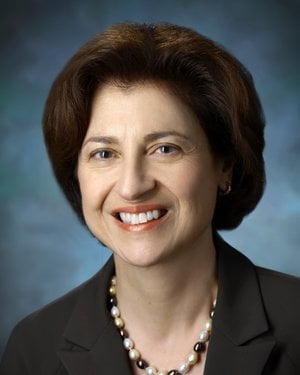
Pioneering PD-1 Immunotherapy and Tumor-Infiltrating Lymphocytes, ft. Dr. Suzanne Topalian
Dr. Patrick Hwu welcomes Dr. Suzanne Topalian, Bloomberg-Kimmel Professor of Cancer Immunotherapy at Johns Hopkins and Director of the Melanoma Program at the Sidney Kimmel Comprehensive Cancer Center. Dr. Topalian shares her journey from surgical residency to groundbreaking research in tumor-infiltrating lymphocytes (TILs) and immune checkpoint blockade. She discusses the evolution of PD-1 inhibition, her contributions to biomarker discovery, and her work expanding immunotherapy to rare cancers like Merkel cell carcinoma.
Dr. Topalian also explores the promise of neoadjuvant immunotherapy, the importance of persistence in research, and the role of mentorship in shaping the next generation of cancer scientists. Throughout the conversation, she emphasizes the collaborative, patient-centered approach that has defined her career and continues to drive advances in cancer immunotherapy.
What You’ll Learn from Dr. Topalian
- How early surgical/bench research paved the way for modern cancer immunotherapy approaches.
- Why CD4 “helper” T cells, and other immune populations, play critical roles beyond CD8 cytotoxic activity.
- Lessons learned from developing the first tumor-infiltrating lymphocyte (TIL) production lab and scaling to clinical-grade manufacturing.
- Clinical significance of the first anti-PD-1/PD-L1 trials and how they shifted oncology across multiple solid tumors.
- Scientific and clinical rationale for neoadjuvant immunotherapy and evidence supporting earlier-line use.
- How biomarker evolution, from PD-L1 and MSI to multiplex and circulating DNA approaches, continues to refine patient selection.
Podcast Transcript
Key Takeaways
- Immunotherapy translation is a marathon - TIL development required decades from concept to FDA approval. Persistence, infrastructure scaling, and multi-disciplinary collaboration were critical.
- Helper T cells and other immune subsets deserve continued focus - early CD4 work opened the door to a broader understanding of immune network contributions beyond cytotoxic T cells.
- Checkpoint inhibitors transformed expectations for advanced disease - first-in-human PD-1 trials demonstrated tumor regression in treatment-refractory melanoma, lung, and renal cancers, creating a new standard of care and catalyzing pharmaceutical development.
- Neoadjuvant immunotherapy offers biological and clinical advantages - treating tumors in situ may better prime tumor-resident T cells and reduce microscopic metastases before surgical resection.
- Manufacturing scale and technological innovation matter - transitioning from wells to bioreactor-type systems enabled effective TIL dosing thresholds and clinical response.
Dr. Patrick Hwu:
Welcome to the ImmunoVerse, a podcast that brings the ever-expanding universe of immunotherapy to life. Through the voices of those advancing this groundbreaking field, I'm Dr. Patrick Hwu, president and CEO of Moffitt Cancer Center and a career immunologist. In each episode, I sit down with pioneering experts who have shaped the past, present, and future of immunotherapy, uncovering breakthroughs, challenges, and the science driving this life-saving innovation. Today we have with us Dr. Suzanne Topalian, Bloomberg-Kimmel Professor of Cancer Immunotherapy at Johns Hopkins and Director of the Melanoma Program at the Sidney Kimmel Comprehensive Cancer Center. Dr. Topalian was among the first to demonstrate the clinical potential of PD-1 inhibition, leading landmark studies that have helped reshape the standard of care for multiple cancers. Her work extends beyond trials. She's also a leader in biomarker research, helping us understand which patients are most likely to benefit from immunotherapy. Her career represents the perfect intersection of rigorous science, visionary leadership, and patient-centered care. Welcome to the ImmunoVerse, Dr. Topalian.
Dr. Suzanne Topalian:
Thank you, Patrick.
Dr. Patrick Hwu:
Great. So tell us, you've done so much in immunotherapy. What got you started in immunotherapy? Why immunology?
Dr. Suzanne Topalian:
Yeah, so we've known each other for many years. You know that I started out as a surgeon, and during my surgical residency I had an opportunity to do one year of research. And so I went to Children's Hospital of Philadelphia to do that, and I was in an immunotherapy lab. And during that one year, I really became hooked on the idea that the immune system could reject cancer, just the same way that it rejects viruses, transplanted organs. It's the defender of the body, and cancer is so different from normal that it should be able to recognize and reject that as well. So that got me started on my path that led me down to the National Cancer Institute to do a fellowship with Steve Rosenberg and continue my career there.
I really became hooked on the idea that the immune system could reject cancer, just the same way that it rejects viruses, transplanted organs. It's the defender of the body, and cancer is so different from normal that it should be able to recognize and reject that as well.
Dr. Patrick Hwu:
It was so fun working with you all those years at the NCI Surgery Branch. You really pioneered a lot of things while you were there. For example, you were one of the first to look at CD4 cells against cancer. So why don't you talk about the differences between CD8 and CD4 cells and how what you did was so novel and unique.
Dr. Suzanne Topalian:
Okay, well thank you. So CD8 cells are killer immune cells, killer T cells, and they directly attack cancer cells. But there's another, very important kind of immune cell: CD4 cells, which we also call helper T cells. And they are the organizers of the immune response. They're the generals, and the CD8 killer cells are like the foot soldiers. So I became very interested in what they might be contributing to anti-cancer immunity. And so it all came together, and that kind of opened the door to looking at other cell types like natural killer cells and B lymphocytes that make immunoglobulins that can be cancer-specific. So it's a very complex network of interacting cells, but it can all be focused against cancer.
Dr. Patrick Hwu:
You also pioneered a lot of other things at the Surgery Branch. In fact, you were the first leader of the Tumor-Infiltrating Lymphocyte lab at the NCI where all of this therapy germinated and last year became FDA approved. So that must've been very fulfilling for you.
Dr. Suzanne Topalian:
Extremely exciting to see that happen after 40 years of research. So research doesn't happen quickly. Sometimes it takes a while. And growing tumor-infiltrating lymphocytes was my project as a postdoctoral fellow with Steve Rosenberg. But yeah, we carried it across the thresholds to being able to grow very large numbers of these cells to be able to treat patients with multiple different kinds of cancers. And as you know, the most promising results in those very early days in the 1980s came in patients with advanced melanoma who had not responded to other kinds of treatments that were available at the time. And the approval you referred to with the TILs, that is an approval in melanoma, although there's a lot of research going on now in other types of cancer too.
Dr. Patrick Hwu:
That must have been such a foreign concept when you started this clinical lab. So talk a little bit more about what this lab did and why it was so unique at the time.
Dr. Suzanne Topalian:
Right. Well, when we were trying to figure out how to grow a lot of these cells to give back to patients, we started doing it in small incubators, in small wells and plastic plates, and gradually I built a team of technicians and we would all be doing this alongside in special cabinets to keep everything clean. And it became obvious along the way that we were going to need to transition to different technologies if we were going to really scale this up. So Steve, our leader, started collaborations with different companies to be able to grow this in plastic bags, which could hold a liter or more of culture fluid instead of just doing it in tiny wells in hard plastic plates. And so we gradually built the lab and treated the first few patients, and it was only after we exceeded a threshold of billions of cells that went back into the patients that we started to see tumor regressions. And so then we knew what we had to do and set our sights on that. But again, it was Steve Rosenberg's leadership and vision that really carried the day.
Dr. Patrick Hwu:
You must have been thrilled to see those first patients respond.
Dr. Suzanne Topalian:
Oh, it was unbelievable because these patients had had every other kind of available therapy. And again, this started in the 1980s, so we didn't have the modern immunotherapies that we have today. We didn't have anti-PD-1 and anti-CTLA-4. There was chemotherapy, radiation therapy. It was limited, but it was what we had. And so when these patients signed on to clinical studies at the National Institutes of Health, they were coming to us to volunteer to be part of an experiment without knowing if it would help them, but knowing that the knowledge would help the field and would help us to move things forward.
Dr. Patrick Hwu:
And being a clinician yourself, you not only produced the cells in the lab, but you also attended on the service where you saw the patients, gave them the cells, gave them the interleukin-2, and really interacted, read the x-rays. Right. So you were right there.
Dr. Suzanne Topalian:
I think it was a one-of-a-kind experience, really. There was a lot of disappointment in those days because most of the things that we were trying in the clinic did not help the majority of patients. But the group of us, including you Patrick, were convinced that the immune system could reject cancer if we managed it properly, attuned it properly. And so persistence was a big part of success.
But the group of us, including you Patrick, were convinced that the immune system could reject cancer if we managed it properly, attuned it properly. And so persistence was a big part of success.
Dr. Patrick Hwu:
Then you move to Johns Hopkins where you really got interested in immune checkpoint blockade and led many of the anti-PD1, the initial anti-PD1 therapies that showed that it could help not just melanoma patients, but many other kinds of patients. Why don't you talk a little about that?
Dr. Suzanne Topalian:
So our team at Hopkins led the first in-human trial of the very first anti-PD1 or PD-L1 drug. And that was a drug from a biotech company, Medarex at the time. It was called MDX-1106. It became nivolumab or Opdivo as we know it today. And so that very first trial involved four different medical centers, and we decided to treat patients with several different kinds of cancers based on scientific reasons, preclinical information, and saw responses in three different kinds of cancers in that trial. And that led to a much larger trial that included hundreds of patients that eventually we published in 2012 in the New England Journal, showing that anti-PD1 could cause the regression of very advanced, otherwise treatment-refractory melanomas, lung cancers, and kidney cancers.
Dr. Patrick Hwu:
I mean, some of those papers you published in those days were among the most referenced papers in all of oncology.
Dr. Suzanne Topalian:
It was really gratifying to see the interest, and not only from the academic sector, but also from multiple pharmaceutical companies and biotech companies who began to make their own versions of these anti-PD1 or PD-L1 drugs and bring them forward to clinical testing. So as of today, there are 11 different drugs that are now FDA approved in the United States that block this pathway, PD-1/PD-L1, which normally restrains anti-cancer immunity. So when we block that pathway, it liberates the immune system to attack cancer.
Dr. Patrick Hwu:
And I remember you really went beyond melanoma, as you're saying, even to rare cancers. So one of your studies found that anti-PD1 worked in Merkel cell cancer, which is a pretty rare cancer of the skin. It's the cancer that Jimmy Buffett had, for example. It's pretty rare, can be caused by a virus or can be caused by the sun. Talk a little bit about the studies of Merkel cell cancer.
Dr. Suzanne Topalian:
Okay, so as you said, Merkel cell is a relatively rare cancer type. About 3,000 people per year in the United States develop this cancer. It can behave very aggressively. And so at the time that we decided to test anti-PD1 against Merkel cell carcinoma, there was some laboratory evidence that this might be a smart thing to do. So this effort was really initiated by my collaborator Paul Nghiem at the Fred Hutchinson Cancer Institute in Seattle. Paul had studied Merkel cell carcinoma for many years. His laboratory had done studies showing that immune cells that recognize Merkel cell carcinoma also express these immune checkpoints like PD-1 and others on their surface. And our group at Hopkins, Janice Taube, Evan Lipson, and others showed that the binding partner for PD-1, PD-L1, was highly expressed in Merkel cell carcinomas. So there we had the pathway present in the cancer.
We had a group of patients who had very aggressive cancers and there was really no treatment that could prolong life in these patients. So when their cancers progressed to stage four, these patients had a life expectancy of about nine months. And so we, Paul Nghiem and I, along with a cooperative group that was funded by the National Cancer Institute, started a multicenter trial eventually finding that anti-PD-1—in this case, it was a drug called pembrolizumab—could cause the regression of very advanced tumors in over 50% of these patients. And these were, for the most part, durable tumor regressions that could prolong life. And in some cases now it appears that they may even be cured because many of these patients have now gone on for years without their cancer. And so it turns out that the virus in the cancer produces its own proteins that are very strong stimulants for the immune system. So this taught us something about what it takes for the immune system to reject cancer. It doesn't have to be a lot of mutations. It could be a very strong stimulus like virus-associated proteins.
Dr. Patrick Hwu:
Great. Well, now you're focusing—and it really melds well with your career path as a surgeon—on neoadjuvant therapy, giving the treatment before even surgery. So why don't you talk a little bit about your work there?
Dr. Suzanne Topalian:
Sure. So as you said, as with most things in oncology, we started testing these drugs in people with very advanced cancers who had already had other treatments that hadn't worked for them. Once we found out about the response rates in those patients, and once we knew that the drugs were relatively safe and we could recognize what the side effects were, we developed ways to treat the side effects early on if they did occur. We then started to think, why don't we try to give this treatment earlier in the course of cancer development? It might even be more effective before the cancer gets to stage four. And so the first efforts were to try to give these drugs right after surgery in patients who were at high risk for tumor recurrence. But our group at Hopkins thought that there might be an even better, more effective way, which would be to give it before surgery in high-risk patients.
Our hypothesis was that by giving these drugs before surgery, while the tumor was still in place, we could activate those immune cells that had already infiltrated the tumor. And once activated, immune cells then leave that primary spot and travel around the body looking for sites of tumor. And sometimes these sites of tumor can be very small so that we can't see them on scans, but ultimately they will be the reason that cancer comes back after surgery. And we showed that we could see primary lung cancers regress after only four weeks of anti-PD-1 therapy. And so it does appear that there's value to giving immunotherapy before surgery.
We showed that we could see primary lung cancers regress after only four weeks of anti-PD-1 therapy. And so it does appear that there's value to giving immunotherapy before surgery.
Dr. Patrick Hwu:
It's almost a full circle moment with your early TIL work where you recognized there were T cells in the tumor itself trying to kill the tumor. So here with neoadjuvant therapy, you're activating those T cells within the tumor before even the surgery.
Dr. Suzanne Topalian:
So we realized that the T cells are there, and we knew this even in the 1980s because we could look at pathology slides and we could see the T cells, the killer cells, and the helper cells. They were there in the tumor, but the tumor was growing. And the question was always why. And then decades later, with basic laboratory research, a lot of it funded by NIH grants, but also other sources of funding, we learned that these T cells were being restrained by molecules like PD-1 that we call immune checkpoints. And that's when we knew that we had to develop drugs that would target those checkpoints and liberate the immune response against cancer.
Dr. Patrick Hwu:
You talked about looking at the tumor in the 1980s. Well, you've also done a lot of work by looking at the tumor and the molecules in the tumor and the biomarkers. So you've done some critical biomarker work to try to determine why some patients respond, others don't, and what we can do to help more patients respond. So don't you talk a little about your biomarker work.
Dr. Suzanne Topalian:
Sure. So we first described the biomarker PD-L1 with immunohistochemistry and published that information, very early, alongside the first large anti-PD-1 clinical trial. This was in 2012. A lot of that work was initiated by Lieping Chen, who's now at Yale, and Janice Taube and Bob Anders, who are still at Johns Hopkins. But this eventually became an FDA-approved biomarker in certain cancer types to find the patients who were most likely to respond to anti-PD1. Later on, we teamed up with the Cancer Genetics group at Johns Hopkins led by Bert Vogelstein to describe another marker, microsatellite instability (MSI). Cancers that have microsatellite instability accumulate a very large number of mutations, which make them more visible to the immune system. And this is a very simple hospital-based test to know if a tumor has MSI or not. But it turns out that cancers that have MSI are very likely to respond to anti-PD1 therapies. And this eventually became FDA-approved as well. And it doesn't matter what type of cancer it is. So this is a unique marker that crosses different cancer types. And in fact, we heard some very exciting presentations here at the AACR annual meeting this afternoon about what's going on with anti-PD1 therapy before surgery for MSI-high cancers.
Dr. Patrick Hwu:
That's exciting that you've identified some biomarkers that really affect clinical practice. If you have MSI-high, you should definitely get immunotherapy. Now, at the same time, when I'm in clinic, I still need more biomarkers. I think for the most part, we're not helped enough by biomarkers to try to determine what I should do first for the patients. I think we're going to need even more studies and more markers, and to have AI bring it all together. Do you think AI is going to help us with trying to really determine who should get immunotherapy, and what combinations we should give?
Dr. Suzanne Topalian:
Yes. So the markers that I mentioned are single biomarkers, but there's a lot of promise in multiple or multiplex biomarkers that might include some characteristics of T cells, some characteristics of the tumor. They could include things like looking for DNA circulating in the blood of patients, and AI may be capable of putting all these factors together into a compact package that would be a much more powerful biomarker. So that's something for future development.
Dr. Patrick Hwu:
Wonderful. And tell us, for a final question, we're also trying to the point that scientists are fun, and you're a fun person. On your off hours, I know you play classical piano. So tell me about your hobbies.
Dr. Suzanne Topalian:
Well, so music is my main hobby, and I do love the piano. I also like to listen to music. And Patrick, you're a very accomplished musician yourself, and so I think you can appreciate where I'm coming from on that.
Dr. Patrick Hwu:
Great. And tell us about what— you've also mentored many people in the field. Tell us about what mentorship means to you.
Dr. Suzanne Topalian:
Well, of course, the next generation is so vitally important in carrying this work forward. And so I have been privileged to mentor some very talented people in the past few decades that I've had my own lab. And it's been very gratifying to see them go on and build their own careers. And some of them are now professors in their own right. So the work will go on, and I feel good about that.
The next generation is so vitally important in carrying this work forward. And so I have been privileged to mentor some very talented people in the past few decades.
Dr. Patrick Hwu:
Wonderful. Well, we want to thank our guest, Dr. Topalian, for joining us today. And thank you for going on this journey with us through the ever-expanding universe of immunotherapy. To hear more episodes of ImmunoVerse, make sure to subscribe on your favorite podcast platforms.