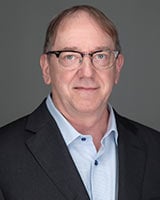
Skepticism to Standard of Care: The T-Cell Journey, Ft. Dr. James Mulé
Host Dr. Patrick Hwu sits down with immunotherapy pioneer Dr. James Mulé to discuss the origins and evolution of T cell therapies, groundbreaking discoveries at the NCI, and the translation of research to patient care at Moffitt Cancer Center.
Podcast Transcript
Patrick Hwu
Welcome to The ImmunoVerse, a podcast that brings the ever-expanding universe of immunotherapy to life through the voices of those advancing this groundbreaking field. I’m Dr. Patrick Hwu, president and CEO of Moffitt Cancer Center and a career immunologist. In each episode, I sit down with pioneering experts who have shaped the past, present and future of immunotherapy, uncovering breakthroughs, challenges and the science driving this lifesaving innovation.
Today, we have with us Dr. Jim Mulé, Associate Center Director of Translational Science here at Moffitt. Dr. Mulé is a world-renowned immunotherapy expert, recognized for his research and clinical trial contributions to cancer immunotherapy, particularly in solid tumors. His clinical research group at Moffitt is involved in developing and validating genomic signatures of immunotherapy response as well as vaccine strategies and other approaches to recognize and destroy tumors, including cell-based therapies. He has published over 200 articles and has been an NCI/NIH investigator continuously for nearly 30 years. Dr. Mulé is a recent inductee of the National Academy of Inventors. Welcome to the ImmunoVerse, Dr. Mulé.
James Mulé
Thank you, Dr. Hwu.
Patrick Hwu
Alright, well, thanks so much for being here today. Tell us, you've been in this field of immunotherapy for a long time. Tell us about the early days. People really didn't think we could trigger the immune system against cancer, did they?
James Mulé
No, it's very true. I mean, we were sort of the outsiders in the investigative field prior to that time. Much of the focus had been on chemotherapy, drugs, radiation therapy, and, to some extent, surgery as the frontline treatments. And when we started to look at the impact the immune system might have on tumors, it was not only in its infancy, but also, there were many skeptics out there.
Patrick Hwu
And some of the early trials didn't work. So, that really caused a lot of skepticism in the field.
James Mulé
Very true. Very true. But to battle cancer, you have to be very courageous. You have to keep pushing the envelope.
Patrick Hwu
Yeah, I know when I was training, a lot of my early mentors in the oncology fellowship actually studied things like the folate pathway and they really did not think immunotherapy was going to work.
James Mulé
No, exactly. Right. And trying to get papers published was also a challenge. So even if you were successful in the laboratory, developing new concepts and having new discoveries, it was very difficult to get those papers published because of the skepticism out there.
Patrick Hwu
Yeah. So tell me what made you interested in immunotherapy and what told you that this was going to work?
James J. Mulé
I was a graduate student. I left New Jersey to go to Seattle for graduate school at Fred Hutchinson Cancer Center when they first opened their doors in Seattle, and met a young Swedish couple, Carl Ingrid Strom, who came from the Karolinska Institute in Stockholm. And they were the ones Hwu were pushing at that time the need to establish the two immunology program at the Hutch. I was one of their first graduate students.
Patrick Hwu
Great. Shortly after that, you started working with Steve Rosenberg at the National Cancer Institute. Tell us what brought you to the NCI.
James Mulé
So after I finished my time in Seattle, it was time to move on for a postdoc after I got my degree. And I sat with the Stroms and we strategized about what would be the most appropriate place for me to land as a postdoc. And it was slim pickings at the time. There were not a lot of options for laboratories Hwu were really at the forefront of studying tumor immunology. And it was Steve's lab that was first on the radar screen. And the Stroms encouraged me to apply, which I did, and I was accepted.
Patrick Hwu
Great. And how long were you there with him at the National Cancer Institute?
James Mulé
So, over the course of 10 years, I worked up the ranks initially as a postdoc, then a senior fellow, and then a tenured senior investigator.
Patrick Hwu
Great. And that's where we met, because you were one of my mentors there when I worked with Steve
James Mulé
Rosenberg. Exactly right. Yeah. I likened it to our team, including you, Dr. Hwu and a number of others in the lab to the 1927 Yankees that it was arguably one of the best baseball teams in history. And I thought that we very much were that type of team.
Patrick Hwu
So when you think about what went on there in the eighties and the nineties, a lot of revolutionary things that are still being done today. T-cell, the, so tell us about the initial T-cell therapies.
James Mulé
So originally much of the work was in mouse because you had to show impact of whatever treatment you had in preclinical animal studies before you could go to the FDA to run early-stage clinical trials. So when I was at the Hutch, we were working on T cells because the Stroms came from basically a T-cell background in their studies in Stockholm. And at that time, interleukin two or TCGF was first identified and cloned that Steve took that and showed that you could expand T cells outside the body using IL two. And that set the whole stage for us to not only study the biology of T cells, but use them therapeutically. And
Patrick Hwu
So some of the first that were done there at the National Cancer Institute in our group with Steve Rosenberg were really gene modified cells, right? No one thought that you could do gene therapy in people, but that was where we really started putting CAR T into T cells, TCRT into T-cell. I remember that. I think that was your idea, said, why can't we just put tcell receptors into T cells? And that way you work with Magia Moore and others. And that was really the first demonstrations that you could put T cell receptors into T cells.
James Mulé
Yeah, it was that, but also you could insert cytokine genes into T cells. And so there was a separate effort going on looking at what genes could be put in T-cells that would not only help their biology but strengthen your potency. And you of course was one of the pioneers in developing CAR T, if not the pioneer with Steve, and show that you could not only do it in mouse, but you could do it in human. And this was also true in Mike Nishiura with you and others in the lab, that you could also do this with TCRs and endow those T cells to recognize
Patrick Hwu
Tumor. So I think it's exciting because these new trials now CAR Ts have been approved for blood cancers and now we're going into solid tumors. The TCR transduced T cells are now getting nice responses in some patients with solid tumors. It's very
James Mulé
True.
Patrick Hwu
I think people don't realize it started so long ago back in the nineties at the National Cancer
James Mulé
Institute. It's very true, very true. It's come a long way. And as you point out, the therapeutic effects that one is now seeing in the clinic speaks volumes to the courage we all had to keep going and to develop these technologies and get them into patients and show benefit. There was an army of skeptics at that time that were pushed back at us in every way, either through publications, talks that we would give during the discussion session of plenary talks and at conferences. And so if there was anything I learned in my career, first with the Stroms and then with Steve was you never give up. You never look back and you just keep going. And that's how you become successful.
Patrick Hwu
And when people tell you, Hey, that's not going to work. If you have good scientific basis that it's going to work, keep going. Exactly right. Exactly right. So let's talk about tumor infiltrating lymphocytes. Those were discovered at the NCI in the Rosenberg group while you were there. And actually the name tumor infiltrating lymphocytes was coined there, right? Correct. Correct. And so tell us about the first till
James Mulé
Studies. Well, again, it was started in mouse with Renee Laier, Hwu was a clinical fellow in the lab with us and with Steve and a few others had that paper in science, which was the first to show, at least in the mouse, you could isolate, grow these T cells and show they were therapeutic and caused dramatic tumor regression in mice. Before that, it was Ilana Arone Hwu predated my arrival at the surgery branch Hwu showed in vitro that you could expand these cells from tumor. And then Laier and others took that to show you could do it in mouse. And then we were off to the races and the next step was to show you could expand human cells and give them to patients
Patrick Hwu
That now is FDA approved. So how does that make you feel that things that you helped start way back in the eighties, nineties at the National Cancer Institute, are now FDA approved?
James Mulé
It's very rewarding. I mean, when I came to Moffitt, thanks to our board here, our board of directors, our former director of the Cancer Center and others, when I arrived, there was no question they were going to support this and bring it here to Moffitt. And we were able to then take this out of the NCI and show that we could treat patients here at Moffitt.
Patrick Hwu
Yeah. So let's talk about that a little bit. So after the NCI, you went to industry for a little bit, then you went to University of Michigan, then you got a phone call in the early two thousands. Tell us about Senator Connie Mack and why did he get interested in Till and how did that come where he was calling you, recruiting you from the University of Michigan?
James Mulé
Well, they called me, I got a call, it was in the morning of April 2nd or third in Ann Arbor. I was in my office and there was 30 inches of snow on the ground and it was a complete whiteout. And I was asked to come to consider coming to Moffitt for an opportunity. And jokingly, half jokingly, I said, I'll be on the first plane as soon as the airport opens. So I arrived and Lee Moffitt, Connie Mack were very instrumental in convincing me that this was the place I should come to. And it was a very easy decision.
Patrick Hwu
So Senator Connie Mack, and we've talked to him about it, he helped to double the NIH budget when he was a senator. He went into a bookstore, saw Steve Rosenberg's book, the Transformed Cell, got really interested in T-cell therapy, called Steve, said, we want to do this. He was the board chair. Connie Mack was the board chair for a while at Moffitt and he said we should do T-cell therapy. So he called Steve and said, Hwu do I need to hire? And he said, hire Jimmy Le. And that's why they called you. And why in 2003 when you came to Moffitt Cancer Center, you really started from scratch.
James Mulé
Exactly
Patrick Hwu
The T-cell program. And we were one of the first places outside of the National Cancer Institute offering T-cell therapies like TIL therapy. But you really started from scratch here, right? Exactly. And there's a huge commitment to it. But back then people might've thought, really, at Moff, Kansas, you're going to invest in that. Right. In 2003, it wasn't a
James Mulé
Common thing. Right. It's very true. We tried at University of Michigan and there were just too many hurdles to get it off the ground in Ann Arbor and here it was a welcome relief to have such support to get this going. That's what I
Patrick Hwu
Love about Moffitt, always thinking on cutting edge machine learning with math oncology, we have engineering now, but back in 2003, it was really quite a risk to go and hire someone and build a T-cell therapy unit. So what went into that? There's nothing here for T-cell therapy. What did you have to do to get T-cell therapy to make Moffitt now one of the world leaders in T-cell therapy? Tell us about that journey.
James Mulé
Well, it didn't hurt that the board chairman was behind this with Connie Mack. A melanoma survived. In fact, all his siblings developed melanoma in the family, so he was committed. And Michael McGill Cudi, I hold the family's endowed chair in Moffitt, was in honor of his brother Michael, Hwu passed away from melanoma. And it was through his interaction with Don Adam, Hwu became a benefactor of this initiative and gave the largest gift to Moffitt at that time to allow us to set up a special facility under FDA guidelines to be able to grow till expand them and give them in clinical trials. It was that gift that launched, really launched the effort.
Patrick Hwu
It was really a lab that is still going strong today. A clinical lab to grow T-cells for patients. Correct. Correct. Because these trials are highly regulated. Absolutely. People have to gown above everything in these GMP labs. Right.
James Mulé
That's very true. And again, there were skeptics even at that time, not within Moffitt Walls, but still, can you really take this out of the NCI and you know, because at that time you had MD Anderson and it was you and your group with Moffitt that we were able to launch till outside the NCI. And those data actually was able to convince to some extent the FDA to go forward and get the
Patrick Hwu
Approval. Right. It was a lot of hurdles, a lot of hurdle. I try to start this at MD Anderson, we did successfully, it was a lot of hurdles, a lot of groups to jump because people were like, what? They're used to taking a drug off a shelf to treat cancer patients. Correct. But with till you have to take the tumor, isolate the immune cells from the tumor from the or right to the lab, grow the cells to a hundred billion or so and then give them back. And it's a lot to do that. Correct. And so very few places were investing and at that time, those were the only three places, the National Cancer Institute, Moffitt and MD Anderson. Exactly right where you and I were. That could get people could get til therapy Therapy. Right, exactly.
James Mulé
And also it was the support, as you know, because you're an Adelson Medical Research Foundation investigator as I am, that it was that support from the ADELSONS that also helped to move this forward.
Patrick Hwu
I remember that. And then we also had a grant together that's right from the Melanoma Research Alliance that we shared between Moffitt and MD Anderson. I remember that. So all of that really helped those early days. Absolutely. Absolutely. So tell us, last February, a year ago, till therapy was approved by the Food and Drug Administration for advanced melanoma. Tell us about that and what that meant to
James Mulé
You. Well, it was somewhat to say, well, it's the end of the journey, but really now it's the beginning of the journey because we have a lot we can do now that it's an approved therapy by the FDA. And so it was very rewarding when you look through the years, you look through all the hassles and combine it with the successes and the path you took, the decisions you made along the way that to see that approval was incredibly rewarding.
Patrick Hwu
And tell us, what's the future of TIL therapy? It's right now approved for advanced melanoma. Is it going to work in other diseases?
James Mulé
Well, I'm a believer, as I believe you are, and we're seeing responses in non-small cell lung cancer at Moffitt and also studies that are being conducted by ivans. Most recently we're seeing complete responses in bladder cancer with the installation of TIL in non-muscle invasive bladder cancer, which is very encouraging. And so the technology has gotten to a point where we're more confident and comfortable that we can take this beyond melanoma.
Patrick Hwu
Great. And then you've pioneered a lot of things. Another area that you've really pioneered is this area of tertiary lymphoid structures. Tell us about what is A TLS?
James Mulé
So A TLS is a microscopic lymph node and they're found embedded in surrounding solid tumors. Not all solid tumors, but they by all intents and purposes under the microscope, they have a similar composition of peripheral lymph nodes in the body. And we found them back 14 years ago. Here's another example where working with the pathologist at Moffitt and the genomics core here with Merck Bioinformaticists, that we identified these structures very unique and we're the first to show that it correlated with clinical response to immunotherapy. Tumors that were absent were negative for these tls. Inevitably, those patients did poorly and showed little if any response to immunotherapy. So we believed at the time there was a connection between tumors having no structures and the body responding inside the tumor mass to cause immunotherapy to be effective. We sent the paper to top tier journals and I saved the critiques from the reviewers and we could not get the paper published.
There were so many non-believers because we were told why hadn't pathologists identified these before? Well, no one ever asked him to look for them, by the way. So we had a hard time getting that paper published. Finally, we did. We followed it. That was in colon cancer. We followed it up. Same story, same true outcome in melanoma. Again, had trouble publishing that paper. Multiple journals finally got that paper published. I had a call with Wolf Friedman Hwu also is a discoverer of tss, and we did a Google search and when we first sent the papers out, we looked online to see if there were any published indications of identification of TSS in solid tumors. Zero. Nothing. Fast forward today, 14 years later, there are hundreds of thousands of papers now identifying these structures and showing clinical relevance.
Patrick Hwu
So it just shows a lot of times when you're first, there's an uphill battle. Exactly. And these tls are going to be important not only to understand Hwu's going to respond and Hwu's not, but maybe to find the kinds of cells that we need to help mediate response.
James Mulé
Exactly right. Exactly right. We now have new data to suggest that tumors that have those structures generate better till now.
Patrick Hwu
So we come a long way. The future looks bright for immunotherapy. We still have a lot to do though. Right. And we have a colleague, one of your very good friends. He recently passed from pancreatic cancer, Jeff Weber. He was attending here. He a researcher here. He saved many lives when he worked at Moffitt Cancer Center recently he passed away from pancreatic cancer. And I know you're a very good friend of his. Tell us how that hit you and what does that tell you about what we have to continue doing?
James Mulé
Well, Jeff was with us at the NCI with Steve and he was in the lab with us. And then he, very true to the immunotherapy field, same phenotype, same genotype, wants to show that immunotherapy is highly effective in solid tumors. He was here at Moffitt. He established the Adam Center of Excellence for melanoma when he was here. Also was able to get the first spore, NCI spore melanoma. And then he became deputy director at NYU Cancer Center at the Perlmutter. And I can remember one day he called me and he said, I had a colonoscopy and I had some undefined pain. So I said, could you also do an ultrasound? He said, well, the good news, they came in and said, your colonoscopy showed you're clear. The bad news is we found a mass on your pancreas. And he fought the battle. He was so true to his field, to his work. He worked up until a Friday and passed away on that Sunday. He never gave up hope. He kept working, seeing patients, taking care of his patients, and he was not able to beat the disease.
Patrick Hwu
I know you even went up and helped his spouse clean out his office there at NYU. And what was going through your head as you were cleaning out Jeff's office?
James Mulé
Well, I would go up there to help the family when he was sick. And so I would go up probably every three weeks up to New York and had final dinner at their house in Manhattan. And yeah, it was heart wrenching.
Patrick Hwu
So one of our own dies of pancreatic cancer. So far we haven't gotten immunotherapy to work in pancreatic cancer. Are we going to get immunotherapy to work in pancreatic cancer?
James Mulé
I believe we will. I think we have to engineer. I think we have to engineer the immune system in different ways. We have the tools. I think it's known to be not seen by the immune system and hence immunotherapy is not effective. But I really do believe with the new tools we have, we'll be able to make an impact.
Patrick Hwu
So here we are. Jim, want to wrap up? I want to thank you for joining us today. You're such an expert in immunotherapy. You've really helped the genesis of this whole field. We've come a long way. Gotten some FDA approval, saved a lot of lives, but as we reflect on Jeff Weber and his passing from pancreatic cancer just shows us how much more we have to do.
James Mulé
Exactly right.
Patrick Hwu
I’m very optimistic that we're going to get on top of all these cancers. Very much so. Immunotherapy and T-cell therapy. So, thanks for going on this journey with us through the ever-expanding universe of immunotherapy. To hear more episodes of The ImmunoVerse, subscribe on your favorite podcast platforms.