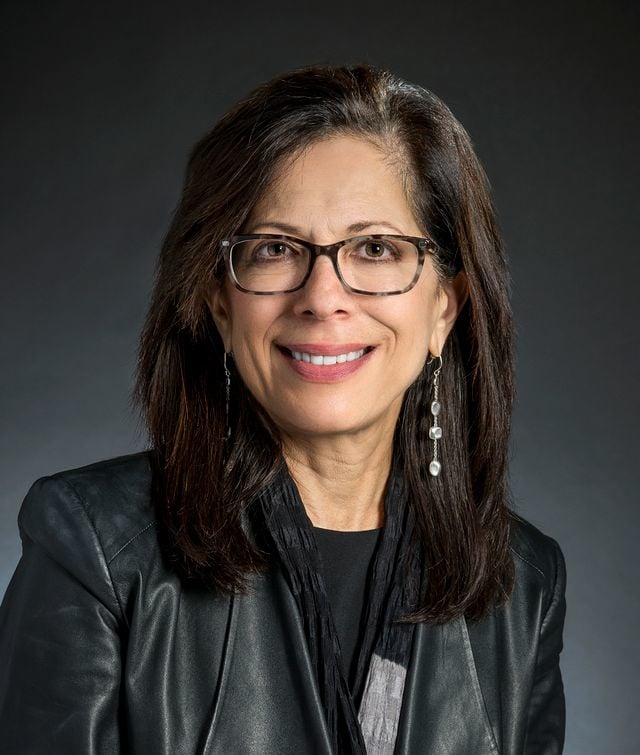
Targeting KRAS: A New Era for Pancreatic Cancer, ft. Dr. Elizabeth Jaffee
Dr. Patrick Hwu welcomes Dr. Elizabeth Jaffee of Johns Hopkins, a renowned leader in cancer immunotherapy. Dr. Jaffee shares the personal and scientific journey that led her to tackle one of oncology’s toughest challenges: pancreatic cancer. From her early fascination with virology to pioneering the use of genetically modified tumor vaccines, she has pushed the boundaries of what’s possible in cancer prevention and treatment. Dr. Jaffee also discusses efforts to use immunotherapy earlier — even preventively — and explores how AI and multi-modal data could revolutionize cancer risk prediction and early detection.
What You’ll Learn from Dr. Jaffee
- The role of KRAS mutations in early pancreatic cancer and how vaccines can target them
- How we can harness both targeted therapies and vaccines to overcome resistance in pancreatic cancer.
- How immunotherapy could be used for pancreatic cancer prevention
- The use of AI in early detection for at-risk patients
Podcast Transcript
Key Takeaways
- KRAS vaccines are showing promise in preventing recurrence of pancreatic cancer post-surgery, with strong immune responses observed.
- Early pancreatic lesions already show immune reactivity, and vaccines may be able to activate these cells before cancer fully develops.
- Neoadjuvant immunotherapy—treatment before surgery—is producing encouraging immune responses in pancreatic cancer.
- AI and integrative data tools will be essential in identifying high-risk patients early and tailoring personalized prevention strategies.
- Mentorship is critical to the progress and future of cancer research.
Dr. Patrick Hwu:
Welcome to the ImmunoVerse, a podcast that brings the ever-expanding universe of immunotherapy to life through the voices of those advancing this groundbreaking field. I'm Dr. Patrick Hwu, president and CEO of Moffitt Cancer Center and a career immunologist.
In each episode, I sit down with pioneering experts who have shaped the past, present, and future of immunotherapy, uncovering breakthroughs, challenges and the science, driving this lifesaving innovation. Today we have with us Dr. Elizabeth Jaffe, Deputy Director of the Sydney Kimmel Comprehensive Cancer Center at Johns Hopkins, and Co-Director of the Skip Viragh Center for Pancreas Cancer. Dr. Jaffe has spent her career advancing cancer vaccines and immunotherapy for some of the most challenging cancers, especially pancreatic. Her innovative approaches to tumor antigens and immune priming have brought new hope to patients who previously had few options. She's also a national leader in cancer policy, having co-chaired the cancer Moonshot Blue Ribbon panel and served as president of AACR. Her voice continues to shape both scientific progress and the future of cancer care.
Welcome to the ImmunoVerse, Dr. Jaffe.
Dr. Elizabeth Jaffee:
Thank you, Dr. Hwu. It's a pleasure to be here.
Hwu:
Wonderful. So, you know, you've really helped shape immunotherapy research in America and across the globe. Talk to us about how you first got interested in immunotherapy as an approach for cancer care.
Jaffee:
You know, that's a very interesting question. So when I was in college, virology was a big area of research and I was hearing some really interesting lectures on how we're starting to understand how viruses are presented to the immune system. And it was clear it was within an infected cell. And so I thought to myself, if that's the case, what about a cancer that's going to have some sort of way to look different to the immune system from a normal cell? So I was very excited about thinking about this concept. So this was probably around 1979 or 1980. And then T cell biology became very important during the eighties, where we started to isolate the different cytokines at the genetic level so we could actually produce these cytokines, grow T cells in a culture dish, and now we could really study it. And then of course, dendritic cells, GM-CSF. So it was all coming together for me. And in 1989, as a fellow in oncology, I had the opportunity to work with some amazing people where we started, I was part of the beginning of genetically engineering tumor cells to alert the immune system to induce a T cell, an immune cell to recognize and kill the cancer. So, it kind of evolved from college on, and it was really viruses that made me excited, the whole world of virology, but I was always fascinated with cancer.
Hwu:
So in those days, not very many people were studying immunotherapy, and the ones that were studying immunotherapy were working on the cancers where there was a little bit of light, where it was kind of working -- melanoma, it starts on the skin goes throughout the body. So we were all working on melanoma, but you decided to work on, probably the hardest of cancers, pancreatic cancer. So what made you so crazy as well as visionary to want to work on pancreatic cancer immunotherapy so early in your career?
Jaffee:
Yeah, no, you're right. My division chief at the time asked me if I needed a CAT scan. He said, immunotherapy of you know, melanoma, renal cell carcinoma, but pancreatic cancer? Well, it was a couple of things. So one, my father's brother died of pancreatic cancer when I was an intern, and he lived for three months in a lot of pain. So that made me think this is a disease that really needs some really good research. And then when I was a fellow my first year, I saw many pancreatic cancer patients, the nicest people in the world, and all I could do for them was to control their pain so that they could go see their daughter get married or their grandchild be born. And I felt like there had to be more to be done for this disease. And then it turned out I was at Hopkins, I was at the place where the surgeons were doing the most surgery, and the chair of surgery turned out to be a pancreatic cancer surgeon as well, John Cameron.
My division chief at the time asked me if I needed a CAT scan. He said, immunotherapy of you know, melanoma, renal cell carcinoma, but pancreatic cancer?
And he had really perfected the Whipple. And he came into my office one day when I was an early career faculty and he said, Dr. Jaffe, it's time you work on pancreatic cancer. We're going to put together a spore program. So it was really the government SPORE program, government funding really brings people into a field that needs it. And having this group of people at Johns Hopkins who were behind me and supported me and wanted me to be a part of their group. And he did that with a young person, Scott Kern, who was coming out of Bert Vogelstein 's lab who he said, you have to work on the genetics of pancreatic cancer. And he took Ralph Rubin, who was a pathologist, and he was working in actually transplant immunology, and he set time to work in pancreatic cancer. If John said you had to work in these things, we all said, okay. And we got the first SPORE. We were able to build a biobank for pancreatic cancer, and I was able to test the first vaccine in a couple of years that I developed in patients who are undergoing surgery. I had the surgeons behind me.
Hwu:
Well, it's such a tough cancer and there's such an incredible need. So it took a lot of courage, I think, to study pancreatic cancer. It's such an early time in the field. Pancreatic cancer is tough because it starts deep in the body. And I know you've worked hard on trying to intercept cancer earlier and trying to identify pancreatic cancer earlier. Do you think that's where we should use immunotherapy?
Jaffee:
Actually, my dream has been to use immunotherapy for prevention. Ideally, I'd love to vaccinate 25- and 30-year-olds against a number of different cancer, potential cancer genes. But it turns out that pancreatic cancer is the ideal cancer to start with, because mutated KRAS is in near all of the first, earliest, the earliest pre-cancer lesion. So when a normal pancreas cells starts to transform, it does so because of this mutation in KRAS. And so it's a very early event, and KRAS pancreatic cancer is dependent on KRAS. You get rid of KRAS , and you could shrink that tumor in patients with the cancer. What's interesting is we've been studying these pre-cancers, and it turns out that these precancers also start to bring in inflammation. And I just described in one of the talks at AACR, how we're able to now with all the new technologies that we have to be able to discern what the earliest inflammatory changes are.
Actually, my dream has been to use immunotherapy for prevention. Ideally, I'd love to vaccinate 25- and 30-year-olds against a number of different cancer, potential cancer genes. But it turns out that pancreatic cancer is the ideal cancer to start with, because mutated KRAS is in near all of the first, earliest, the earliest pre-cancer lesion.
And actually early on we see good T cells. So imagine now being able to give a vaccine at that early stage. Hopefully, we can activate those T cells. So we just finished a small study in 20 individuals, we can't see any lesions. These are people who have a family history of genetic predisposition to pancreatic cancer. Everyone wants this vaccine. We enrolled so quickly because they want an insurance policy, it's safe. And now we could study immune responses and understand how it's working. So that's where we are right now in the high-risk population. And I think we're going to learn a lot and be able to start to really figure out how do we prevent this bad disease. Now, the major advance that we still need is to be able to detect these early lesions. And you can't see them radiographically. There's a lot of work on trying to develop blood tests, but right now they're not able to detect these early lesions. But I have hope that over the next five or 10 years, we'll be seeing some tests that can help us identify who's really at risk from an early age.
Hwu:
Do you think it's going to be a combination of understanding a person's genetics to see if they're predisposed for pancreas cancer and knowing their family history, they have pancreas cancer in their family, and also combining that with blood tests and other parameters like their BMI and all other things. So you think it's going to rely on AI to bring all of that data together?
Jaffee:
Oh, yes. I think you, you're pointing to a very important advance, and that's AI. I mean, being able to integrate all of this data, you know, obesity, BMI, diabetes, we know that often you get diabetes and there's a certain type of diabetes now that we know that can predict who's going to get pancreatic cancer. All of these factors, epigenetic changes that are due to environmental changes. Microbiome, we know that the microbiome for many of these gastrointestinal cancers, including pancreatic cancer, can influence the development and the progression. So I think we need AI to help us do this. There's so much data, but how do you make sense of it? So I totally agree, and I'm very hopeful. I have never been more hopeful. And that's the issue. Why is the government all of a sudden not wanting to fund all of this progress? It's because of all the government investment that we're here today where we have new treatments, we have AI being applied to help us figure out even the newest ways of treating patients and hopefully preventing patients from getting cancer in the near future. So I'm really excited. I think the opportunities are amazing, and the immune system is so critical to all of this. Even early on in these early precancers, the immune system could be very powerful.
Hwu:
Even something as deadly as pancreatic cancer. If we put all of the data together, including AI approaches, we're going to be able to identify those patients with very early or really susceptible to getting pancreatic cancer. And then you think it's the immune response that we'll have to trigger to do something about that such as vaccines?
Jaffee:
Absolutely. We need that immune response. And as I mentioned in these even earliest lesions, we're seeing these immune cells that have the ability to react, but they need to be activated. We need to get those vaccines into our people who are at risk for pancreatic cancer. And I could tell you that we have a high risk clinic. It is so easy to enroll because nobody wants to get pancreatic cancer. So I think the public is interested in this. People who know about pancreatic cancer, they're very interested in seeing this work happen.
We need that immune response. And as I mentioned in these even earliest lesions, we're seeing these immune cells that have the ability to react, but they need to be activated. We need to get those vaccines into our people who are at risk for pancreatic cancer.
Hwu:
So when those very early pancreatic cancers exist, your research is showing there are immune cells capable of killing that cancer. We just have to activate them. If we do that, maybe the cancer will never grow.
Jaffee:
Exactly. And that is goal. That is my goal. That has been my dream from the time I was in college. And now I think we're realizing that dream.
Hwu:
Well, that's very exciting. Well, along the way, you've really helped to identify antigens. You've worked, identified some antigens in mouse models, in fact my lab studies one of the antigens you identified, and in some of our models you have identified antigens in antibodies in pancreatic cancer patients. And so tell us, has that led to additional therapeutics for patients with more advanced disease?
Jaffee:
Yes. In fact, I'm very excited because we've moved from a whole tumor cell vaccine where we didn't know what the antigens are to a KRAS vaccine. And we're targeting multiple mutations that are important to pancreatic cancer and in the adjuvant setting. So after patients have had surgery, we have been vaccinating patients and we're seeing people living a lot longer disease-free. So the cancer not coming back when in reality, it usually comes back within five years. So we're very excited, but we're able, importantly, we're able to dissect out how the immune system is responding to the vaccine and the cancer and what we're learning is helping us to make it an even better vaccine.
And we're targeting multiple mutations that are important to pancreatic cancer and in the adjuvant setting. So after patients have had surgery, we have been vaccinating patients and we're seeing people living a lot longer disease-free.
Hwu:
You mentioned the dependence of pancreatic cancer on the KRAS mutation. There are some drugs being approved for targeted therapy of certain mutations with KRAS. How do you think that's going to work with the vaccine? Are you going to give them both?
Jaffee:
That's an exciting time right now. You've hit on it exactly right. So these KRAS inhibitors are showing amazing responses as much as a 90% cancer control rate in patients with metastatic pancreatic cancer. The problem is that resistance does occur and it does occur in under a year typically, and this is true for most targeted therapies. And so what we see, and we've looked at this pre-clinically, as have other people, what is being shown is that KRAS causes a lot of immune suppression. You give an inhibitor and it reverses that immune suppression so that the immune system can get into the pancreatic cancer, recognize and kill the cancer. So we are now doing a clinical trial where patients who are getting their KRAS inhibitor, as soon as they've finished treatment, we're coming in with our KRAS vaccine plus immune modulating agents to help the T cells that are activated against KRAS stay activated.
And so with this approach, we're hoping that we could extend the duration of the KRAS inhibitor therapy. And we're also working with some of these companies to design the next set of trials where we might go to patients who have earlier stage disease. Ideally, you might see this as a way to intervene to prevent pancreatic cancer from developing. First you give the inhibitor and then you come in with the immune response so that you make sure that whatever the inhibitor is doing by, let's say, turning off KRAS at the earliest stages, now, it's even easier to induce an immune system when you don't have KRAS at all. So that would be like vaccinating someone who is totally naive for an infection to prevent that infection.
So we are now doing a clinical trial where patients who are getting their KRAS inhibitor, as soon as they've finished treatment, we're coming in with our KRAS vaccine plus immune modulating agents to help the T cells that are activated against KRAS stay activated.
Hwu:
You're using these targeted agents not just to kill the KRAS-bearing tumors, but also to make the environment safer and more amenable for immune cells to come in and kill the cancers.
Jaffee:
Exactly right. So I'm excited. I haven't been this excited in my whole career, and as you and I know, it's been about 30 years, we've both been working in this field at least 30 years. I don't want to give away our age, but I feel like I've never been more enthusiastic that we are making great progress with immunotherapy now in diseases that immunotherapy has not yet made progress.
Hwu:
That's exciting. Now, a lot of fields like melanoma, what I treat, we're starting to give the therapies before the surgery called neoadjuvant therapy. Are you doing that approach in pancreatic cancer, where you're giving the immunotherapy before the surgeon takes out the pancreatic cancer?
Jaffee:
So we have a neoadjuvant and adjuvant study where, and we started this in 2008, where we first started it with vaccine. We didn't have immune checkpoints available, but now we've turned it into what we call a platform study where we learn in about 15 to 20 patients how one treatment is working because we get a biopsy before, we give the vaccine, and then two weeks later, we get the whole tumor and we could see how the tumor has changed. And we were the first to describe in pancreatic cancer and probably in any cancer with treatment, these lymphoid aggregates that come in. So we know that a vaccine can get the immune cells in to the pancreas, even in the tumor. So even though the tumor has developed this aggressive way to resist the immune system, we can still get it in with our vaccine.
The problem was that the T cells were not activated enough to do something and PD-L1 was going up. So the second arm, and we've reported on this, we added to the vaccine anti-PD1 again, just two weeks later, we started seeing T cells getting activated. But what we saw was that the T cells needed a little bit more help to really be fully activated. And we knew that because they put up this other molecule called CD137 or 4-1BB. And so our third study, which we just recently published on, added an antibody to 4-1BB. It's actually, we call it an agonist. So it really gives a big kick to allow the T cell to be even more potent. And so in doing so, now we're seeing pathologic responses in over a third of the patient's complete pathologic responses, and then another proportion of the patients with partial. And so we were so excited about that. We learned a lot about the immunology. These T cells are activated, they're proliferating. And so now, we are just starting an expanded study to see how well this is going to work in a larger population. We're hoping that this will be the first time that we take an immunotherapy through all the stages to approval that we've been working on.
...now we're seeing pathologic responses in over a third of the patient's complete pathologic responses, and then another proportion of the patients with partial. And so we were so excited about that. We learned a lot about the immunology.
Hwu:
That's very exciting. Well, you've also had a lot of people coming through your lab. You've mentored the world's best GI immunotherapists throughout the country. And what's your mentorship style, and what's your mentorship philosophy?
Jaffee:
When you mentioned mentorship, to me in the end, I want my reputation to be that I've mentored the people who will really make a difference. I'm very proud of all of the people I work with. The mission is to help patients with pancreatic cancer or with colon cancer. I want them to really buy into the mission. If they do, I feel like I've picked the right people, the talent. It's just for me to facilitate, to be there, to help ask the questions when they show me the data, not tell them what to do. I want them to tell me what they want to do, and then we talk about it. And I try to help to get them thinking in a way that's a bit more broad. Right. Well, that's a good question you're asking, but what do you think of this? Or if they get negative data, they're usually dejected early on.
And I'm excited, right? Negative data is good because it's not really negative, it's just that your hypothesis didn't go the way you wanted. Sometimes we learn more from the negative data. So I try to get that message across very early on so that when they look at data, they don't look at it just one way, my hypothesis didn't work, I'm going to stop that study and go somewhere else. Now, why didn't your hypothesis work? So these are some of the tools I try to give them. And then of course, you have to support them throughout their career. So many of the people who I've mentored are now doing great things in their own right. And I always have a dinner to celebrate at AACR, and I invite them to give talks at Hopkins. I help them with their different grants. I put them up for awards. So I try to be there as a lifetime friend and colleague, not just a mentor.
Hwu:
Well, so you've been the AACR president and you're a role model for so many cancer immunologists across the world, and especially women scientists. So you've done a lot for women in science. Talk about that a bit.
Jaffee:
Yeah, I think that for me, I look at myself as being kind of that second generation of women who came through cancer research, the first generation boy, they really had to be trailblazers. It was difficult for them. For me, it was more subtle in the difficulties. Women need to be encouraged. And I think this is a very critical time when I was training, and then when I became in the position to be a mentor, and early on, more women came to me than men because they weren't used to having a woman mentor. And that was okay. I was glad. And so it's been wonderful. I love having the mix. I put women up for awards. I make sure any meeting that I organize, make sure there's balance. It's more of a proactive type of intervention that you're doing to try to make sure that they're thinking about, you know, when you're organizing something, you're thinking a little bit more broadly.
And I do the same for people of color because that's another group that has of course not been thought about as much. And so being able to promote a diverse group of people who are all experts in their field, to be able to take part. You know, I like to tell people, I think it's important to be mentoring young people. I've always had high schoolers and mostly women in my lab. It really helps to develop women in science. They get excited about it. And I also tell people that my first leadership job was actually as the troop leader for my girls' brownie troop. And those girls got a lot of exposure to science, and it was a lot of fun.
I think it's important to be mentoring young people. I've always had high schoolers and mostly women in my lab. It really helps to develop women in science. They get excited about it.
Hwu:
That's great. Any of those Brownies besides your kids that are off and doing science now?
Jaffee:
Yeah, half of them are in science and medicine, whether they're nurses or researchers, or they're research nurses. So a lot of them are in science, and it was really exciting to see that.
Hwu:
Wow. Well, you've been such a great mentor and advocate for so many people.
Well, we want to thank our guest, Dr. Jaffe for joining us today. And thank you for going on this journey with us through the ever-expanding universe of immunotherapy. To hear more episodes of The ImmunoVerse, make sure to subscribe on your favorite podcast platforms.