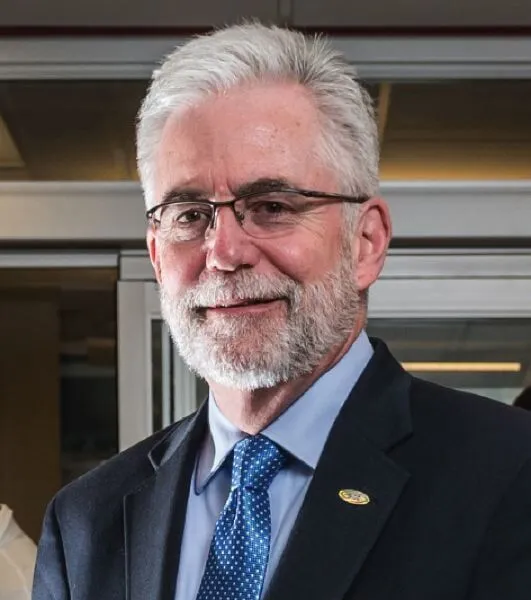
Uncovering the Dark Matter of Cancer, ft. Dr. Bernie Fox
Dr. Patrick Hwu sits down with Dr. Bernie Fox, a pioneering immunologist and Harder Family Endowed Chair in Cancer Research, Molecular and Tumor Immunology Laboratory, Earle A. Chiles Research Institute at Providence Cancer Institute. The conversation spans the early days of immunotherapy, including their shared training roots in the NIH Surgery Branch under Dr. Steve Rosenberg, and moves into today’s cutting-edge science.
Dr. Fox explains the emerging concept of “dark matter” in cancer biology — the once-dismissed non-coding regions of DNA that may play a pivotal role in tumor progression and immune targeting. He discusses how these regions are now known to produce short-lived proteins that may act as cancer drivers and immunotherapy targets. Importantly, many of these “dark antigens” are shared across tumor types and do not appear in healthy tissue, making them promising targets for vaccines, TCR therapies, and other immune-based treatments.
The episode also highlights Fox’s commitment to mentorship, the evolution of the Society for Immunotherapy of Cancer (SITC), and the future potential of dark genome research in cancer and beyond.
What You'll Learn with Dr. Fox
- How early immunotherapy research at the NCI helped prove that genetically engineered T cells can fight cancer.
- What scientists mean by the “dark genome” and why it matters in cancer.
- How hidden regions of DNA can produce proteins that help tumors grow and spread.
- Why many tumor antigens may come from non-canonical DNA regions rather than mutations.
- How researchers are exploring vaccines and engineered T cells to target these antigens.
- Why discoveries in the dark genome could impact many diseases beyond cancer.
Podcast Transcript
Key Takeaways
- Early experiments helped establish the foundation for modern cell therapies like CAR T and TCR therapies.
- Much of the genome once thought to be “junk DNA” can produce proteins relevant to cancer biology.
- Many tumor antigens presented on cancer cells may originate from the dark genome.
- Some of these antigens appear to be tumor-restricted and not found in normal tissues.
- Shared dark genome antigens could help create scalable immunotherapies across cancers.
- Identifying which dark genome proteins drive cancer growth is a major focus of current research.
Patrick Hwu, MD:
Welcome to The ImmunoVerse, a podcast that brings the ever-expanding universe of immunotherapy to life through the voices of those advancing this groundbreaking field. I'm Dr. Patrick Hwu, president and CEO of Moffitt Cancer Center, and a career immunologist. In each episode, I sit down with pioneering experts who have shaped the past, present and future of immunotherapy, uncovering breakthroughs, challenges and the science driving this life-saving innovation. Today, we have with us Dr. Bernie Fox, Chief of the Laboratory of Molecular and Tumor Immunology at the Earl A. Childs Research Institute at Providence Cancer Institute, and the Harder Family Chair for Cancer Research. Dr. Fox has spent his career pushing the boundaries of what we know and don't know about how the immune system interacts with cancer. He's a leading voice in decoding the so-called "dark matter" of immuno-oncology, the hidden forces, unknown immune responses and unanswered questions that could hold the key to why some patients respond to immunotherapy and others do not.
Through decades of work in immune monitoring, cancer vaccines and translational tumor immunology, Dr. Fox has helped shape how we investigate the unseen and how we turn insights into action. Welcome to The ImmunoVerse, Dr. Fox.
Bernie Fox, PhD:
Patrick, it's great to be here. Thanks for the invitation.
Hwu:
Wonderful. Well, we're going to talk about dark matter in a second, but why don't we start by talking about the dark ages. You have really been one of the OGs in immunotherapy. You worked very early on with Steve Rosenberg, who was on this podcast and talked about the history. So, tell us about those early days and what was it like?
Fox:
That was a great podcast with Steve. Congratulations on pulling that off. The early days has changed a lot, but I think for me, it was going to the Surgery Branch at the NCI and seeing things happen. I mean, I had read about them. I'd seen the studies where they had used PHA-activated killer cells. I never saw the PIG study until much later, but I mean, saw that you just knew they were pushing the envelope. They were moving things very, very quickly. And so, it was such a wonderful experience to be able to go to the Surgery Branch at the NCI where you and so many others of our colleagues have trained, to experience that and realize what it took to move things from the bench to the bedside.
Hwu:
We did some of the original studies there in the mouse models with the cytokines, with the cell therapies, some of the original cell therapies, right?
Fox:
So, when I got to the Surgery Branch, Steve tasked me, the first project was identifying the LAG precursor and making a monoclonal antibody against that. So, what I was doing was I was sitting with the patients that were getting IL-2 or getting LAG and IL-2. These patients were getting recombinant IL-2, and I would get blood samples every five minutes and then I would take them back, isolate the cells, and look for whether or not they had functional activity. And I was testing the antibodies that we were making to see whether or not they would bind those cells. So I started with that part. I did end up moving then on to the TIL studies. We worked on one of the TIL lines that I had generated in the lab. The famous one that supposedly came from a garbage can or something, we rescued it. That was the one we used to provide the recombinant DNA advisory committee with data showing that you could put a marker gene into those T cells and they still retained therapeutic efficacy, which was the last sticking point, besides all the lawsuits and things that had to happen.
But showing that you could genetically engineer a T cell, put it back into a mouse, and it would mediate regression of the tumor, was the key point that the recombinant DNA advisory committee wanted to see, and that's the data that we generated for them.
Hwu:
So that's exciting because that was really the genesis of putting genes into T-cells, which now serves as the basis for CAR T, TCR-T, and so many therapies that are helping patients today.
Fox:
Yeah, agreed. It was revolutionary right at the time. And for Steve to have the vision to push that forward and for the others there at the NIH to be supporting that and providing the retroviral vector and other molecular technology and expertise, it's something that I don't know if we hadn't had that happen, where would we be today? I mean, how much further behind would the whole field be if it wasn't for those early studies? Because people have been thinking to do this, to put in the adenosine deaminase gene into T-cells for many, many years and other genetic manipulations, but it wasn't moving. It wasn't moving to the humans until Steve Rosenberg, with all those things that he can do, managed to sway the politics of the crowd in that room in Building 31 to convince the majority to vote in favor of that first-in-human study with gene-marked or gene-engineered T-cells.
It's also been a great place to train people, the Surgery Branch. Many of us, we didn't overlap there, but I feel like we're from the same family because we both came from the Rosenberg group and so many people in the field are from that group and so many fun stories have emanated from there. And a famous one from you was that Steve used to have this rule, don't listen to the radio, really focus on your work, focus on tissue culture. You should be always thinking about your experiment. And then he gave up one day because he came into the lab on a Saturday and saw something, saw you doing something.
Yeah. So I was a native Michigander, and I had had season football tickets at Michigan for already at that point eight or nine years. So I knew there was no radios, but there was no rule against having a TV set in the lab. So I brought a small, one of those portable TV sets. It wasn't bigger than eight or 10 inches. And I set it up in the corner of the lab, and I had it turned in for the Michigan game on one side. This was a six-foot hood and I was a good four feet away from the TV set and I had wiped it down with alcohol, and I was watching the Michigan game. And I can still remember Steve coming around the corner where the hood was and looking at me and looking at the TV set and just shaking his head and walking away.
And I said, "You said no radios." And he's said that story a few times since then. So it's a true story.
Hwu:
Yeah, it's so funny. So he gave up on the radio rule after seeing a TV in the hood. He
Fox:
He did.
Hwu:
So that's great. Well, you had a really wonderful career. You were president of SITC, really helped the whole field, helped establish fundraising efforts for the next generation of investigators in immunology. Now you're doing some really exciting work with dark matter of immune recognition. So tell us a little bit about that.
Fox:
Yeah. So it's very exciting. Our bodies are made up of about one and a half percent of our DNA. It's the other 98% or so of the DNA has been called the so-called "junk DNA" or "dark genome" or people call it "dark matter DNA." But essentially, those are genes that we never thought were being expressed, never turned into proteins. But it turns out that many of them are actually turned into proteins. And in fact, a program called the Encode Project has shown that 80% of our DNA in our bodies that has been thought to not be able to code for proteins, actually has the capacity to be coded for protein. And so what's really exciting is to find out now that some of those genes that are made, are made into protein. The proteins are sticking around for just a few minutes, but in those few minutes, they're able to provide the cancer with all the directives it needs to quickly proliferate and to migrate away to metastasize into other parts of the body.
Our bodies are made up of about one and a half percent of our DNA. It's the other 98% or so of the DNA has been called the so-called "junk DNA" or "dark genome" or people call it "dark matter DNA." But essentially, those are genes that we never thought were being expressed, never turned into proteins. But it turns out that many of them are actually turned into proteins.
So this is really exciting to now realize there are new things that we can target with drugs and with the immune system.
Hwu:
So these proteins are helping the cancer grow and proliferate and be a cancer, but there also could be antigens because they can be processed and presented on the surface. So they can be attacked by T cells.
Fox:
Right. And so in fact, two really foundational papers have been published, and they've been under review for more than two years. So, those papers have essentially been critically reviewed by people in the field and they contain lots and lots of supplemental data. The key point of those papers are one is that in the one case for lung and melanoma, 99% of the epitopes, the antigens on the surface of the HLA, that are potential tumor antigens, are derived from either this dark genome, dark matter, or from other apparently expressed genes or tissue-specific genes. Only 1% appears to be derived from genetic mutations in there. And so it goes on to explain that the reason that is, is it turns out the genes are being expressed in areas where they're not close to the proteasome physically and don't end up, or they have very low levels of translation.
So, it's providing us with new insight into a whole spectrum or universe of epitopes that we can target. And what's really exciting from my perspective is not just that they're driver elements, but that they're shared, not just between tumors of one histology, but it looks like many of them are shared, or at least some of them are shared across many different cancer types. And that's where the research from my lab has really been focused now and we're currently trying to get some of that data published.
It turns out the genes are being expressed in areas where they're not close to the proteasome physically and don't end up, or they have very low levels of translation. So, it's providing us with new insight into a whole spectrum or universe of epitopes that we can target. And what's really exciting from my perspective is not just that they're driver elements, but that they're shared, not just between tumors of one histology, but it looks like many of them are shared, or at least some of them are shared across many different cancer types.
Hwu:
So that's exciting. So what you're saying is that what we think about the genes, the 20,000 genes or the exons that everyone thinks about, we think that was the derivation of most of the proteins, and it probably is for normal cells. But in cancers, they're utilizing this 98% of the DNA to express additional proteins that help drive their cancer phenotype. And not only can we utilize those to understand cancer, but we can target those with T cells.
Fox:
Absolutely. And so we reported earlier this month at the AAI meeting that one of the patients that we vaccinated -- with a vaccine that had the dark matter in it -- that patient made an immune response against that dark matter. That dark matter was also expressed on his tumor cells, and we could isolate that T-cell receptor that the patient made, and we could show that it could see his tumor, and we could show that before we vaccinated him, you could not find that T-cell receptor in his blood, but by 12 weeks after vaccination, it shot up and then stayed high. So we're continuing to study that patient, but that patient's now out more than 10 years after having his tumor resected. And so that receptor we think is a safe receptor, and we think that antigen is an example of a safe dark matter antigen that you can use to immunize people against.
Hwu:
What about normal tissues? Yeah. Do they also express dark matter? Could you possibly have some toxicity on normal tissues or have we studied that? What about the heart, the lung, the brain, the liver?
Fox:
Great questions. And so what's been happening, and our group hasn't been studying this directly in cases of the thymus or the heart yet, but the groups that have, the things which they're calling tumor-restricted or cancer-restricted antigens are not expressed in the normal tissues they've looked at by peptidomics, looking at it looting off the peptides. They're not expressed in the thymus by the peptidomics, and the true cancer-restricted ones don't appear in any normal tissue RNA-seq databases. So it appears that there's a class that are really very, very tumor restricted. There may be others where the RNA is being expressed in some normal tissue at some low level. Those may still be relevant cancer antigens. We don't know. Those are open questions, but we're talking hundreds of antigens, not a handful.
Hwu:
So what's regulating this and why do cancers express this? Is it because of somehow when the DNA's all wound up and it's more unwound in a cancer cell? Is that the openness of the chromatin structure, as they call it, that might be causing this to be expressed?
Fox:
I think the majority of what you read in publications is it's exactly what you said. It's epigenetic control of the genome, and it's something else that's happening to cancer or to the DNA in cancer cells. And so I'm not an expert in that, but it's amazing. The reading I've been doing recently, looking at the impact of diet, of exercise, all these things have impacts on that epigenetic as well as other things that they don't understand, what makes cancer a cancer, but it's clearly those unraveling of the histones or of the DNA so that it can then be decoded and made into RNA, and then translated into protein that is allowing them to be made. And so, I think understanding that, is going to help us understand better why the dark genome's made and then how it's working, and how we might stop it.
Hwu:
So you started your career looking at TIL or natural immune responses in the tumor itself. Are there TIL or T cells in the tumor itself that already recognize this dark matter?
Fox:
That's a great question. And I think one of our other compatriots, Alena Gros, who was a ex Surgery Branch fellow, had a paper where she did not find ... she identified dark antigens, that she identified from the cancer cells by pulling out the peptides from the HLA molecules, but she found that TIL didn't see those, the ones she looked at, but that she could prime immunity to. And I think her observation explains why those of us that have worked trying to discover antigens, haven't found them before. I think that the hypothesis that we're working under is that many of the dark antigens, they're made, but they're short-lived, they have their function, they'll turn on a gene, they'll do something to the cancer cell to make it cancer, but then they get degraded and they end up being stabilized on the surface of the cancer where the immune system can see it, but because they're not able to be released as the whole protein, the dendritic cell can't pick them up, can't prime immunity against them, and so you never develop immunities against them.
So we're going to have to find artificial ways, either through vaccines or by in vitro modification of cells or priming of cells in the lab or of doing T-cell receptor gene transfer to manipulate those cells. Other things that people are talking about are things like the conjugates making synthetic immunology where you use that T-cell receptor against dark matter to deliver a payload or another drug.
Hwu:
I see. So that's the application, the ventral application. If we can understand what these dark matter antigens are, and you think there's a lot of them on the surface of cancer cells, we can design therapeutics that include cancer vaccines, include gene modified T cells, TCR, gene-modified T cells that include T-cell engagers, protein drugs that we know can work in people that activate the immune system. So we can make a chondre of drugs targeting this if we can just identify these shared antigens on the surface. And if they're shared, then it would really help with the scalability.
If we can understand what these dark matter antigens are, and you think there's a lot of them on the surface of cancer cells, we can design therapeutics that include cancer vaccines, include gene-modified T cells, TCR, gene-modified T cells that include T-cell engagers, protein drugs that we know can work in people that activate the immune system.
Fox:
Absolutely. And so if you look at the data, the recent data that's been published, there are, and again, I think this is early, so there's going to be more, but in the numbers of patients they've looked at, and each case, it's going to be a limited number like 12 or less where they've looked for a given histology, but they're finding shared epitopes across those. Those are going to be different depending on the HLA, so the tissue antigens that the patient has, but it looks clearly like there are a large number of them. So now the current challenge is to figure out which ones are really important. I mean, from my perspective, which ones are the drivers? Which are like the things that would be like a KRAS mutation. And I think there are those sorts of drivers in this dark matter. Those will be the ones to focus on.
And so going back to the television set in the hood, there's a guy, Dr. Prensner at University of Michigan, who's identified in pediatric brain tumors that some of this dark matter is responsible for the driving of those brain tumors. And he's got a limited number of them. I think that would be a great case to go after both T-cell receptors against those, as well as vaccines to go after those for children with those tumors.
Hwu:
That's exciting. So if we can find out what dark matter antigens are actually driving the cancer, then we can make therapeutics against them. And if they're shared, these could really be great drugs for patients. Agreed. Some people have talked about new ORFs. Does this overlap with what people define as new ORFs?
Fox:
So yes, in fact, the new ORFs are the novel unannotated ORFs, non-canonical sequences, dark genome, dark peptidome, dark matter, those are all kind of fall in the same area. And it looks like it's a little bit different maybe from some HLA types, but the majority of the non-canonical epitopes are being driven from the five prime UTR. That's where they're coming from. You can find some from the three prime UTR, you can find other ones, but they're either from the five prime UTR or from an alternative reading frame within that five prime UTR. That's where we're finding the vast majority of them.
Hwu:
Of the dark matters coming from the five prime untranslated region. So usually a gene starts at a start site, an ATG, we call it a start site, but to the left of this, it's starting early in some ways.
Fox:
Exactly.
Hwu:
You're supposed to start the book on page one, but they're starting at the preface, right? Yeah. In some ways. And that's where these dark antigens are coming from. Also, there's other RNAs called long non-coding RNAs. Do some of them come from there?
Fox:
Yes, they do. So there's a whole series Nof circular RNAs, of link RNAs, of long non-coding RNAs, and dark matter can come from all of those. In our experience so far, at the limited experience we have, those are another source, and they could be an incredibly important source. There have been papers already published in Nature a year ago, showing that they're really critically important too, and that they can make vaccines against those in animal models, and they can protect the animals or treat animals with breast cancer. So I think all of those are potentially really relevant to the treatment of patients with cancer.
Hwu:
It's really amazing how much we're learning and it's an exciting time because Biology 101, we always learned, oh, we have DNA, we have genes, the genes go to RNA and the RNA go to proteins, and that's what makes up the cell. And I guess for normal cells, that's a large part what it is. But now if we're trying to attack cancer cells, there's many other parts of the DNA that we can attack that make little, little proteins that we can attack in these cancer cells. It really opens up the possibilities for how we can target and kill cancer cells.
Fox:
Absolutely. And I think the exciting thing for me in the dark genome is it's not just cancer. This is Alzheimer's disease, it's dementia, it's autoimmunity, and it's not just immune targets. There's small molecule targets that could be developed, I think, to target these as well. So that's why we've seen in the pharmaceutical companies, a huge investment in the last year, year and a half into the dark genome space.
The exciting thing for me in the dark genome is that it's not just cancer. This is Alzheimer's disease, it's dementia, it's autoimmunity.
Hwu:
Well, that's really exciting. Tell us, you've also been a leader in immunology. I can tell you, you've helped guide the careers of young people. You've raised a lot of money for supporting the careers of young people. Tell us what your philosophy is on mentorship and developing that next generation.
Fox:
Well, I just want to say that SITC is so many great presidents, including yourself. And just at the time I was there, we moved from being almost dying to having Ipilimumab approved. So that was a big thing. But my goals on mentorship are to find people and only take people in the lab that are interested in doing translational research. That's one of the key components. And then the key component is to have students ask themselves and fellows ask themselves, "What have I done today to make a difference to find a cure for patients with cancer?" So every day be able to look at yourself and say, "What have I done? How have I moved that rock up the hill trying to get to the top, and maybe prevent it from rolling down the other side, or at least at this point?" So I guess those are the things I try to look for or try to instill in people and to tell them that what I learned at the Surgery Branch about finding ways to grow cells, whether it be in bags or roller bottles or whatever it was, to find ways to do what you need to do to move the science into a patient, and then other people will figure out how to do it cheaper, better, faster, but if you believe in what you're doing, you should be pushing to move it into patients.
Have students ask themselves and fellows ask themselves, "What have I done today to make a difference to find a cure for patients with cancer?" So every day be able to look at yourself and say, "What have I done? How have I moved that rock up the hill trying to get to the top, and maybe prevent it from rolling down the other side, or at least at this point?"
Hwu:
That's wonderful. Well, we're really fortunate to have you in the field at Bernie. So we want to thank our guest, Dr. Fox, for joining us today, and thank you for going on this journey with us through the ever-expanding universe of immunotherapy.