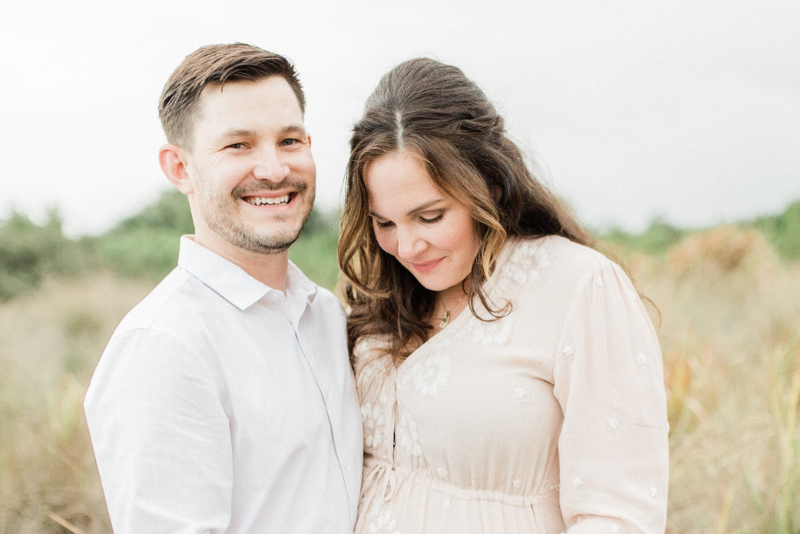
I Really Misunderstood Self-Care with Cassie Wood
This episode is being re-released with a special update from Cassie at the end, sharing how she and her family are doing now.
Cassie Wood discusses the shock she experienced when her husband Kyle was diagnosed with brain cancer while celebrating his 33rd birthday. Navigating caregiving while parenting young children, Cassie shares about burnout and the struggles of asking for help.
What you’ll learn from Cassie:
- Why ignoring big emotions makes caregiving harder, and how acknowledging them becomes the path forward
- Why caregivers shouldn’t wait for others to “just know what to do” and how to ask for specific help
- What burnout looks like in real time, and how therapy can be transformative
- How boundaries, lowered expectations and realism coexist with hope
- How finding new purpose (returning to school, helping others) helped her reclaim identity beyond “caregiver”
Thank you to our Guest: Cassie Wood
Host: Donna DiClementi
Production Team: Jackie Beaushaw, Randy Isaacson (Family Advisor), Donna DiClementi, Anne Bidelman, and Karen Caraballo
Music By: Lloyd Goldstein
For more stories, subscribe to "In It Together: A Podcast About Caregiving" wherever you get your podcasts.
Podcast Transcript
The heart of the story
-
Caregiving reshapes the entire family and the caregiver can carry emotional and logistical weight that others often don’t see.
-
Trying to handle everything alone can increase burnout and isolation; asking for help is not a failure but a crucial survival skill.
-
Acknowledging anger, fear and sadness is important and can allow a caregiver to move through the experience instead of being consumed by it.
-
Support often comes from unexpected places, and openness invites kindness, connection, and community.
-
Letting go of control and expectations allows families to appreciate what is still possible rather than grieving the life they imagined.
Donna DiClementi: Welcome to In It Together, a podcast about and for caregivers and the people they love. I'm Donna DiClementi, your host, and Manager of Outpatient Social Work at Moffitt Cancer Center. In each episode, we'll dive deep with a wide range of caregivers to better understand the highs and lows of caring about someone with cancer. You'll meet the wives, husbands, partners, friends, and children to hear what worked well and what didn't work well as they became a caregiver for their loved one with cancer. Our hope is that by listening to caregiver stories, you will learn valuable information, plus feel supported, encouraged, and renewed. After all, we are In It Together. Thanks for joining us.
Donna DiClementi: So, I'm really excited today to welcome Cassie Wood to the podcast. Cassie is a spouse, a parent, and a social worker. Cassie, I really appreciate your interest and your willingness to share your experiences of being a caregiver with us today. Thank you for joining me on In It Together.
Cassie Wood: Thank you for having me.
Donna DiClementi: So, Cassie, let's start off with kind of the origin story, the beginning. Tell us about how your family and, um, you became a caregiver for a loved one with cancer.
Cassie Wood: My journey as a caregiver began in early 2019. My husband, Kyle and I were just starting our family, so our daughter was two and we were expecting our second child, a boy, that April. Also in April was Kyle's 33rd birthday. So, we talked, and I encouraged him to celebrate his birthday a little bit early so he wouldn't miss out on anything fun, you know, due to the baby. So he did. And on March 30th of 2019, while Kyle was out with his friends celebrating, he suffered multiple grand mal seizures and ended up in the emergency room where I was told that he had a mass in his brain. Um, we would later find out that it was anaplastic astrocytoma. So, grade three brain cancer. Wow. Yeah.
Donna DiClementi: Thank you so much for sharing that. Tell us how you managed the beginning stages of that news.
Cassie Wood: So we live down here in Florida and we don't have any family so it was really hard to manage it emotionally, physically. I always thought that I was really strong, and I could get through you know anything but I kind of underestimated the weight of caring for you know someone that you love. I only really functioned in a state of shock and denial. I was really in denial about the severity of it of course in the back of my mind… you know Google tells you some very scary things and I was aware of the fact that you know Kyle could not make it, but I would tell myself oh he never gets a cold, he's so healthy, he's 33 you know he'll be fine. So I think that really kind of helped me get through it all and being so busy you know it's… it's good and bad because I didn't have time to stop and think about it which I think would have consumed me but I also didn't have time to stop and think about it so I couldn't like process properly until later and I think by the that time you know emotions had just gotten so big it was really difficult to process at all.
Donna DiClementi: What do you think looking back on that time was the most helpful and what do you think was not productive?
Cassie Wood: It's hard to know exactly what was the most helpful. I think just my personality. I was I was blessed with a very independent and stubborn personality, so I think I just used that to our benefit that like we're going to do whatever it takes and like I'm too stubborn to let anything happen to Kyle. So I think that was really the biggest thing that worked for me. Um the detrimental things were you know I… I think a lot of people were very positive and I tried to stay positive as much as I could initially but you know there's really a lot of negative emotions of course when someone's diagnosed with cancer. It's horrible. It sucks. Like you're going to be sad you're going to be mad and to not acknowledge those in the beginning and not allow myself to feel my feelings and you know like it's OK to be mad and sad like this wasn't supposed to happen like this is absurd like this is happening to me. So, I think the most beneficial thing was you know later on when I was able to like really acknowledge those emotions so I'm like OK I feel this like now we can move on and ignoring them for that long was just them probably the worst thing I could have done.
Donna DiClementi: How do you think that that showed up for you ignoring those big emotions at the beginning?
Cassie Wood: I think I was just really overwhelmed. You know I I would get very upset at the smallest things. And I was trying to control everything in my life. You know I was trying to control Kyle's health which is you know ridiculous looking at that now. I have no control over you know what's gonna happen with his cancer and I have no control over other people and their reactions so I think it was just really like trying to control everything I could because my life was spinning out of control.
Donna DiClementi: What did you put into place to manage the day-to-day everyday tasks of being a mom to two young kids and then your husband's illness? What type of help did you have to have?
Cassie Wood: Well, the type of help I needed, you know I would love to say that I got that help but I didn't. You know I really needed help logistically driving him everywhere with the brain cancer he was having seizures, and you can't drive for about six months after a seizure so I had to drive him to work and to appointments and drive my kids around. So, I think that would have been really helpful. And later on we did start like hiring lift rides for him and that was a big relief for me to not feel like I have to go somewhere and then I could have some time to breathe or maybe be in my house alone and watch TV without anybody there. I really needed help with those kinds of things, like just grocery shopping and picking kids up here and there. And after when Kyle started to decline a few years after his diagnosis, you know, I opened up a little bit more to friends and family about what was going on and we did get a lot of that help that I think I wish I would have opened up earlier so I could have gotten. And so that was helpful.
Donna DiClementi: So, I guess what I'm hearing you say is that in the beginning and it seemed like even a couple of years into this you were trying to manage everything as a unit?
Cassie Wood: Yes.
Donna DiClementi: And then as his illness progressed to a point where you knew you couldn't manage it all on your own you started to be more honest with friends and family and they kind of came in and and helped.
Cassie Wood: Yeah, that's exactly it. I think you know I don't know if it's a pride thing that I wanted to seem like I had it all together and I was handling it. That if somehow you know if I was a mess that was reflective on my person. So yeah, when we couldn't really manage anymore we couldn't you know hide the state of everything it was finally when we reached out and I wished I would have done it sooner.
Donna DiClementi: Mhm what can you tell other people about how you navigated you know do you tell all the people in your life everything? How do you communicate effectively with everybody who cares about you and Kyle and the and the family?
Cassie Wood: I think once we kind of let the cat out of the bag about his diagnosis you know I just kind of let things happen organically. And if people ask, they ask. If they don't ask, I let it sit. I think I also have gotten much better at feeling out the person. I’ll give them maybe a little bit of information like “Oh my husband's disabled” and then gauge that reaction before I, maybe, open up a little bit more about what happened. I think that was helpful for me, but I don't know how I learned to do that I think I just probably did it wrong a lot and learned the right way to do it. But I think it just happens naturally and you'll you'll have some really bad interactions and that's gonna happen and you're allowed to have the feelings about those. But you’re gonna have a lot of good ones and I feel like for every person that disappointed me, one person surprised me in a good way. So it's definitely a balance.
Donna DiClementi: You were talking about you were nervous about what everybody else would think that you were reaching out for help. But when I’m hearing the story, I’m thinking it took you two years? You know, I’m thinking wow. Yeah, that had to be really rough for two years.
Cassie Wood: Yeah, it was. You know I think in the beginning, if I would have made a list of all the people that I thought were gonna be there for us without me having to ask right? They would just “oh they'll be here, no worries” like they'll come, they'll move down here, or they'll show up, and I made a list of people who I didn't think would really step up. I mean, I was completely wrong. So I think I was relying on people just knowing what to do and not saying it. And just being like they should know. They should know that I need my lawn mowed, and that I need groceries. Right? Like I shouldn't have to ask right? So that's the stubborn stubbornness in me.
Donna DiClementi: So I think stubbornness, you know, in some ways really helped you and then stubbornness you know in some ways was a deterrent. but it seems like you learned is ask for what it is that you need, right? We can't read other people's minds and be in their homes to know what it is they exactly need. But if someone were to say to you “ohhh let me know what you need, and I'll help you” and and you're like “Oh yeah sure sure I will” but then you never do.
Cassie Wood: Never, absolutely not.
Donna DiClementi: So, if someone were to say to you now “let me know what you need, I wanna help you” what would you say?
Cassie Wood: I would say “can you pick my kids up from school” you know “can you watch them so we can have a date night” you know just little… anything.
Donna DiClementi: OK.
Cassie Wood: I think the other thing too is that in the beginning, when I did ask for help to people who I thought would say yes, when they said no it was so hard for me. Like I took it as a personal attack, like, how could you say no to me in this moment? So, I think that was also unfair of me to expect people to just say yes all the time. And I think it hurt me so much that I ended up hurting myself more by… I was so scared that people are gonna say no also umm that I just stopped asking. But you really have to be OK with people saying no because sometimes people will say yes. A lot. So I think that's important too that I learned.
Donna DiClementi: You were talking too about the fact that you were expecting some people to kind of really be supportive. But you were surprised because there were other people in your lives that just really stepped up to the plate for you, that you totally didn't expect. So, talk a little bit about that.
Cassie Wood: I think I learned people are gonna say no, and it’s gonna be for different reasons. And you have to you know accept that. But when I started to, you know, open up to, maybe, moms in my neighborhood who I wasn’t very close with. Or when when Kyle finally told coworkers, he didn't tell anybody for two years. He didn't tell anybody until he was actually leaving. When they found out it was like, strangers can be so kind, you know? They were strangers to me, and they still text me two years later saying “how are you?” “What do you need?” “I'm gonna drop off Chick-fil-A.” They don't even ask me they're like “I'm gonna do this, for you.” And I think it's really important to open up to other people and experiences because you don't know what is gonna happen, good or bad. You know I I gained a lot of friendships and got really close with people I would have never thought I would have, and they just showed up.
Donna DiClementi: Yeah, nice.
Cassie Wood: Yeah.
Donna DiClementi: Cassie one of the things that you were talking about were the relationships and the ways that they changed and what was surprising. So, tell us a little bit more about those relationships. What did you think prevented people from kind of reaching out to you or kind of surrounding you with what you needed?
Cassie Wood: Well, I think the biggest thing was that I wasn’t communicating. So that's kind of hard for people if they don't know what's going on. It was like ripping a Band-Aid off every time you say it to somebody for the first time it's like real. You know people react differently. Some people don't say anything, and some people say the worst thing at the worst time. And they, you know, and it's not intentional I think people just don't know how to react. We don't talk about these things a lot and emotions make people uncomfortable. So, I would find myself comforting the people I'm talking to because I could tell that they were not comfortable with what was going on, so I find myself soothing them or trying to make everything nice for them when I'm the one sharing, you know, this deep dark secret I felt like about him. I think, looking back, I can see how people just react differently you know? Some people don't handle change very well or you know they're in denial or they just have to distance themselves because they just don't know what to do. And some people get mad and they lash out you know.
Donna DiClementi: So, in all of this who provided care to you?
Cassie Wood: Oh man, it makes me really sad cause not a lot of people. I did have a really good friend that… you know our relationship grew, we actually got close because of what had happened. So that was helpful to have just someone that I trusted kind of listen to me vent but I think that's really why I kind of self-isolated because I just couldn't deal with all the other stuff. Like you said I couldn't be everything to everybody all the time. And I was getting burned out. You know I think just having one at least one person or or some place that you can vent either if it's online or in person, anything is is really helpful I think that's probably the only thing that got me through the first couple of years. Because there was no time for me to do much else.
Donna DiClementi: You said you were getting burnt out, can you describe what that looked like?
Cassie Wood: It was a very slow burn out. I I started like I mentioned I was consistently overwhelmed by everything. I was angry all the time and angry about things that I shouldn't be angry about. And I don't think I felt as much sadness about what was happening which is very scary to me because this is a sad situation. But it was just mostly like anger and denial and everything I mentioned before about you know trying to control everything. I mean I was spiraling out of control.
Donna DiClementi: So, what helped you get out of that spiral?
Cassie Wood: So, my really good friend kind of had an intervention with me I joke around about and pushed me to get therapy and it was the best thing I've ever done in my entire life. I wish I would have done it even before Kyle was diagnosed. I think it's helped me so much with just like everyday things that we barely talk about the cancer diagnosis. Because there's not much to talk about, I can't do anything about it. So I think just therapy really helped me manage expectations and you know it was my form of self-care because I was trying to learn how to accept the situation. And accept that, you know, if if Kyle's not doing well that's not a reflection of me. Which is how I was feeling before. And just learning that I'm doing the best I can you know and it it's gonna be what it's gonna be and it's out of my hands.
Donna DiClementi: Great. Did you feel like you connected well with you know the first therapist you saw?
Cassie Wood: Not at all. I think I saw her one time and I just felt like she didn't get it, so I guess it's the stubbornness in me that was like well let me find somebody else. I think I I'm now with my third therapist and I've been with her for two or three years and she's gonna have to retire before I stop talking to her. It's just the connection, you know, like you… it's like talking to a friend you have to be on the same energy as this person and and everybody is different and all therapists are different so I think it was really important that I didn't give up and I'm so glad that I didn't go to that first therapist and say “this was awful” like “I'm not I'm not doing this anymore.” and even after the second one I went a little bit longer but I was like “no this… this ain't it either I need somebody else.” So it's important to keep trying.
Donna DiClementi: You talked about this one friend and the intervention you know I'm putting it in air quotes “The Intervention” that she did and led you to go to therapy did you find what other things did you find helpful that maybe other caregivers can try?
Cassie Wood: I realized that I really misunderstood self-care. I thought it was you know taking a bubble bath and going shopping or vacation but, in my situation, I couldn't do any of those things. But that didn't mean I shouldn't take care of myself. So, as I mentioned before I really was doing internal work about, you know, being compassionate and kind and just nice to myself. That was probably a game changer. I learned a lot about boundaries and initially I thought that just meant you know cutting people or things out but as I learned you know you can open some boundaries and let people in and talk about things and be open to new experiences. So I think navigating those boundaries and seeing what's serving me and what's helping me and it's OK to say “you know what, this isn't working. I don't wanna do this anymore.” Doesn't mean I'm a failure it just means I'm gonna go in a different direction. And we kind of talked about this before letting go of expectations but not just of other people and myself but you know Kyle's prognosis. That was very hard because in the beginning you know I was I was so hopeful it was I wasn't being realistic so when things started to change with his disability, and he started to lose like speaking ability and memory I wasn't prepared because I never really wanted to think about the bad things that could happen. And there's a balance you know. I I needed to be realistic and hopeful at the same time. Like, hope for the best, we'll plan for the worst. So I think letting go of control around Kyle's health and you know what's gonna happen to him was the greatest.
Donna DiClementi: And what is one resource that helped you?
Cassie Wood: So I think finding somebody that is going through a similar situation. I connected with a wife of similar age, similar age children, and a husband with a similar type of brain cancer. And so that was nice because, although we'll never really understand what the other person's going through, it's like we get the complexity of a brain cancer diagnosis. So that was really helpful.
Donna DiClementi: How did you connect with them?
Cassie Wood: So I found a group on Facebook. I know there's other mentor programs like Imerman Angels that can connect you with somebody like that, but I think that would have been helpful for me like a more one-on-one intimate where I felt safe to share like what I was thinking and feeling. My kids were really young when he was diagnosed so I don't think they really understood what was going on until recently so the Families First I think is going to be a good a resource for my daughter who's now six. Just to connect with other people and be like “Oh my parent has this too” like this is, not that it's normal, but this is like this happens.
Donna DiClementi: Sure.
Cassie Wood: Right so it's good for my for my daughter and my son to kind of see that you know other people are like us. I wish I would have heard of the like Coffee Connection or the Patient and Family Advisory Program earlier. I think that has been really therapeutic for me to share my story and connect with other people who kind of get it as well. So, I think that's just really important to know that you're not the only one that this is happening to and not that that makes me feel better that other people are going through this but you know at least we can kind of go through it together and support each other any way we can.
Donna DiClementi: That’s right, that’s right. What did you and Kyle together talk about that you intentionally do differently?
Cassie Wood: We don't really talk about what we do differently I think we just kind of started doing things differently. It was very helpful when we started living in the moment which is extremely difficult for me. You know I'm a planner I'm a doer so I'm always thinking about the next thing and what we could do but with Kyle’s diagnosis I can't really plan… I can't even plan tomorrow. you know. That's a hard, a hard, hard pill to swallow especially in your 30s. It's fun because I can just kind of wake up and see where the day takes me but, but it gives me a lot of anxiety. We try not to get so worked up about little things and just focus on like what are we going to do as a family? You know appreciating the little things that we can. I think a lot of time a lot of times people, and myself before his diagnosis, were really caught up in you know social media or the perfect life. And you know I should be very grateful I have two healthy kids and my husband is stable after a brain cancer diagnosis. But it's hard to see it that way, you know, when you're focusing on social media and others are doing because our life is different. Now we really try to focus on like little things and not trying to do these profound life changes. Like we don't need to go on this big grand vacation, and you know Kyle I aren't gonna go hiking in the Rocky Mountains you know like we planned. So we really tried to focus on shifting more attention to what we are attention to what we could do and that was very helpful. And we can just go to the park and hang out for the summer, or you know do little things that are more manageable with his capability.
Donna DiClementi: So, it's been four years since Kyle's cancer diagnosis and a lot has happened to you individually, to Kyle, to your family. So tell us a little bit about where you are now four years later.
Cassie Wood: Well first of all Kyle has been stable for two years so that's…
Donna DiClementi: That's great news
Cassie Wood: Yes, thank you. A blessing because it's allowed us some time to breathe and kind of live as much of a normal life as we can. When Kyle was diagnosed obviously one of my fears was a financial fear and I had never finished my college degree while my husband had a master's degree so how am I gonna provide for two kids and a husband? So I decided to go back to school and I decided to go into social work. Obviously, I know a lot about cancer, or my experience with cancer and disability and Medicare, but I really wanted to be a person that I wish I would have had in the beginning. Either a social worker that I would have met or a resource for somebody else. I also volunteer at Coffee Connection as a Family Advisor which has been you know therapeutic for me as well but again I… I struggled so much on my own and it was really pointless you know I don't know what I was trying to prove or whatnot so I think being able to kind of be there for somebody else if they want the support has been helpful for me and hopefully it will help others. You know the caregiver role was forced on me. And I wanted to figure out well who am I because I'm more than this. And this was kind of my way of like finding myself again you know. As you mentioned like you lose yourself being a caregiver because you're thinking about everybody else and so this was just kind of me like taking my power back a bit and saying like no I'm a human being with wants and needs and desires and this is my way of doing that.
Donna DiClementi: is there anything Cassie that we've not talked about that you think is important to add?
Cassie Wood: You know my biggest advice that I would give myself would be that you know I'm allowed to take up space too in this. In the beginning it was all about Kyle like you mentioned like people ask about Kyle. How's Kyle doing? How is everything? And then at the end of the conversation they slip that “well what's going on with you?” And how can you complain or say anything negative when you've just talked about this diagnosis that your husband has? And it's not a competition, you know, I'm allowed to have my feelings and my voice and my say in all of it and it doesn't make me a bad caregiver. Like I can say no. It doesn't mean I don't love my husband, I'm not taking good care of him - It just means I'm also taking care of myself.
Donna DiClementi: I think that's beautiful the way you phrased that you are allowed to take up space. You are allowed to have people reach out and say, “Cassie how are you doing?” and a lot of caregivers lose their sense of who they are because they're giving so much to their loved one living with that cancer diagnosis.
Cassie Wood: Yeah, there are a lot of caregivers that are a lot of things to a lot of people. But they need to be something to themselves too. You have to take care of yourself, or you can't take care of anybody else.
Donna DiClementi: I ask this of everyone that's on the podcast - if there was one thing you've learned that you would like to share with other caregivers what would that be?
Cassie Wood: Be nice to yourself. You're doing so much and you're responsible for so much. And you know you need to be nice to yourself when you have your self-talk.
Donna DiClementi: That's great. I really appreciate you coming here today and sharing all of this with us.
Cassie Wood: Thank you for the opportunity.
Donna DiClementi: Yeah, really really important.
Donna DiClementi: Thank you for listening to In It Together: A Podcast About Caregiving. In It Together is brought to you by Moffitt Cancer Center's Patient Library and Welcome Center, in collaboration with our Social Work department. Special thanks to Lloyd Goldstein, Musician in Residence here at Moffitt Cancer Center's Arts and Medicine program for our music. And thanks goes to our producer, Jackie Beaushaw, Patient Library Supervisor, and Randy Isaacson, Family Advisor. For more information about the services mentioned in this episode, please view the show notes or visit the In It Together page on Moffitt.org. Thank you for spending time listening and we hope that it was useful. Have a great day.