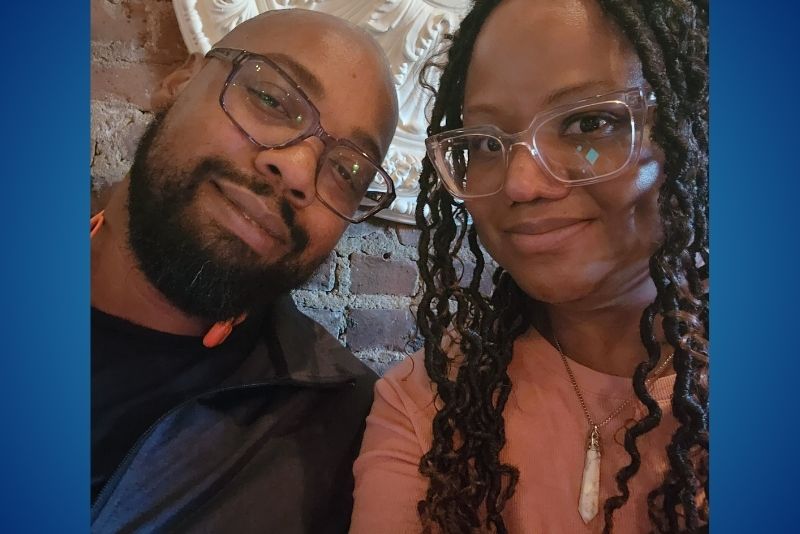
It’s a Marathon, not a Race with Nadia Lambert
Nadia Lambert shares what it was like to become a caregiver to her husband, Gary, after his sudden multiple myeloma diagnosis at 38. She reflects on raising two young children while navigating fear, uncertainty and the shift from partner to advocate. Nadia speaks openly about anticipatory grief, the strain on family life and the move to Tampa that ultimately brought hope and community. Her story is one of honesty, resilience and learning that caregivers deserve care, too.
What You'll Learn From Nadia
-
What it’s like to step into caregiving suddenly, especially while raising young children and managing work
-
How important pacing yourself matters when a cancer diagnosis turns into a long-term, chronic caregiving journey
-
Why “running your own race” is essential
-
How caregivers become advocates and help to guide care decisions
-
The emotional impact of caregiving on marriage and the quiet shift of roles over time
-
The importance of building a support system, even when it’s uncomfortable to ask for help
- Why caregivers deserve to be asked, “How are you doing?”
Thank you to our Guest: Nadia Lambert
Host: Donna DiClementi
Production Team: Jackie Beaushaw, Randy Isaacson (Family Advisor), Donna DiClementi and Karen Caraballo
Music by: Lloyd Goldstein
For more stories, subscribe to "In It Together: A Podcast About Caregiving" wherever you get your podcasts.
Podcast Transcript
The heart of the story
-
Nadia became a caregiver not once, but twice, first for her mother, then for her husband
-
She navigated caregiving while parenting two very young children, trying to protect them without lying to them
- The invisible but real impact of anticipatory grief, mourning a future she feared might never happen
-
A single moment, being asked how she was doing, revealed the importance of checking in with a caregiver
-
Over time, Nadia learned that caring for herself isn’t selfish; it’s necessary for the entire family to function
-
By sharing her story openly, Nadia hopes other caregivers feel less alone, less guilty and more seen
-
Nadia's story is about love, resilience and the belief that if this journey can help even one other caregiver, it matters
Donna: Welcome to In It Together: A Podcast About Caregiving from Moffitt Cancer Center. I’m Donna DiClementi and I’m the manager of outpatient social work here at Moffitt Cancer Center. And today we have the privilege of hearing Nadia Lambert. So Nadia talks to us about her husband's cancer journey after she was a caregiver for her mom for a long time, who also lived with cancer. Nadia and her husband have school aged children, and they moved to the area specifically for his care at Moffitt. So we get to learn how Nadia built community in her new home state and how she balances her growing career, motherhood and being a caregiver to her spouse. What I really appreciated about Nadia's story, and how she tells it, is her honesty and her vulnerability. Because Nadia shares where it went well and where she needed help. And I think that as caregivers, we're always wondering, um, should I be able to do this on my own? When should I get some help for myself? And we hear that from Nadia, and I really appreciate all that she had to share with us today. And I know that you will too. So welcome to In It Together.
Donna: Welcome to In It Together, a podcast about and for caregivers and the people they love. I'm Donna DiClementi, your host and manager of outpatient social work at Moffitt Cancer Center. In each episode, we'll dive deep with a wide range of caregivers to better understand the highs and lows of caring about someone with cancer. You'll meet the wives, husbands, partners, friends, children to hear what worked well and what didn't work well as they became a caregiver for their loved one with cancer. Our hope is that by listening to caregiver stories, you will learn valuable information plus feel supported, encouraged, and renewed. After all, we are in it together. Thanks for joining us.
Donna: Nadia, I'm really excited to have you on the podcast today. Um, I have been looking forward to this from our, um, all of our discussions prior to the podcast and, um, learning about you and your family. So let's dive right in and tell us about your family and how you became a caregiver for a loved one with cancer.
Nadia: Okay. Well, it was in 2014, shortly before my husband's 38th birthday, when he got diagnosed with stage three multiple myeloma. It was quite a shock. Uh, we were both working. Uh, he had been on a really big, healthy, athletic kick for a while, doing half marathons, doing bike races, and things seemed good. And he started to experience a lot of pain and limited mobility. It took several months before anything showed up on a scan, and by then he was walking with a cane and had gone through rounds of physical therapy. And then one day in December of that year, it was like, oh, something is really wrong and you need to make an appointment to see an oncologist. I don't think in the history of ever, has anyone been delighted to hear you need to meet with an oncologist? It was devastating. And for me, it was especially traumatic because I had been a caregiver for my mother. Her first go round with uterine cancer, maybe ten years prior to that. And I felt all of that old panic just rising to the surface. I had to be my husband's caregiver because there was no one else. It was the two of us and our two children. Our families were spread out over a few different states and a few different countries. So I had to, you know, put on my big girl pants and take it on. And, um. That's been my life since December of 2014 until now.
And I felt all of that old panic just rising to the surface. I had to be my husband's caregiver because there was no one else. It was the two of us and our two children.
Donna: Well, thanks for sharing that with us. How old were your children at the time of your husband's diagnosis?
Nadia: My daughter was five and my son was six.
Donna: Oh my gosh, what a big responsibility for you.
Nadia: It it made the caregiver role more complicated because how do I pivot from dealing with kids who have very recently just started school to full time caring for my husband, who before and actually even to this day, is fiercely independent? That's the kind of balance I wasn't really accustomed to, and also my work responsibilities. I don't think I had a good handle on it to begin with, and I think emotionally having to have this role, but not able to really fully explain to a five and six year old what's going on, why we can't be as physically and in some cases emotionally present as we previously were. The most you could kind of say is, daddy's not feeling well. Daddy has to go to the doctor. Mommy has to go too. But it's way too complex to explain to them. So over the years, as they age, we gave them a little bit more and a little bit more while still trying to be completely honest, because as the daughter of a chronically ill person, there were many times I didn't understand what was going on, and I felt afraid and in some cases abandoned. And I didn't want to repeat that cycle. So I sort of made a promise to them before they could truly understand it, that I wouldn't lie to them about anything, no matter how bad the situation got. But at the same time, having to couch it in a way that's digestible for their age.
Donna: Sure, sure. What a wise woman you are. What a wise woman. Really. So I want to just summarize a little bit, even though we're at the beginning. Is that your husband? It was 2014, you said.
Nadia: Yeah
Donna: He was diagnosed in 2014. And, um, today he's doing well.
Nadia: He is currently in remission. Um. This coming November will make, I believe, three years in remission following the Car-T that he had here at Moffitt, actually.
Donna: Okay, great. So what we're talking about today is, you know, the time from initial diagnosis and kind of your caregiving journey up to and including now. So it's, um, I and I want to highlight that because it's a story where you, you have a cancer diagnosis in your family that ends up being a chronic illness that you live with over time. And so your caregiver story really is, um, helpful to the listener because it's talking about how you, you know, run that marathon over a long period of time rather than, you know, a short period of time. So I'm really eager to, to hear more, um, about that.
Nadia: It's it is quite a journey. And it's funny that you mention marathon because not only because Gary used to take part in races, but, uh, there was a point in time where he got a tattoo on his calf that said, run your own race. And that's been sort of his mantra throughout this journey. And it's really important to him because as patients, as family members, as caregivers, we do have a habit of googling and using social media and meeting people and running comparisons. Well, this person with myeloma didn't make it to five years. This person made it to 20 years. This person had to have surgery. This person had no side effects whatsoever. And it's important to understand that everyone's journey is different. You can have the exact same doctors. You can be the same age. You can be the same race. But. The cancer is not going to behave equally for everyone. It's a terrible disease no matter how you slice it. But everyone's experience is totally unique, and as a caregiver, you have to sort of level set your expectations and not sort of expect that things are going to go exactly the way it says in some publication. Or, you know, if you put it into ChatGPT or things like that, because you can really you can set yourself up for heartbreak thinking that everything's going to go perfectly well. And when it doesn't, you're lost.
And it's important to understand that everyone's journey is different. You can have the exact same doctors. You can be the same age. You can be the same race. But. The cancer is not going to behave equally for everyone.
Donna: So along that same lines, how did you manage the ups and downs of the journey so far? What are the things that were really helpful to you?
Nadia: Research. Careful. Proper research. Uh, to learn more about the disease. Having honest conversations with all of his doctors and basically the entire team. Uh, I'm sure there were times where they saw my name come up in their email inbox and was like. Her again. She's got more questions. And if I couldn't come to an appointment, sometimes I would say, honey, can you put me on speakerphone so that I can hear what's being said and ask any questions and make sure that I understand, because another part of being a caregiver is being totally aware of the whole picture, because you can't necessarily rely on someone who's going through sometimes really aggressive treatments and side effects to be able to focus in on everything the doctor's saying, every side effect, what all these medications are called in the proper dosages and things like that. You know, even under the best of circumstances, a person who's not ill may have a hard time digesting everything, but you're now dealing with someone who's going through essentially the worst time of their life, and you want them to retain this very complex, you know, medical jargon that's very, very hard. And, you know, so it's important as a caregiver that you get educated on the disease, you get educated on what the standard treatments are, what are the innovations in that are coming up in the pipeline? Because at the end of the day, you're not just really caregiving. You're advocating and you're helping your loved one make the best decision for their care. Because, you know, it may be 100% of what that doctor said. It may be that you need a second opinion or a third or fourth.
Donna: Mhm.
Nadia: You know, but you won't know that unless you're really involved in the process.
Donna: Excellent. Excellent advice. Thank you. In what ways did your role change once your husband was diagnosed with cancer?
Nadia: Uh. Our… everything about our lives changed. But I would say that being the quote unquote wife took a backseat to being a caregiver. And. It was necessary, especially in the early years when he really needed that kind of, you know, intense involvement. But at the same time, our relationship did take a few bumps and bruises because of it. I think it's it's very difficult to go from sort of a 50/50 partnership where we're sharing the responsibility of the home and the bills and the kids to suddenly, you know, they're big chunks of time where he physically can't work, and he's going through all of these things. And I have to be very… intrusive. What did you eat? What did you drink? How are you feeling? What's your pain level? You know. Do you feel warm? Maybe you're getting an infection. Should we call the doctor? You know, going through what the appointments are. Did you put in your medication refills and becoming the person that's getting super familiar with your partner's, you know, insides changes the tone of your relationship, you know? And in a lot of ways, your home becomes an extension of the cancer center. And it. It's a shame because you do lose a lot of the… casual joy of that relationship because you're so involved in I have to keep you healthy. I have to keep you alive. So I have to manage all of these different things. And you're not thinking about, let's have a date night, or snuggle up on the couch and watch Netflix because you're so wrapped up in these priorities, and wife just fades further and further into the background. Um, I don't necessarily recommend that, but it's a very hard thing to overcome in the early phases where there's so much fear and uncertainty.
Donna: Sure. Thank you so much for sharing that. I think that was a really vulnerable insight that, um, I think our listeners are going to, um, resonate with but maybe don't often talk about with anybody. So I really appreciate that. Looking back, do you think that there was a way you could have had those more joyful moments, or those date nights or those, you know, two hour Netflix binges?
Nadia: The easy answer is yes, I would have done it way differently in hindsight. Um, I think that. All people. Everyone with a chronic illness strives for a sense of normality. And the less your home becomes that sanctuary in place of normality, the harder it is for them to do the things they need to do to get through these horrible situations, because there is no safe space. Home is just, you know, another Moffitt Branch now. So how do you have a normal conversation? How do you just be. And you know, I, I think that.. I because it was just us and I didn't have my full village of support.
Donna: Mhm.
Nadia: I didn't feel comfortable loosening the reins enough to relax and just be.
Donna: Mhm.
Nadia: You know and I think also there's also a grief cycle. And. Initially when he got diagnosed. My first thought was I'm going to lose him. This is the man that. I've been with since I was 20 years old in college. And we've gone through so much. We've done long distance over two different countries for a few years at a time. Finally got things together, got married, two beautiful children and it just felt like. Uh, it it felt like this big, beautiful dream just shattered.
Donna: Mhm.
Nadia: And. I didn't have, I. I didn't have good ways to cope. I. I did and do still have really good friends and family all over the place and there were phone calls and tears. And when my family or Gary's family were able to come and support, they did. But that was not the reality of our everyday life. And I felt this drive to. Tough it out. Be strong. Be strong. Be strong. Be strong for him. Be strong for you. Be strong for these babies. And the only time I would let myself truly fall apart would be like 2:00 in the morning. And I would just put my face, like, on his shoulder, on his back. And cry. And, you know, I don't recommend preemptive grieving. It's not the healthiest thing in the world, but. At that point in time. That's how it felt. It felt like someone had given him a death sentence and I could not imagine. 2025, and he is still here and not just being here, being in remission. And our children are now 16 and 17 at the tail end of high school. We're dealing with college applications and the SATs and all of those things. If I had that kind of foresight, I would have been able to cope better. But in that immediate term. It just felt like I had nothing left.
Donna: Mhm.
Nadia: And. You know, I it's hard is I don't talk about this part very often. Not even to Gary. But, you know, it was just so much grief and a sense of. Feeling like it was so unfair.
Donna: Mhm.
Nadia: Barely 38 years old. And having to think about the reality that he may not be able to see his babies grow up.
Donna: Mhm.
Nadia: And go to college, get married, have children of their own. And then losing him. You know, I and obviously selfishly not having him next to me.
Donna: Sure. Absolutely.
Nadia: And you know, I try not to dwell on that too much these days. Because I feel more hopeful than I did in those moments. But the immediate despair was intense, and I. I have a greater appreciation for. All of the things that were done for him to extend his life, to improve his quality of life. Because it could have all gone the other way.
Donna: Mhm.
Nadia: And you know it changes your perspective on what it means to have time and have those moments as a family.
Donna: Yeah. Yeah, a lot of what you shared. I know that caregiver's experience as well. And again, don't necessarily talk about it with anybody. And you called it preemptive grieving. And, uh, I think that it's grief. It's grief for this is not the way we expected our lives to go. And it might be anticipatory grief because you're wondering what's the end result. Yet at the same time, it's grieving that this point in time with my young children and our growing beautiful family. This has happened, right? So I appreciate you really painting a detailed picture of what? Of what grief is like. And, um, and I know that so many people are going to resonate with that. Um. You talk about how difficult it was to be that solid foundation of a caregiver, especially when your, um, village that you called? It wasn't immediate. Um, what did you do to take care of yourself?
Nadia: I didn't. I should have and I have paid a physical and emotional toll for that neglect. Um, only. And I would say in the last year or two have I given myself the space and grace to refocus on myself as an individual independent of wife, mom, dog, mom, caregiver, um, and all of those things. And it's taken a lot of therapy. It's taken a lot of soul searching, even more tears to even feel like I could do that. Because even though he's in remission, the journey continues. And it's become so normalized to backburner my own wants and needs that I had to purposely start to shift it and change my thinking because it's no longer automatic. You know, even when you know I'm online shopping as one does, you know, I have to sometimes justify, well, should I buy this bit of nonsense? It's not even about affordability. It's. This thing is only for me.
And I would say in the last year or two have I given myself the space and grace to refocus on myself as an individual independent of wife, mom, dog, mom, caregiver, um, and all of those things
Donna: Mhm.
Nadia: Do I feel right doing it. And there are times where I felt like. Let me throw something in the cart for the kids or for the household as a whole, or for Gary or even for the dog, so that I feel okay with it because I'm not accustomed to just being a little bit selfish and selfish always feels like a negative thing, but you have to be. You know, because if you're not looking out for yourself, who's going to? And also even in the caregiver role, if you're neglecting yourself, you're not giving your best to your loved one. And there were many times where I was just exhausted, anxious, depressed and everything just fell by the wayside. Outside of the immediate things I needed to do to keep the household running, and I would strongly advise any caregiver out there not to do that, even if it means I'm just going to take an hour and lay in a hammock and read a book, or I'm just going to paint my toenails just because I can, or just sit and do literally nothing.
Donna: Mhm.
Nadia: Don't think about anything or anyone in that moment. Just be for a little bit. It's so important. And. The longer you neglect it, the harder it is to start up again. And I won't say my age because it doesn't feel real sometimes, but I'm getting up there and I think about the years lost when I should have been focused on hey girl, let's get our fitness together. Or let's spend more time with our hobbies, you know, and doing whatever the ADHD demons you know, think is the next thing to take on. And, you know, I, I wish I had dedicated more time to that and understood that it didn't have to be at the expense of the people I love, because me being a whole person helps all of us function properly.
I wish I had dedicated more time to that and understood that it didn't have to be at the expense of the people I love, because me being a whole person helps all of us function properly.
Donna: So you being a whole person helps all of you function more properly. Excellent, excellent. So. It's interesting that caregivers focus so much on talking about the journey of caring for their loved one at the expense of caring for themselves. But caregiving, and it's in and of itself the word doesn't exclude you. We seem to think that caregiving is something that we extend to others. But we also need to extend it to us. So I'm really glad that you've rediscovered that, and I dare to believe that most people in the throes of new caregiving for a loved one with cancer do not think about themselves.
Nadia: That is very true. Um, it often doesn't feel appropriate.
Donna: Mhm.
Nadia: You know, this person, whether it's a partner, a child, a parent, a best friend. They're experiencing something that you're not going through. You're sort of on the sidelines, and a lot of ways you feel useless and helpless, and you're trying to be there as best you can in whatever way they need. And it it doesn't always feel appropriate to say “I know you're having a rough day, but I want to take an hour for myself to do something I want to do.” And while I know intellectually I should, everyone should. In your heart it feels like, how dare you take the focus off of this person that needs you, and sometimes it's perpetuated by the people around you as a caregiver. There were times where I could go ages, and everyone I would talk to would say, How's Gary? How's he doing? How's he feeling? And they never ask how I was doing. And I remember one of his sisters got on the phone and I started my spiel. He's fine. The doctor said this, the lab said that. And she stopped me, and she said, Nadia, how are you doing? And I started to crack because. I hadn't heard that question in my direction in so long. That it wasn't even a thought that I considered. Hey, how am I doing? And, uh, I think that it's important. Obviously. Be concerned. Love and care for the person going through cancer. Absolutely. But check in on their caregiver, their family members. You know, it's excruciating for a husband, a wife, a mother, grandmother, an aunt, a cousin to witness the person they love going through such physical and emotional pain. And they need love and support as well. They need someone to cry with. They need someone to talk to and lean on. You know, or they just need someone who will babysit.
Donna: Right.
Nadia: Or bring over, you know, some chicken or something like that, or, you know, anything, anything. And people, a lot of people are afraid. They think that they're going to say the wrong thing or do the wrong thing. So they're either painfully cheerful or they're crying a lot or they avoid you altogether.
Donna: Mhm.
Nadia: And I've found that the easiest thing is. Ask. Tell me what you need. Or just do it. Just come over with the chicken.
Donna: Right.
Nadia: You know?
Donna: We'll figure out what to do with it. Just bring it over.
Nadia: You know, we have freezers for a reason.
Donna: Right.
Nadia: Or just call up and say, hey, you know, I'm going to take the kids to the zoo this afternoon. I don't need you guys to do anything. I'll feed them, and then I'll bring them back when I'm done.
Donna: Yeah.
Nadia: Or, you know, why don't you go and get a haircut? I will stay and hang out with your husband for a few hours, and we'll play Xbox while you go and have a breather.
Donna: Right.
Nadia: You know, I think a lot of times. We don't feel comfortable asking, and sometimes we don't even know what we need until we get it. So I think it's really important that people see the whole picture beyond just the one patient and think about the family, the household, how it's functioning and or not functioning as the case may be.
Donna: So it's the family as a system that there is a person living there who has cancer. But we want to think about the family as a system, as a unit, and take care of the family in it and not focus only on the the person who has cancer. Um, so I really appreciate those suggestions. You talked earlier and I want to make sure that we go back to it is, um, the fact that you did some research and your husband did research, and then at some point in your journey, you moved from where you were getting care and the community you were comfortable in to closer to Moffitt. So can you tell us a little bit about that decision?
Nadia: Sure. Um, well, Gary and I met in college, uh, just outside of Philadelphia, and he, he grew up in, in the suburbs, and we ended up, once we got married, started our family living in the city for quite a long time, and. We. He got really excellent care. But we got to the point where it felt like we wanted a better quality of life for the children. And it had always been in the back of our heads that Florida was closer to our families. No winter. Hooray! And it became difficult to execute over the years because he really wasn't stable for a while where we thought, yes, let's pick up and move, sell the house, grab the dog and take off. Um, what really helped solidify it was the pandemic and the the end of his career. The understanding that, you know, he he had been in law enforcement, uh, with probation and parole, and it was no longer a safe place for him because the risk of infection was so high and he had to sadly let go of that dream and cut his career short. And we thought about what the next step would and could be. And. We took a few weeks during the summer and we came to Tampa. We had already looked up moffitt and its excellent reputation. We looked at the oncologist and we found Doctor Brandon Blue, who is a myeloma specialist, and we felt encouraged that this might be the right step. But we had to be sure because. Transplanting your family is a huge step. And we took a tour. We met people. And we met a realtor. We looked at houses, tried to get a feel for what it could be. And once Covid started to really rage in 2020. Crazily, we got the U-Haul, packed up everyone and put our house on the market and drove the 20 something hours down here. And I'm extremely glad we did because he's had an amazing time here at Moffitt. As amazing as anyone with cancer could have at a cancer center, that's, you know, keeping in perspective, you know, Doctor Blue, um, he's not just his oncologist. I feel like they have a really strong friendship. And when they see each other, you know, it's like just two guys, like, hey, how you doing? And they laugh and they joke and talk about all manner of cancer and non-cancer things. And I think that relationship has helped sustain him through very difficult decisions, especially when it came time to explore the notion of a Car-T because he hadn't been in remission before then. He had had low numbers off and on. But as people who are familiar with myeloma know, it's a beast. You knock it down, it comes back, you know, you think you have it under control. It's sort of like whack a mole. And some of the treatments are extremely aggressive, especially with someone Gary's age, because the thought is you can tolerate it. But it's very rough going. And I think he was able to sit with Doctor Blue and go through the options and really talk about what he wanted for his life. And Doctor Blue was - is - excuse me, because he's still a big part of our lives. Was really - is really positive and forward facing. It's “you're young. Let's look long term. Let's not play the short game because I'm invested in you being around for a long, long time. So let's do what we need to do to help ensure that.” And I, when I see him, I'm always thrilled to see him. But I mean, I, I can't thank him enough for his unending honesty and encouragement because you don't want someone who's going to, you know, blow smoke. And you also don't want someone who's so rigid that you feel like they don't truly care. You know, I I'm really glad that we made this move. And as much as sometimes the children complain because it doesn't actually get cold and they don't have snow anymore. And you know, things are a little more spread out here. I think it's been a net positive for the family. Not sure if that exactly answered your question.
Donna: Yeah. That's great. No, it was it was perfect. And, um, one more thing. I wanted to make sure that we got in, um, because we had talked about it before, and that is that you really developed a nice and sought after, a nice community of support. And I wonder if you can share some of those resources or you know how those. Resources have been helpful to you?
Nadia: Sure. Um, from the very beginning, um, we sought out connections on social media, um, with other myeloma patients and their families. Um, when we were in Philadelphia, we also were a part of a cancer family support group, uh, that had families dealing with all manner of cancer. But what we all had in common is we all had young children. Um, and we'd meet and the children would have their time to talk to the social workers. They would color and do all sorts of activities while the parents got together and had honest conversations about their challenges. We were also connected to various resources for everything from helping to, uh. Pay for summer camp, to transportation, to meals. Those kind of resources were really, uh, helpful. And over time. Gary got more involved with. Cancer organizations, um, like the Leukemia and Lymphoma Society, um, IMF, ACR, um, he's done talks and webinars and all sorts of things. And over the years. Somehow, magically, I've become sort of his mascot and gotten dragged along. And once in a while, someone puts a mic in my face and knocks me questions now, and, uh, I'm not quite sure how my life took that particular turn, but I think we both find it rewarding to help the community that has supported us so much over the years. It it can be difficult because you're dredging up a lot of your fears and trauma and. I know there have been times where you have to sort of. Take a deep breath afterwards and sort of shake off all of those emotions. But I think by and large, uh, and we talked about this actually the other day. If we've gone through all of this, whether it's ten years, 11 years or 50 years, if somebody got some benefit, they got some hope, they got a link to a resource they weren't aware of, or they just don't feel so isolated. At least all of this was for something, you know. Uh, I would hate to think that, you know, we went through this roller coaster and. There was just nothingness, but, you know, pain and misery. You know, I, I hope that. Patients and caregivers and family members, whether it's this particular podcast or through some other avenue, go, hey, I didn't know. I didn't know this particular thing about this disease, or I didn't know other people felt the way I feel, and maybe they don't feel as lonely or feel as guilty for their feelings, you know? And, you know, maybe they find us vastly amusing. That's cool too.
Donna: I think you can rest assured that you have, um, given so much hope and resources to patients and caregivers, you and your husband, and the generosity of all the ways that you share here at Moffitt and with the larger community. Um, you had mentioned that program up in Philadelphia, and we have that similar program here at Moffitt. It's called Families First and where, um, families who are going through a cancer journey, who have young children, um, can get resources and have similar events like that where parents get to meet each other. And so anybody listening who's interested in information on families first, we, um, that will be in the show notes and you can make sure to get that information. And then all of the resources that you talked about, it's so important that, uh, um, patients and their families get connected with their social worker to be able to review all of those resources. So you can also call the main social work line at any point, and get connected with a social worker who can help you with all of those. Um, before we end, is there anything that we haven't discussed that you'd like to share with caregivers that you want to make sure you have an opportunity to say?
Nadia: Uh, so many things. Uh, what I would say is go into it with your eyes wide open. I think everyone wants to be optimistic and hopeful, and I think they should be. But understand that this role is more than holding someone's hand at an appointment. You have to be prepared for any and everything. All of the triumphs, but also all of the challenges and. Absolutely find people you can lean on, because when those challenges come up. You need to be able to let yourself not be super strong all of the time. You have to be able to, you know, find someone who will give you a hankie and you can weep together. And also someone who's going to help you cheerlead when you know the labs come back and they're good. I don't know if there's a greater feeling than that. And, you know, sharing all of those highs and lows, not just with, you know, your loved one, but with your village and your trusted friends and family is is really important. You know, don't don't go it alone.
Sharing all of those highs and lows, not just with, you know, your loved one, but with your village and your trusted friends and family is is really important. You know, don't go it alone.
Donna: Thank you. Thank you. So eyes wide open. And I also would like to add it. It is one step at a time because we don't really know what's going to happen in the future. So, um, just just one step at a time. Um, you know, how do you eat an elephant? You know, one bite at a time. Um. And I want to. Although you did not say this, I want to re-emphasize that caregiving is not only extended to the person living with cancer. It is extended to the person you see in the mirror when you look. When you look there, the person staring back. The caregivers caregiving is extended to that person as well.
Nadia: Yep. And that you deserve that care.
Donna: That's right. Yeah.
Nadia: You know, that's. That's super important.
Donna: You need that care.
Nadia: You need it. And you're worthy of getting it.
Donna: Yes. Yeah, absolutely. Thank you so much.
Nadia: Thank you.
Donna: Thank you for listening to In It Together: A Podcast About Caregiving. In It Together is brought to you by Moffitt Cancer Center's Patient Library and Welcome Center, in collaboration with our social work department. Special thanks to Lloyd Goldstein, musician in residence here at Moffitt Cancer Center's Arts in Medicine program for our music. And thanks goes to our producer Jackie Beaushaw, patient library supervisor, and Randy Isaacson, family advisor. For more information about the services mentioned in this episode, please view the show notes or visit the In It Together page on moffitt.org. Thank you for spending time listening and we hope that it was useful. Have a great day.