
You Never Get Over It, You Grow Around It with Randy Isaacson
Randy Isaacson reflects on his experience caring for his wife, Lynn, after an unexpected leukemia diagnosis. He shares the emotional weight of realizing treatment wasn’t working, the practical challenges of managing medications and hospital visits, and the small comforts that brought joy during difficult times. Randy opens up about grief, resilience, and the importance of finding ways to grow around loss rather than trying to get over it.
What You'll Learn From Randy
- How to stay grounded when caregiving begins suddenly and life changes overnight.
- Focusing on one day, one task, one person can help when the future feels overwhelming.
- Activities like movement and journaling can protect a caregiver’s mental health.
- Kindness toward yourself matters just as much as caring for your loved one.
- Love, not perfection, is what truly carries caregivers through.
- Joy and connection can still exist, even in the hardest moments
Thank you to our Guest: Randy Isaacson
Host: Donna DiClementi
Production Team: Jackie Beaushaw, Randy Isaacson (Family Advisor), Donna DiClementi, and Karen Caraballo
Music by: Lloyd Goldstein
For more stories, subscribe to "In It Together: A Podcast About Caregiving" wherever you get your podcasts.
Podcast Transcript
The heart of the story
- A sudden cancer diagnosis turns an ordinary family trip into the beginning of an unexpected caregiving journey.
- Caregiving unfolds in quiet, everyday moments: walking hospital halls, sharing meals, organizing medications, and simply sitting together.
- Hope evolves over time, from believing treatment will work to finding peace when outcomes change.
- Grief begins before loss, and continues afterward, but it does not erase joy, meaning, or connection.
- Giving back becomes a way to honor a life and ensure that something good comes from profound pain.
- Even in the darkest moments, love is constant, and it endures.
Donna DiClementi: Hi, this is Donna DiClementi, your host for In It Together, a podcast about caregiving from Moffitt Cancer Center. I'm the manager of Outpatient Social Work, and really delighted to introduce this next episode to you. Our guest is Randy Isaacson. Randy is a patient, family advisor and producer of this podcast, and he talks to us about his journey as a caregiver when his wife, Lynn, was diagnosed in 2019. And I want to tell our listeners that this episode is a bit longer than the other episodes we've had so far. And, um, it's because Randy's advice and his journey is compelling, and I think that all listeners will certainly, um, be captivated by the way that Randy tells the story and everything that he learned and he's sharing with us. So he takes us on this journey of an unexpected cancer diagnosis and how, um, caregiving evolved over time in supporting his wife and navigating work and adult children and concrete issues like managing appointments and medications and hospitalizations. And then he really talks about what this impact had on him emotionally, spiritually, and how it's kind of driven the rest of his life. So I'm really glad that you're going to get to experience Randy Isaacson, because it was a great episode. Thanks for joining us.
Donna DiClementi: Welcome to In It Together, a podcast about and for caregivers and the people they love. I'm Donna DiClementi, your host and manager of outpatient social work at Moffitt Cancer Center. In each episode, we'll dive deep with a wide range of caregivers to better understand the highs and lows of caring about someone with cancer. You'll meet the wives, husbands, partners, friends, children to hear what worked well and what didn't work well as they became a caregiver for their loved one with cancer. Our hope is that by listening to caregiver stories, you will learn valuable information plus feel supported, encouraged, and renewed. After all, we are in it together. Thanks for joining us.
Donna DiClementi: I am happy to welcome Randy Isaacson to the podcast. I know that our listeners will find Randy's story and experience as a caregiver to his
wife, Lynn, as moving and helpful as I did. Randy's wife, Lynn, died from cancer in 2019, and Randy and Lynn raised two children. Randy is now a grandfather. Randy owns a marketing business, and he spends time giving to Moffitt Cancer Center as a patient family advisor. Um, it's important to recognize that Randy serves as a producer of this podcast and has been instrumental in getting in it together off the ground, and he does a lot of other initiatives at Moffitt as well. And so I appreciate his willingness to share experiences of being a caregiver for his wife with all of us. And so thank you, Randy, today for joining me on In It Together.
Randy Isaacson: Thanks for inviting me, Donna. It's, uh, it's a pleasure.
Donna: Randy, can you tell us about Lynn, your children, and how you became a caregiver for a loved one with cancer?
Randy: Sure. Um, in 2019, um, we had a big trip planned, a big family trip planned at Yosemite National Park. And, uh, my daughter, and at that time, her boyfriend and my son and his girlfriend, uh, and my wife and I, we were all getting together and going to go hiking at Yosemite. And, and that summer before we had Lynn and I had done a lot of kind of working out to prepare for this. And, um. We got to Yosemite and started a hike and Lynn stopped. She just realized she couldn't go any further. And it it was really odd, you know, something we'd really been looking forward to. And and she just wasn't feeling right. Uh, so the next day, she stayed back at the Airbnb and I hiked with the kids, and and then we flew back to, uh. Wisconsin. From there, where our cottage is. And Lynn said, I'm not feeling right. You know, we need to. We need. Let's get back to Florida, where our doctor is. And we got back down here as soon as we could. She visited primary, her primary care doctor. Initially they thought it was, uh, maybe a thyroid condition or perimenopausal condition, but then they did bloodwork and saw that her platelets were dangerously low and said, you need to get to the emergency room. So we went to the local emergency room, um, you know, with everybody with coughs and broken bones and whatever else might show up in the emergency room. And, um, they did blood work there also. And, um, we were in one of those kind of cubicles at the emergency room, and a couple of doctors came in and said, we think you might have some form of leukemia. And, uh, she was admitted in the community hospital. And, um, shortly after she was admitted, one of the doctors said, we need to get you to Moffitt. Um, I think they saw a relatively healthy person, 55 years old, and this had come on very quickly. Um, and we knew nothing about leukemia. She had acute myeloid leukemia, and it had progressed from, uh, a couple of other acronyms that are used with different leukemias. And, um, we got an appointment at Moffitt, and, uh, that was the beginnings of, uh, our first experience with any kind of significant health issue in our immediate family. Um, so that's, you know, that's the background of, of kind of where I am right now.
Donna: What was that like in the beginning, those initial weeks, once you kind of got to Moffitt, what was that like for you? And Lynn.
Randy: Well, I think our, our feeling was because we had heard a little bit about Moffitt, um, great things. And, and our feeling was, uh, this is going to get handled. Well, you know, we're at a place that has, uh, worldwide expertise and resources. And, uh, while we're pretty fortunate to be, um, fairly close to, um, this, this, uh, research facility, this hospital, and, um. There was. We only thought the positive. There really was no alternative. Then the positive, then a good outcome. We had no idea what it entailed. Uh, pretty quickly we learned that she would be admitted, uh, into the hospital for a fairly long period. Uh, the first course of chemotherapy is intense, and and so, uh, to reduce the risk, you're, you're admitted, you're an inpatient and for like, 30 or 40 days. Um, and we said, you know, they said we'd get a call at and, uh, and show up at X day and almost like checking into a hotel for a long stay. Mhm. Uh, as strange as that sounds. Um, and when we got up to the floor and I think it was four w um, there was a nurse there and she said, oh, you must be Lynn. Um, welcome. Uh, this is going to be your home for a while. And that felt good.
Donna: Mhm.
Randy: Uh, it felt like, uh, you know, the, the tone was great. The, the, the, the spirit was great. And so it took a little bit, we just didn't think, we just did not even come close to thinking about a bad outcome.
Donna: Mhm.
Randy: Um in the very beginning um the, the uh one thing I want to point out is we, we took us a few days before we told our children, you know, they were adults or working their, their jobs and we didn't want to tell anybody until we knew. What were we going to do.
Donna: Mhm.
Randy: We we didn't want to necessarily have something open ended. Um so we wanted to wait till we knew what the plan was.
Donna: Okay.
Randy: Before we let them know.
Donna: Um, how long did you wait?
Randy: It was about 3 or 4 days. Yeah, it was about 3 or 4 days. And it was, uh. And we agreed on it.
Donna: Uh huh.
Randy: The two of us talked about it. I think we both felt that way. We didn't want to add. We knew it was going to add a lot of worry. And we knew knowing what the next step might be, as we explained what the situation was, might give them a little bit of, uh, comfort. So
Donna: I'm glad that you brought that up, because a lot of caregivers struggle with what to tell, who to tell, when to tell. And a lot of times the focus ends up being on minor children. But your children were adults, and once you told them, are you able to share whether they felt that they understood the delay or were they a little? Annoyed.
Randy: They weren't annoyed. Uh. They understood. I, I think they may have thought we have a very good relationship with both our kids. And I think they may have thought, um, I think we trust you on this. And, um, there wasn't a talk about. Oh, we didn't want to scare you or we didn't. We just wanted to have more information.
Donna: Mhm.
Randy: Um, and in the end, I think, I think that was a good thing.
Donna: Good.
Randy: Um, you know, it's, it's a, there's a lot of. Change and information. And I think what you realize that I've got a couple of friends. You know, everybody has different health issues at one time or another. And and I think when you when you are on the outside, sometimes you feel like, well, there's always an answer. You know, once you start getting diagnostic tests and you start going, you know, you have a particular condition, you think, oh, well, there's a way of treating it. And what you often I think run into is there's a lot of unknowns still too. And everything doesn't seem to work just as we'd like it to work. Uh, and there are twists and turns and surprises and, and that was our experience and also and, and, uh, you know, it's a you got to kind of keep your balance when you have all these twists, turns and ups and downs. And that's a challenge.
You've got to kind of keep your balance when you have all these twists, turns and ups and downs. And that's a challenge.
Donna: Yeah. Yeah. Absolutely, absolutely. So, um, were you part of that first initial admission? Did you stay as well.
Randy: Oh yeah. Mhm. Yeah. Um, you know we came in together and uh, I spent when she was an inpatient here, I would be here uh roughly from around 9 or 10 in the morning till 6 or 7 at night. Um, and some of that was just, you know, quietly sitting in her room with her and some of it was talking and a lot of it was walking, too. There was a big emphasis because she was, uh, going to be an inpatient and, and in a bed, uh, for a good portion of time. And she was weak and, and the medicines were, you know. Pretty powerful.
Donna: Sure.
Randy: But, um, they really emphasized walking. So we'd walk loops in the wing.
Donna: Mhm.
Randy: Um, and we did a lot of that. I'd go down to the cafeteria, pick up some things she'd get uh, she liked the idea of ordering off the menu.
Donna: Uh huh.
Randy: Um was surprised that the food was pretty good. Um, but was often a lot more than she cared to take in, especially because she was getting chemotherapy and other things. And so we'd share meals.
Donna: Yeah.
Randy: Um. And I never spent the night. Uh, and that was an option. I think her room had, uh, a little area, or they could bring a pullout bed. But Lynn Lynn felt like, hey, you're going to be a lot more comfortable if you're at home.
Donna: Mhm.
Randy: Um, and this was she was admitted in October of 18. And so a good portion of October, November, December, she was in the hospital. It was wintertime. So it got dark fairly early.
Donna: Yeah.
Randy: Um so and it got, you know, it stayed dark in the morning. So we drive here often in the dark and I drive home in the dark.
Donna: Mhm.
Randy: Um,
Donna: What what did you do during that period to take care of yourself while you watched Lynn with this disease?
Randy: Yeah. There was, uh, you know, I've always been a walker, a big walker. And I found that walking, uh, was very helpful. And, um, nature being outdoors, uh, even when she was an inpatient here, I would, uh, I might say I'm going to go for a walk out in the campus, the USF campus. And, um, the walking really helped. I tried to continue to exercise. Um, one of the big adjustments for me was the planning of meals. Uh, I hadn't really been the one to do that in our life. And we were together for 34 years, and, uh, there were certain meals that I would do, but but for the most part, she was handling meal planning, and and so that actually occupied my mind quite a bit figuring out because we had people visiting, you know, wanting to see Lynn and our kids. And so there was a part of having having things going on at home. Hey, people need to be fed and you need to have the right groceries. And, you know, a lot of times that might trip home from the hospital, it's like, oh, I got to pick up some groceries. Uh, in fact, one time I brought up the idea that maybe they have a Publix pharmacy here. Maybe they need a Publix grocery store kind of on campus or nearby.
Donna: Yeah. Yeah. Definitely. Definitely. How about, um, you kind of talked a lot about your physical health, which of course leads into mental health. Was there anything in addition to the walking and thinking about meal prep that you did to, um, kind of take care of your mental health?
Randy: Yeah. On the mental health side, I think, um, I would try to get my head around how to think about what was going on, and, um, I use and how to describe it. I also did journaling, writing. It was a way of of getting thoughts down, and I just let myself wander as I wrote. Um, I'd write about. Times in our life together. Specific memories I'd write about, um, perspectives I had on things. And I try to write a thousand words. I was almost like if I was exercising for 30 minutes of step, I put a number of words on it, and I always felt better, uh, when I was done. It was real helpful in terms of just kind of getting my head in a different space. So journaling was helpful for me.
Donna: Had you been journaling prior to Lynn's diagnosis? Is that a practice that you've had your, you know?
Randy: Yeah, my my job was, as a writer, a good portion of my career. So I was very comfortable with writing. Um, I hadn't been keeping a journal at the time, but at different times in my life, I had.
Donna: Okay.
Randy: So it was it was something I was pretty comfortable with. And when I, when I write, I just write for my own eyes.
Donna: Mhm.
Randy: I definitely don't think about, uh, other people reading it. Uh, it's more a matter of if I can put words to it somehow, I can, um, understand it better.
Donna: Sure.
Randy: I found that if I can put the words together to describe the situation in a, in the right frame.
Donna: Mhm.
Randy: For me, which would be more positive frame, um, then it helps. So I kept thinking about getting on the other side of this.
Donna: Okay.
Randy: We were going through something, and we're going to get on the other side of this.
Donna: Mhm.
Randy: Um, there was also, um, a case to where, uh, people, you know, friends and family, of course, you know, reaching out with their, their prayers and their thoughts and, and um, at times I. It's so. I had a, um, there, uh, a couple of friends who had their churches, you know, prayer groups for Lynn. Uh, Lynn and I weren't real active in the church, uh, and in any of the churches. And, uh, so I wondered about this. And, of course, I had I had moments where I questioned, like, wow, should we have been more prayerful?
Donna: Mhm.
Randy: Um, and it scared me because we weren't um, and one time I reached out to a friend of mine who I knew had a lot of faith. Um, but he was also a very practical person, practically minded, I thought. And and he because I, I had a strange moment where I worried that we weren't getting enough prayers. And if only we got more prayers, maybe that would take care of things that would help Lynn survive this. And, uh, I talked to my friend, and. He said. You know, when people are praying and sending their prayers. So they're just sending your love because that's love. He goes, that's what they're doing. They're just trying to express their love. And. And he said, you know, we always have more to give. He said, there's never a shortage of love. You're never going to run out of it.
He said, when people are praying and sending their prayers, they're just sending you love because that's love. He goes, that's what they're doing. They're just trying to express their love. And he said, we always have more to give. He said, there's never a shortage of love. You're never going to run out of it.
Donna: Mhm.
Randy: And he said it's making them feel good to give their love. And hopefully you can feel good receiving their love. And you really put it in perspective in terms of love. And that made a big difference for me.
Donna: Good.
Randy: In terms of helping me. Oh know that um in some ways, regardless of how this was all going to turn out, we had a lot of love around us, between us and, uh, that's continued to help me.
Donna: Good. Yeah. Thanks for sharing that. It's pretty meaningful. Um, from the time of Lynn's diagnosis to the time of her passing, it was it was relatively short.
Randy: Yeah.
Donna: So. What was the most difficult thing about that passage of time?
Randy: Um hmm. So it was 162 days.
Donna: Mhm.
Randy: And I think it was after Lynn passed away. She passed away on March 26th in 2019. I. I had to count the days. It seemed like such a short period of time from when she was diagnosed to when she died. And and I counted the days. And then I started thinking about it in terms of, um. How many days she was alive and how many days we were together as a couple. Since college, you know, for 34 years. And I had this thing, um, of this was just a very small part of this big, wonderful life that we had was only 162 days, and I didn't want those 162 days to define our life.
Donna: Yeah
Randy: And our life together. And, um, probably, you know, your question of what was the toughest? The toughest was. The. The point where I realized there was a good chance she wasn't going to get better. And I remember being at her bedside. She was an inpatient at the time, and and it had to have been one of her visits in January or February, you know, at visits to the hospital and, and, um, treatments weren't working. We were kind of in this holding pattern. She was taking a lot of medicines, but it was more because she was immunocompromised. And, um, she also was getting blood and she was getting platelets very frequently. And, um. She realized, I realize she was there before me, that this just wasn't working out. It wasn't going in our favor. That's how I would put it. This is not going in our favor. And, um, I remember I couldn't really breathe. So that moment. When I realized that. You know I may lose her.
Donna: Mhm.
Randy: That was the toughest.
Donna: Absolutely.
Randy: Uh, and she was, she was there before me and. And uh, she kind of was just like wow. You know, sometimes that's the way it goes. And, uh. Yeah. Yeah. That's that's probably the toughest is. And you don't want to go there, but sometimes you need to go there. And you just can't avoid it.
Donna: So you've said a lot of really meaningful, powerful things. And I'm I got teary eyed multiple times as you were talking, um, that the counting, the number of days compared to the number of days of her life compared to the number of days you were together and having that short amount of time not define your big, wonderful life you had with her. Powerful. And then, you know, kind of fine coming to the realization that, um. The end of this is going to result in the other side of this. It's going to result in Lynne's death. Um, and that she came to it before you did. And I think that that's some for a lot of people kind of do say that a lot of caregivers say, you know, they were kind of just waiting for me to catch up with what they already knew.
Randy: Mhm. Yeah. I mean, nobody really knows. And, um, when I think about it in terms of caregiving, I want to go to maybe some of the more, maybe some practical things to, you know, one of my goals all the time was, um, trying to be at home, get her home.
Donna: Mhm.
Randy: Um, and, and because home was a real happy place for her and, um, there was a good period of time that our daughter was staying with us and, and her company allowed her to work from home. And this was.
Donna: That's great.
Randy: You know, a little bit before it was more common. And um, so we we really that was always a goal to not be inpatient, but be an outpatient, be home, even though we'd have trips of, you know, 4 or 5 times a week coming back to Moffitt, uh, for treatments or for blood and that type of thing. Then when you're home, you know, back to meals and television. I mean, one of the, you know, just real comfort, comfort things for Lynn. So we set up a couple of blow up beds in the living room, and she and my daughter would lay on those blow up beds and they'd watch. They they've had a thing watching Law and Order since, uh, Kelsey was probably, uh, four years old. Um, and uh, they and thankfully, Law and Order has been for a really long time.
Donna: and many of its, uh, others shows.
Randy: So it was so cool to watch them laying on these blow up beds in the living room, watching Law and Order, loving it. Blankets, just, you know, enjoying this time. Um, and in the meantime, you know, I'm getting a lot out of that. I was never the same level of law and Order fan that they were. Uh, but I was getting medicines organized. I had around, uh, we had a round table, like a dining table, and I was trying to figure out a system. So I had a paper with the different, uh, medicine routines and what the medicine was and the medicine by it. And so everything was kind of set out because some things were twice a day, some things were four times a day. Uh, some were two tablets, some were one. And trying to keep all that straight. And so I had to write it down, had these things and had a fairly big space with the table. And, uh, then I, uh, I set a timer on my phone and I'd say, okay, Lynn, uh, you know, you got to take your antiviral. Um, and she'd be like, oh, like I'm in the middle of watching Law and Order. I don't want to take it. And I didn't argue with her. I was just like. And then she'd a few minutes later say, well, why don't you bring it over here? So, you know, I can and here's a bottle of water. Um, so that was, you know, kind of the, uh, you know, there was, I guess I'd say I wasn't going to argue with her. Of course, you know, it's their prerogative. And that's one thing I really learned. Um, two is, uh, you know, you're as much as you can feel like all this stuff is being done to you when you're under care for a serious medical condition. Uh, you have to remember that you're still, uh, you're still in charge.
Donna: Absolutely.
Randy: You're still in charge of your own body. And, um, I, you know, that's kind of. Lynn was demonstrating that to me and saying, I don't really want to. I'll decide when I want to take it. And, you know, that was like ten minutes later, but it was so, um, you know, that. And then we'd have a knowing we might have an appointment the next day. It'd be a matter of getting our travel bag together. Um, like a day bag. You know, we had a day bag, and in that day bag, there might be combination of, uh, medicines you might need for the day. Some snacks, some food. Um, there might be a change of clothes. Um, so those were the kinds of things to that caregiver.
Donna: Yeah.
Randy: In the background. Um, kind of trying to make sure things are in order.
Donna: Yeah. There's a lot of concrete needs
Randy: Mhm.
Donna: That the caregiver has to figure out and get into some kind of a, a system. So it sounds like you did that really well.
Randy: And I could I could say that being busy and focusing on the task.
Donna: Mhm.
Randy: Was a big help.
Donna: Mhm.
Randy: Sitting and doing nothing and letting your mind wander and wander to places that just aren't great places to be was not what I wanted to do.
Donna: Mhm.
Randy: And to avoid that, I was, uh, you know, just like, in perpetual motion in many cases.
Donna: Okay. So that's one concrete thing I think that would be helpful for caregivers to hear. What are other things that you think caregivers need to hear to help them in this time period?
Randy: Well, there's you know, it's tough as it is making sure you're getting good sleep. Um, the the part about. Having some time to yourself to walk, um, and get a little exercise. Uh, being kind to yourself. I think there's a lot of. Am I doing enough? Did I do the right thing? Should I have said that those things can happen?
Donna: Mhm.
Randy: Uh. And, um. Being kind to yourself and realizing that if you made a mistake, it happens. And and perhaps you're just being too tough on yourself. Um, knowing that you you can only do the best you can.
Donna: Yes.
Randy: And, um. Even though you may feel like, oh, I, I wish there was more that I could do. And, um, you know, one of my big, uh. Task, I guess you could say was, uh, when I come visit every day to make sure there was, you know, she had clean underwear and and some, you know, comfy clothes to change into. When Lynn was an inpatient, she wanted to wear her own clothes. She wanted to wear either, you know, kind of comfy, comfy pants and shirt, or she might have pajamas. Uh, she didn't want to wear a hospital gown or that type of thing. And I think that was just a huge thing. And there was another, um, reminds me of another part that was really a great memory. She found that she loved wearing my white t shirts. You know, the kind you wear under. When I used to work in an office and I had white t shirts under my dress shirt she. She really liked wearing those. Those were her, uh, and and I thought, wow, that's. That just feels great.
Donna: That's good.
Randy: You know, that she was wearing my white t shirts and, uh, I think there's little things like that that if they happen, um. You know enjoy it.
Donna: Mhm.
Randy: Enjoy it. Find the, the the little bright lights and bright spots as they pop up and um. You know, we would find ourselves sitting in, uh, in the um, clinics waiting and of course everybody in the clinic is going through something extremely tough. And sometimes we find ourselves thinking, wow, that's a tough situation. You know, if we saw a parent with a teen or young adult child and we thought, oh, how difficult that must be, and having that empathy for someone else kind of took took the attention off ourselves. Uh, it took the focus off ourselves. I found that kind of helpful. It's not a case of single. Someone else has it worse, but it was more a matter of being able to, um, not pay attention to yourself for a period of time.
Find the little bright lights and bright spots as they pop up.
Donna: Being mindful of others.
Randy: Yeah, being mindful of others, and I it was it was a helpful, uh, thing not worrying about our situation, but more, uh, having some concern and compassion for someone else situation.
Donna: Sure. Were there any services at Moffitt, um, that you and Lynne found helpful in addition to the medical care you received?
Randy: Well, you know, on a, on an informal basis, the, the nursing was one of the best parts of the nursing as Lynn developed these relationships with the nurses because she'd have long stays and just the conversations, the sidebar conversations with the nurses.
Donna: Sure.
Randy: Uh, was and I know it's not a, uh, defined service, but she developed these. Friendships with the nurses and got to know a little bit about their life and you know, kids and what they like to do and that type of thing. And that was that was very helpful. Um, it we did go to the library and orientation or I went, um, I thought, well, I need to understand a little bit more about this place and, um, what's where. And, you know, I did not do a lot of research about her disease.
Donna: Okay.
Randy: And, um, I felt I felt like, well, I'm at a place where, you know, some of the top people in the country. Are constantly learning about this disease. And I, you know, there's no way I can come close to developing the knowledge to really, um, take us somewhere.
Donna: Mhm.
Randy: Um, and then the other end of it is if you, if you look up information on acute myeloid leukemia, uh, it can paint a pretty dark picture. And I didn't want to go there.
Donna: Yeah.
Randy: Um, uh, so it wasn't a case where I used the library for research or did research on my own. Um, there was a way of of getting my head around it. To which, you know, I thought, well, there's everything statistics, you know, survival statistics and the likelihood of certain things happening during the course of your care. And what I realized is I don't really need the statistics. What I need is just one person to get better.
Donna: Mhm.
Randy: I just need one person. And there's always a case where someone survives this or doesn't experience that you know.
Donna: Right.
Randy: And um that's I didn't need a x percentage. I just needed one person to get better. So I just focused on that. I just focused on that.
Donna: Yeah. That's so wise, um. Can you, uh, speak to what it was like for you after Lynn's death?
Randy: Um. Strangely, perhaps. Um. Well, I guess first of all, it was it was just disorienting. It was hard to imagine.
Donna: Mhm.
Randy: Um. There had been a lot of sadness leading up to that. And. And in some ways, because she was so sick, there was a little bit of relief.
Donna: Mhm.
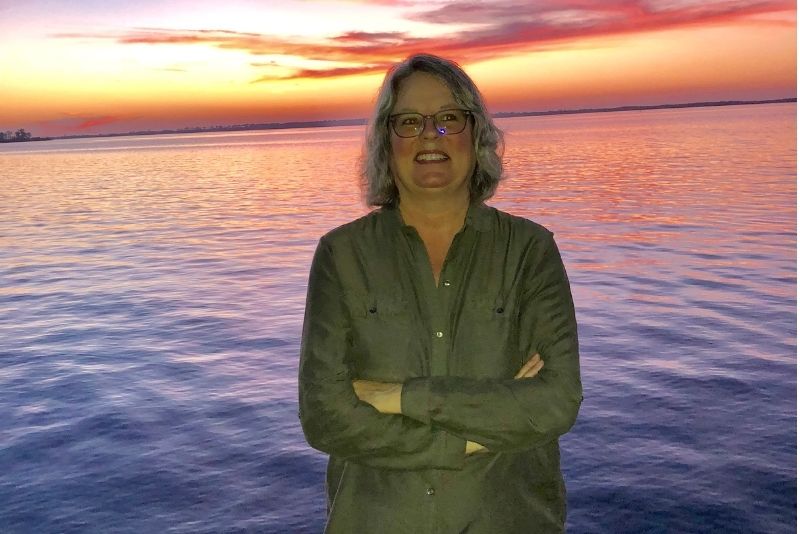
Randy: Uh, she was no longer in her. Horrible battle. Uh. This pain wasn't going to come back. It was the end of it. Um, so there was, oddly, a little bit of relief. Um, she was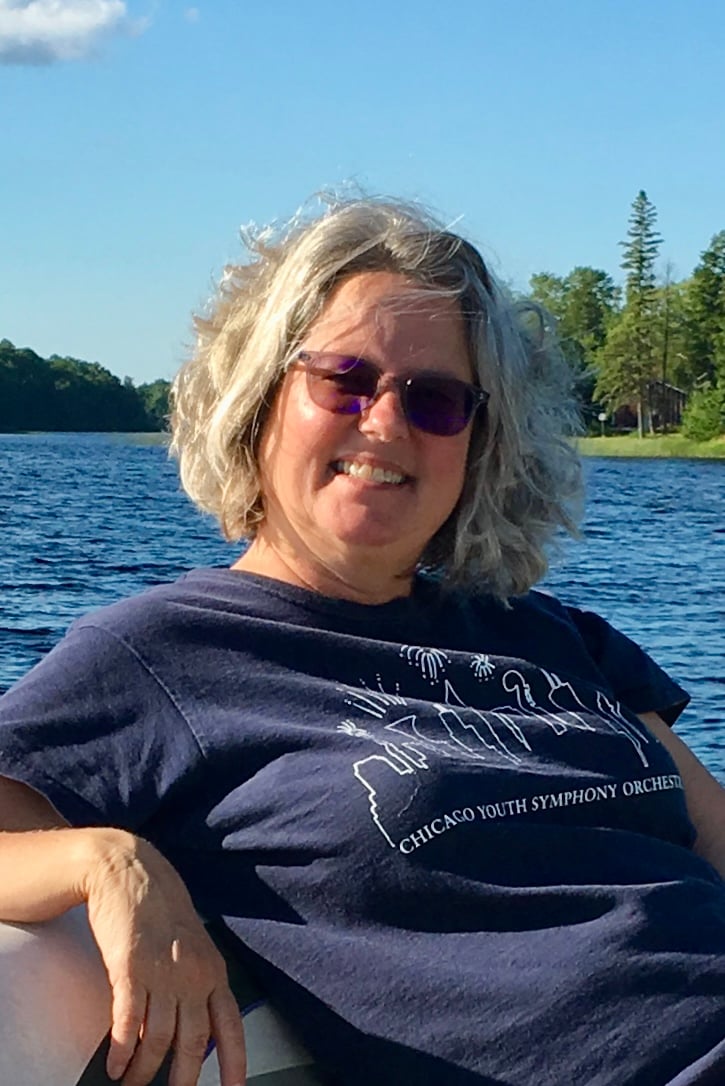 an extremely happy, laughing, smiling person. And, you know, all her friends pretty much would comment on that. And, and, uh, and to a certain extent, it was true even through most of her cancer care. And, um, so I think we knew that our best. The best we could do for Lynn was to celebrate her life and also try to carry over some of her her joy.
Donna: Mhm.
Randy: Uh, it sounds strange, right? Like, wow, this horrible, horrible thing happens. And how can you, um, how can you think joy at the time. And, and I wanted to tell her story to people and I want I had a, I have a picture of, uh, her with, um, one of our, I guess would be a great nephew. And she's holding him, and it's just big laugh on her face. And the little baby, he's like, maybe eight months, big laugh. And I show people that picture, I said. And she died two weeks later. And see this person experiencing so much joy.
Donna: Mhm.
Randy: And two weeks later she died. I saw as a real positive like she was getting every last bit out of her life. And um I said to the kids, you know, I tried to, you know, earlier I mentioned this idea of putting words around things and if I can put words around them, they make better sense to me. And I said to the kids, um, one time I said, you know, mom would want us to do something productive and not let this be destructive. Uh, granted, it's a little grimy, but it also helps me remember it.
Donna: Mhm.
Randy: But I still think about that, um, that the the worst thing would have, you know, no positives come from this. Uh, nothing better come from it. And there's been numerous times over the last six years where I think we've done a lot of better, you know, done a lot of good things. Um, that have been spurred by this experience.
Donna: Mhm.
Randy: And, um, the, uh. The other way I've talked to the kids about it is I said, you know, it's almost like we were all in a car accident together and mom died. And we all got hurt bad.
Donna: Mhm.
Randy: But we're going to get better. We're going to heal and we're going to carry on with our lives. And that takes a lot of work. You know, I. It took me about, um, six or so months after Lynn died to realize I needed some help. Some counseling.
Donna: Mhm.
Randy: Um, and that was when I started doing the counseling. Um, it was, you know, transformative. Um. I reached a point where I just didn't feel like I was getting better. I was stuck. And, um, I remember going into the counselor, the grief counselor, through hospice.
Donna: Mhm.
Randy: And said, uh, I kind of like. So what do we do now? Like, what do you how do how does this work?
Donna: Right.
Randy: What are you going to tell me that somehow is it going to fix things.
Donna: Mhm.
Randy: And of course that's not how it worked. Um, and uh it was, it was extremely helpful. He was a good listener and uh, reassured me that I wasn't going crazy and I felt myself get a little better, um, with every visit.
Donna: Yeah, absolutely. You used the word transformative, which, uh. You know, of course, I love as a social worker that you use the word transformative. Um. And I think for listeners, that's a really important word coming from your mouth, because it was by virtue of the relationship of talking to somebody about the story, about Lynn, about your disorientation, about the joy and the sorrow that helped you to feel more grounded with each visit.
Randy: And the balance. So about a year after uh, Lyn had died is when I started volunteering.
Donna: Mhm.
Randy: And I look at my volunteering as ongoing therapy.
Donna: Yeah.
Randy: Um, it's one of the things I do that helps me.
Donna: Mhm.
Randy: Uh, keep my experience alive and put some good to work from this experience. Um, and and that. While it. Might sound, um. I guess I do it for me. Uh, you know, you're you're volunteering. Uh, I think in a lot of cases, when you find, uh, something to volunteer for, that, uh, you, you have a genuine interest in, uh, you're doing it for yourself, which is perfectly fine.
Donna: Absolutely.
Randy: Um, you know who sometimes, like. Oh, I'm doing to to help others. I'm doing it, you know, to add more good to the world. Um, but, hey, you're doing it to live a better life, to feel better about your life, and and, you know, get something personally out of it.
Donna: Right.
Randy: Um.
Donna: That and that's the definition of what you talked about, uh, being productive rather than destructive.
Randy: Yeah. Yeah. Like, boy, that first time I, I drove up to Moffitt, um. I hadn't been here since she was the last discharged. She died at home. Um. And I thought. I mean, I just cried in the car.
Donna: Sure.
Randy: I thought, what am I doing? How can I go back to this place? And, um. And it was good. You know, it felt like, wow, I'm I've worked this grief muscle.
Donna: Mhm.
Randy: Um, and it's, it's stronger now and I can, I can do things that I couldn't do, I can, I can you know, lift certain emotions that would, were too heavy for me. Uh, and I can lift them and kind of move them out of the way and carry on.
Donna: Yeah.
Randy: So…
Donna: Amazing. Are there anything, uh, any other things, Randy, that we haven't talked about that you feel are important to share?
Randy: Um. I just I guess I always keep in mind, too, that everybody's, uh, situation is different.
Donna: Mhm.
Randy: And you, you're you have to respect that. Um, one thing I really learned is when someone's sharing something. A horrible health issue they're dealing with. Or you can just listen and that's enough. And and just listen with some, some compassion and empathy. But I think we we naturally, as humans, might want to relate it to our own experience or bring up an experience we had that's similar. And I found that's probably not that helpful. Um, when people are sharing their experiences. Uh. You know. That's tough.
Donna: Let them.
Randy: Yeah. Let them share it. And. And, um. I guess that's part of caregiving perhaps, too. You know, we're all kind of caregiving for each other at times.
Donna: Mhm.
Randy: You know, it's not just a formal situation. We have friends who, you know, lose family members and have go through different things. And, and we're, we're providing a little caregiving when we're on the other end of the phone and letting them tell their story. And um, I do mention counseling to folks more often. Um, because, uh, that's the first time I experienced it, and and it worked, uh, well for me. Um. And probably will in the future.
Donna: And I just also want to say that if people are interested in counseling and they really don't know where to start, um, you always can call the social worker at Moffitt Cancer Center and tell them that you're interested in some counseling to manage your own, um, life, whether you're currently caregiving or you've lost a loved one to cancer. And we can, you know, certainly guide them as to the best resources. Um. But it has been an honor to sit here with you today.
Randy: Thanks for again. Thanks for having me. I. I just thought of one other thing, which is, um, when you go through, I think whether whether your loved one survives or doesn't make it, um, your life's changed.
Donna: Mhm.
Randy: And and being really aware of that is important. Um, you know, we've tried to be very kind of upfront and vocal about what we went through, um, with, with the loss of Lynn. And I'm always conscious that if I, if I try to park it or pack it down, it's not going to be helpful. Um, so, so I, I think really, you never get over it. It's, I guess the point you continue to work with it.
We've tried to be very kind of upfront and vocal about what we went through with the loss of Lynn. And I'm always conscious that if I try to park it or pack it down, it's not going to be helpful. So I, I think really, you never get over it. I guess the point you continue to work with it.
Donna: Mhm, and you grow around it.
Randy: Yeah, you grow around it. You work with it. You find certain things where. Wow. It's it's actually helped me. Um, and back to that, you know, how does something positive come out of this and trying to not let it be doubly harmful?
Donna: Mhm, so thank you, Randy.
Randy: Thanks, Donna.
Donna DiClementi: Thank you for listening to In It Together: A Podcast About Caregiving. In It Together is brought to you by Moffitt Cancer Center's Patient Library and Welcome Center, in collaboration with our social work department. Special thanks to Lloyd Goldstein, musician in residence here at Moffitt Cancer Center's Arts in Medicine program for our music. And thanks goes to our producer Jackie Beaushaw, patient library supervisor, and Randy Isaacson, family advisor. For more information about the services mentioned in this episode, please view the show notes or visit the In It Together page on moffitt.org. Thank you for spending time listening and we hope that it was useful. Have a great day.