
Colorectal Cancer Screening
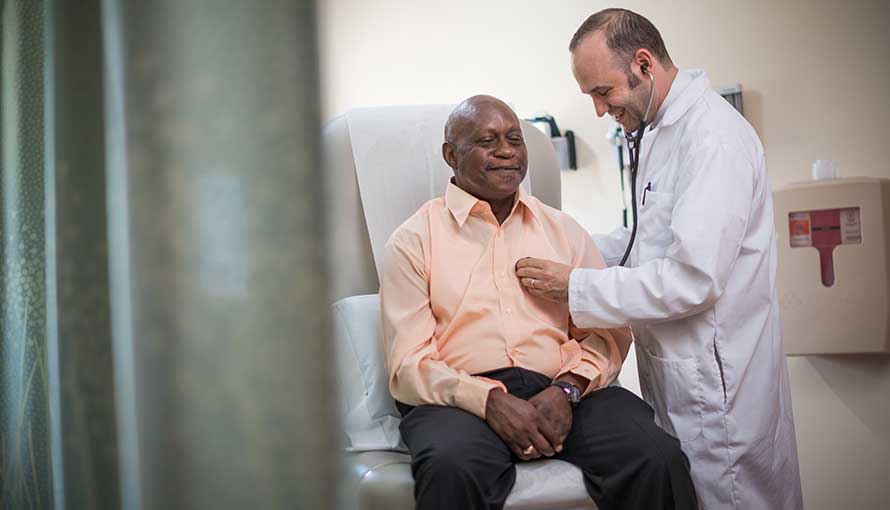
Colorectal cancer screening should begin at age 45 for individuals of average risk. In some cases, individuals should begin screening earlier if they have certain risk factors for colorectal cancer, including tobacco use, alcohol use, obesity and diabetes.
Types of colorectal cancer screening tests
Screening should also begin earlier for individuals at an increased risk of developing colon cancer, including African Americans, those with a history of inflammatory bowel disease, specific genetic syndromes, history of radiation therapy to the stomach or pelvis, and those with a family history of polyps or colon cancer.
Several methods are available for colorectal cancer screening and a decision on the best approach for an individual should be made with the guidance of a physician. Routine testing can be lifesaving, as it can lead to cancer prevention.
Endoscopic and radiologic examinations:
- Colonoscopy (recommended) – A colonoscopy is one of the most sensitive screening methods for colorectal cancer. A colonoscopy is an outpatient procedure in which a flexible scope allows the doctor to view the rectum and entire colon (right and left colon.) A colonoscopy can accurately evaluate for polyps which can be removed or tested for cancer with a biopsy. The decision to remove or sample a polyp is generally based on its appearance and size. If the colonoscopy is normal and no abnormalities are found, the next exam is repeated in 10 years.
- CT colonography (CTC, formerly referred to as "virtual colonoscopy") – A series of computerized tomography (CT) scans are taken of a patient’s colon after a small tube (catheter) is inserted into the rectum and used to fill the colon with air to improve image quality. A physician will then review the images to check for signs of colorectal cancer.
- Flexible sigmoidoscopy; can be combined with FIT or sensitive gFOBT – A flexible tube (sigmoidoscope) with a small camera attached to the end is inserted into a patient’s rectum. A flexible sigmoidoscopy only evaluates the left colon and is generally performed every five years. If small polyps are detected, the physician may remove them during the procedure for further testing. If cancer is suspected, a follow-up colonoscopy may be recommended.
Stool-based tests:
Non-invasive options for screening include stool-based and radiographic testing. We recommend discussing with your doctor which test is best for you. These tests can usually be taken at home and with a small sample of feces they can detect blood or molecular markers which may indicate the presence of a cancer or polyp in the colon.
- Guaiac-based fecal occult blood test (gFOBT) – The more sensitive gFOBT test should be used, if this method is chosen. Typically performed annually.
- Fecal immunochemical test (FIT) – The quantitative test should be performed when available; may use the qualitative test if quantitative tests are not available. Typically performed annually.
- FIT-DNA (multitargeted stool DNA test, combining fecal DNA, FIT, and DNA methylation assays) – Cologuard assay available in the United States. Typically performed every three years.
Colorectal Cancer Screening Frequently Asked Questions
Colorectal cancer screening is one of the most powerful tools we have for cancer prevention. Screening tests can find pre-cancerous polyps so they can be removed before they ever turn into cancer. They also find cancer early, when it is most treatable.
We understand you may have questions about when and how to get screened. Below are answers to the most common questions to help you take this critical step for your health.
-
What risk factors make me a candidate for earlier screening?
While average-risk screening starts at age 45, you should discuss starting earlier if you have any of the following factors:
- A family history of polyps or colon cancer
- A personal history of Inflammatory Bowel Disease (Crohn’s disease or ulcerative colitis)
- Certain genetic syndromes that increase risk
- Lifestyle factors like tobacco or heavy alcohol use, or obesity
- Your doctor will use your complete medical profile to determine the appropriate start time and frequency for your screenings.
-
Why is screening so important if I feel completely healthy?
Colorectal cancer is unique because it is highly preventable. Screening tests work in two ways:
- Prevention: They find pre-cancerous polyps (abnormal growths) and allow doctors to remove them before they can turn into cancer.
- Early Detection: If cancer is present, screening finds it at an early stage when treatment is most successful. Most early colorectal cancers produce no symptoms, which is why getting screened while you feel healthy is crucial.
-
Does getting a screening mean my doctor thinks I have cancer?
Absolutely not. Screening is performed on people who are healthy and have no symptoms. Your doctor is recommending it because screening is a proactive, preventative measure that significantly lowers the lifetime risk of developing colorectal cancer.
-
My doctor recommended a Colonoscopy. What is involved in the preparation?
Colonoscopy preparation (or "prep") is necessary to ensure your colon is completely clean so the physician can clearly view the lining to find even very small polyps. The prep generally involves:
- Following a clear liquid diet for a specified period (usually the day before).
- Drinking a prescribed liquid solution or taking laxatives, often in a split-dose (half the night before, half the morning of the procedure), to fully cleanse the bowel.
While the prep can be inconvenient, it is temporary, and most patients agree the preventative benefits are well worth the effort.
-
If I choose to do a stool-based test, what are the chances of getting a "false negative?"
A "false negative" means the test result is negative (normal), but a cancer or large polyp is actually present.
- Risk: Stool-based tests are highly accurate but do have a small risk of a false negative, especially compared to a colonoscopy. They are designed to be repeated regularly (annually for FIT, every three years for FIT-DNA) to compensate for this risk.
- Action: It is critical to stay on schedule with your recommended stool test frequency. If you notice any new symptoms between tests (such as bleeding or change in bowel habits), you should contact your doctor immediately, regardless of your last screening result.
Contact Moffitt Cancer Center Today
Because colon cancer is one of the only cancers that can be easily and reliably detected in people who do not have symptoms, Moffitt Cancer Center encourages individuals to stay up-to-date with their screenings. If the results of a colon cancer screening test show the presence of a precancerous polyp or cancerous lesion, our expert oncologists can develop an individualized treatment plan.
If you’ve been diagnosed with colorectal cancer and would like to learn more about treatment options, call 1-888-663-3488 or submit a new patient registration form online.