Non-Small Cell Lung Cancer

Non-small cell lung cancer (NSCLC) develops in the closely packed epithelial cells that line the airways of the lungs (bronchi). Normally, these cells help protect and maintain healthy lung tissue, but if a genetic mutation occurs in the cellular DNA, the cells can grow uncontrollably and form cancerous tumors.
Most lung cancers are classified as either non-small cell or small cell, based on the behavior of the cancerous cells and their appearance when viewed under a microscope. NSCLC is the most common type, accounting for approximately 85% of all lung cancer diagnoses.
Compared to small cell lung cancer, NSCLC generally grows and spreads more slowly, which can make it more responsive to localized treatments, such as surgery and radiation therapy, especially when detected early.
What causes non-small cell lung cancer?
The causes of NSCLC are not fully understood. In a broad sense, cancer develops as a result of abnormal changes in cellular DNA. While the triggers of these cancerous changes in lung cells are not always clear, researchers have identified several factors that may increase the risk of developing NSCLC. These include:
Smoking
The link between tobacco smoke and lung cancer is well established. The American Cancer Society estimates that up to 80% of all lung cancer cases are caused by smoking, while many others are related to inhaling secondhand smoke.
Environmental exposures
Frequent exposure to certain harmful chemicals, including those found in air pollution, diesel exhaust and asbestos, may increase the risk of developing lung cancer. Over time, these substances can damage sensitive lung tissue and lead to abnormal cell growth, which can eventually result in cancer.
Genetics
Some people are genetically predisposed to developing lung cancer. Those who have a family history of the disease should be especially mindful of potential symptoms, even if they do not smoke.
What are the symptoms of non-small cell lung cancer?
NSCLC often causes few or no symptoms in its early stages. As the tumor grows and spreads, however, noticeable symptoms may begin to appear. Common warning signs include:
- A persistent cough, which may be dry or produce mucus or phlegm
- Wheezing and shortness of breath
- Fatigue and lack of energy
- Hoarseness and other vocal changes
- Coughing up blood (even small amounts)
- Chest pain that worsens with deep breathing, laughing or coughing
- Unexplained weight loss or reduced appetite
While these symptoms are more often caused by a noncancerous condition, such as an infection or chronic lung disease, it is important to promptly discuss any unusual changes with a physician. An early evaluation can allow for an accurate diagnosis and, if lung cancer is present, the best possible chance for successful treatment.
"The doctor put me in a clinical trial and I’m still here, thanks to him and thanks to Moffitt."
Request an appointmentHow is non-small cell lung cancer diagnosed?
A biopsy is the only way to definitively diagnose NSCLC. However, several diagnostic steps may be taken before a biopsy is performed.
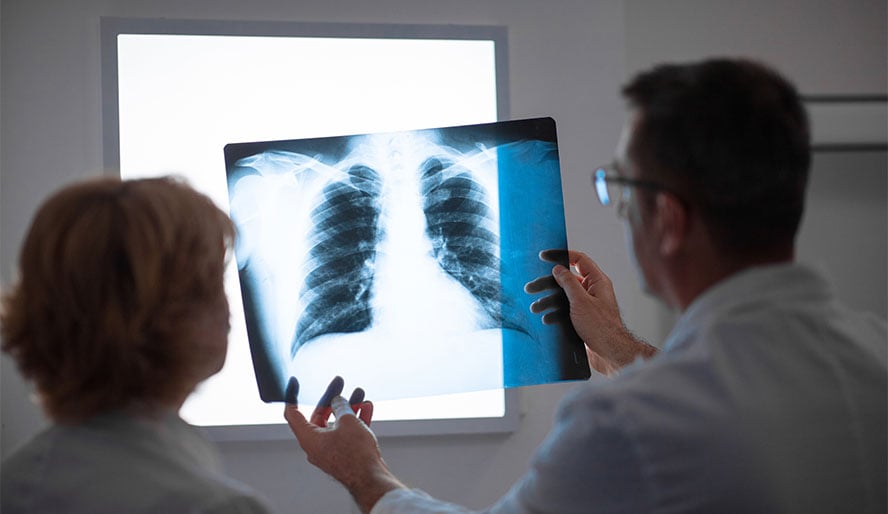
If the patient shows possible signs of lung cancer, the physician will perform a comprehensive physical examination and review the patient’s medical and smoking history. If the findings suggest a need for further evaluation, imaging scans are usually the next step. High-quality images can help the physician visualize the lungs and identify any abnormal growths or changes.
Common imaging tests used for diagnosing lung cancer include:
- Chest X-ray
- Computed tomography (CT) scan
- Magnetic resonance imaging (MRI) scan
- Positron emission tomography (PET) scan
In addition to helping the physician evaluate suspicious areas, these imaging studies may also reveal whether lung cancer has spread (metastasized) to other parts of the body.
If imaging suggests cancer may be present, the physician will order a biopsy to collect a small sample of lung tissue or fluid for microscopic examination by a pathologist. Several minimally invasive biopsy techniques can be used for diagnosing lung cancer, including:
- Fine needle aspiration (FNA) – Uses a thin, hollow needle to remove small pieces of lung tissue
- Thoracentesis – Uses a catheter-over-needle device or a specialized ultrasound-guided needle to draw out fluid that has accumulated around the lungs
The choice of biopsy method will depend on several factors, including the location of the suspected tumor and the patient’s age, symptoms and overall health. Once the diagnosis is confirmed, the physician will order additional testing to determine the cancer type, stage and molecular profile, all of which will guide treatment planning.
#1 Cancer Hospital in Florida
Schedule an AppointmentWhat are the types of non-small cell lung cancer?
NSCLC has three main subtypes, all of which look similar when viewed under a microscope. The main difference lies in the type of epithelial cell where the cancer begins. Because each subtype responds differently to cancer therapies, this information is key to developing an effective treatment plan.
Adenocarcinoma
Adenocarcinoma is the most common subtype of non-small cell lung cancer. It typically begins in the mucus-producing cells found in the outer areas of the lungs. This form of lung cancer occurs more frequently in women and in individuals who have never smoked. Because adenocarcinoma tends to develop slowly and is often detected before it spreads, it is more likely to be diagnosed at an early stage and generally carries a better prognosis than other types of lung cancer.
Squamous cell (epidermoid) carcinoma
Squamous cell carcinoma is the second most common subtype of non-small cell lung cancer. It begins in the thin, flat squamous cells that line the bronchi and occurs more often in men than in women. Although this type of cancer typically grows slowly, it can form a cavity within the lung if it progresses without treatment.
Large cell (undifferentiated) carcinoma
Large cell carcinoma is the least common subtype of non-small cell lung cancer. It can develop in several types of large cells within the lungs, distinct from those involved in adenocarcinoma and squamous cell carcinoma. Because large cell carcinoma tends to grow and spread quickly, it is often more challenging to treat than the other major subtypes.
What are the stages of non-small cell lung cancer?
Determining the stage of lung cancer is a crucial step in planning treatment. Staging describes the size and extent of the tumor, including whether it has spread to nearby lymph nodes or other parts of the body.
NSCLC may be classified as:
Stage 0 non-small cell lung cancer (carcinoma in situ)
In stage 0, abnormal cells are found in the top lining of the bronchi but have not yet invaded deeper lung tissues or spread outside the lung. Because the cancer is confined to the surface layer of the lung, it is considered pre-invasive.
At this earliest stage, surgical removal of the affected area of the lung may offer a cure. In some cases, a minimally invasive procedure, such as a bronchoscopic resection or laser therapy, may be used. The goal of treatment is to completely remove or destroy all abnormal cells before they can develop into invasive cancer.
Stage 1 non-small cell lung cancer
Stage 1 NSCLC indicates the tumor is small (usually less than 4 centimeters in diameter) and limited to one lung. There is no lymph node involvement.
Surgery is the primary treatment for stage 1 non-small cell lung cancer, and it is often curative. For a patient who cannot undergo a surgical procedure, stereotactic body radiation therapy (SBRT) may be an alternative. In some cases, chemotherapy may be recommended after surgery to lower the risk of cancer recurrence.
Stage 2 non-small cell lung cancer
At stage 2, the tumor may have grown larger than 4 centimeters in diameter or cancerous cells may have spread to nearby lymph nodes or the chest wall, diaphragm or other structures near the lungs. Although more advanced than stage 1, stage 2 NSCLC is still potentially curable with aggressive treatment.
Surgery remains a standard treatment option if the tumor can be removed safely. After surgery, chemotherapy is often administered to destroy any microscopic cancer cells that may remain. Radiation therapy may also be used in certain cases, particularly if lymph nodes are involved or if the surgical margins are close. For a patient who is unable to tolerate surgery, chemoradiation may be considered.
Rated High Performing in Lung Cancer Surgery
Schedule an AppointmentStage 3 non-small cell lung cancer
Stage 3 NSCLC can be further classified into three subcategories (3A, 3B and 3C) based on the size of the tumor, the extent of lymph node involvement and the degree of cancer spread within the chest. At this locally advanced stage, the tumor may have reached lymph nodes near the center of the chest or affected vital structures, such as the heart, trachea and esophagus.
Stage 3 non-small cell lung cancer often requires a multispecialty treatment approach. In some cases, surgery may still be an option if the tumor can be removed completely. Many patients receive a combination of chemotherapy and radiation therapy (chemoradiation) either before or after surgery for heightened treatment effectiveness. Immunotherapy has also become an important option for some patients, helping the immune system recognize and attack the cancer cells. The goals of stage 3 NSCLC treatment are to control the cancer, shrink the tumor and prevent further spread while maintaining quality of life.
Stage 4 non-small cell lung cancer (metastatic disease)
Stage 4 NSCLC indicates the tumor has spread to the other lung, the fluid around the lungs (pleural fluid), the fluid around the heart (pericardial fluid) or a distant part of the body, such as the brain, bones, liver or adrenal glands. While metastatic lung cancer is generally not curable, several treatments are available to slow its progression, relieve the symptoms and improve the outcome.
Systemic therapy is the cornerstone of treatment for stage 4 non-small cell lung cancer. Options may include chemotherapy, immunotherapy or targeted therapy for a tumor with a specific gene mutation, such as EGFR, ALK or ROS1. In certain cases, radiation therapy or surgery may be used to alleviate symptoms or manage isolated areas of cancer. Stage 4 NSCLC treatment is highly individualized and focuses on balancing cancer control with maintaining comfort and overall well-being.
How does non-small cell lung cancer staging guide treatment?
The stage of NSCLC provides a roadmap for treatment planning as follows:
- Early-stage cancer – At stages 0 through 2, surgery generally offers the best chance for cure, often with chemotherapy or radiation therapy for added protection against cancer recurrence.
- Locally advanced cancer – At stage 3, a combined treatment regimen, such as chemoradiation, surgery and immunotherapy, can control the tumor and improve the long-term outcome.
- Advanced cancer – At stage 4, systemic therapy can target cancer cells that have spread throughout the body, focusing on slowing the progression of the tumor, reducing the symptoms and supporting the patient’s quality of life.
In addition to guiding treatment planning, accurate staging can help the patient and their healthcare team better understand the outlook and what to expect from treatment.
How is non-small cell lung cancer treated?
The optimal treatment approach for NSCLC can vary based on the stage of the tumor, the patient’s overall health and whether the cancer has specific genetic characteristics. Many patients receive more than one type of therapy to control the tumor more effectively and improve the long-term outcome. Typically, a multispecialty team—including surgical, medical and radiation oncologists—will work together to create a personalized care plan.
Surgery for non-small cell lung cancer
Surgery is the primary treatment for early-stage NSCLC, when the cancer is confined to one lung and has not spread to nearby lymph nodes or distant areas of the body. The goal is to completely remove the tumor along with a margin of surrounding healthy tissue for microscopic analysis by a pathologist.
The types of surgery for non-small cell lung cancer include:
- Wedge resection or segmentectomy – Removes a small portion of the lung containing the tumor
- Lobectomy – Removes one lobe of the lung (the most common treatment approach for localized NSCLC)
- Pneumonectomy – Removes the entire lung if the tumor involves a large or central area of the lung
Surgery may be followed by chemotherapy, radiation therapy or targeted therapy to lower the risk of cancer recurrence. Minimally invasive surgical techniques, such as video-assisted thoracoscopic surgery (VATS) and robotic surgery, can help reduce the recovery time for some patients.
Chemotherapy for non-small cell lung cancer
Chemotherapy uses powerful medications that enter the bloodstream and circulate throughout the body to reach and destroy widespread cancer cells. It may be used before surgery to shrink a tumor and make it easier to remove, after surgery to help prevent cancer recurrence or as the main treatment for advanced NSCLC.
The standard chemotherapy approach for non-small cell lung cancer typically combines a platinum-based agent, such as cisplatin or carboplatin, with another chemotherapy drug, such as a taxane (paclitaxel), antifolate antimetabolite (pemetrexed) or nucleoside analog (gemcitabine).
Radiation therapy for non-small cell lung cancer
Radiation therapy uses precisely targeted beams of energy to destroy cancer cells while sparing nearby healthy tissues. It may be used alone, after surgery or in combination with chemotherapy.
The types of radiation therapy for NSCLC include:
- External beam radiation therapy (EBRT) – Delivered from a specialized machine (linear accelerator) located outside the patient’s body, typically given five days per week for four to nine weeks
- Stereotactic body radiation therapy (SBRT) – Delivers higher-dose radiation beams over one to five sessions to treat small, early-stage tumors
Radiation therapy can also help relieve the symptoms of advanced-stage NSCLC, such as pain and shortness of breath, if surgery is not feasible.
Chemoradiation for non-small cell lung cancer
For some patients with stage 3 NSCLC, chemotherapy and radiation therapy may be used together. Known as chemoradiation, this combined modality therapy can provide better tumor control than either treatment alone.
Chemotherapy can make cancer cells more sensitive to radiation therapy by interfering with the way those cells repair damage. Normally, when radiation therapy injures a cell’s DNA, the cell will attempt to fix the damage. Certain chemotherapy drugs can disrupt this repair process or weaken the cancer cells’ ability to recover. As a result, radiation therapy becomes more effective at destroying the tumor.
Additionally, chemotherapy can slow or stop cancer cell growth, keeping more cells in the stages of the cell cycle when they are most vulnerable to radiation therapy. This combined effect—known as radiosensitization—is why chemotherapy and radiation therapy can improve tumor control when used together.
The healthcare team will closely coordinate the timing and dosage to maximize the effectiveness of treatment while managing any side effects. After completing chemoradiation, some patients may receive consolidation immunotherapy, such as durvalumab, to help the immune system continue fighting any remaining cancer cells.
Immunotherapy for non-small cell lung cancer
Immunotherapy boosts the ability of the body’s immune system to identify and destroy cancer cells. This innovative treatment approach may be appropriate for a patient with advanced or recurrent NSCLC, either alone or in combination with chemotherapy.
Common immunotherapy drugs used to treat non-small cell lung cancer include:
- Pembrolizumab (Keytruda®)
- Nivolumab (Opdivo®)
- Atezolizumab (Tecentriq®)
- Durvalumab (Imfinzi®)
These medications target specific proteins—such as PD-1, PD-L1 or CTLA-4—that cancer cells use to hide from the immune system. By blocking these pathways, immunotherapy can help restore the body’s natural ability to recognize and attack cancer cells.
Targeted therapy for non-small cell lung cancer
Targeted therapy is a form of precision medicine that focuses on the specific genetic mutations or proteins that are driving cancer growth. Before starting treatment, the patient will undergo genetic testing (also known as molecular profiling) to identify any mutations that may respond to targeted drugs.
Common molecular targets and the corresponding treatments include:
- EGFR mutations – Treated with osimertinib (Tagrisso®)
- ALK rearrangements – Treated with alectinib (Alecensa®) or lorlatinib (Lorbrena®)
- ROS1 rearrangements – Treated with entrectinib (Rozlytrek®)
- KRAS G12C mutations – Treated with sotorasib (Lumakras®)
Targeted therapy is taken orally in pill form and often causes fewer side effects than traditional chemotherapy.
Prophylactic cranial irradiation (PCI) for non-small cell lung cancer
PCI is most commonly used in the treatment of small cell lung cancer. However, it may be considered for a patient with NSCLC who has an increased risk of brain metastasis. This specialized therapy delivers low doses of radiation therapy to the brain to destroy microscopic cancer cells that may not yet be visible on imaging scans, helping to reduce the likelihood of the cancer spreading to brain tissue.
Supportive care for non-small cell lung cancer
Supportive care is an essential component of NSCLC treatment at every stage. It focuses on relieving symptoms, such as pain, fatigue and shortness of breath, while also supporting emotional well-being and overall quality of life. Supportive care specialists will work closely with the oncology team to provide comprehensive, compassionate care that addresses the patient’s needs throughout their treatment journey.
How is recurrent or relapsed non-small cell lung cancer treated?
Even after successful treatment, lung cancer can sometimes return. Treatment options for recurrent NSCLC can vary depending on several factors, including how much time has passed since the initial therapy, the location of the recurrence and whether new genetic mutations have developed in the cancer cells. The primary goals of treatment are to control the growth of the tumor, relieve the symptoms and preserve the patient’s quality of life.
NSCLC recurrence can occur near the original tumor site or in a distant area of the body, such as the brain, bones or liver. To determine the next steps, the oncology team will evaluate multiple factors, including the type of relapse and how the cancer responded to prior treatment. The two main types of NSCLC relapse are:
- Sensitive relapse – The cancer returns months or years after treatment is completed and initially responded well to therapy. These tumors may respond to retreatment with the same or similar drugs.
- Refractory relapse – The cancer progresses during or shortly after treatment, showing resistance to prior therapies. These tumors typically require a different approach or a new type of therapy.
After a thorough evaluation, including imaging studies and a biopsy if needed, the oncology team will determine which category applies and develop a tailored treatment plan.
Molecular testing and rebiopsy for recurrent or relapsed non-small cell lung cancer
For patients with recurrent NSCLC, molecular retesting is often recommended. Cancer cells can change over time, and new mutations may appear that open the door to targeted treatment options. A rebiopsy or liquid biopsy—which can detect cancer cells or pieces of DNA shed by tumor cells into the bloodstream—can help the physician identify key genetic alterations, such as:
- EGFR, ALK, ROS1, BRAF, KRAS or MET mutations
- PD-L1 expression, which can determine eligibility for immunotherapy
This updated information can help ensure the patient receives the most effective, personalized therapy based on their current cancer profile.
Second-line therapy options for recurrent or relapsed non-small cell lung cancer
If the initial treatment for NSCLC loses effectiveness, several second-line options may be available depending on the patient’s previous therapy, overall health and molecular test results. These may include:
Immunotherapy for recurrent or relapsed non-small cell lung cancer
If NSCLC progresses after chemotherapy, immunotherapy may help restore the immune system’s ability to recognize and attack the cancer cells. Common immunotherapy drugs used in this setting include:
- Nivolumab (Opdivo®)
- Pembrolizumab (Keytruda®)
- Atezolizumab (Tecentriq®)
These medications may be used alone or in combination with chemotherapy, depending on the patient’s PD-L1 levels and prior treatment history. Immunotherapy can be especially effective for a patient who did not previously receive it as a first-line therapy.
Targeted therapy for recurrent or relapsed non-small cell lung cancer
If molecular testing reveals a new or previously untreated gene mutation, targeted therapy may be an option. Common targets and their corresponding treatments include:
- EGFR mutations – Osimertinib (Tagrisso®)
- ALK rearrangements – Lorlatinib (Lorbrena®)
- ROS1 rearrangements – Entrectinib (Rozlytrek®)
- KRAS G12C mutations – Sotorasib (Lumakras®) or adagrasib (Krazati®)
- MET exon 14 skipping – Capmatinib (Tabrecta®)
These therapies specifically block the pathways used by cancer cells to grow and spread, often with fewer side effects than chemotherapy.
Chemotherapy for recurrent or relapsed non-small cell lung cancer
If immunotherapy and targeted therapy are not suitable second-line options, chemotherapy may still play an important role in treating recurrent NSCLC. Medications such as docetaxel, pemetrexed and gemcitabine may be used alone or in combination to help control tumor progression and relieve symptoms.
In some cases, docetaxel combined with ramucirumab (Cyramza®)—a targeted drug that blocks tumor blood vessel growth—can be effective for advanced NSCLC that has progressed after platinum-based chemotherapy.
Clinical trials and emerging therapies for recurrent or relapsed non-small cell lung cancer
A patient with recurrent or refractory NSCLC may be an excellent candidate for a clinical trial. These important research studies are designed to evaluate the effectiveness of promising new treatments, such as next-generation targeted drugs, immunotherapy combinations and personalized vaccines, in comparison to the current standard of care. In addition to gaining access to novel therapies that are not yet widely available, a clinical trial participant can help shape the future of lung cancer care.
Supportive care during non-small cell lung cancer recurrence
Managing symptoms and maintaining quality of life are central parts of care for recurrent NSCLC. Supportive care focuses on easing pain, fatigue, shortness of breath and emotional distress while the patient continues active cancer treatment. A multispecialty team will ensure the patient receives both effective therapy and compassionate support every step of the way.
Florida's Cancer Center of Excellence
Moffitt is a Cancer Center of Excellence by the state of Florida. The designation recognizes providers that exceed service standards and excel in providing quality, comprehensive and patient-coordinated care.
What are the possible side effects of non-small cell lung cancer treatment?
NSCLC treatment may include a combination of surgery, chemotherapy, radiation therapy, immunotherapy and/or targeted therapy. While these treatments are designed to control or eliminate the cancer, they can also cause side effects that vary from person to person. Understanding what to expect and how to manage any side effects can help the patient stay strong and comfortable throughout their care.
Side effects of surgery for non-small cell lung cancer
A surgical procedure, such as a segmentectomy, lobectomy or pneumonectomy, is the standard treatment for early-stage NSCLC. Recovery can vary based on the extent of the procedure and the patient’s overall health.
Possible side effects of surgery for NSCLC include:
- Pain or discomfort near the incision site
- Shortness of breath or reduced lung capacity
- Fatigue and weakness
- Cough or sore throat from the anesthesia or breathing tube
- Increased risk of infection or excessive bleeding
Usually, any postsurgical pain can be managed with prescribed medications and breathing exercises to help restore lung function. Pulmonary rehabilitation and gentle activities will be encouraged to improve breathing and endurance. The healthcare team will monitor the patient for complications, such as infection and fluid buildup, ensuring early intervention if any issues arise. With time, many patients can resume normal or near-normal activity levels.
Side effects of chemotherapy for non-small cell lung cancer
Chemotherapy targets rapidly dividing cells throughout the body. While it can be highly effective against cancer, it can also impact healthy cells. This may lead to certain side effects, such as:
- Fatigue and weakness
- Nausea and vomiting
- Hair thinning or hair loss
- Reduced appetite and changes in sense of taste
- Low blood cell counts, increasing the risk of infection and anemia
Supportive medications, such as anti-nausea agents, growth factors and antibiotics, can help prevent or reduce side effects. The patient will be encouraged to consume a balanced diet, stay hydrated and rest as needed. Through routine bloodwork, the healthcare team will monitor the treatment response and adjust the dose as necessary to minimize toxicity while preserving effectiveness.
Side effects of radiation therapy for non-small cell lung cancer
Radiation therapy uses focused energy beams to destroy cancer cells in a targeted area of the body, such as a lung or the nearby lymph nodes. It may be used after surgery or in combination with chemotherapy.
Common side effects of radiation therapy for NSCLC include:
- Fatigue
- Skin irritation or redness in the treated area
- Cough or shortness of breath
- Sore throat or difficulty swallowing
Most radiation-related side effects gradually lessen after treatment is completed. In the meantime, skin irritation can often be relieved with gentle cleansing, moisturizing and avoiding sun exposure on the treated area. Fatigue may be managed through regular rest, light physical activity and a balanced diet. Throat or swallowing discomfort may improve with medications and dietary adjustments, such as soft foods and adequate hydration.
Side effects of immunotherapy for non-small cell lung cancer
Immunotherapy can help the body’s immune system detect and destroy cancer cells more effectively. While usually well-tolerated, it can sometimes cause the immune system to attack healthy tissues. Possible side effects include:
- Fatigue
- Skin rash or itching
- Diarrhea or colitis
- Cough or shortness of breath from lung inflammation (pneumonitis)
- Hormonal changes, including thyroid dysfunction
Frequent monitoring can help ensure early detection of immune-related reactions. When side effects occur, corticosteroids or other immunosuppressing medications can help control inflammation. Through routine blood testing, the healthcare team will track the patient’s hormone and organ function. Most side effects of immunotherapy improve with prompt treatment.
Side effects of targeted therapy for non-small cell lung cancer
Targeted therapies act on the specific gene mutations that drive cancer growth, such as EGFR, ALK or ROS1. Because these medications are designed to attack cancer cells more precisely than traditional chemotherapy, the side effects are often milder. Some patients may experience:
- Skin rash or acne-like irritation
- Diarrhea
- Fatigue
- Changes in liver function
If side effects become bothersome, the physician may temporarily pause therapy or adjust the dose to help relieve the symptoms without reducing long-term effectiveness. Otherwise, mild skin reactions can often be treated with medicated creams or antibiotics, while proper hydration can help control diarrhea. During targeted therapy, regular blood tests will be performed to help the physician monitor the patient’s organ function and ensure treatment safety.
Side effects of prophylactic cranial irradiation (PCI) for non-small cell lung cancer
PCI delivers low doses of radiation therapy to the brain to destroy microscopic cancer cells that may not yet be visible on imaging scans. Modern prophylactic cranial irradiation techniques are designed to protect healthy brain tissues while delivering radiation therapy effectively. Nevertheless, side effects may occur, such as:
- Fatigue
- Headaches
- Temporary hair loss
- Nausea
- Memory or concentration difficulties
- Balance or coordination changes (rarely)
Medications such as anti-nausea drugs and pain relievers can help alleviate immediate symptoms, while fatigue is best managed with rest and light activity. Cognitive exercises and rehabilitation programs may also help the patient maintain memory and concentration. Most side effects gradually improve after treatment ends, and the healthcare team will closely monitor the patient to ensure the benefits of PCI outweigh any potential risks.
Supportive care and symptom management
Managing the side effects of treatment is an essential part of comprehensive lung cancer care. A multispecialty team—including oncologists, nurses, dietitians, social workers and other medical professionals—can provide essential support throughout NSCLC treatment, providing the patient with personalized guidance on nutrition, energy conservation, emotional well-being and symptom control. This integrated approach can help the patient maintain their quality of life while focusing on healing and recovery.
Benefit from world-class care at Moffitt Cancer Center
The multispecialty team in Moffitt’s renowned Thoracic Oncology Program provides the latest advances in treatment for all forms of lung cancer, including NSCLC. In a single location, our patients have access to highly respected medical oncologists, pulmonologists, thoracic surgeons, radiation oncologists, pathologists and other experts who focus exclusively on lung cancer. Working together, our team develops individualized treatment plans and refines them as necessary to ensure the best possible outcome and quality of life for each of our patients.
Moffitt also spearheads a groundbreaking clinical trial program and ambitious research initiatives to improve lung cancer treatment options, as well as a comprehensive and convenient Lung Cancer Screening and Surveillance Program. If you would like to speak with a Moffitt professional about lung cancer prevention, screening, treatment or clinical trials, you can request an appointment with a specialist at Moffitt by calling 1-888-663-3488 or submitting a new patient registration form online. We do not require referrals.
Non-Small Cell Lung Cancer