
Soft Tissue Sarcoma
Soft tissue sarcoma is a cancer that can originate in muscles, tendons, ligaments, joint linings (synovial membranes), nerves, blood vessels or fat. These soft tissues connect, support and surround structures throughout the body. Most often, the tumors develop in the arms, legs, chest and abdomen, although they can occur virtually anywhere.
Accounting for less than 1% of new cancer diagnoses, soft tissue sarcoma is relatively rare. Additionally, the tumors can vary widely in terms of their type, location and behavior, which can further complicate treatment.
What causes soft tissue sarcoma?
Soft tissue sarcoma develops when healthy cells undergo harmful changes that cause the cells to grow uncontrollably and form tumors. Scientists do not fully understand the exact mechanisms behind these genetic mutations. However, through extensive studies, researchers have identified several risk factors for soft tissue sarcoma.

What are the risk factors for soft tissue sarcoma?
While soft tissue sarcoma affects people of all ages, it is more prevalent among older adults. In addition to advanced age, other known risk factors include:
- Radiation exposure – Prior radiation therapy for another cancer
- Inherited cancer predisposition syndromes – Li-Fraumeni syndrome, neurofibromatosis type 1 and retinoblastoma
- Chemical exposure – Contact with vinyl chloride, dioxins or herbicides containing phenoxyacetic acids
- Chronic lymphedema – Long-term swelling in the limbs
What are the signs and symptoms of soft tissue sarcoma?
In many cases, the first warning sign of soft tissue sarcoma is a painless lump or swelling under the skin. However, a tumor that develops in the abdomen may not produce noticeable symptoms until it grows large enough to pressure nearby nerves, organs, muscles or blood vessels. This pressure may cause:
- Abdominal pain
- Difficulty breathing
- Black, tarry or bloody stools
- Constipation
- Nausea and vomiting
- Unexplained weight loss
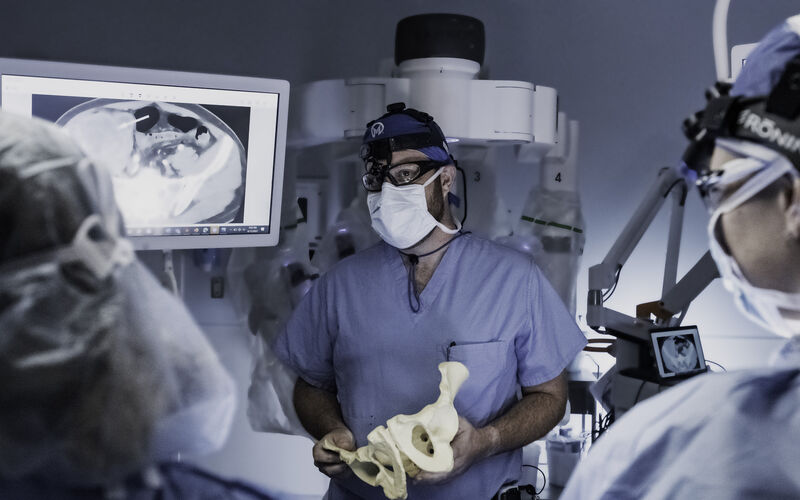
How is soft tissue sarcoma diagnosed?
If soft tissue sarcoma is suspected based on the symptoms, the physician will typically begin the diagnostic process with a physical examination and imaging to visualize the tumor and assess its location and size. Common options include:
A definitive diagnosis of soft tissue sarcoma requires a biopsy, which involves obtaining a small sample of suspicious tissue for microscopic examination by a pathologist, who can identify cancerous cells. Depending on the location and size of the tumor, the physician may order an incisional, core or excisional biopsy.
Additional lab testing may be performed on the biopsy sample, such as immunohistochemistry or molecular genetic testing, to check for specific genetic mutations and cancer markers.
How is soft tissue sarcoma treated?
In general, soft tissue sarcoma treatment is tailored to the specific type, location and stage of the tumor and the patient’s overall health. Common options include:
- Surgery – The primary treatment for most soft tissue sarcomas involves surgically removing the tumor along with some surrounding healthy tissue to ensure clear margins.
- Radiation therapy – Used before surgery, radiation therapy can shrink the tumor and make it easier to remove. Used after surgery, radiation therapy can help eliminate any remaining microscopic cancer cells.
- Chemotherapy – Chemo may be administered to address a soft tissue sarcoma that has spread or is likely to spread.
- Targeted therapy – Also known as molecularly targeted therapy or biological therapy, targeted therapy involves the use of drugs or other substances to target specific molecules that the cancer cells need to survive and spread.
- Immunotherapy – A viable treatment approach for certain patients, immunotherapy capitalizes on the body’s natural disease-fighting capabilities, enhancing the immune system’s ability to target, attack and destroy specific tumor cells.
These treatments may be used alone or in combination for heightened effectiveness.
As with all types of cancer, early detection of soft tissue sarcoma usually allows for a wider range of treatment options. Prompt and appropriate treatment is the key to achieving the best possible outcome and quality of life.
Benefit from world-class care at Moffitt Cancer Center
Moffitt’s renowned Sarcoma Program is led by a multispecialty team that focuses exclusively on soft tissue and bone cancers. We offer the latest treatment options for soft tissue sarcoma, including a robust portfolio of clinical trials. Working together, we develop an individualized treatment plan for each patient, and then continually refine the plan as appropriate.
If you would like to learn more about soft tissue sarcoma, you can request an appointment with a specialist in our Sarcoma Program by calling 1-888-663-3488 or submitting a new patient registration form online. We do not require referrals.