
What Does a Magnetic Resonance Imaging (MRI) Scan Technologist Do?
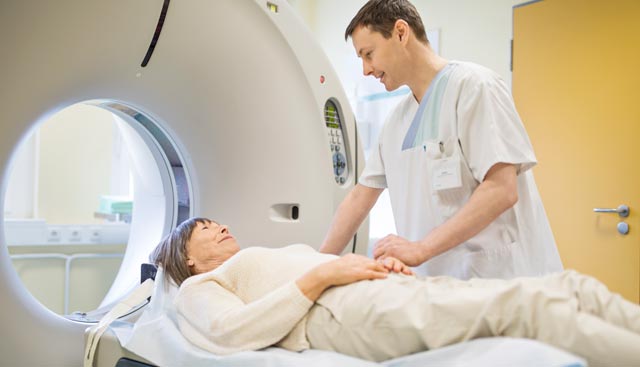
Magnetic resonance imaging scan technologists are vital members of the healthcare team, particularly in oncology. These highly specialized professionals operate sophisticated MRI equipment, creating detailed images that help physicians diagnose, treat and monitor patients with cancer and other medical conditions.
With global cancer rates on the rise, the need for skilled magnetic resonance imaging scan technologists is growing steadily. According to the U.S. Bureau of Labor Statistics, employment for MRI technologists is expected to increase by 6% from 2023 to 2032, outpacing the average growth rate for all occupations. This trend highlights the role as an appealing career choice for individuals seeking to blend technological proficiency with a commitment to patient care.
What type of education and training is required to become a magnetic resonance imaging technologist?
Typically, an aspiring MRI technologist will need to:
- Complete a radiologic technology program – The most common entry point is a two-year associate’s degree in radiologic technology; however, some professionals choose to pursue a bachelor’s degree for more advanced opportunities.
- Focus on MRI technology – After completing a formal education program, most candidates seek further training in MRI technology through specialized certification programs or on-the-job development.
- Obtain certification and licensing – Certification from the American Registry of Radiologic Technologists (ARRT) or a similar organization is typically required. Additionally, many states mandate licensure to ensure MRI technologists uphold certain professional standards.
- Gain clinical experience – Hands-on experience in a clinical setting is essential to build proficiency in using MRI equipment and working with patients.
- Continuing education – Professional development and skills enhancement can help MRI technologists stay up to date on the latest advances in MRI technology and best practices.
What are the responsibilities of a magnetic resonance imaging technologist?
Typically, a day in the life of an MRI technologist in an oncology setting involves:
- Operating MRI equipment – Setting up and calibrating magnetic resonance imaging machines, monitoring the imaging process and making adjustments as needed to achieve the best possible image clarity
- Ensuring safety – Screening patients for contraindications, including metal implants and medical devices, and following strict protocols to protect them from potential hazards, such as strong magnetic fields
- Preparing patients for imaging tests – Explaining the MRI procedure, answering questions, addressing concerns, starting intravenous (IV) catheters, administering contrast agents and positioning patients to capture high-quality images while prioritizing their comfort and safety
- Gathering documentation – Compiling all pertinent information to provide accurate and timely service to patients and ensure completion of required documentation, such as consent forms, injection documentation, release forms, progress notes, MRI patient screening forms and patient history forms
- Collaborating with other medical professionals – Communicating with oncologists and radiologists to facilitate accurate diagnostics and appropriate treatment planning
- Maintaining MRI equipment – Performing routine checks and coordinating repairs to maintain magnetic resonance imaging machines in optimal condition
What are the career specialties for magnetic resonance imaging technicians?
An MRI technologist may choose to specialize to focus their expertise and align their career with areas of personal interest and professional demand, such as:
- Oncology imaging – Specializing in imaging related to diagnosing cancer and monitoring treatment progress
- Neurological imaging – Capturing detailed images of the brain and nervous system to identify tumors and other abnormalities
- Cardiovascular imaging – Using advanced techniques to assess the heart and vascular system, which may be affected by cancer or its treatment
- Pediatric imaging – Working with children, including those with cancer, to ensure safe and effective imaging tailored to their unique needs
What are the career options for magnetic resonance imaging technologists at Moffitt Cancer Center?
Moffitt offers diverse career opportunities for MRI technologists who want to make a difference in the field of oncology. As one of the nation’s leading cancer treatment and research centers, we provide a collaborative and innovative environment where imaging specialists can excel. At Moffitt, you can:
- Work directly with patients to capture high-quality images that aid in their cancer diagnosis and treatment
- Assist with clinical trials and research projects to advance imaging technologies and improve cancer care
- Collaborate with oncologists, radiologists and researchers to contribute to groundbreaking cancer treatments
- Pursue a leadership or teaching position in our imaging department
Moffitt also supports career development through continuing education programs and opportunities for specialization.
A position as a magnetic resonance imaging technologist can be a rewarding choice for someone who is passionate about delivering outstanding patient care and advancing medical technology. If you are ready to make a meaningful impact in oncology, consider joining the Moffitt team as an MRI scan technologist. With state-of-the-art facilities and a commitment to innovation, Moffitt is the ideal place to grow your career while contributing to life-saving cancer treatments. Apply now and take your first step in an important and fulfilling journey.