

Celebrating Aging Through Stories of Care and Resilience
For many families, caring for an aging loved one is one of life’s most challenging and meaningful responsibilities.
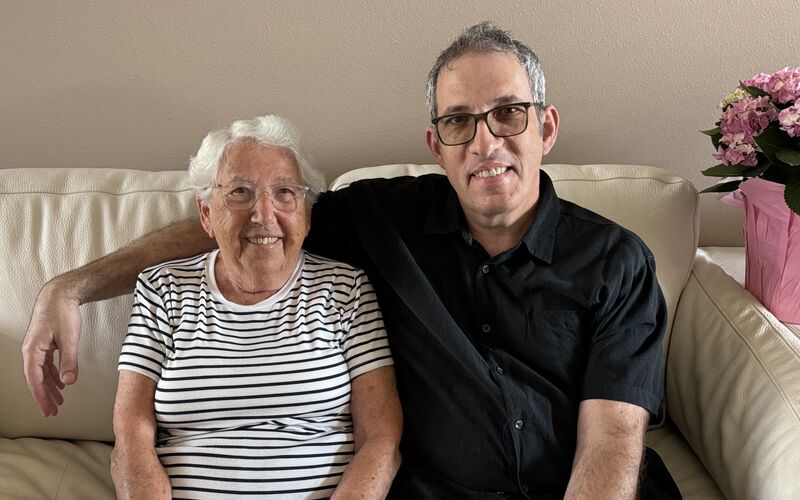
For David Dauman, advisor and co-chair of Moffitt Cancer Center’s Patient and Family Advisory Council, that journey began in 2018, when his mother, then 89 and in excellent health, was diagnosed with lung cancer.
“She was treated successfully with a newly developed radiology protocol,” Dauman said. “But about eight months later, doctors discovered a tumor on her large intestine. The Moffitt team performed surgery, which was also successful.”
Today, she is 96 and thriving, thanks to both her care team and the support of her family.
Strong Advisory Role
Caring for an older cancer patient, Dauman explained, often requires different considerations than for younger patients.
“You often serve in a stronger advisory role,” he said. “In my case, my sister and I helped explain my mother’s disease state and advised her on treatment decisions. For many elderly patients, caregivers also play a crucial role during consultations since hearing challenges or difficulty recalling details can make it harder to fully process information.”
The role brought moments of deep difficulty.
“It was emotionally hard to watch my parent confront life-and-death issues,” Dauman said. He remembers the heartbreak of watching his mother endure painful IV insertions and blood draws. Yet in those moments, he found strength by reframing his role.
“Caregiving became my opportunity to repay my mother for her lifetime of devotion to me,” he said.
Differing Perspectives
Unique challenges arise when caring for older patients, Dauman noted. Beyond finances and self-care struggles, many face different perspectives on treatment.
“When I was a patient, I had young children. So surrendering to cancer was never an option. For older patients, the decisions can be harder and more nuanced: balancing what’s appropriate care versus what might feel overly aggressive,” he said.
Through it all, Dauman leaned on his own support system, especially his wife, who cared for their children so he could focus on his mother. “My wife’s support allowed me to stand up fully for my mother,” he said.
Caregiving Advice
Looking back, Dauman has gained lessons he hopes will help other caregivers.
First, he emphasizes respecting the patient’s autonomy. “The ultimate decisions belong to your loved one.”
Second, he reminds caregivers to honor their own emotions, but privately. “Feel scared, frustrated, angry or heartbroken, just not in front of the patient.”
And finally, he encourages finding moments of joy. “Keep a sense of humor. Laughter helps both the patient and the caregiver, no matter what age.”
As we recognize National Aging Month, Dauman’s story is a reminder that caregiving is not only about providing support but also about honoring the dignity, wisdom and wishes of those who have cared for us throughout our lives.
