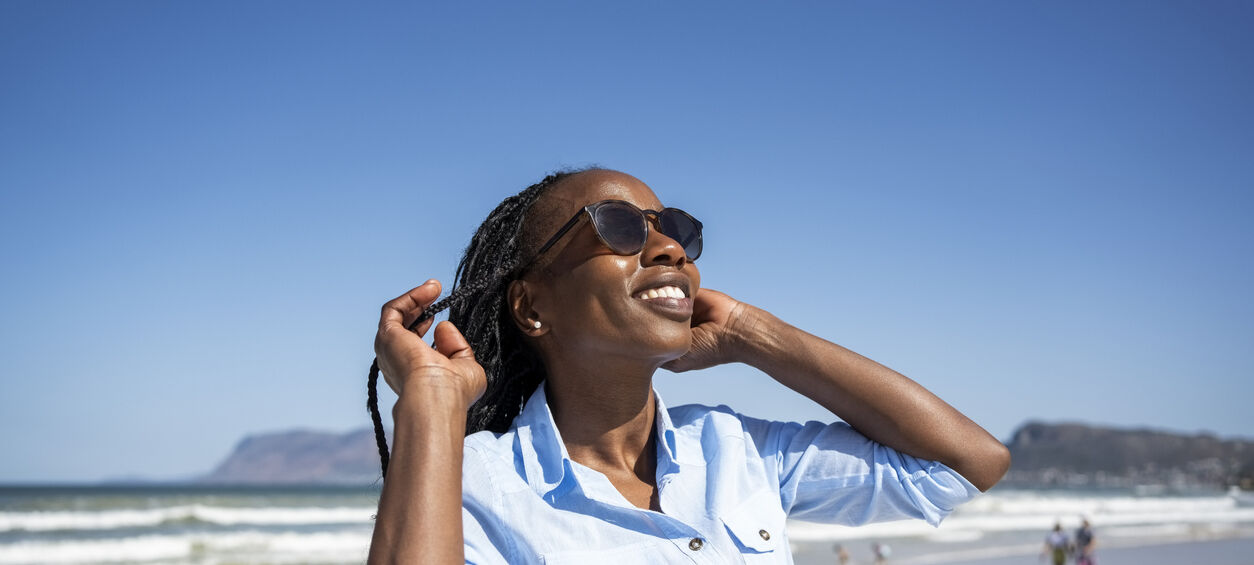
Don’t Forget To Protect Your Eyes From UV Rays This Summer
Planning for a day outside usually includes sunblock and hats. But what about your eyes?

Jonathan Zager, MD
According to Jonathan Zager, MD, a surgical oncologist in Moffitt Cancer Center’s Cutaneous Oncology Department, our eyes are nearly as susceptible to ultraviolet-induced damage as our skin. Protecting them with sunglasses, especially shades that specifically block UV rays, can help us avoid long-term damage.
UV radiation can directly damage DNA, and it can cause several health concerns for our eyes, particularly damage to the conjunctiva, cornea and lens. Too much UV radiation can cause cataracts and pterygium, a pinkish, triangular tissue growth on the cornea that can grow so large that it impairs vision.
If your eyeballs get sunburned, it can cause swelling, watery eyes and blurry vision. This condition is called photokeratitis, or snow blindness. Typically, this takes several years to develop, so one day of forgetting your sunglasses likely won’t cause permanent damage.
Buying the Perfect Pair
Sunglasses are designed to protect you from the sun, and it’s important to find a pair you like. Why? Because if you like how they look, you will be more likely to wear them.
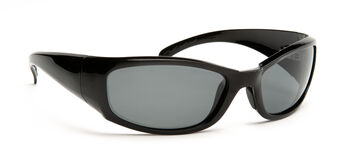 Other important factors to consider:
- Blockage of 99% to 100% of UVA and UVB rays — This is the single most important type of protection that sunglasses can provide for your eyes. Long-term exposure to UV light can lead to the development of cataracts and other eye growths, including cancer. Most sunglasses that are sold in the U.S. meet this requirement, regardless of their cost.
- Polarization — Polarized lenses can reduce reflected glare from sunlight that bounces off smooth surfaces, such as water, pavement and car windows. This feature can be helpful for driving, fishing and boating, and many are also designed to offer maximum UV protection.
- Mirror coating — A mirror finish is a thin metallic coating layered over an ordinary lens. This can increase comfort by reducing the amount of light that enters your eyes.
- Wraparound style — Large, wraparound sunglasses can help keep sunlight from shining around the frames and into your eyes, which can reduce the benefits of UV-protective lenses.
- Impact resistance — All sunglasses are required to meet impact standards established by the U.S. Food and Drug Administration for safety. While no lens is truly unbreakable, plastic lenses are less likely than glass lenses to shatter when hit by an object, such as a ball or stone. Polycarbonate plastic sunglasses are particularly durable but also tend to scratch easily. If you choose this type of lens, look for a scratch-resistant coating.
- Photochromic — A photochromic lens will automatically darken in bright light (in about 30 seconds) and lighten in low light (in about five minutes).
Other Tips
Besides sunglasses, you can protect your eyes by:
- Avoiding tanning beds since they use the same harmful UV light as the sun
- Protecting your entire face from the sun by wearing a hat with a 3-inch brim or larger
Sunglasses are particularly important for children, whose eyes are even more sensitive to the sun’s UV rays since they have larger pupils, clearer lenses and typically spend more time outdoors.
“Wear your sunglasses whenever you are out,” Zager said. “Even on cloudy days because sun damage to the eyes and eyelids can happen any time of the year.”