



Gordon Ramsay Shares Skin Cancer Diagnosis
Over the Labor Day weekend, celebrity chef Gordon Ramsay had a message for his followers on social media. Wear sunscreen!
The television star announced that he had surgery to remove basal cell carcinoma from his jawline. Basal cell carcinoma is one of the two most common forms of skin cancer and is highly treatable if it’s detected early, according to Rogerio Neves, MD, PhD, a reconstructive surgeon with the Cutaneous Oncology Department at Moffitt Cancer Center.
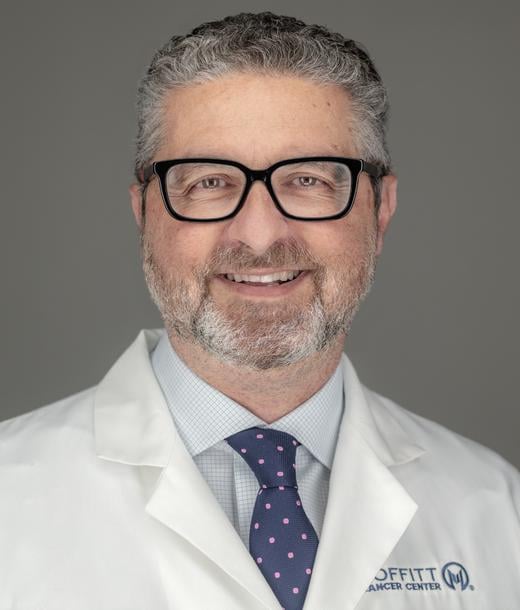
“Chronic sun exposure is one of the primary causes of basal cell carcinoma,” Neves said. “But it can also be brought on by exposure to other ultraviolet lights, including commercial tanning beds.”
According to Neves, that UV light can cause genetic mutations in skin cells, specifically the basal cells, which are responsible for producing new cells as old ones are shed.
Many Causes
The other common form of skin cancer is squamous cell carcinoma. Squamous cell carcinoma is also linked to sun exposure and can be caused by long-standing inflammation or chronic wounds or scars, according to Kenneth Tsai, MD, PhD, vice chair of Pathology Research at Moffitt. While this type of cancer is often related to sun exposure, that’s not its only cause. Human papillomavirus (HPV) infection can also be a contributor when skin squamous cell carcinoma is found in the nailbed or near the genitals.
In his posts over the weekend, Ramsay encouraged his fans to protect themselves from the sun.
“Please don’t forget your sunscreen this weekend,” Ramsay, 58, posted on Instagram along with a photo of his stitches stretching from his neck to his earlobe.
According to the World Health Organization, more than 1.5 million new cases of skin cancer were diagnosed around the world in 2022. Of those, nearly 330,000 were melanoma, a more serious form of skin cancer.
-

1.5 million
New cases of skin cancer diagnosed in 2022
Melanoma accounts for only 1% of skin cancers but causes a large majority of skin cancer deaths, according to the American Cancer Society. The organization estimates that nearly 105,000 new melanomas will be diagnosed in the United States in 2025, with a slight majority of those being found in men. Nearly 8,500 people in the U.S. will die from melanoma this year.
Protect Your Skin
The best defense against all skin cancers is protection, says Vernon Sondak, MD, chair of Moffitt’s Cutaneous Oncology Department. “Skin cancer rates are astronomical here in Florida, but if it’s detected early, it improves our chance to cure it. It’s important to remember that the recommendations for older people regarding sun protection are not any different than for anyone else.”
Experts encourage people to follow the advice of doctors rather than trends and suggestions they may see from influencers on social media platforms.
Ramsay is expected to recover from his surgery and seemed in good spirits on his post, joking, “I promise you it’s not a facelift! I’d need a refund.”
SUN SAFETY TIPS
- Exposure – Limit sun exposure between 10 a.m. and 3 p.m. when UV is its most intense.
- Clothing – Protect your skin from sun damage with clothing, including a loose-fitting, long-sleeved shirt and long pants made of a tightly woven fabric. Swimming? Opt for a T-shirt or rash guard while in the water.
- Hat – Protect your head, ears, face and neck with the shade of a wide-brimmed hat constructed of a tightly woven fabric like canvas (UV rays can penetrate a straw hat). If you wear a baseball cap, use sunscreen on exposed areas like your face, neck and ears.
- Sunglasses – Wear sunglasses that block both UVA and UVB rays. Well-designed sunglasses can help prevent cataracts and protect the delicate skin around your eyes from the harmful effects of sun exposure.
- Shade – Seek shade underneath a shelter, umbrella or tree, especially during the midday hours. Use extra caution near surfaces that reflect the sun’s rays, like water and sand.
- Sunscreen – 30 minutes before going outside, always apply a waterproof, broad-spectrum sunscreen with a sun protection factor of 15 to 30. Don’t forget your ears, the tops of your feet and the scalp. Reapply every two hours.
