How Weight Shapes Cancer Risk
SPECIAL SERIES: WOMEN IN ONCOLOGY
Women faculty at Moffitt Cancer Center come from different backgrounds around the globe. Their areas of research and clinical care span the entire cancer continuum, from treatment to prevention. Community involvement and mentorship among faculty are foundational, and we celebrate the essential roles women play in making a difference at the cancer center and in society.
For years, the link between obesity and disease mainly focused on heart problems such as high blood pressure, diabetes and stroke. Now researchers know that excess weight also plays a major role in cancer.
Obesity is linked to 13 cancer types, including breast, colon and endometrial. At Moffitt Cancer Center, four women doctors and researchers are tackling that connection from every angle, from prevention and behavior to hormones, inflammation and science in the lab.
Their message is consistent: Understanding how weight shapes cancer risk is about increasing awareness, expanding tools for weight loss and developing habits to protect your health.
The Link Between Weight and Cancer
For Karen Lu, MD, every conversation about cancer prevention starts with awareness.
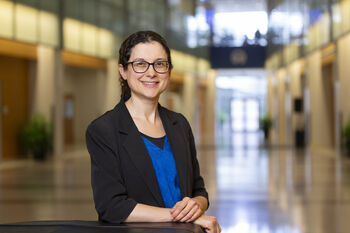
Karen Lu, MD, highlights how extra weight raises cancer risk and why early awareness is key.
“Obesity is absolutely associated with increased cancer risk,” she said.
As Moffitt’s physician in chief and a nationally recognized gynecologic oncologist, Lu has seen that connection play out in both the clinic and data.
Large population studies have shown that obesity raises the risk for several cancers in women, including breast and colon, but the connection to endometrial cancer stands out. “It’s the most tightly linked,” Lu said.
Lu also stresses that obesity doesn’t just raise the risk of developing cancer, it can also affect outcomes after diagnosis.
“For endometrial cancer, you actually have a worse outcome if you’re obese,” Lu noted. “That’s important for women to understand because now we have better interventions.”
Erin George, MD, says the connection between obesity and endometrial cancer starts deep inside the cell.
“A majority of endometrial cancers are estrogen-driven. With increased obesity, there’s more estrogen circulating that’s unopposed, and that increases the risk for those cancers,” said George, an oncologist in Moffitt’s Gynecologic Oncology Department.
Fortunately, most endometrial cancers are found early.
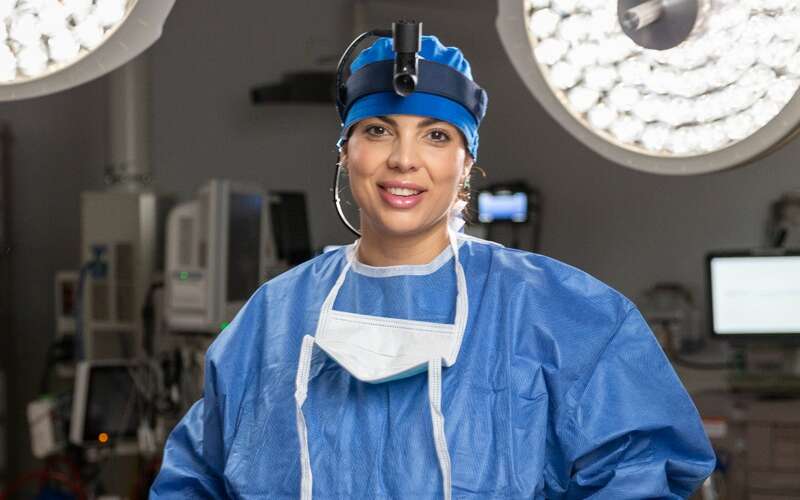
Erin George, MD, explains how weight affects gynecologic cancers and patient outcomes.
“They often present with abnormal uterine bleeding, so we usually catch them at stage 1 and can cure them with surgery alone,” she said. “But over the last two years, endometrial cancer has surpassed ovarian cancer in mortality among women in the United States. Not all of that is explained by obesity, but it can definitely play a role.”
George notes that ovarian cancer behaves differently but may still draw energy from body fat.
“Ovarian cancer tends to spread to the omentum, a fatty layer that covers the intestines,” she said. “It likes that fat-rich environment. Everyone has one, but it’s a lot bigger in women who are obese. Ovarian cancer likes to feed on fat cells. There’s still a lot we don’t understand about how obesity might impact how it spreads and metastasizes.”
In her lab, George and her team are using tiny samples of real tumors to grows miniature avatars that mimic how cancers behave inside the body. This could allow them to compare immune cells from obese versus normal-weight patients to see if there’s a difference in response to immunotherapy.
Clinically, George sees the effects of obesity often.
“Surgery is more challenging,” she said. “There’s a higher risk of blood clots and wound-healing problems.”
Another hidden problem is called sarcopenic obesity, or patients who look overweight but have also lost much of their muscle.
“Even if a patient looks overweight, they might actually be malnourished,” George said. “They have lost muscle but not fat, and those patients have worse outcomes.”
George’s advice to patients looking to make a change is to start simple and keep things realistic.
“Start small,” she said. “Ten minutes of movement here and there adds up. Take the stairs. Cut out sugary drinks. It doesn’t have to be perfect. It just has to start.”
‘More Tools to Help’
Before the current wave of weight loss medications, many women with severe obesity turned to bariatric surgery.
“There was a big study that showed the risk of all cancers went down dramatically after bariatric surgery, especially endometrial cancers,” Lu explained. “And now we have more tools to help. Not just diet and exercise or bariatric surgery, but now these GLP-1 agonists. That’s real progress.”
Monica Avila, MD, splits time between the operating room and her research, caring for women with cervical, uterine and other gynecologic cancers. Her compassion and curiosity now drive her research into whether weight loss drugs might help lower cancer risk.

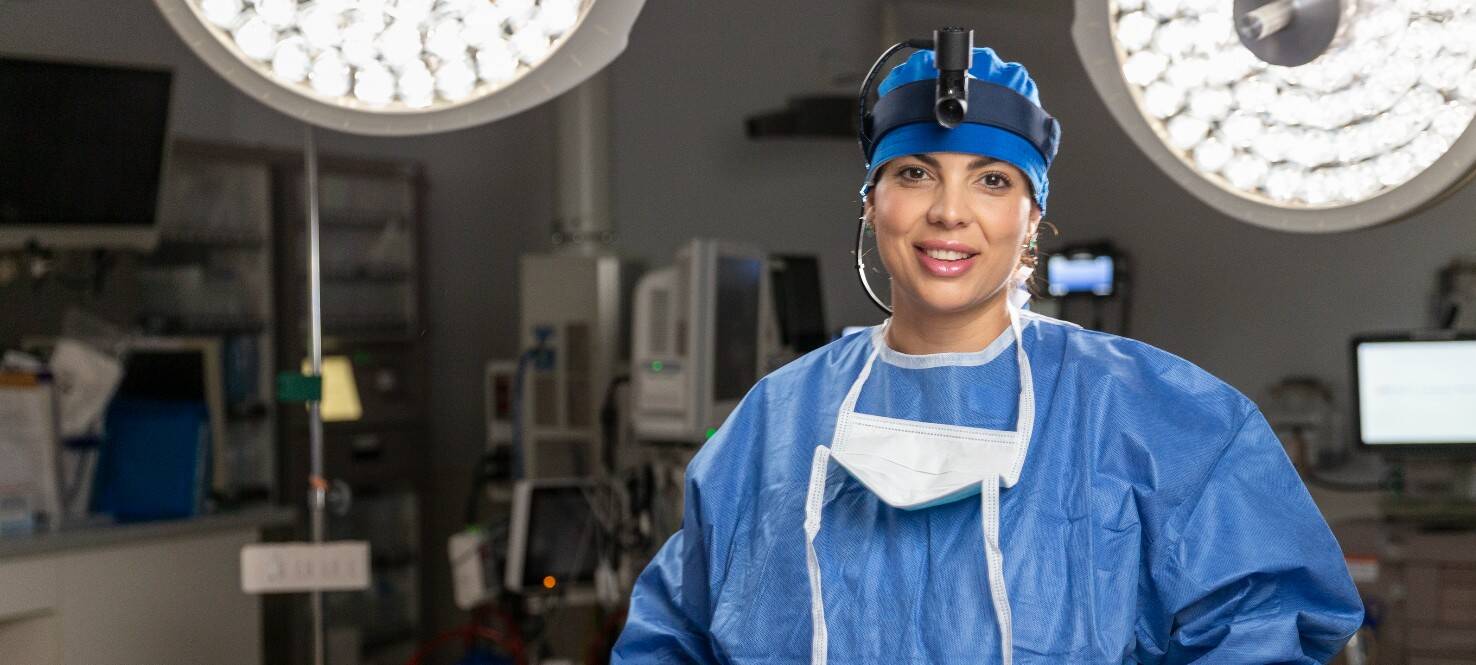
Monica Avila, MD explores whether weight-loss medictions can help lower cancer-risk.
When GLP-1 medications like Ozempic and Wegovy first arrived on the market, they were hailed as game-changers for diabetes and weight loss.
“They exploded in popularity before we had time to study them in cancer,” Avila said.
At first, scientists worried these drugs might cause cancer. Early lab studies raised concerns about thyroid cancer, but that hasn’t proven true in people.
“So far, it’s only been linked to medullary thyroid cancer, which is very rare and mostly seen in people with a genetic condition,” Avila said. “What we’re actually seeing in patients is the opposite — a lower risk of several other cancers.”
Newer studies show these drugs might help lower the risk of certain cancers, especially some uterine and gastrointestinal types.
“The risk-to-benefit ratio is clearly in favor of these drugs,” Avila said. “We’re not just seeing weight loss. We’re seeing biological changes that may influence cancer risk.”
New Hope
Avila and her team are now testing whether GLP-1 medications could stop cancer from forming or keep it from coming back. She works with colleagues at different hospitals, referring patients who have had surgery for endometrial cancer and women managing precancerous uterine changes while trying to preserve their fertility.
“We’re asking two big questions,” she said. “Can we use these drugs for primary prevention to keep cancer from forming? And can they help with tertiary prevention, meaning keeping cancer from returning after treatment?”
Early lab studies are promising. The drugs may help protect uterine cells at the microscopic level, making them less likely to turn cancerous.
“That’s mind-blowing,” Avila said. “It means we might be preventing cancer at the cellular level, not just by changing weight.”
However, she stresses that these medications are not replacements for healthy habits.
“Physical activity and healthy eating remain the mainstay,” she said. “GLP-1s are a tool, a powerful one, but they work best when combined with those habits.”
Prevention Is Key
For Tiffany Carson, PhD, preventing cancer starts in everyday choices and habits that can shape a person’s health.
“There are now 13 cancers associated with obesity,” she said. “So, I approach cancer prevention and control through helping people achieve healthier weights.”

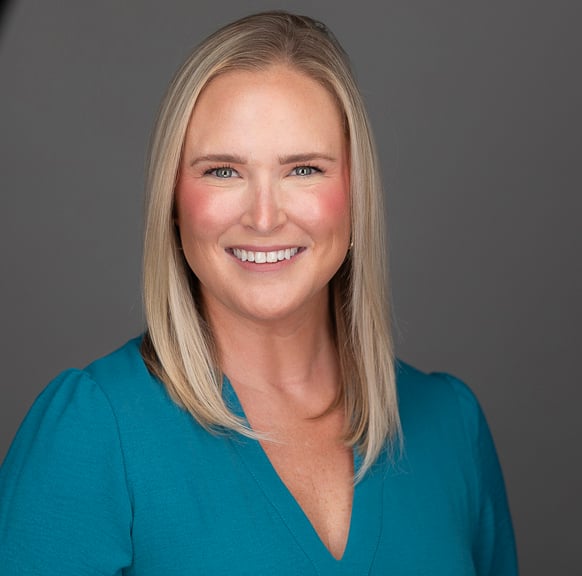
Tiffany Carson, PhD, works with communities to help reduce cancer risk through healther habits.
At Moffitt, Carson leads community-based studies that address obesity across the board, from prevention to survivorship. Her flagship project, the RESET study, focuses on Black women from the community, the group with the highest prevalence of obesity in the United States.
“The unique thing about RESET is that, in addition to focusing on traditional behavioral weight loss strategies, we incorporate a strong stress management component to every session,” Carson explained. “Our hypothesis is that partnering stress management with behavioral weight loss strategies will lead to more weight loss, particularly among individuals who have higher stress.”
Carson’s team has enrolled over 340 cancer-free women in the RESET study, which will conclude in spring 2026.
From Stress to Nutrition
Carson and her team have also adapted RESET for breast cancer survivors, who often face treatment-related weight gain. This resulted in a new intervention, Survivors RESET.
“There are so many things working against weight management once someone is diagnosed with breast cancer,” she said. “Fatigue, anxiety, depression, stress. Before you realize it, there’s been substantial weight gain. Survivors RESET provides evidence-based guidance and support for healthy eating, increasing physical activity and stress management during a time when many other things may seem outside of a patient’s control.”
The results were powerful.
“We had 100% retention. Everyone who started the intervention finished,” she said. “They all said they would recommend it to someone else, and more than half achieved clinically significant weight loss.”
Her work extends into nutrition science through Moffitt’s Population Engagement and Research Laboratory (PEARL), a state-of-the-art space designed to test how diet influences cancer risk and recovery.
Carson’s studies there include exploring how the Dietary Approaches to Stop Hypertension diet or DASH diet — originally designed for heart health — may improve gut health and reduce the risk of colorectal cancer. In collaboration with Sylvia Crowder, PhD, and Heather Jim, PhD, Carson is also studying whether a ketogenic diet can boost immune cell fitness before chimeric antigen receptor T-cell therapy.
“We are starting to learn more about the mechanisms that link obesity and cancer,” she said. “The next step is figuring out how to disrupt those mechanisms so that risk isn’t as inherent.”
For anyone ready to begin making changes, Carson offers practical advice.
“If you can, have a conversation with a registered dietitian or tailor a plan to your needs,” she said. “But if you are looking for a more general place to start, we have the most evidence supporting a plant-based or Mediterranean-style diet for general health and cancer risk reduction.”
Her message mirrors her research.
“If we can help people achieve healthier weights, we can make real progress in preventing and controlling cancer.”