Is Immunotherapy Before and After Surgery a Better Strategy for Certain Cancers?
A new wave of research presented at the American Society of Clinical Oncology Annual Meeting could reshape how some cancers are treated. For the first time, multiple large studies show that using immunotherapy both before and after surgery can significantly reduce the chance of cancer coming back. The results, unveiled during ASCO’s plenary session, reflect a growing shift in cancer care that focuses on using immunotherapy earlier in treatment, not just as a last resort.
Colon Cancer: A New Standard for a Unique Subtype
Patients with stage 3 colon cancer who have a specific genetic feature known as deficient mismatch repair typically receive chemotherapy after surgery. However, new results from the phase 3 ATOMIC trial suggest combining chemotherapy with the immunotherapy drug atezolizumab, followed by continued immunotherapy afterward, is a better option.
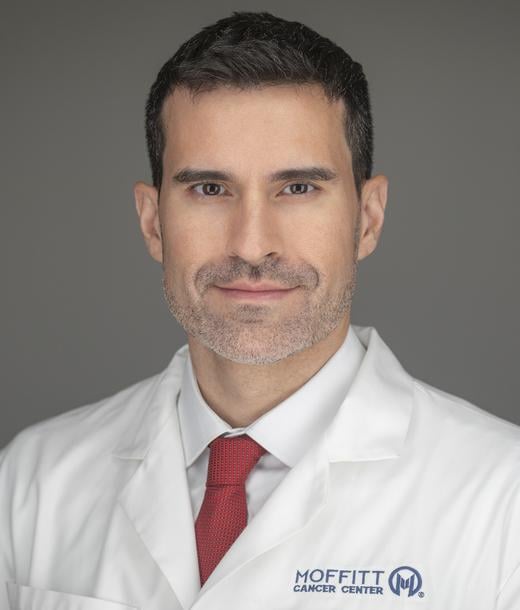
Tiago Biachi, MD, PhD
The trial, which enrolled patients across more than 300 sites, found that three years after treatment, 86% of patients who received the combination were cancer free compared to 77% who had chemotherapy alone.
“We know from studies in stage 4 disease that these mismatch repair deficient tumors are very sensitive to immunotherapy,” said medical oncologist Tiago Biachi, MD, PhD, of Moffitt Cancer Center’s Gastrointestinal Oncology Department. “ATOMIC is the first phase 3 trial demonstrating the benefit of adding immunotherapy (atezolizumab) to standard chemotherapy with FOLFOX. If approved, this study should change the practice in 10% to 15% of patients with stage 3 colon cancer. The next question to be answered by future trials is if we still need chemotherapy for all these deficient mismatch repair colon cancer patients or if they can be treated with immunotherapy only to minimize toxicity.”
Head and Neck Cancer: First Major Advance in 20 Years
Another important study, the NIVOPOSTOP trial, looked at patients with high-risk head and neck cancer. Researchers tested whether adding the immunotherapy drug nivolumab after surgery, along with standard radiation and chemotherapy, would improve results.

Christine Chung, MD
It did. After three years, 63% of patients who received the immunotherapy combination were cancer free, compared to 52% with standard treatment alone. This is the first time in over two decades that a new treatment has outperformed the standard approach for these patients.
“I am excited to see the positive results from this trial, particularly because the shown benefits of immunotherapy are in a patient population with a very poor prognosis given the current therapy,” said Christine Chung, MD, chair of Moffitt’s Head and Neck – Endocrine Oncology Department. “While this study has a significant potential for curing more patients, we hope to see improved overall survival data in future studies.”
Stomach and Esophageal Cancers: A Promising Path Forward
For patients with stomach or gastroesophageal junction cancer, the risk of recurrence after surgery is high even with chemotherapy before and after surgery. But the MATTERHORN trial offers new hope.
Researchers tested whether adding the immunotherapy drug durvalumab to standard chemotherapy, known as FLOT, could improve outcomes. Early results show that patients were significantly less likely to have their cancer return or worsen, a benefit known as improved event-free survival.
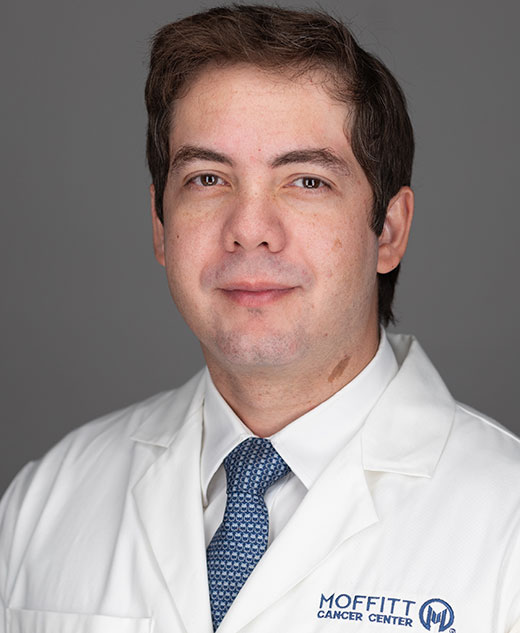
Allan Lima Pereira, MD, PhD
Although long-term survival data is still being collected, experts believe this new approach could soon become a global standard.
“Despite the lack of mature overall survival data, the significant improvement in pathological complete response, along with the positive primary endpoint of event-free survival, will likely support the approval of FLOT plus immunotherapy as the standard of care for resectable gastric or gastroesophageal junction adenocarcinoma. The debate will likely continue regarding whether immunotherapy should be restricted to PD-L1 positive tumors only,” said Allan Lima Pereira, MD, PhD, a medical oncologist in Moffitt’s Gastrointestinal Oncology Department.
Together, these studies mark a potential shift in how certain cancers are treated. Instead of waiting for the disease to return, immunotherapy is now being used before and after surgery, a time when the immune system may be most responsive. For patients, this could mean longer periods without cancer, fewer recurrences and better overall outcomes.