



Is Walking the Best Medicine for Cancer Patients?
After a cancer diagnosis, a persons first instinct may be to slow down, take time to rest, recover and wait on the next steps from their physician. However, according to Lary Robinson, MD, a member of Moffitt Cancer Center’s Thoracic Oncology Department, the most damaging myth in cancer care is “taking time to rest.”
Treating lung cancer patients for decades, Robinson has become an advocate for something that doesn’t come in a prescription bottle – walking. His message is simple and backed by science: Walking is medicine. He states that it can make a real difference in how people feel, heal and respond to treatment.
The First Step
Leading Moffitt’s Lung Nodule Clinic, Robinson often meets people facing frightening unknowns. Some are diagnosed with early-stage cancer that can be surgically removed. Others have advanced disease requiring aggressive non-surgical treatment. In those crucial in-between moments waiting for a diagnosis, preparing for surgery or beginning chemotherapy, patients often ask: What can I do now?
His response? Walk.
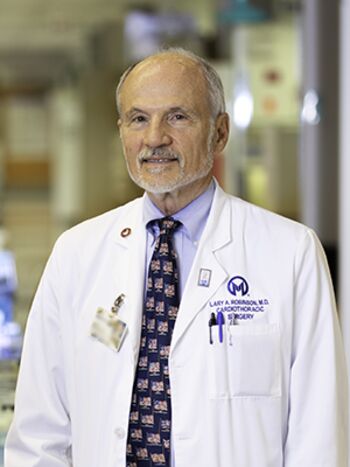
Lary Robinson, MD
“I tell them not to rest. In fact, walking improves sleep, mood and even how you respond to treatment,” Robinson said. “It lowers depression, boosts the immune system and decreases inflammation. All of which are important in fighting cancer.”
To back his recommendation, he gives his patients a booklet titled “Cancer and Exercise: It Is Beneficial.” Written by Robinson, the booklet contains research studies supporting exercise for cancer care. One study highlights that exercise not only helps patients during treatment, but it can also reduce the risk of developing 13 different types of cancer.
Rewriting the Rules of Recovery
According to Robinson, the old advice of staying in bed and saving your strength is fading.
“Many well-meaning family members and even some physicians still say to rest. But the data just doesn’t support that,” Robinson explains. “In fact, it shows the opposite.”
After his patients went through surgery, Robinson would give them the exercise booklet. “They’d always ask, ‘How do I recover best?’ I’d tell them, ‘Walk, walk and walk. You’ll heal faster, feel better and reduce inflammation.’”
The benefit isn’t just physical. Many cancer patients feel a loss of control over their bodies and their lives. Exercise gives them something they can own — a way to actively participate in their healing.
“When you tell someone there’s something they can do to help their treatment go better, they listen. They’re eager. It empowers them,” Robinson said.
Building a Habit, Not a Workout Regimen
Robinson isn’t advocating for intense gym sessions or marathon training.
“Walking briskly for 30 minutes a day — about 150 minutes per week — is enough. That’s 5,000 to 7,000 steps. It’s manageable for most people,” he said.
While walking is the cornerstone, he also encourages gentle resistance training a few times a week. No fancy equipment needed, just resistance bands or bodyweight exercises like chair squats and wall push-ups. These movements support bone health, prevent muscle loss, and help with balance and stability, especially in older adults.
Advice to Patients
Robinson says if he could tell every cancer patient just one thing, it would be this:
“Exercise is medicine. And it’s the part of your treatment you control. No matter the diagnosis, no matter the stage, getting up and moving isn’t just possible. It’s powerful.”
