Moffitt Launches Young Adult Colorectal Cancer Survivors Study
A new study at Moffitt Cancer Center is underway to understand the perspectives of young adult colorectal cancer survivors ages 20 to 44 about their cancer diagnoses.
This comes as new information from the American Cancer Society shows that colorectal cancer is now the leading cause of cancer deaths among people under 50. While analyzing cancer death data from 1990 to 2023, researchers found that colorectal cancer deaths have increased 1.1% each year since 2005.
The Young Adult Colorectal Cancer study is a qualitative study funded by Moffitt’s Adolescent & Young Adult Program. It is led by postdoctoral fellow Dolapo Anyanwu, PhD, and Department of Health Outcomes and Behaviors faculty Clement Gwede, PhD, and Christine Vinci, PhD.
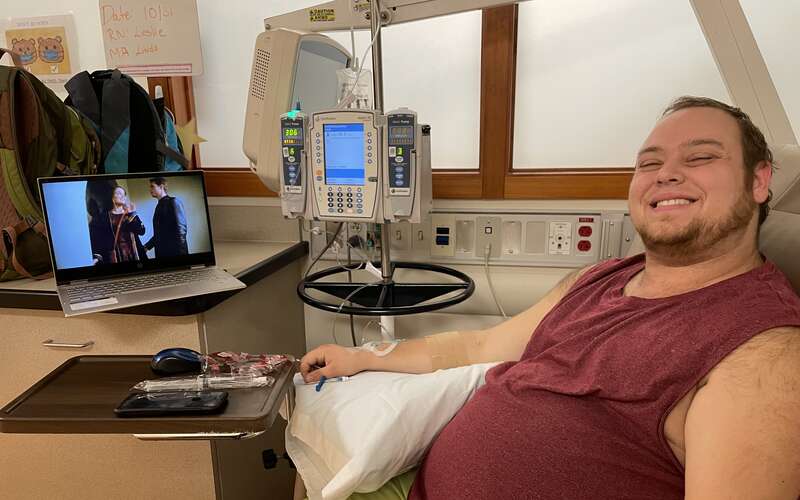
Thirty-one-year-old Mason Halper is one of the first participants to join the newly launched study. Prior to his diagnosis, he was experiencing abdominal pain and unexplained vomiting. A colonoscopy revealed he had stage 3 colorectal cancer. Through testing, Halper found out he has Lynch syndrome, an inherited condition that highly increases the risk of developing certain types of cancer, specifically colorectal cancer.
“I wanted to join this study to hopefully help others diagnosed with colorectal cancer,” Halper said. “I think there needs to be more education out there for people.”
Improving Education and Creating Resources
According to Anyanwu, the long-term goal of the study is to create a future digital health education program focused on young adults that are not yet eligible for colorectal cancer screening, a resource that patients like Halper think could be beneficial.
Colorectal cancer screening is recommended to begin at age 45 for individuals considered to be at average risk. In some instances, individuals should start screening earlier if they have certain risk factors, including the following:
- Tobacco use
- Alcohol use
- Obesity
- Diabetes
- History of inflammatory bowel disease
- Specific genetic syndromes
- Family history of polyps or colon cancer
“If people are educated and know what to look out for, it could help them get diagnosed at a younger age and at an early stage, which hopefully will result in better and quicker treatment options,” Anyanwu explained.
The study does not involve medical interventions, medications or diagnostic testing. According to research coordinator Claudia Jimenez-Roman, patients enrolled in this study will complete an online survey collecting demographic information, followed by an in-depth interview.
“Participants will be asked about their awareness of colorectal cancer before their diagnosis, their experience with the healthcare system, and their opinion on how colorectal cancer education could be better delivered to young adults,” Jimenez-Roman said.
The study is ongoing and is open to patients within and outside Moffitt.