New Drug Combination Improves Survival in Aggressive Bladder Cancer
A new drug combination is helping people with an aggressive form of bladder cancer live longer and reducing the risk their cancer will return, according to the results of a study presented at the 2026 American Society of Clinical Oncology Genitourinary Cancer Symposium.
The phase 3 trial tested the drugs enfortumab vedotin (PADCEV) and pembrolizumab (Keytruda) in patients with muscle-invasive bladder cancer, a disease that has grown into the muscle of the bladder wall and carries a higher risk of spreading.
An Alternative to Chemotherapy
Currently, many patients who are healthy enough receive cisplatin-based chemotherapy before surgery to remove the bladder. But cisplatin can be hard to tolerate, and some patients cannot receive it at all.
“For a very long time we’ve been using cisplatin,” explained Jon Chatzkel, MD, a genitourinary oncologist at Moffitt Cancer Center and investigator on this study. “But it is a drug that can be hard on the kidneys.”
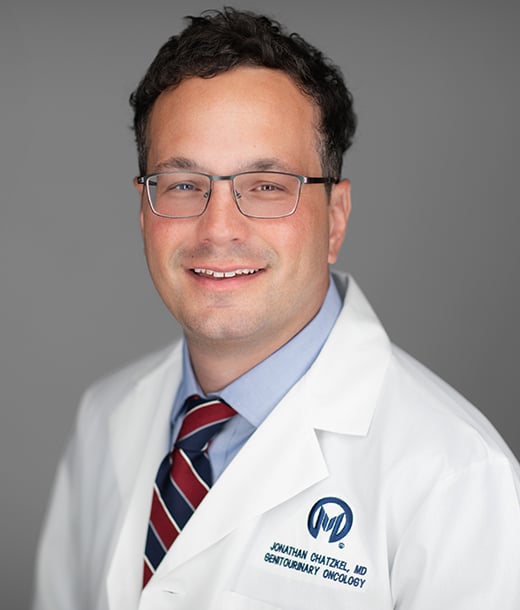
Jon Chatzkel, MD
Researchers tested a different approach by combining PADCEV, a targeted drug that delivers chemotherapy directly to cancer cells, with Keytruda, an immunotherapy that helps the immune system attack cancer.
The trial enrolled 808 patients who were able to receive cisplatin. Participants were randomly assigned to receive either the new drug combination before and after surgery, or standard chemotherapy before surgery.
Strong Results
After nearly three years of follow-up, patients who received the new combination had better outcomes.
At two years, approximately 79% of patients who received the new combination were alive without their cancer returning or worsening, compared with about 66% of patients who received chemotherapy.
The overall survival rate was also higher. Nearly 87% of patients in the combination group were alive at two years, compared with about 81% of those in the chemotherapy group.
Most notably, more than half of patients treated with the combination had no detectable cancer left in the bladder at the time of surgery compared with 32.5% of patients who received chemotherapy.
-

Over 50%
Of patients treated with the drug combination had no detectable cancer left in the bladder at the time of surgery
-

32.5%
Of patients who received chemotherapy had no detectable cancer left in the bladder at the time of surgery
“In the perioperative setting, we have an opportunity to treat patients with the goal of cure,” Chatzkel said.
He added that having a complete response at surgery is an encouraging sign.
“If we’re doing surgery and there’s no tumor left in the bladder, that’s a good indication the treatment is doing its job, and we are hopeful that will lead to more long-term cures,” Chatzkel said.
The combination can cause side effects including autoimmune reactions, rash and numbness or tingling in the fingers and toes. Chatzkel noted that side effects can usually be managed with supportive care and dose adjustments.