

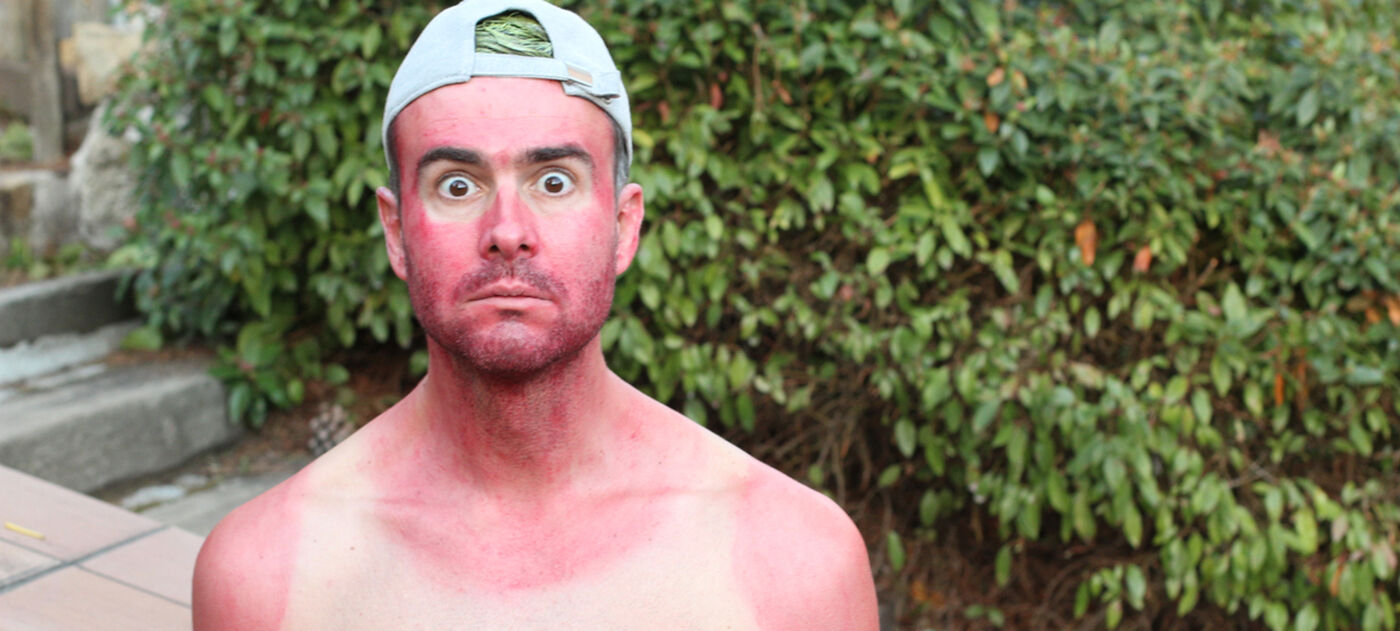
No Surprise Here: TikTok Sunburning Trend has Plenty of Problems
Don’t get your medical advice from TikTok. Especially if an influencer is trying to convince you that sunburning is a good thing.
Influencers on the popular social media app have been throwing misinformation at sunscreen for quite a while, claiming that its chemicals are more harmful than the UV rays from which it protects us. Now, they are claiming that an intentional sunburn can boost your immunity and help cure acne.
All of that is just wrong, according to dermatologists and cancer experts. In short, Matthew Perez, MD, a surgical oncologist at Moffitt Cancer Center, says sunburns are bad news, intentional or not.
“A sunburn is an acute inflammatory skin reaction to extended ultraviolet ray exposure,” Perez said. “The UV exposure causes DNA damage within the skin that leads to an increased risk for development of skin cancer.”

One influencer with 450,000 TikTok followers posted a photo of herself on the beach with the claim that the saltwater and the sun “burned off” her acne. Another influencer with about 3,000 followers claimed that tanning beds help with acne and acne scarring.
Again, that’s incorrect, Perez said. When acne gets sunburned, UV damage to the skin can do the exact opposite and lead to increased scarring and hyperpigmentation of the acne.
“For acne, a patient should seek medical care from a dermatologist,” Perez said. “Especially when the condition does not respond to over-the-counter treatment and negatively affects their quality of life.”
But what about those claims of “healthy tans” or a “healthy glow” when it comes to sun exposure? That’s also a myth, Perez said.
“There is no such thing as a ‘healthy tan,’” he said. “Any unfiltered and/or extended UV exposure leads to DNA damage within the skin.”
Make wise decisions, experts say. It is possible to reduce your risk of skin cancer if you follow these sun safety tips:
- Exposure – Limit sun exposure between 10 a.m. and 3 p.m. when UV light is its most intense.
- Clothing – Protect your skin from sun damage with clothing, including a loose-fitting, long-sleeved shirt and long pants made of a tightly woven fabric. Swimming? Opt for a T-shirt or rash guard while in the water.
- Hat – Protect your head, ears, face and neck with the shade of a wide-brimmed hat constructed of a tightly woven fabric like canvas (UV rays can penetrate a straw hat). If you wear a baseball cap, use sunscreen on exposed areas like your face, neck and ears.
- Sunglasses – Wear sunglasses that block both UVA and UVB rays. Well-designed sunglasses can help prevent cataracts and protect the delicate skin around your eyes from the harmful effects of sun exposure.
- Shade – Seek shade underneath a shelter, umbrella or tree, especially during the midday hours. Use extra caution near surfaces that reflect the sun’s rays, like water and sand.
- Sunscreen – 30 minutes before going outside, always apply a waterproof, broad-spectrum sunscreen with a sun protection factor of 15 to 30. Don’t forget your ears, the tops of your feet and the scalp. Reapply every two hours.
