Physician Urges Colorectal Cancer Screening After Own Diagnosis
Most days, 41-year-old Alex Hayes, MD, sees a handful of patients with various cancer diagnoses as a radiologist with Bay Pines Veterans Affairs Healthcare System.
Hayes has always had a passion for his career, but his own stage 3 colorectal cancer diagnosis at the age of 39 has given him a unique perspective.
“I have some younger patients and I have disclosed my cancer history to them,” Hayes said. “I think it is helpful for them to know they are not alone, and I know they are probably scared. I want to do right by them.”
Once a resident at Moffitt Cancer Center after medical school, Hayes never thought he would ever become a patient there.
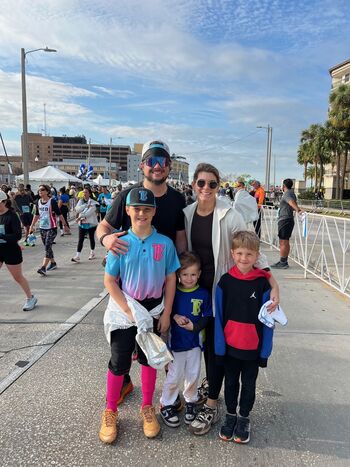
When Hayes finished treatment last year, he was able to run the Gasparilla Distance Classic race with his family by his side.
Unusual rectal bleeding led him to undergo a colonoscopy, which confirmed his diagnosis.
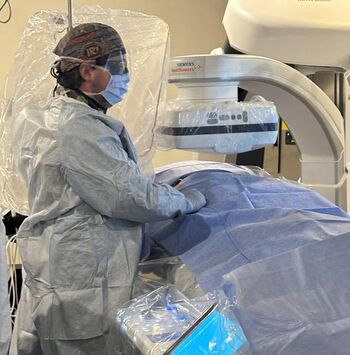
Hayes is now back at work, helping patients of all ages with various types of cancer.
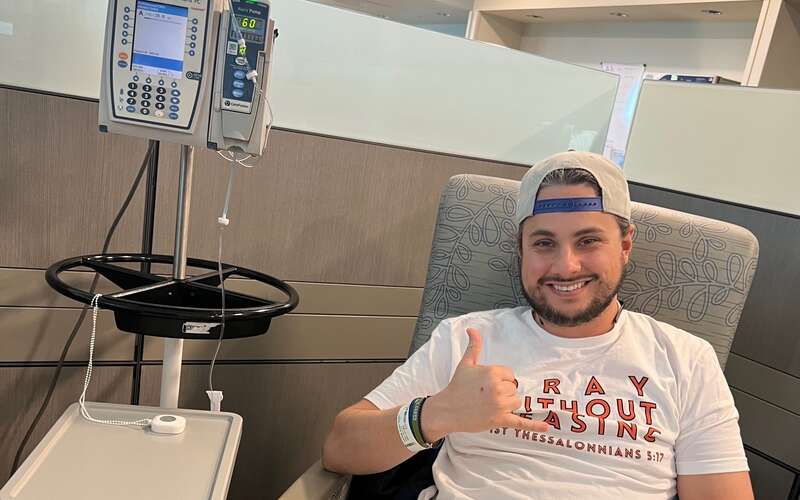
“It hits close to home when I go in now for the patient side of things,” he said. “After my diagnosis, I underwent eight rounds of chemotherapy followed by surgery and then an additional four more rounds of chemotherapy.”
Rising Rates in Younger Adults
According to a new study published by the American Cancer Society, nearly half of all newly diagnosed colorectal cancer cases occur in those under the age of 65. Currently, colorectal cancer screening is recommended to begin at age 45 for individuals considered to be at average risk.
As researchers investigate what may be driving the sharp increase in cases among younger adults, Tiago Biachi, MD, a gastrointestinal oncologist at Moffitt, says certain risk factors can be associated with the disease.
“Strong associations include rising obesity rates, sedentary lifestyles, diets high in ultra-processed foods, heavy alcohol use and smoking, possible gut microbiome disruptions from diet or antibiotics, and emerging environmental factors such as microplastics or other toxins,” he explained.
Family history and genetic syndromes can also increase someone’s risk of developing colorectal cancer.
“If you’re 45 or older, get screened this month,” Biachi said. “If you’re younger, build the habits now and don’t ignore symptoms. Talk to your doctor, spread the word, and let’s make Colorectal Cancer Awareness Month in March drive real action. Screening truly saves lives — yours could be one of them.”
Studying Survivors
To help amplify research into the association between colorectal cancer and young adults, Hayes and other young adults have joined a new study at Moffitt designed for colorectal cancer survivors ages 20 to 44.
The long-term goal of the study is to create a digital health education program for young adults who are not yet eligible for colorectal cancer screening.
“I've had friends who have gone and gotten a colonoscopy after what happened to me, Hayes said. “I definitely encourage everyone to get one once they turn 45 and even sooner if needed.”