Pickleball Keeps Cancer Survivors on Their Toes, Moffitt Study Shows
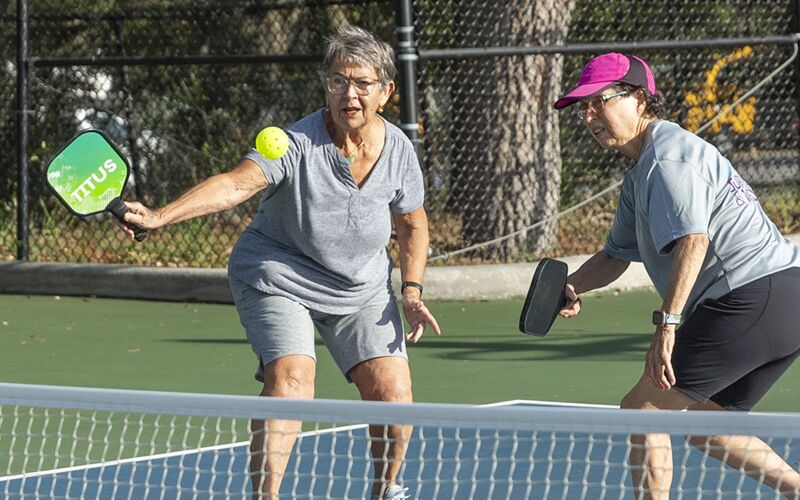
They met on the pickleball court. But their bond goes far beyond the popular paddle sport. Jackie Rowe is a multiple myeloma survivor. Mickey Schwartz battled non-Hodgkin lymphoma. Anne Freeman beat the odds after a double-whammy diagnosis of chronic lymphocytic leukemia and aggressive B-cell lymphoma.
Cancer is a tie that they don’t always talk about, but staying healthy is at the forefront of their minds. Thanks to a partnership between Moffitt Cancer Center and the YMCA of the Suncoast, cancer survivors like Rowe, Schwartz and Freeman found more motivation to keep moving as part of a pilot study called Project Rally.
Led by Moffitt researcher Nathan Parker, PhD, the pickleball project launched in September 2023, inviting cancer survivors and family or friends to pick up the sport as a source of physical activity. In total, 23 people participated in the study, 18 of them cancer survivors, with ages ranging from 47 to 76.
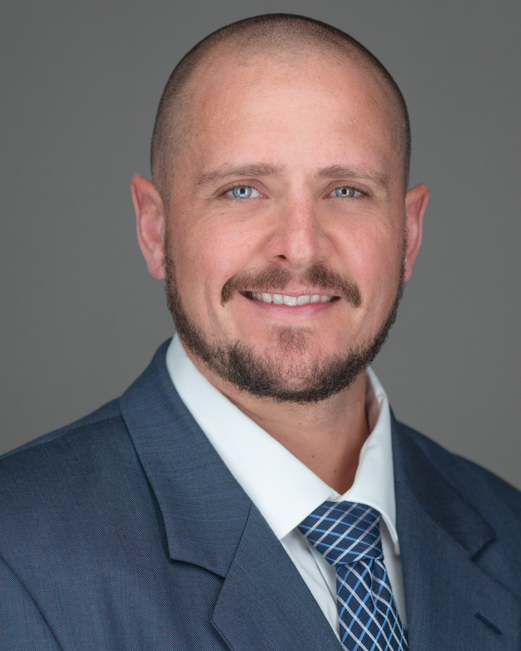
Nathan Parker, PhD
“It was a small group at first, and then, as word of mouth took off and more people heard about it, the group grew a lot,” said Parker, who credits the YMCA with doing an excellent job of promoting the program and drawing people in.
The group gathered at the Greater Palm Harbor YMCA under the tutelage of personal trainer Alex de Cerqueira Santos, a certified pickleball coach. The YMCA offered five sessions a week, and participants were encouraged to play at least twice a week for one hour. Cerqueira conducted fitness assessments on participants at the start of enrollment to measure strength, endurance and body composition. He then introduced each participant to the game, training them on particular pickleball skills before setting players up to volley and play organized games.
“The best part was watching the progress of the participants. These were people who never played pickleball before, and some of those participants were not active at all,” Cerqueira explained. “To be out here, having a group experience, making friendships, bonding — many of the participants started to become friends outside of here — and I think that’s an extremely important part of the project.”
Rowe was one of the participants who had never played pickleball before. She knew the sport was all the rage, but she had been nervous to jump into an overly competitive game. Project Rally proved to be the perfect opportunity.
“What’s so nice about this group is they’re all cancer survivors or they’re caregivers,” she said. “That makes it so much nicer because you’re on an even playing field.”
Freeman had already been working with Cerqueira as her personal trainer when he told her about Project Rally. During her treatment, she had lost a lot of weight, and she was working to build up her strength. The pickleball program was an opportunity to increase her activity and find a unique sense of camaraderie.
“When you have a group like this, everybody understands,” she said. “It’s kind of like when you’re trying to tell a woman what childbirth is like. You can’t describe it. It’s just something you have to go through. It’s really nice to have people who really can understand and appreciate your journey and know how incredibly challenging it was.”
Schwartz found that Project Rally truly lived up to its name. After his battle with cancer, he described himself as living in a fog. Joining the pickleball study was the push he needed.
“I don’t think I would be exaggerating if I said that it was life-changing for me,” he said. “This program got me off the couch, got me active again, and not just playing pickleball. I started kayaking again, which I hadn’t done for a while, and just doing things around the house that I had been neglecting. This just got me going again. It got me back into life again.”
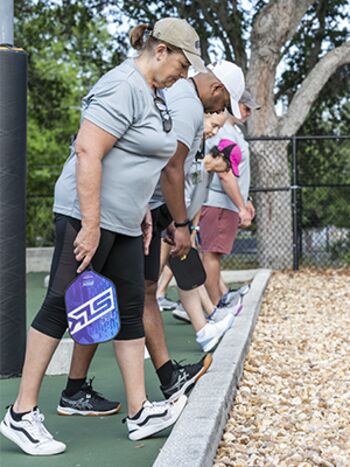
Personal trainer Alex de Cerqueira Santos, center, guides players in a warm-up stretch before the volleying starts. Over the course of the study, Cerqueira noticed the players forming strong bonds.
Parker, Cerqueira and the research team wrapped up the project in April 2024, collecting final assessments on all participants. The study, which published in Healthcare, ultimately found that the program was appealing and accessible. Recruitment and retention rates were strong, with 85.7% of cancer survivors completing the program.
Participants in Project Rally also reported significant increases in physical activity. Cancer survivors, on average, increased their weekly moderate-to-strenuous physical activity by over 80 minutes, including more strenuous exercise. The program also helped increase social support, with cancer survivors reporting more companionship involving their physical activity.
In addition, Project Rally demonstrated the power of partnership. The study was funded through a research grant from the Moffitt Office of Community Outreach and Engagement's Support for Community Organization Research Engagement (COE-SCORE) initiative. COE is directed by Susan T. Vadaparampil, PhD, associate center director for Community Outreach and Engagement, and the SCORE initiative is led by Jennifer I. Vidrine, PhD, assistant center director for Research Community Partnerships. The office’s already established partnership with the YMCA of the Suncoast paved the way for the study’s launch.
“Far and away, the most important aspect was the YMCA’s devotion to the project,” Parker said. “Their motivation and excitement to be part of the research was incredibly helpful and really contributed to the success of the pilot.”
Vidrine notes that this type of strong partnership sets the stage for broader community impact.
“This is a structure that we hope to see more of going forward,” Vidrine said. “Getting community organizations involved in both the research and the delivery of cancer prevention and survivorship interventions ultimately increases the likelihood that research interventions like Project Rally develop into sustainable long-term programs.”
With the pilot study complete, Parker is working to scale the research and expand to additional YMCA locations. Meanwhile, some of the original participants continue to meet up and play on their own.
“The whole idea of activity for cancer patients is something that you hear about all the time. Pickleball is something you can learn easily. It’s something that’s not so stressful, like tennis or some of these other sports,” Rowe said. “And you have the social interaction. So this has done all the things that you read about.”