

Proton Therapy Can Spare Your Heart
The last thing anyone wants is a broken heart, especially following cancer treatment. Doctors have studied the impacts of cancer treatments like radiation therapy on healthy tissue and organs and now have options to spare them.
Proton therapy, which Moffitt will offer starting this summer at its Richard M. Schulze Family Foundation Proton Center at the Speros Outpatient Center in Pasco County, can treat cancerous tumors with much less damage to surrounding healthy organs than other types of radiation. The heart, especially, can suffer toxicities from radiation, resulting in heart disease later in life, according to Moffitt’s vice chair of Radiation Oncology, Lorraine Portelance, MD.
“When we treat a tumor, such as left breast cancer, lower esophageal cancer or lung cancer for example, where the primary tumor is very close to the heart, in order to deliver the radiation dose needed to the target, some radiation will end up in the surrounding tissue, including the heart,” Portelance said.
Limiting Collateral Damage
Using proton beam therapy is a strategy to limit any collateral damage. Portelance says that pediatric cancer patients especially can benefit from this therapy. Moffitt will begin offering proton therapy to younger patients who don’t need sedation and plans to expand the program to other pediatric patients in coming years.
“Of course, the first thing we want to do is to offer a cure to a child diagnosed with cancer, but we also need to pay a lot of attention to treatment toxicity because these children are going to be long-term survivors and we want them to survive with a strong heart,” Portelance said. “So, when it comes to treating a pediatric patient, with say lymphoma, these are patients who we would absolutely want to be treated with proton therapy.”
The heart muscle and the coronary arteries are sensitive to radiation, Portelance says. Therefore, radiation can cause cardiac toxicities, which come in two forms: acute and chronic.
“Acute cardiac toxicities happen during treatment and are usually reversible,” she explained. “Chronic cardiac toxicity from radiation happens later in the patient’s life and can lead to cardiomyopathy or coronary artery disease long after the patients have completed their radiation treatment.”
The reason why the proton beam can protect vital, healthy organs like the heart while delivering the proper dose of radiation to a nearby tumor is that, as opposed to the more traditional photon beams, protons can be gauged to a specific depth. The ability to focus the dose on the target better protects healthy tissue and organs around the tumor.
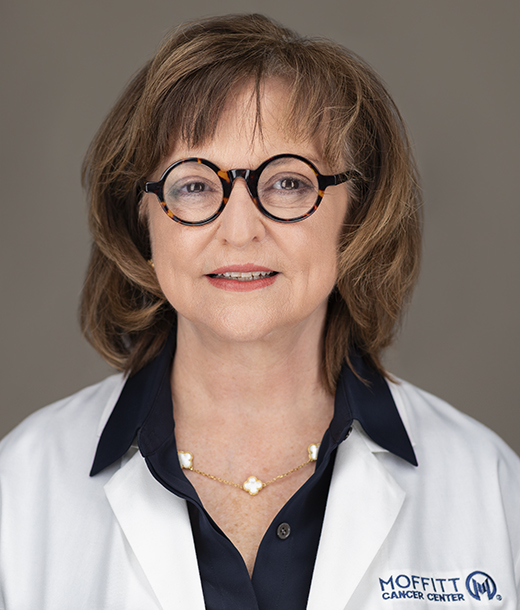
“With proton therapy we can program that beam of energy to hit the target at exactly the right depth,” Portelance said. “That means there is very minimal dose into tissue the proton will travel through to reach the target and there is no exit dose.”
Different Treatment for Different Patients
For clinical situations where proton beam therapy is not indicated, radiation oncology experts have developed approaches to limit radiation exposure to healthy tissue with traditional photon beams, Portelance says.
Not every cancer patient is a candidate for proton therapy, and different treatment options vary depending on several factors.
“There is the anatomy,” Portelance said. “Where is the target and how close is it to the heart or the lungs? Patient-dependent factors also play a part. Does the patient already have a high risk of coronary artery disease because of familial history or life habits?”
Determining the best treatment also requires Moffitt’s multidisciplinary approach, which involves cancer-type specialists like a breast oncologist, for example, working closely with the radiation oncology team to assess risks and, ultimately, quality of life.
