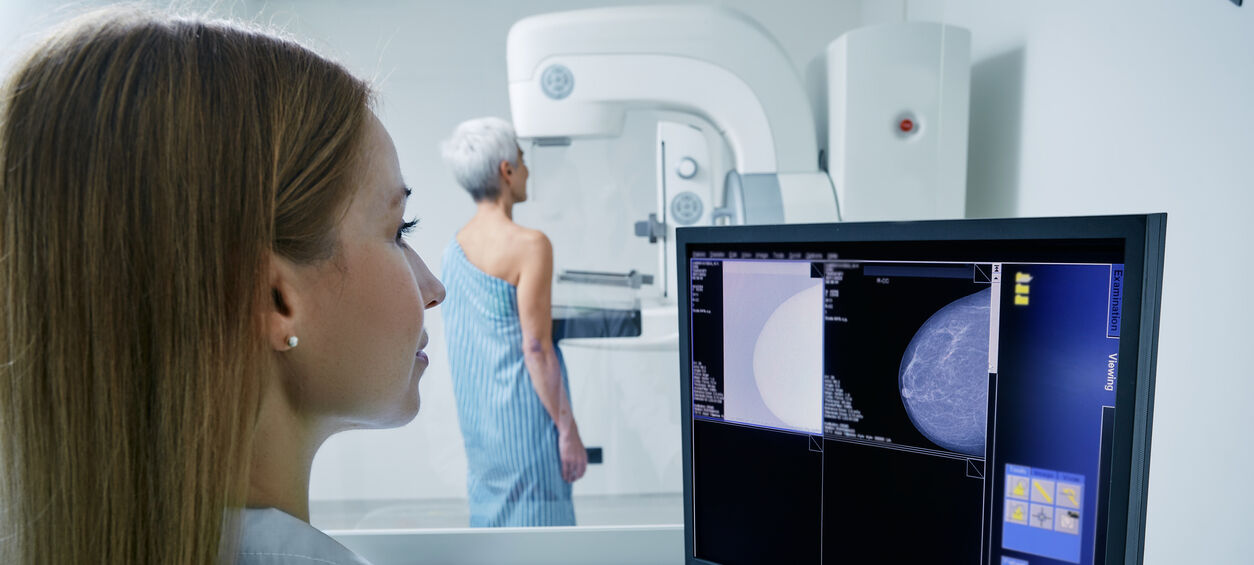
Screening Guidelines Updated for Women With ‘Extremely Dense’ Breasts
Dense breast tissue has increasingly been recognized as an important risk factor for breast cancer. Breast density refers to the way different types of breast tissue appear on a mammogram. Dense breasts typically have more glandular and fibrous connective tissue and low amounts of fatty breast tissue.
According to the National Comprehensive Cancer Network, about half of all women of screening age have dense breast tissue referred to as “heterogeneously dense” or “extremely dense.” Compared to women who do not have dense breasts, the overall risk for developing breast cancer is 1.28 for women with heterogeneously dense breasts and 1.83 for women with extremely dense breasts.
In September 2024, the U.S. Food and Drug Administration began requiring that all mammography reports and results letters sent to patients in the U.S. include an assessment of breast density.
Now, the National Comprehensive Cancer Network is encouraging women with heterogeneously and/or extremely dense breasts to see a provider every six to 12 months and begin annual screening with mammography no later than age 40. For those with extremely dense breasts, the panel recommends a supplemental breast MRI starting at age 50 (consideration can be given to begin at age 40 depending on an individual’s risk factors).
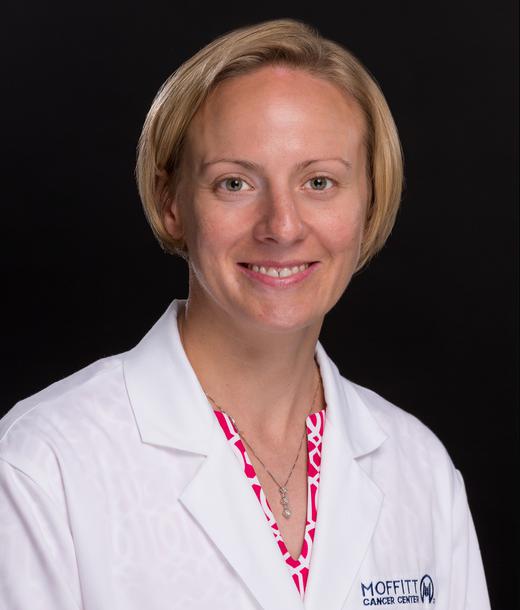
“Dense breast tissue increases a patient’s risk of developing breast cancer but also makes it harder to find the breast cancer on a mammogram,” said Bethany Niell, MD, PhD, the section chief of Breast Imaging at Moffitt Cancer Center. “Breast MRI exams are not limited by breast density, so breast MRI exams find more breast cancers in women with dense breasts.”
In a prospective study, women ages 50-75 with extremely dense breast tissue and normal mammography results were given the option to undergo supplemental breast MRI or mammography only. Those who opted to undergo the supplemental breast MRI had more breast cancers detected than those who underwent mammography only. The breast cancers found on breast MRIs were more likely to be small and had not yet spread outside the breast, which are two features that result in better patient survival.
“Cancer screening tests, like mammograms, save lives. I encourage every patient to talk with their health care providers about their cancer risk factors so they understand what cancer screening tests are best for them,” Niell said. “In women with extremely dense breasts, breast MRI exams find more cancers than mammograms alone, so if you have extremely dense breast tissue, talk with your health care provider about getting breast MRI in addition to mammograms.”