

Single-Drug Immunotherapy Shows Success in Rare Skin Cancer
A new clinical trial is changing how doctors approach treatment for desmoplastic melanoma, a rare form of skin cancer that has historically been difficult to treat. Findings published in Nature Medicine show that single-agent immunotherapy may offer patients highly effective outcomes with fewer toxic side effects than traditional combination regimens.
RESEARCH
— Nature Medicine (@NatureMedicine) August 25, 2025
In cohort B of the phase 2 SWOG S1512 trial, pembrolizumab monotherapy in patients with unresectable desmoplastic melanoma elicited a complete response rate of 37% & an objective response rate of 89%, supporting a new treatment option for this tumor type.…
The phase 2 SWOG S1512 study looked at pembrolizumab, an anti-PD-1 immunotherapy drug, in 27 patients with advanced or unresectable desmoplastic melanoma. The results found that 89% of patients responded to treatment and 37% achieved a complete response. At three years, 84% of patients remained progression free and 96% were still alive. Researchers say these survival rates are exceptionally high for this rare subtype.
-

89%
Of patients responded to treatment
-

37%
Of patients achieved a complete response
The study also reported that 37% of participants experienced severe side effects, but most patients tolerated therapy well and responses were durable. Importantly, the trial suggests that pembrolizumab alone is enough to provide meaningful benefit, reducing the need for combination immunotherapy regimens that can cause significantly more toxicity.
Shifting Treatment Standards
Zeynep Eroglu, MD, an associate member in the Donald A. Adam Melanoma and Skin Cancer Center of Excellence at Moffitt Cancer Center and a co-author of the study, said the results represent an important shift in treatment strategy for patients with desmoplastic melanoma.
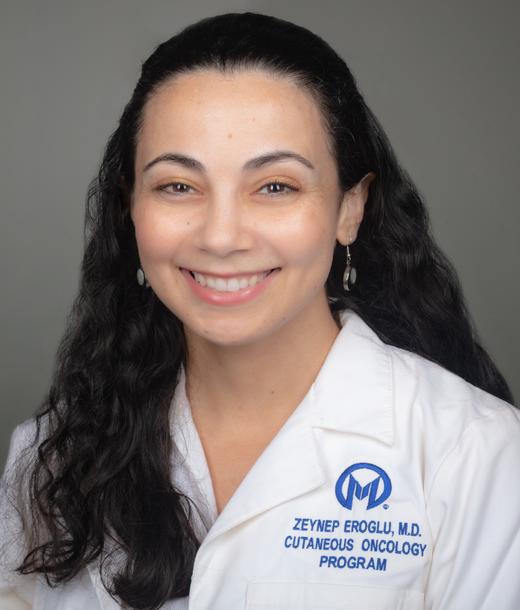
Zeynep Eroglu, MD
“While anti-PD-1 immunotherapy drugs are widely available and used in advanced melanoma, combination regimens with anti-LAG3 or anti-CTLA4 drugs are preferred due to improved outcomes despite increased toxicity,” Eroglu said. “Given the outstanding response rate of 89% to pembrolizumab alone, this trial gives us the ability to offer only anti-PD-1 monotherapy to patients with advanced desmoplastic melanoma. This can spare these patients from unnecessary side effects of dual immunotherapy regimens where severe toxicity rates can be two to six times higher than monotherapy.”
Eroglu added that the results are particularly meaningful because desmoplastic melanoma is both rare and distinct from other melanoma types. It accounts for a small fraction of skin cancer cases and often presents as a fibrous tumor on sun-damaged skin, usually in older patients. Until recently, treatment options were limited and outcomes were less predictable.
Implications for Earlier Disease
The trial’s findings may also have implications for patients diagnosed with earlier stage disease who are still candidates for surgery.
“This rare type of melanoma — desmoplastic type — is highly responsive to anti-PD-1 therapy with one of the highest response rates we’ve seen across all cancer types,” Eroglu said. “For patients who have earlier stage desmoplastic melanoma that may still be surgically resectable, they should be considered for pre-surgery (neoadjuvant) anti-PD-1 therapy. Anti-PD-1 drugs may significantly shrink their tumor and permit a much less morbid surgery. It’s also possible that some patients with earlier stage desmoplastic melanoma may not need surgery at all. These options should be discussed with their team of doctors.”
Looking Ahead
Experts believe the study could immediately influence clinical practice, allowing physicians to confidently use pembrolizumab alone as frontline therapy for advanced desmoplastic melanoma. The high response rates also raise questions about whether neoadjuvant therapy could become standard for patients with operable disease, potentially avoiding major surgeries or even eliminating the need for surgery in select cases.
While larger studies will be needed to confirm these results, SWOG S1512 provides strong evidence that a simpler, safer approach may be just as effective as more aggressive regimens. For patients facing this rare cancer, that could mean better outcomes with fewer burdens during treatment.