



Study Says More Effective Skin Cancer Prevention Strategies Needed for Older Adults
In a study published in JAMA Dermatology, researchers found that the burden of skin cancer and melanoma in older adults is growing worldwide and that more needs to be done to address the health challenges among adults 65 and older.
The study used data from the Global Burden of Diseases database, which showed a significant increase in skin cancer burden over the past three decades, particularly among men. Projections suggest a rising incidence rate for skin cancer and decreasing burden of cutaneous melanoma by 2050.
“The recommendations for older people regarding sun protection are not any different for them than for anyone else,” said Vernon Sondak, MD, chair of the Cutaneous Oncology Department at Moffitt Cancer Center. “Although for older males in particular, hair loss makes protecting the scalp, ears and neck from UV exposure even more important.”
Developing new habits and hobbies may also contribute to the increasing cases in those 65 and older. Sondak adds that a person’s activities change with age, possibly meaning they are spending less time at the beach or at the pool, where sunblock is usually regularly included in supplies, and more time on the golf course or in the garden.
“It’s also important to recognize that even brief outdoor activities like mowing the lawn, for example, require appropriate sun protection. And sun protective clothing appropriate to the activity is clearly important.”
The study looked at data from 1990-2021 and found that population growth was the largest contributor to the rising disease burden. However, cases of skin cancer were more elevated in Australia, North America and Western Europe.
“Obviously, the more UV exposure, the more risk of skin cancer and multiple cancers in different places and of different types, including melanoma,” Sondak said. “Keratinocyte cancer, or non-melanoma skin cancer, arise from keratinocytes, or skin cells, as opposed to the melanocytes for melanoma.”
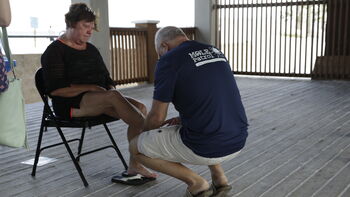
A volunteer with Moffitt's Mole Patrol screens a visitor to the annual Pier 60 event in Clearwater in 2024
Older populations may also have the disadvantage of more UV exposure over their longer lives and perhaps less availability or knowledge of sun protection in their youth. Regardless, it’s important to continue protecting yourself no matter your age, Sondak says. That’s why Moffitt’s Mole Patrol offers free community skin cancer screenings throughout the year.
“These Mole Patrol events allow us to reach a lot of older adults who may have had a lot of sun exposure in their lifetime,” Sondak said. “Our Spring Swing baseball game screenings are always a success, and we’re also set up at air shows and fishing tournaments. Our annual Mole Patrol event at the Clearwater Pier is July 26.”
