The Future of Radiation Is on Her Mind, But the Patients Are in Her Heart
Radiation oncology is a complex field, where precise tumor-directed therapy using different types of beams is customized based on patient characteristics, disease site and tumor dimensions. But at the heart of these complex beam calculations is a patient in need and the people who love them.
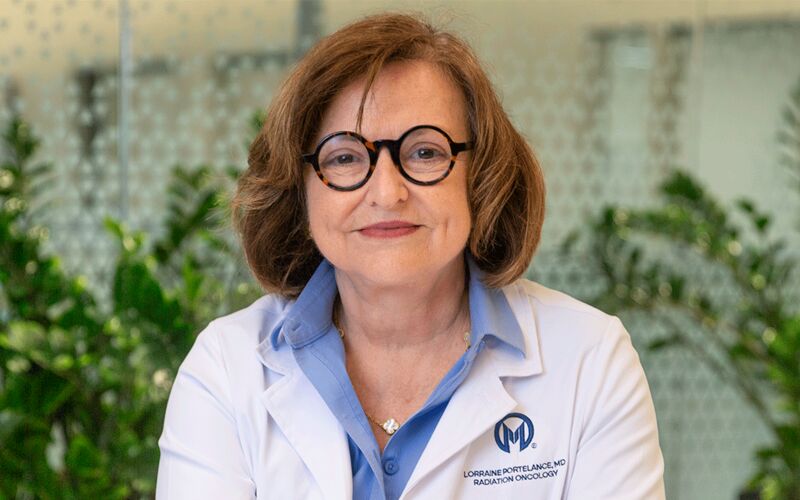
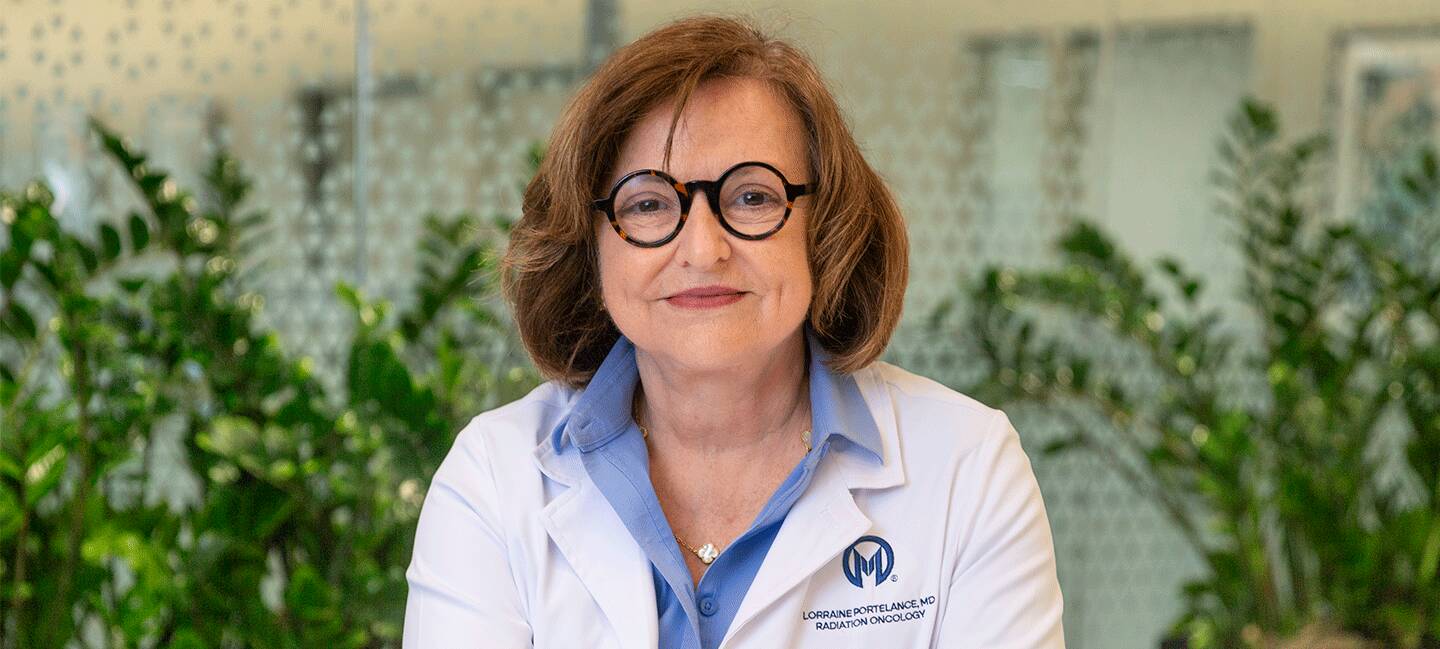
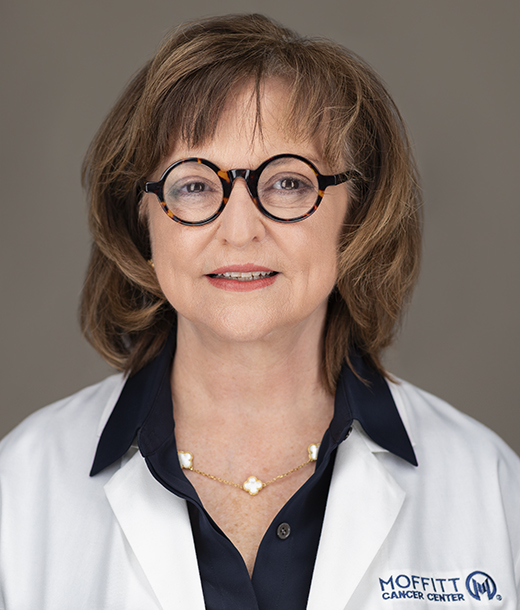
Lorraine Portelance, MD, understands this better than anyone. It’s what drove her to become a radiation oncologist.
Growing up in Montreal, Portelance always knew she wanted to be a doctor. She was drawn to the idea of helping people. But when a young family member was diagnosed with incurable neuroblastoma, Portelance saw a specific type of hero in action. A radiation oncologist treated her family member, providing palliative care for the patient and comfort for the family.
Portelance saw her path in life. She earned her medical degree from the University of Montreal in Quebec, Canada, where she also completed her residency in radiation oncology. She went on to complete a fellowship in radiation oncology and gynecologic cancer management at the Mallinckrodt Institute of Radiology in St. Louis.
“When I start my clinic in the morning, I show up with a profound intention to be present in the moment for each patient I meet. I needed a specialty where I could really connect with my patients,” she explained. “In addition, radiation oncology offers a large spectrum of always evolving high-tech approaches. I’m a curious person. I like the dynamic of discovering new treatment options that we could bring to patients.”
As vice chair and clinical division chief in the Radiation Oncology Department at Moffitt Cancer Center, Portelance is now helping to usher in a new era of cancer treatment. In summer 2026, Moffitt will open its 30,000-square-foot Richard M. Schulze Family Foundation Proton Center at its new Speros campus in Pasco County. Moffitt is one of the few top cancer centers in the U.S. and the only health system in the Tampa Bay area with state-of-the-art ProteusONE proton therapy technology.
As an internationally recognized pioneer in groundbreaking radiation modalities, Portelance is ready to put this lifesaving technology to use at Moffitt.
A ‘Full Toolbox’
Proton therapy is different from traditional photon radiation therapy, as it uses beams of heavy particles (protons) rather than X-rays to deliver radiation to the tumor. Proton therapy delivers radiation precisely to the target area while minimizing damage to surrounding tissue and organs. Moffitt’s ProteusONE technology uses a pencil beam scanning method, an advanced technique that employs a thin, magnetically guided beam to deliver protons in ultrafine layers to the tumor. Physicians in collaboration with physicists can adjust the beam’s depth and intensity to tailor the radiation dose to match the tumor’s exact dimensions down to the millimeter.
“When we talk about personalized medicine, and we think of the ideal weapon for targeting the cancer cells but protecting the normal tissue, proton therapy is very high on the list of tools that we could offer cancer patients,” Portelance said.
Proton therapy can be used to treat any type of solid tumor, including head and neck cancers, brain tumors, lung, prostate, gastrointestinal, gynecologic and some breast cancers. It is also the modality of choice to treat pediatric cancers, reducing young patients’ exposure to secondary radiation. In addition, patients who have previously been treated with photon radiation and experience a recurrence of cancer may be good candidates for proton therapy.
“There is a large spectrum of patients who could benefit from being treated with proton therapy, and we expect to have a busy house when we open at Speros,” Portelance said.
Portelance notes that proton therapy delivery is completely painless and is done in just a few minutes. A full session, which includes prepping and positioning the patient, takes about 30 to 45 minutes.
“From the perspective of a patient, I’m lying there on the table with the treatment machine adjusting to different angles to focus the high point of energy exactly where it should be and spare the surrounding normal tissue,” she explained. “And what’s happening is, because the proton is a heavy particle, it can travel into the normal tissue without dropping any energy until reaching the point where it was programmed to drop the full energy. And beyond that point, there is also no radiation.”
Many studies comparing proton and photon radiation therapy are showing proton offers decreased toxicity and, in some instances, increased survival time, Portelance notes. Still, there is a place for traditional photon radiation in cancer care. For example, she explains that some patients may benefit from traditional radiation because it delivers both a high dose to the targeted tumor and low dose to surrounding areas, where microscopic cancer cells may have spread.
“The Moffitt radiation oncologists have always been at the forefront of innovation in the field. By bringing ProteusONE technology to the institution, we now have a full toolbox available to treat our cancer patients,” she said.
‘Results That We Can’t Even Dream Of’
As a physician-scientist, Portelance is excited for the promise of proton therapy for the patients of today, as well as the patients of tomorrow. Moffitt’s proton therapy machine is expected to be fully booked for treating patients from early in the morning to late in the evening. However, Moffitt researchers will also be using the machine during nonpatient hours to explore new ways to deliver lifesaving therapies.

The proton therapy cyclotron is hoisted into place at Moffitt's Speros campus, which will offer the lifesaving radiation therapy for patients starting in 2026.
The design of the new Speros campus is unique in facilitating this type of collaborative clinical research environment. Along with the proton center, the campus houses an outpatient center and an innovative research facility, bringing experts from across the scientific and medical spectrum together to develop and test new cancer therapies.
“I can’t think of any other proton centers where the design has been done this way,” Portelance said. “To be there in Speros, in a setting that allows clinicians and scientists to have very tight working connections, I believe, is going to lead to results that we can’t even dream of.”
Personally, Portelance is planning a collaborative trial that would combine proton therapy with systemic treatment to address gastrointestinal cancers that have proved to be resistant to radiation after initial treatment. The goal is to determine how the environment around the tumor could be modified to make the cancer cells more sensitive to radiation and use a beam with higher chances of inducing biological effects.
She also anticipates research into using ultrasound technology to track where proton radiation treatment is being delivered in real time, which would allow doctors to improve precision even further.
In addition, Portelance notes that preliminary research into proton flash therapy, which delivers radiation in an ultrarapid way, has shown that this type of radiation not only kills cancer cells more efficiently but also boosts the patient’s immune system to continue fighting the cancer even after the treatment. This is a field that investigators at Moffitt would like to explore as well.
Continued Focus on Patients
As Portelance continues to work toward improving outcomes, she always centers her approach on her patients.
“Sometimes as radiation oncologists, we can sound very technology-oriented and tumor-oriented since we provide tumor-directed therapy, but I want to send a very clear message,” she explained. “Although our beams are tumor-directed, our approach and the way we assess a situation is always comprehensive, looking at the patient as a whole and considering the struggles the family and patient’s support might have to deal with. For me, it’s very important with every single patient I meet to understand where they’re coming from, what their journey is and what their reality is. So I can really address the whole person and offer the most appropriate treatment.”
In some sense, it all comes back to the way that first radiation oncologist made Portelance feel when treating her loved one:
“There’s this saying, the one who gives is the one who receives the most. I think in the field that I am in, this is really true. You give, but the fact that people trust you and that you could help them get better is so rewarding and makes you feel good. That’s full circle.”