

The Story Behind the Artwork at Moffitt
Everyone is a critic. Especially when it comes to art. Preferences range from favorite flowers to preferred colors, and it’s rare that everyone agrees on what makes a great piece of art.
So how does the impressive collection of art come to hang on the walls of Moffitt across our many campuses? It really all boils down to one thing, or one person, in this case. Yvonne Cowley-Smith, wayfinding and interior design manager, heads up Moffitt’s interior experience strategy and standards and it’s her keen eye that curates what artwork gets displayed where.
It’s a huge job, she admits, and one she takes seriously.
“Artwork is one part of the package of interior experience that we present to everyone, including patients, visitors and staff,” Cowley-Smith said. “We have created a healing environment aesthetic, that brings the nerves down and gives people hope and comfort.”

Everything from the arrangement of furniture to how lighting falls into a space creates an atmosphere that she hopes makes everyone comfortable, especially patients.
Andrea Cabrera, director of space planning and programming at Moffitt, works with Cowley-Smith on creating comfortable spaces at the cancer center.
“This is our business,” Cabrera said. “It’s all about the experience and even if someone doesn’t notice the furniture or the artwork, we want them to feel good while they are here and when they leave. Creating an environment that makes them feel confidence in the care they received is important, and that’s the experience we’re focused on.”
Deciding which art pieces hang where involves several factors. Who is the audience for a space, for one, is an important component. Another, she said, is what that audience may be experiencing at the time they encounter the proposed artwork.
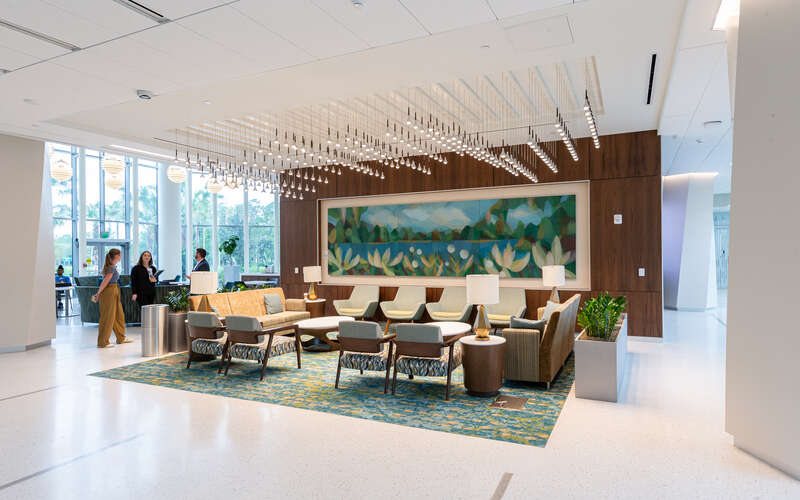
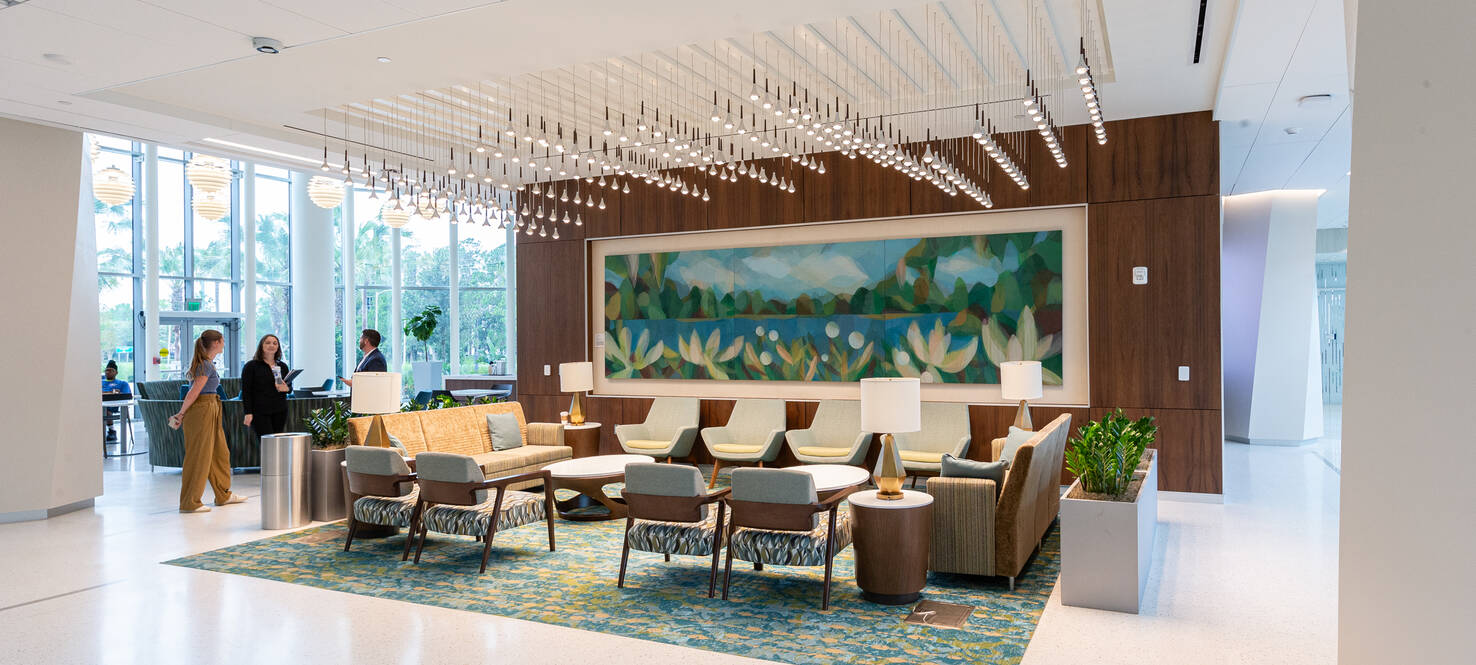
“We have patient, staff and public spaces that influence the art choices,” said Cowley-Smith, who studied art history and earned her degrees in interior design in the College of Architecture at the University of Cincinnati. “It’s not theming, exactly. The selected art subject matter is generally focused on nature-based themes due to its highly influential effect on wellness. In lobbies, we want to make a connection with hospitality. We always want to present a welcoming feeling.”
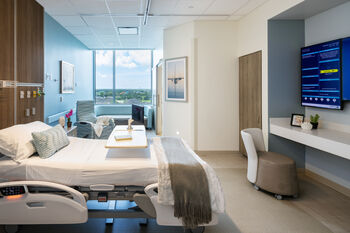
Artwork in MMH patient rooms aim to remind its occupant of past adventures and take them away from the hospital, at least for a little while.
Patient rooms are different, she explains. A person in an inpatient room could likely spend a lot of time in that space, meaning the artwork should be something more transporting than say, a simple flower.
“In inpatient rooms I like to display landscapes,” Cowley-Smith said. “I try to think about what that person is experiencing at that time, and if a piece of artwork can remind them of a wonderful day in a canoe on a lake, that may take them out of the moment they are in for a little while.”
More specific pieces of art are displayed in the more well-traveled areas of Moffitt campuses. Many are part of Moffitt’s fine art collection, which consists of more than 650 pieces, 200 of which are patient and staff related through the Arts in Medicine program. Fine art selections can be identified by the light maple frame and white tag next to each.
Cowley-Smith said that it’s rare for Moffitt to display any pieces of art on loan or by donation, mostly because of the legal and tax implications contained within such an agreement. And, while those agreements do happen on occasion, they are very rare.
During the design of Moffitt Mckinley Hospital and SouthShore’s campus, Cowley-Smith was directly involved in procuring the appropriate artwork for display. She is currently working on selections for the Speros campus in Pasco County.

Cowley-Smith helped procure comforting artwork for Moffitt's Southshore location, which opened in January 2025.
Managing the interior art program at Moffitt is a big responsibility, even though Cowley-Smith understands that the artwork may only be a peripheral component of the interior experience.
“Patients, visitors and staff are focused on much more important things and many times they may walk into an environment and not even notice the artwork, but it becomes a part of the ambience of the space,” she said. “It is our hope that through a healing environment aesthetic, a patient or visitor will feel we’ve got their back and that they can breathe a sigh of relief. And maybe, through the art, they can experience a little moment of joy.”
