

Understanding Dense Breasts: What Does it Mean and Why Does it Matter?
Breast density has become an important topic in women’s health. When a woman hears she has dense breasts, the first questions are usually: What does that mean? and What should I do next?
We sat down with Kimberly Funaro, MD, a breast radiologist in the Diagnostic Imaging and Interventional Radiology Program at Moffitt Cancer Center to learn more about dense breasts and its connection to breast cancer.
What Are Dense Breasts and How Can a Woman Identify if She Has Them?
Dense breasts are very common, affecting about 40% of women in the United States, according to the American Cancer Society. Breasts are made up of a combination of fibroglandular tissue and fat. When there is more fibroglandular tissue than fat, the breasts are considered dense.
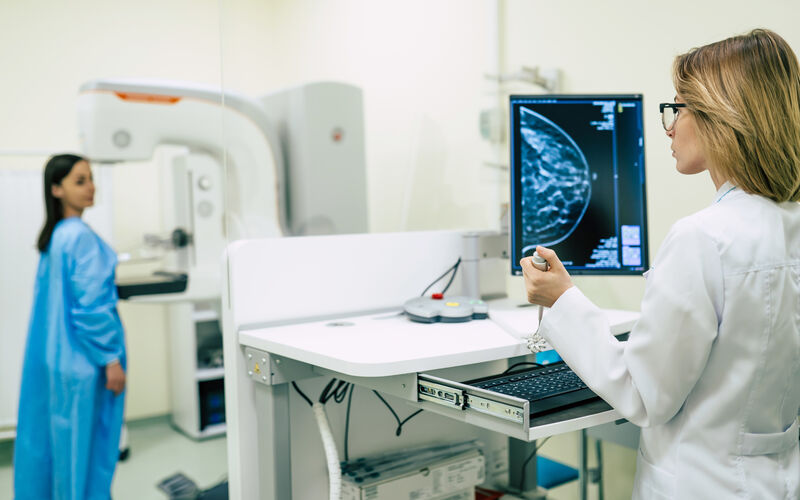
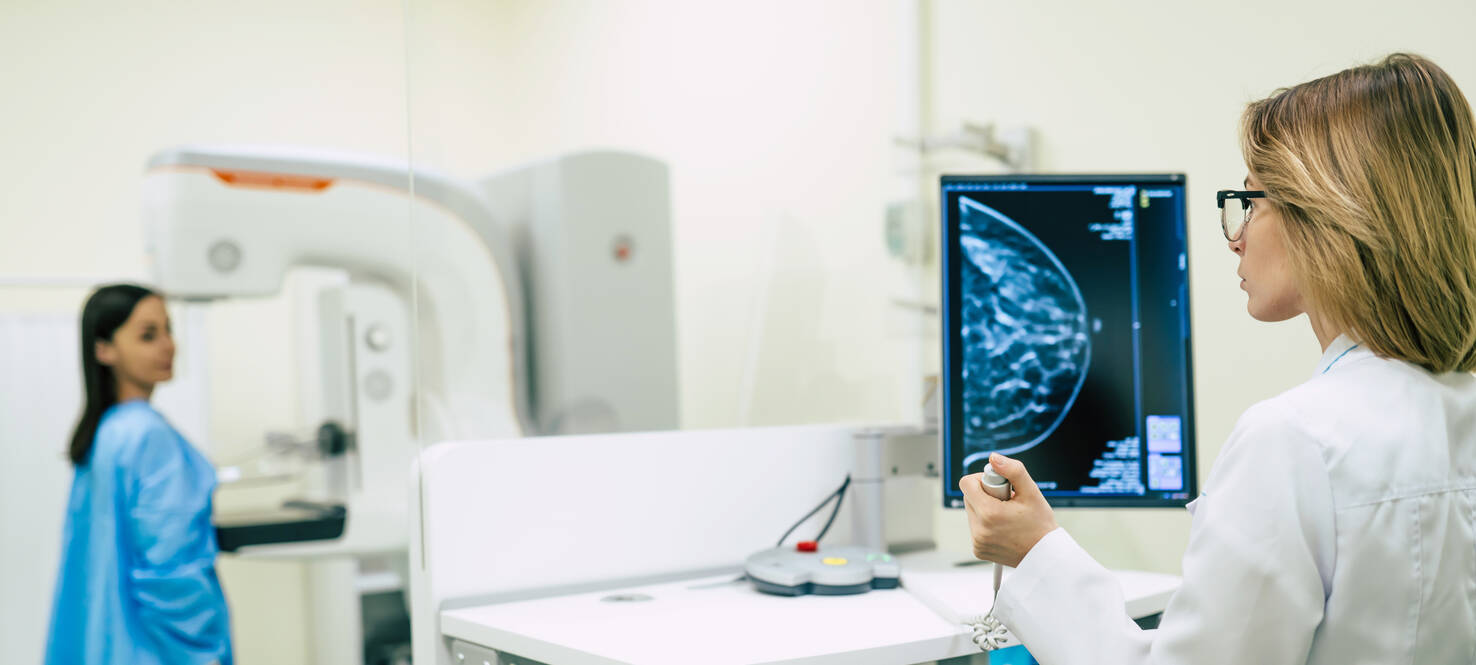
Funaro says that the best way for a woman to identify if she has dense breasts is to have an annual mammogram screening.
“We assess density on each mammogram. It is required by federal law that you receive a letter letting you know if you have dense or not dense breasts,” Funaro explained.
Are There Different Levels of Density?
Dense breasts are categorized into two different categories based on the proportion of fat to fibroglandular tissue: heterogeneously dense and extremely dense.
Heterogeneously dense means there is more fibroglandular tissue than fat and this may obscure small masses on mammography images.
Extremely dense means the breast is composed almost completely of fibroglandular tissue with very little interspersed fat. This level of density makes masses much more challenging for the radiologist to see and limits the sensitivity of mammography.
What Are the Screening Requirements for Women With Dense Breasts?
The Society of Breast Imaging recommends that all women begin their annual mammogram screening at 40. Based on other risk factors, such as dense breasts, additional supplemental screening, including breast MRI, may be recommended.
Funaro adds that it is important to note that a supplemental screening MRI does not replace the need for annual mammography screening.
Are Women With Dense Breasts More Likely To Develop Breast Cancer?
According to the American Cancer Society, women with dense breast tissue have a 15% to 20% greater risk for developing breast cancer.
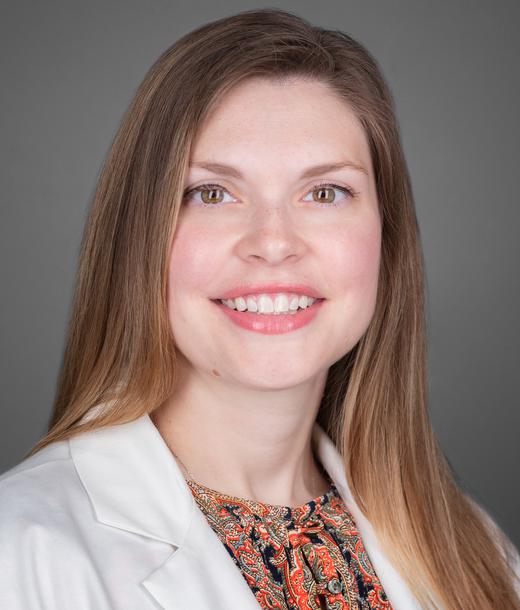
“Having dense breasts is associated with an increased risk of breast cancer but the reasons behind that increased risk are not well understood and still being researched,” Funaro said.
She adds that dense breasts also make it more challenging to find cancers on mammography as the dense breast tissue can hide masses.
Who Has a Higher Chance of Having Dense Breasts?
Premenopausal women are more likely to have dense breast tissue. After menopause, density may decrease due to the lower estrogen levels.
Funaro says Asian women tend to have the highest prevalence of dense breasts. She also explains that while dense breast can be hereditary, there are other factors besides genetics involved in breast density, such as weight, medications or hormone changes.
“Women with a lower BMI tend to have less overall fatty tissue in their breast, making the breast appear dense,” Funaro explains. “Other factors such as hormones have an influence on breast density. Pregnancy and lactation increase breast density due to the hormonal changes. Similarly, hormone replacement therapy can increase breast density because of estrogen’s effects on the fibroglandular tissue.”
Funaro insists that best way for all women, regardless of race, menopausal status or genetics to know their individual density is by having their annual mammogram beginning at age 40.
