
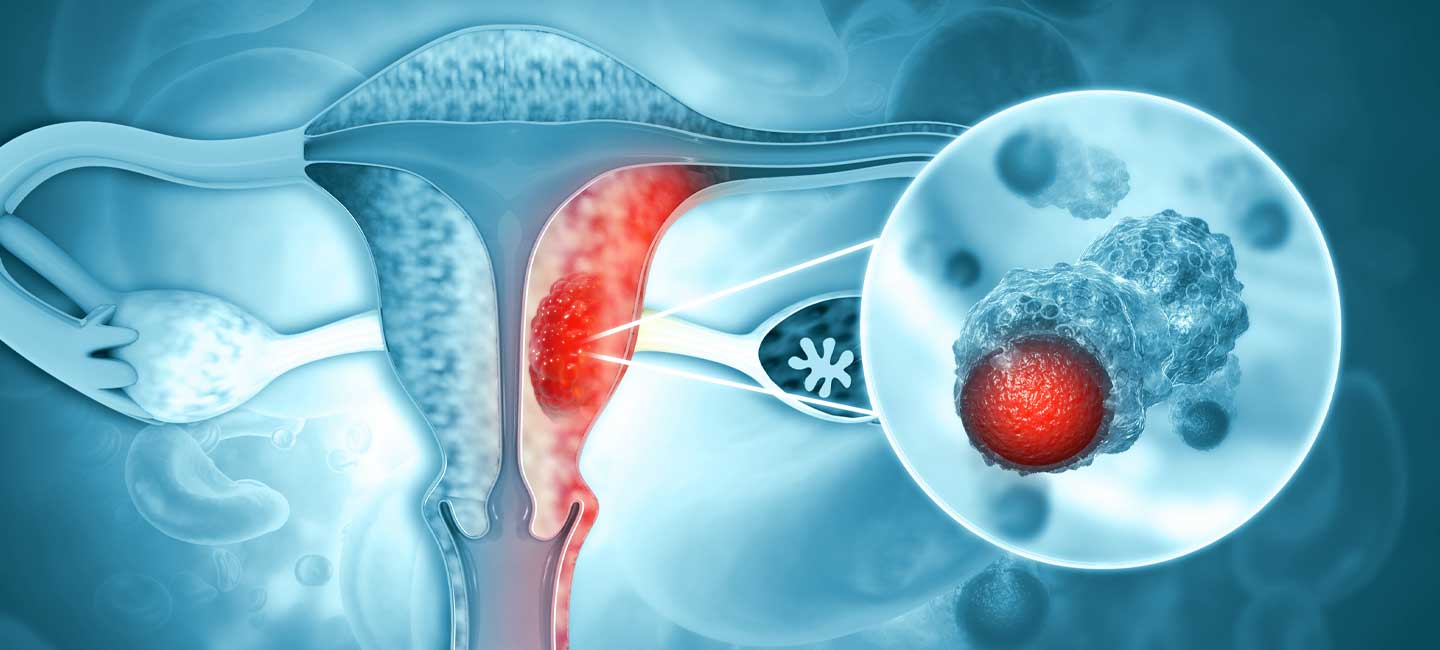
Advancing Endometrial Cancer Treatment with Targeted Therapies
Endometrial cancer is the sixth most common cancer in women and the most common of the female reproductive organs. It affects mainly post-menopausal women, and its incidence is rising, with over 400,000 new cases per year worldwide. As these diagnoses increase by 1-3% each year, there’s an unmet need for new first-line treatments for the nearly 80% of patients with advanced recurring disease who are mismatch repair proficient (pMMR), in which there is a normal expression of mismatch repair (MMR) proteins.
Recent breakthroughs in first-line treatment for endometrial cancer involve the use of targeted immunotherapies in combination with chemotherapy as first-line treatments in patients with primary advanced or recurrent endometrial cancer.
In June 2024, the FDA approved the use of Durvalumab with carboplatin plus paclitaxel, followed by single-agent durvalumab for patients with primary advanced or recurrent endometrial cancer. In the same month, the FDA also approved pembrolizumab with carboplatin and paclitaxel, followed by single-agent pembrolizumab, for the same group of patients. Most recently, in August 2024, the FDA approved a third treatment option for endometrial cancer patients: dostarlimab-gxly with carboplatin and paclitaxel, followed by single-agent dostarlimab-gxly. Moffitt is now offering these newly FDA-approved treatment therapies endometrial patients with mismatched repair.

Dr. Hye Sook Chon
Dr. Hye Sook Chon, a gynecologic oncologist at Moffitt Cancer Center, was one of many investigators and authors of the clinical trials that explored the benefits of immunotherapy on endometrial cancer patients and led to these new FDA approvals.
Breakthrough #1: Olaparib and Durvalumab Plus Chemotherapy
The DUO-E Phase III trial, published in October 2023, studied the results of adding durvalumab, a type of immunotherapy, to chemotherapy treatment, followed by maintenance durvalumab with or without adding olaparib, a PARP inhibitor. Moffitt’s Dr. Chon was one of the trial’s many investigators and authors, exploring the benefits of immunotherapy on Moffitt endometrial cancer patients.
The trial found strong evidence of the benefits of adding durvalumab to chemotherapy for patients with mismatch repair deficient (dMMR) tumors and solid evidence supporting the addition of olaparib for patients with pMMR.
For patients with dMMR, using durvalumab plus chemotherapy followed by adjuvant therapy of durvalumab produced better outcomes for patients with advanced endometrial cancer.
For patients with pMMR, there is compelling evidence for the addition of olaparib to the maintenance durvalumab treatment. They showed a longer duration of response (18.7 months) compared to the control arm (7.6 months) and had a 32% reduced risk of second progression or death than the control group. They also showed improvement in time from first to second treatments and other key secondary efficacy endpoints. Progression-free survival rates were much higher compared to those who received the standard of care alone, highlighting how the addition of olaparib enhances the results of checkpoint inhibition immunotherapy as a first-line treatment for endometrial cancer.
DUO-E is the first phase III trial to explore the benefits of the combination of immunotherapy and PARP inhibition in patients with endometrial cancer. The results encourage further exploration of PARP inhibitor maintenance therapy in specific subsets of the disease, such as pMMR and PD-L1-positive patients. They also show promise of innovative new treatment approaches for patients with advanced forms of this disease.
Breakthrough #2: Dostarlimab With Chemotherapy
Dostarlimab is a monoclonal antibody initially approved for use in combination with chemotherapy for patients with mismatched repair-deficient recurrent or advanced endometrial cancer. In August, the FDA approved expanding the drug’s indication to include a broader range of cases. This introduces a new standard of care across the board, especially for patients with endometrial cancer with mismatch repair intact, who previously had few options available.
The drug targets and blocks the PD-1 protein, empowering the body’s immune system to recognize and attack cancer cells. In clinical trials, the median overall survival of patients who received dostarlimab-gxly was 44.6 months compared to 28.2 months for patients who received a placebo.
Breakthrough #3: Pembrolizumab With Chemotherapy
Pembrolizumab is an anti-PD-1 therapy FDA-approved in combination with chemotherapy to treat adult patients with primary advanced or recurrent endometrial carcinoma, regardless of mismatch repair status. The June FDA approval was based on data from Phase 3 of the NRG-GY018 trial, which showed a 40% reduced risk of disease progression or death in patients with pMMR endometrial cancer and a 70% reduction in patients with dMMR endometrial cancer compared to the placebo arm of the study.
Pembrolizumab with carboplatin and paclitaxel, followed by a single-agent pembrolizumab, is a new frontline therapeutic option for patients. It demonstrates a clinically meaningful and statistically significant progression-free survival benefit compared to chemotherapy alone.
The Future of Endometrial Treatment
Other initiatives to progress the treatment of endometrial cancer include exploring ways to detect it before symptoms develop, including studying genetic risk factors and new biomarkers. Treatment methods, such as using molecular subtypes to determine the best treatment options, employing targeted therapies, and testing treatment combinations, also allow us to advance our understanding and standard of care for endometrial cancer.
Clinical trials continue to push the needle forward in discovering and studying revolutionary drugs and treatments. Moffitt will continue to drive research breakthroughs, giving patients access to the most advanced treatment options.
Moffitt is Florida's only National Cancer Institute (NCI) Designated Cancer Center. Our patients are cared for by a cohesive team of experts in their fields, from gynecologic oncologists to medical oncologists, radiologists, fertility preservation specialists, and more. This team meets weekly to evaluate patients and collectively determine individualized treatment plans. Moffitt is the best place for cancer care in Florida, with patient outcomes up to four times higher than the national average.
To refer a patient with gynecologic cancer or with a suspicious tumor finding, please complete our online form or contact a physician liaison for assistance. As part of our efforts to shorten referral times as much as possible, online referrals are typically responded to within 24 - 48 hours.