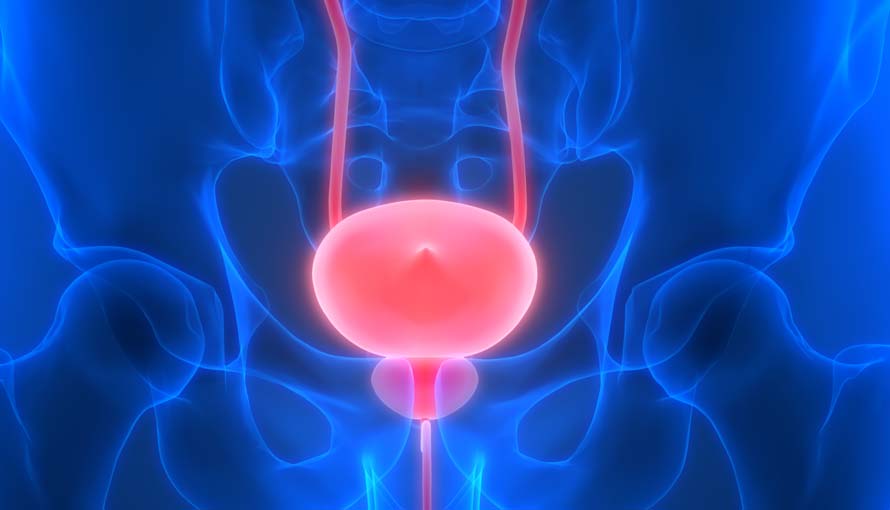
Bladder Preservation Therapy for Muscle-Invasive Bladder Cancer: A Multidisciplinary Approach
Bladder preservation therapy is a well-established, evidence-based approach for select patients with muscle-invasive bladder cancer (MIBC), a condition where cancer penetrates the bladder’s muscle wall. This treatment integrates maximal safe tumor resection with external beam radiation and low-dose chemotherapy to maintain a cancer-free, functional bladder while offering comparable survival rates to radical cystectomy in appropriately selected patients.
Moffitt Cancer Center’s Multidisciplinary Approach
Moffitt Cancer Center provides comprehensive care through its specialized multidisciplinary bladder cancer clinic. Patients benefit from consultations with an expert team that includes a urologic surgeon, radiation oncologist, medical oncologist, pathologist and radiologist. Our collaborative model ensures personalized treatment for each patient.
While no randomized clinical trials have directly compared bladder preservation to surgical removal, patients must meet certain qualifications. Our team evaluates each case individually to determine the most effective approach—whether bladder-sparing therapy or radical cystectomy.
"For those eligible for bladder preservation, we provide a structured treatment and surveillance plan to optimize outcomes,” said Dr. Daniel Grass, Section Chief of Genitourinary Radiation Oncology.
Bladder Preservation vs. Bladder Removal Surgery
Bladder preservation therapy allows patients to retain their bladder and urinary function. In contrast, bladder removal surgery (radical cystectomy) requires urinary diversion procedures, impacting long-term quality of life. Radiation therapy serves as a "virtual surgery," precisely targeting tumors while preserving bladder integrity. However, patients must commit to rigorous post-treatment surveillance to detect potential recurrences.
Dr. Roger Li, a urologic oncologist specializing in the care for patients with bladder cancer, agrees that preservation of the bladder is highly desired: “Although radical cystectomy has been proven to be curative in many patients with muscle invasive bladder cancer, careful selection can help many to successfully avoid this life-altering surgery. With the ever improving radiation technology and systemic treatments, we are beginning to find this to be a practical strategy for more and more of our patients.”

Advantages of Bladder Preservation Therapy:
- Organ Preservation: Maintains natural bladder and urinary function.
- Comparable Cancer Control: Clinical outcomes align with radical cystectomy when selection criteria are met.
- Reduced Surgical Risks: Avoids complications such as infection, blood loss and extended recovery time.
Bladder Preservation Treatment Process Evaluation and Multidisciplinary Consultation
- Comprehensive assessment by Moffitt’s urologic cancer experts.
- Cystoscopy to evaluate tumor extent and determine the need for additional resection.
- Collaboration with radiation and medical oncologists to formulate a personalized treatment plan.

Treatment Planning and Therapy
- Radiation planning using advanced imaging (CT/MRI) to map the treatment area.
- Development of a customized radiation plan over two weeks.
- Radiation therapy is typically administered daily over four to seven weeks.
- Concurrent low-dose chemotherapy to enhance radiation efficacy.
Post-Treatment Surveillance
Routine monitoring to detect recurrence:
- Cystoscopy and imaging every three months for the first two years.
- Bi-annual follow-ups thereafter.
Advanced Radiation Techniques for Bladder Cancer
Precision in radiation delivery is crucial due to bladder size variability and its proximity to sensitive tissues. Moffitt Cancer Center employs advanced radiation technologies, including:
- MRI-Guided Radiation Therapy: Real-time imaging ensures precise targeting while sparing normal tissues.
- Adaptive Treatment Planning: Daily adjustments to optimize tumor targeting and minimize exposure to surrounding organs.
"These innovations allow us to compensate for bladder filling variations and minimize radiation exposure to normal tissues, ultimately reducing side effects and improving treatment precision," said Dr. Grass.
Advancing Bladder Cancer Treatment Through AI and Machine Learning
Moffitt Cancer Center is leveraging artificial intelligence (AI) and machine learning to refine bladder preservation therapies. Supported by a state-funded grant, our research aims to:
- Analyze real-world data on patient-reported treatment side effects.
- Develop predictive AI models integrating clinical, behavioral, and imaging data.
- Optimize treatment protocols to enhance patient quality of life and minimize toxicity.
Upon completion, this initiative will inform a multisite clinical trial comparing AI-driven treatment planning with conventional approaches, potentially influencing national guidelines for MIBC treatment.
Refer your patients
To refer a patient to Moffitt for bladder preservation therapy, complete our online form or contact a physician liaison at Physician.Relations@Moffitt.org. Online referrals receive responses within 24 - 48 hours.