

Expanding Minimally Invasive Options for Lung Metastases: The Role of Thermal Ablation
For patients with metastatic cancer involving the lungs, not all are candidates for surgical resection, and in some cases, radiation therapy may present long-term risks to respiratory function. In select cases, thermal ablation offers a minimally invasive alternative, providing localized treatment that can preserve healthy lung tissue while avoiding certain side effects associated with more conventional therapies.
Although the technique has been available for some time, thermal ablation is still offered at relatively few cancer centers nationwide, primarily due to the specific expertise and infrastructure it requires. Moffitt Cancer Center has been working to expand access to this option for appropriate patients in the Southeast, joining and collaborating with other academic institutions such as MD Anderson and Mass General that have established programs in this space.
Understanding Thermal Ablation
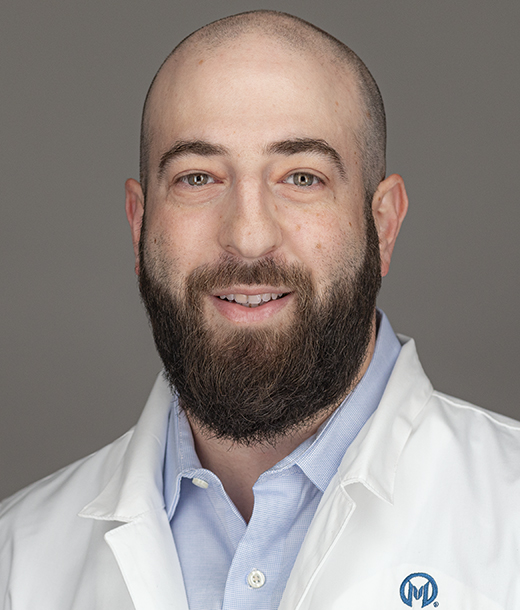
Erez Klein, MD
Thermal ablation is a localized treatment modality that uses extreme heat (Microwave ablation) or cold (Cryoablation) to target tumor cells while minimizing impact on surrounding tissue. It may be considered for patients with metastatic disease to the lungs, especially when other treatment options may not be feasible or optimal.
Candidates may include patients with metastatic sarcoma presenting with multiple bilateral lung metastases, patients presenting with oligometastatic lung disease, or selected patients with primary lung cancer who are not eligible for surgical resection or radiation. Treatment may be delivered in a single session or across multiple stages, depending on the number and location of lesions.
The choice between cryoablation and microwave ablation is largely determined by tumor location. Cryoablation is generally used for peripheral lesions due to its favorable safety profile near the pleura, while microwave ablation is often preferred for more central lesions due to its efficiency and thermal coverage.
While radiofrequency ablation (RFA) was used in the past, newer technologies have largely supplanted it in pulmonary applications due to improved control and procedural efficiency. Microwave ablation offers advantages in terms of speed and consistency and may also stimulate immune activation, though further research is ongoing in this area.
Clinical Outcomes and Considerations
Emerging data suggest that thermal ablation can offer comparable overall and progression-free survival outcomes to surgery and radiation in carefully selected patients. Importantly, several studies have shown that pulmonary function may be better preserved following ablation, which may be especially relevant for patients with underlying respiratory compromise or multiple prior treatments.
Thermal ablation is increasingly being integrated into the management of metastatic disease involving organs such as the liver, lungs, and kidneys, particularly when focal control of disease is the clinical priority.
Moffitt’s Approach
At Moffitt, thermal ablation is now part of the interventional oncology portfolio within the Diagnostic Imaging and Interventional Radiology Program. Dr. Erez Klein, who has received advanced training in lung ablation techniques, is helping to establish and grow this service locally. His clinical practice is focused on interventional oncology, with a specific interest in minimally invasive therapies for lung metastases.
Dr. Klein continues to collaborate with national colleagues and is engaged in ongoing efforts to further refine protocols and expand patient access. His involvement complements the existing expertise at Moffitt in thoracic surgery, radiation oncology, and medical oncology, creating a multidisciplinary environment where individualized treatment decisions can be made.
Patients referred for consideration of thermal ablation will be evaluated in collaboration with their existing care teams, including referring thoracic surgeons and oncologists, to ensure a coordinated and evidence-based approach.
Collaboration and Referrals
Moffitt welcomes the opportunity to work alongside referring providers across specialties, including sarcoma, GI, GYN, GU, and thoracic oncology, to assess whether thermal ablation may be an appropriate option for their patients. As with all services at Moffitt, the focus remains on delivering personalized, comprehensive and collaborative cancer care.
To refer a patient diagnosed with or suspected of having lung metastasis for thermal ablation, please complete our online form or email our physician liaison for assistance. Our experts are honored to collaborate with you on their evaluation and develop a personalized treatment plan.