
From Clinical Trials to Clinical Practice: CAR T-Cell Therapy for ALL
Dr. Bijal Shah
In November 2024, the FDA approved the use of obecabtagene autoleucel (Aucatzyl) for the treatment of adults with relapsed or refractory B-cell precursor acute lymphoblastic leukemia (B-ALL). This breakthrough CAR-T cell therapy received approval based on results from the FELIX (NCT04404660) clinical trial, which included Moffitt’s Dr. Bijal Shah among its authors.
Moffitt Cancer Center is leading the way in cell therapy, pioneering new science and driving discoveries that save lives. This new option for adult ALL patients changes the treatment landscape, offering better outcomes for a patient population that needs it.
ALL and the Current Standard of Care
Acute lymphocytic leukemia (ALL) is a cancer of the blood and bone marrow that affects immature lymphoblast cells, white blood cells that aren’t fully developed. A rare cancer with only 6,500 new cases diagnosed in the U.S. annually, it starts in the bone marrow and rapidly produces abnormal lymphoblasts, which don’t mature properly into lymphocytes.
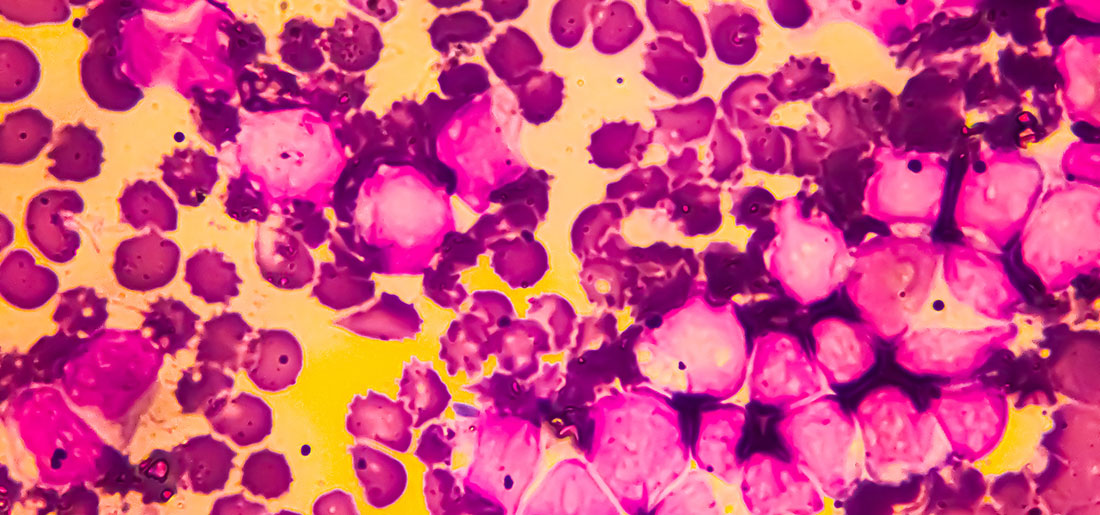
Without treatment, this cancer progresses quickly. It is the most common type of cancer diagnosed in children and has high cure rates in this population, but it can also occur in adults, who tend to have lower survival rates. This aggressive cancer has a high unmet medical need in the treatment of patients following relapse, which historically carries poor outcomes.
Historically, adult patients facing relapsed or refractory (r/r) B-cell precursor ALL have had limited treatment options. The standard of care has typically combined chemotherapy with targeted therapies and, for some, allogeneic hematopoietic stem cell transplant (HSCT). These long-term treatment plans were aggressive, yet response and survival rates were discouraging.
Aucatzyl Clinical Trial Insights
Aucatzyl is a CD19-directed genetically modified autologous T-cell immunotherapy. Its unique design features a fast target-binding off-rate to minimize excessive activation of programmed T cells. Results of the FELIX trial demonstrated that this fast off-rate reduces toxicity and T-cell exhaustion, leading to improved medication persistence and high durable remission rates. In this study, 42% of evaluable patients treated with Aucatzyl achieved complete remission within three months, with a mediation remission duration of 14.1 months.
This investigational therapy also showed safety advantages due to the tumor-guided dosing. Only 3% of patients experienced severe cytokine release syndrome, and less than 5% developed high-grade neurotoxicity. These results are lower than those observed with other CAR-T therapies, giving hope to patients neurologic complications may significantly complicate treatment delivery.
-

About 6,500
cases of ALL diagnosed annually
-

About 4 of every 10
cases of ALL are in adults
How Aucatzyl Changes the Treatment Landscape
Aucatzyl represents new treatment possibilities for adults with r/r B-cell precursor ALL. As the first CAR-T therapy approved explicitly for this cancer subtype and only the third for any B-ALL variant, it provides a critical alternative to hematopoietic stem cell transplantation, particularly for transplant-ineligible patients. While clinical evaluation is still needed, Aucatzyl may also benefit patients previously treated with brexucabtagene autoleucel.
Aucatzyl’s differentiators include its lower toxicity profile than earlier CAR-T therapies and unique binding properties. It presents the potential for durable patient remissions with a single infusion.
“This CAR has a different CD-19 binder, which binds more physiologically and can come with lower cytokine production and lower neurologic toxicities. The CAR is also delivered using a novel split infusion approach that is customized to the underlying tumor burden to enhance its safety further,” says Moffitt’s Dr. Shah, an investigator for the FELIX clinical trial.
Moving Forward With Advanced Therapeutic Options
Moffitt Cancer Center’s Bone Marrow Transplant team has gained direct experience with this treatment through clinical research and is now prepared to offer this newly approved immunotherapy to eligible patients.
With unique expertise in administering obecabtagene autoleucel and a longstanding reputation as pioneer in cellular therapy discovery, Moffitt offers referring physicians seamless access to leading-edge treatment options for patients. Our multidisciplinary team of transplant specialists, cellular immunotherapists, and hematologic oncologists works collaboratively to determine optimal treatment sequencing for each patient's unique disease presentation.
Referring providers can expect comprehensive communication throughout the treatment journey, including ongoing progress updates. Our CAR T-cell therapy program consistently demonstrates excellent outcomes, with survival rates that exceed national benchmarks.
This new therapy option is a significant step forward in treating B-ALL. Moffitt remains committed to advancing cellular therapy while maintaining the highest patient care and safety standards.
To refer a patient with cancer or a suspicious finding to our Malignant Hematology Program, please complete our online form or contact a physician liaison for assistance. As part of our efforts to shorten referral times as much as possible, online referrals are typically responded to within 24 - 48 hours.