

Specialized Clinic for Bone Lesions and Bone Metastasis
When cancer spreads to the bones, it can cause major problems for patients already dealing with disease. Broken bones are a major concern that can complicate treatment outcomes. That’s why the Sarcoma Program at Moffitt Cancer Center instituted a Bone Metastasis Clinic, the first of its kind in Florida and among only a handful in the U.S.
According to the American Cancer Society, almost all cancers can spread to the bone, but the most common include breast, lung, prostate, kidney, melanoma, ovarian and thyroid cancers.
The goal is to change the way these cancers are detected and treated by quickly assessing all metastatic cancer patients with bone fractures or impending fractures. It will also evaluate patients with bone lesions with a previously undetermined source.
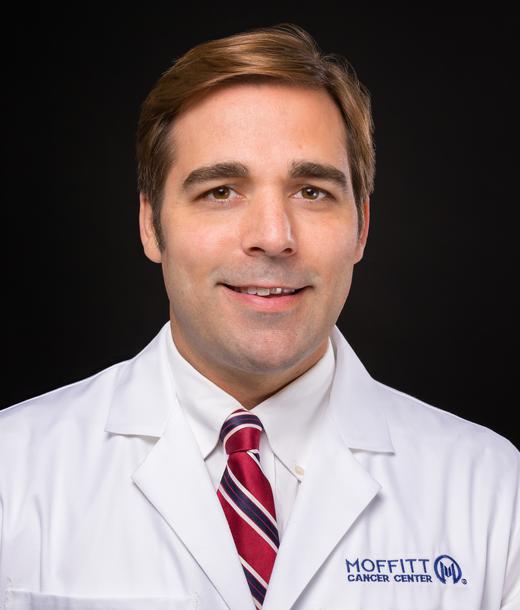
"Some doctors may see their patients in pain and try to treat it with medication," said Dr. David Joyce, a specialist in sarcoma surgery at Moffitt. "They may not realize that these patients could be at risk for a fracture. Our goal is to find out if these patients are at risk for a fracture and help them before that happens.”
Moffitt’s Sarcoma Program will see patients with metastatic disease in the pelvis, arms, legs and shoulders while the Neuro-Oncology Program will see patients whose disease spreads to the spine and skull.
Virtual Consultations with the Bone Metastasis Clinic
To help serve more patients, Moffitt's Bone Metastasis Clinic has launched a virtual consultation pathway specifically designed for patients living more than 75 miles away. This initiative aims to improve access to timely, expert evaluation while reducing the travel burden for patients facing complex bone metastasis concerns.
What this virtual option offers:
- Remote consultations for new patients residing outside a 75-mile radius
- Comprehensive imaging review to assess fracture risk and guide intervention
- Multidisciplinary coordination with oncology, surgical, and radiation teams
- Streamlined referrals for expedited, well-coordinated in-person care when needed
Patients who meet the following criteria are excellent candidates for this virtual access point:
- Specific bone lesion(s) of concern (up to four locations)
- No prior surgery for the lesion(s)
- Imaging already completed and available for review
- Experiencing pain or impaired mobility
- Reside 75+ miles from Moffitt
- Presumed stage IV disease or confirmed distant metastasis
To refer a patient, please complete the online referral form or email our physician liaison at Physician.Relations@Moffitt.org.
Previously, patients referred to sarcoma specialists may not have been able to see a doctor for weeks. This new clinic will allow patients with metastatic disease to be fast tracked to a doctor within days in hopes of preventing a fracture before it happens.
“What we’re able to do is provide access to patients,” said Joyce. “We get them in, get them seen and get them definitive answers as to whether something surgical is needed and onto treatment as quickly as possible. These metastatic diseases should be treated more like trauma. They can have distracting pain and not realize there is another impending fracture that they need fixed as soon as possible to mobilize. These patients are already at stage 4 and need to be seen quickly so their overall treatment can begin or continue.”
According to Joyce, patients who haven’t suffered a fracture are typically referred to surgery to reinforce the bone to prevent a fracture. Patients who might not be candidates for surgery will be referred to a radiation oncologist for treatment options to address the pain if they aren’t at risk for fracture.
“With surgery we can stabilize the bone by placing a rod inside the bone or adding a plate,” said Joyce. “Even if it’s in the leg, most patients are walking and go home the next day. For more significant disease, we can do a total replacement with a prosthesis if needed.”
While fractures can happen with a fall or injury, bones weakened by cancer can also break during day-to-day activities. These breaks cause sudden, severe pain and most often happen in the long bones of the arms and legs or bones in the spine. According to a study published in the British Journal of Cancer, hospitalization due to a bone fracture was associated with an increased risk of death.
“Patients that have fractures don’t do well for a number of reasons,” said Joyce. “Some of it is the stress response related to a pathologic fracture and metastatic bone physiology that tends to lead to more complications down the road. You’re also more likely to develop blood clots if you’re stuck in bed with a broken leg.”
While the clinic is in its infancy, Joyce believes it can make a big difference for the future of metastatic disease care.
“We really want to get people taken care of before there’s a missed opportunity to avoid a care complicating pathologic fracture,” said Joyce. “If we can provide a way to relieve the anxiety of wondering if the bone is going to break to doctors and patients, pain can be better addressed, patients will be happier, and patients won’t miss their cancer treatments.”
If you’d like to refer a patient to Moffitt, complete our online form or contact a physician liaison for assistance. As part of our efforts to shorten referral times as much as possible, online referrals are typically responded to within 24 - 48 hours.