
The Role of Cardio-Oncology in Managing Risks During Cancer Treatment
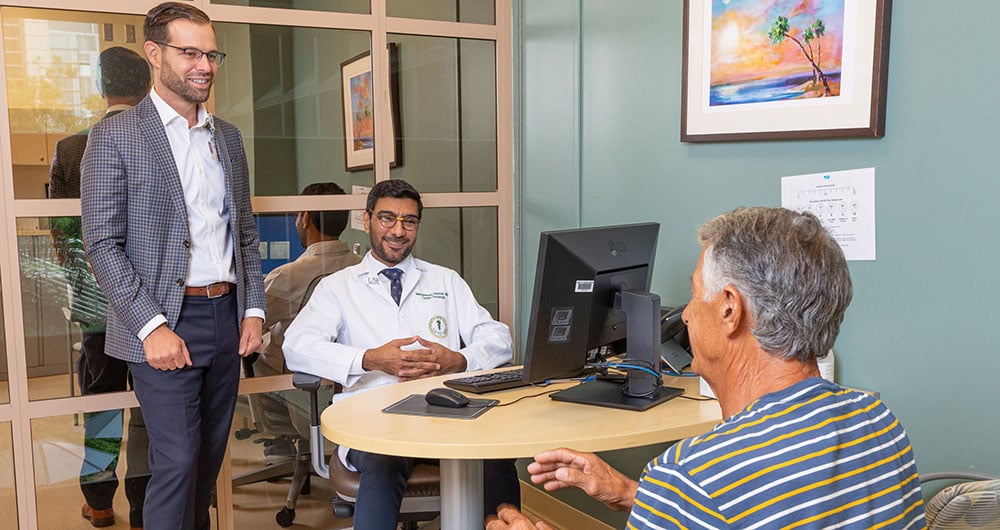
Dr. Mohammed Alomar, center, works with oncologists such as Dr. Ben Creelan to ensure patients remain heart healthy throughout cancer treatment.
Cancer treatment, while lifesaving, can place significant stress on various organs, especially the cardiovascular system. While direct cardiac involvement due to cancer is rare, treatments for many cancers, such as chemotherapy and radiation, can lead to long-term cardiovascular complications. The Cardio-Oncology Program at Moffitt Cancer Center is specifically designed to address these complications by closely monitoring and managing the cardiovascular health of patients undergoing cancer treatment, as well as those in survivorship.
Cardio-Oncology at Moffitt Cancer Center
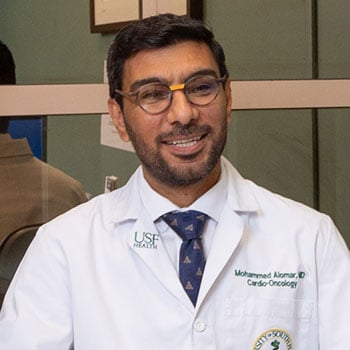
Moffitt Cancer Center's Cardio-Oncology Program is a unique, multidisciplinary initiative that focuses on managing the cardiovascular side effects of cancer therapies. Dr. Mohammed Alomar, the program director, and his team of expert cardiologists work in close collaboration with oncologists to ensure comprehensive care for patients before, during and after cancer treatment.
The program provides patients with a tailored approach to cardiovascular care, taking into account the type of cancer treatment they are receiving and their pre-existing cardiovascular conditions. With advanced technologies and a deep understanding of the cardiovascular effects of cancer treatments, Moffitt’s Cardio-Oncology team ensures that cancer patients receive the highest level of care.
Why Cardio-Oncology Matters
Cancer therapies such as chemotherapy, radiation and newer immunotherapies (e.g., CAR T cell therapy) can have a detrimental effect on heart function. These treatments can cause heart damage that may not manifest until years after the treatment, often requiring long-term surveillance and management. The prevalence of heart disease among cancer survivors is increasing as the number of cancer survivors grows, with some therapies linked to irreversible cardiovascular damage.
“Our goal is simple: to prevent heart damage from cancer treatments," says Dr. Alomar. "We screen patients before, during and after treatment to detect any early signs of cardiovascular problems, allowing us to intervene early and reduce the risk of long-term complications.”
Cancer Treatments and Their Cardiovascular Risks
The most significant cardiovascular risk in cancer therapy comes from treatments like chemotherapy, immunotherapy and radiation, which can cause both reversible and irreversible cardiac events.
Some cancer treatments, particularly those used to treat breast cancer, lymphoma, sarcoma and hematological malignancies, are known to increase the risk of heart disease. For instance, patients who receive radiation for breast cancer, especially those with left-sided breast cancer, may experience an increased risk of cardiovascular complications many years after treatment.
“Patients with left chest radiation can develop heart disease 10 years after their treatment, often requiring ongoing monitoring and intervention,” said Dr. Alomar.
Additionally, chemotherapy agents such as anthracyclines and HER2-targeted therapies have known cardiotoxic effects. These treatments may lead to heart failure or other complications if left unmonitored.
The newest challenge in cardio-oncology involves immunotherapies like CAR T cell therapy. This treatment has revolutionized cancer care, but its long-term cardiovascular effects are still not fully understood. As a result, Dr. Alomar and his team at Moffitt are closely monitoring patients who undergo CAR T cell therapy, both pre- and post-treatment, to ensure their heart health is maintained.
A Multidisciplinary Approach to Cardio-Oncology
Moffitt’s Cardio-Oncology Program brings together cardiologists and oncologists, offering a comprehensive, patient-centered approach to care. Patients are classified into three categories based on their risk of developing cardiovascular complications:
- Patients without a prior history of heart disease who are undergoing chemotherapy are known to cause heart problems.
- Patients with a history of cardiovascular disease who are undergoing cancer treatment.
- Survivors who have completed treatment but require ongoing surveillance to monitor their heart health.
In all cases, the Cardio-Oncology team uses advanced imaging techniques like electrocardiograms, CT scans, and state-of-the-art 3D echocardiography to monitor heart function throughout the treatment process.
Additionally, the program offers a range of interventions, including the use of cardioprotective agents to prevent heart damage, nutritional counseling, and cardiovascular treatment for those who have developed heart conditions as a result of cancer therapy.
Surveillance and Long-Term Care
One of the hallmarks of Moffitt's Cardio-Oncology Program is its commitment to long-term surveillance of patients. While many patients do not develop cardiovascular side effects immediately following cancer treatment, the risks can persist for years. The program distinguishes between reversible and irreversible cardiovascular complications:
- Reversible cardiovascular events are typically monitored for two to three years, with patients "graduating" from intensive monitoring once their heart health stabilizes. However, they are encouraged to return if new cardiac symptoms develop.
- Irreversible cardiovascular events require lifelong monitoring and management, as these conditions are not fully reversible even with treatment.
The Cardio-Oncology team works with patients over an extended period, ensuring that any cardiovascular complications are addressed before they can interfere with quality of life or overall health.
Patient Outcomes and Research Initiatives
Moffitt’s Cardio-Oncology Program is also deeply committed to advancing research to better understand and prevent the cardiovascular side effects of cancer treatment. The program is currently involved in studies focused on identifying new medications and therapies to mitigate cardiotoxicity, optimizing radiation techniques to minimize damage to healthy tissue and evaluating the role of diet and nutrition in supporting cardiovascular health during and after cancer treatment.
Collaboration with Referring Physicians
As a healthcare professional, you can trust that your patients will receive the highest standard of care when referred to Moffitt’s Cardio-Oncology Program. Our specialists work hand in hand with oncologists to provide comprehensive care and surveillance, ensuring the best possible long-term outcomes for patients with cardiovascular concerns related to cancer treatment.
The program also provides consultations for patients who have completed cancer treatment, offering ongoing monitoring to prevent late-onset cardiovascular complications. The goal is to enhance the quality of life and long-term health of every patient through expert care, research and a multidisciplinary approach.
For more information on the Cardio-Oncology Program or to refer a patient complete our online form or contact a physician liaison for assistance. As part of our efforts to shorten referral times as much as possible, online referrals are normally responded to within 24 - 48 hours.