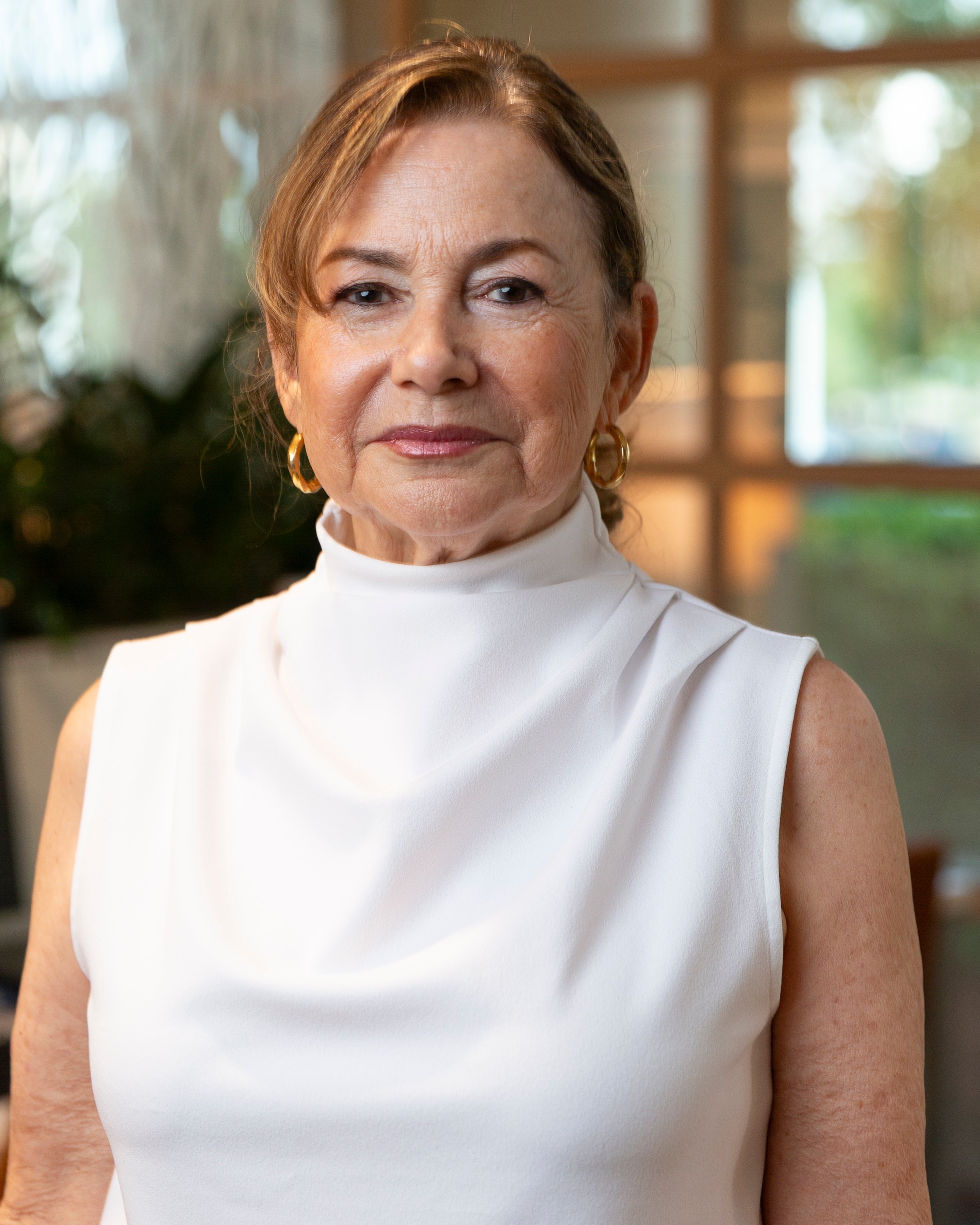
Isabel's Story

Isabel
Metastatic Melanoma Clinical Trial Patient
"This is amazing for me. I trust Moffitt."
Isabel’s Journey: Hope, Science, and a Clinical Trial Far from Home
Melanoma | Clinical Trial Participant
Every 28 days, Isabel travels ‘across the pond’ to Tampa to receive an investigational therapy at Moffitt Cancer Center. Her story shows how clear communication, trust and access make clinical trials possible for more people around the world.
International patient finds hope in a clinical trial for melanoma
Isabel splits her life between a coastal town in Ecuador and the island of Madeira, Portugal. She has lived with melanoma for eight years. Before coming to Moffitt, she tried oral therapies and twice she ended up in the ICU. When the cancer spread to her groin, she chose not to continue pills.
“My health insurance broker looked for a second opinion,” Isabel says. “Moffitt proposed several clinical research alternatives, which I immediately accepted.”
Today, she travels to Moffitt every 28 days for an infusion. Her treatment plan is expected to last at least a year. The clinical trial covers hotel lodging during her visits and Isabel handles the flights. “Despite the length of the trip, I value my life,” she says. “I am grateful for the covered hotel expenses.”
Isabel is enrolled in a Phase 3 international study evaluating an investigational therapy called IMA203, a type of T-cell receptor (TCR) therapy designed to recognize and attack melanoma cells. The trial compares this personalized cell therapy to standard treatments, measuring how well it controls cancer, how safe it is and how it affects patients’ quality of life.
Clear Communication Builds Trust in Clinical Trials
From the start, information and trust guided Isabel’s decision. “Everything was so well explained to me,” she says. “I already knew about Moffitt’s fine reputation, so I accepted without any doubt.”
Inside a clinical trial, care is structured and closely monitored. Consent is a conversation and participants can ask questions at any time, opting to stop participation whenever they choose. Isabel felt that control. “Yes, absolutely, I felt in control of my decisions and care,” she says.
Her experience at Moffitt has matched her expectations. “It could not be better,” she says. “Everybody is very kind and friendly.”
Diversity in Clinical Trials Improves Cancer Treatment for Everyone
When people from many backgrounds take part in research, the results better reflect the patients we serve. Trials that include a wide range of ages, life experiences and genetic ancestries can reveal important differences in how therapies work. This helps researchers improve safety and effectiveness for everyone.
For Isabel, access mattered. “There is no research like this in Ecuador,” she says. “I had no idea this existed. I feel privileged to be part of a medical trial.”
What Patients Should Know Before Joining a Clinical Trial
Clinical trials are not a last resort. Many trials are available early in care. If you are considering a trial, here are a few questions to help guide your decision:
- What is the goal of this study, and how might it help me now?
- What visits or tests will I need between treatments, and can any be done close to home?
- What costs are covered by the study and what will be billed to insurance? Are there resources for travel or lodging?
- If I decide to stop the trial later, how do I withdraw, and what are my next options?

Isabel’s message is simple. “I would encourage people to participate without fear,” she says. “Ever since I started five months ago, everybody is amazed at how well and relaxed I look.”
She believes this path gives her the best chance at a complete remission.
Referring Patients to Clinical Trials Expands Access to Advanced Care
For providers, early conversations about research can open options for patients who live far away, speak another language or have limited experience with cancer research. At Moffitt, clinical trial teams work closely with referring physicians to ensure patients understand their options and receive ongoing communication and support.
Why refer to a trial:
- Access to innovative therapies under rigorous oversight
- Data that reflect real-world patient populations and improve safety for all
- Shared decision-making that respects patient preferences and control
Trial teams can also discuss how patients are monitored between infusions, what follow-up occurs remotely and how results are shared back to referring providers.
A Journey of Gratitude and Global Impact
“I know I am going to be cured completely,” Isabel says with a smile. She has two sons, a large extended family, and many reasons to keep traveling. “This is amazing for me. I trust Moffitt.”
Science moves forward when people like Isabel say yes to well-explained options and feel supported every step of the way. Her journey reminds us that when research welcomes many voices, everyone benefits.