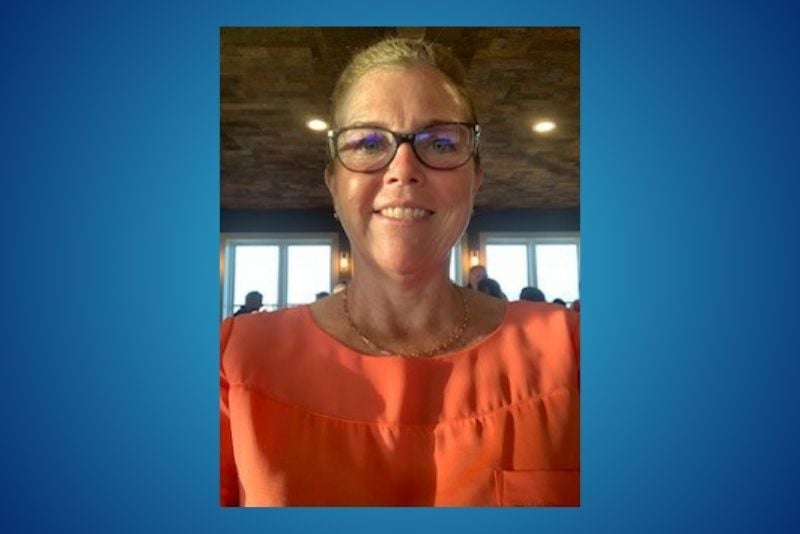
Ann Klein: It Broke My Heart In Beautiful Pieces
Ann Klein is a pancreatic cancer survivor whose journey reminds us just how powerful human connection can be in the midst of a medical crisis. Ann walks us through the whirlwind of her diagnosis, the long days of testing and treatment, and the unexpected moments of compassion that carried her through — from a nurse practitioner who stopped to check on her heart, to a musician who played her into peace, to a team member who made sure she didn’t ring the bell alone.
Her story is tender, honest, and full of the quiet heroism we see every day at Moffitt. It’s a reminder of how much it matters to notice people, to look them in the eye, and to bring your best self even on the hard days. Anne shows us that these small moments of care aren’t small at all — they’re life-changing.
What You'll Learn From Ann
-
How a sudden pancreatic cancer diagnosis upended Ann’s life — and the whirlwind of tests and decisions that followed.
-
What it’s like to arrive at Moffitt overwhelmed, scared, and unsure where to start.
-
How moments of compassion from nurses, anesthesiology staff, and support team members made an outsized impact during her hardest days.
-
The role Whipple surgery, hospitalization, and weeks of radiation played in her treatment journey.
-
Why simple human connection — a question, a smile, a song — can change the course of a patient’s entire experience.
-
The message Ann wants every healthcare worker to hear about presence, kindness, and the power of noticing someone.
For more stories, search for "Pep Talks with Moffitt" wherever you get your podcasts, or tune in and subscribe via our show page.
Podcast Transcript
The Heart of the Story
-
Ann’s journey is a reminder that while cancer treatment is complex, the moments patients remember most are deeply human.
-
A nurse practitioner who asked, “How are you really doing?” became a turning point on one of Ann’s worst days.
-
A musician with a bass violin brought calm, comfort, and the first peaceful rest she’d had in days.
-
Through every stage, small acts of compassion helped Ann feel seen, supported, and less alone.
-
Her story underscores that emotional care is as healing as medical care — and that kindness truly stays with patients for life.
My name is Ann Klein, um, and I was diagnosed with pancreatic cancer in August of 202 after having symptoms that I didn't think were cancer related at all. Started getting multiple tests trying to figure out what was wrong with me. That's when the surgeon in Vero Beach, Florida, had noticed that there was a suspicious mass on my pancreas. They biopsied it and then determined that it was cancer. And then that's when immediately when she called me with the results, she referred me to Doctor Hodul at Moffitt right away.
Prior to my diagnosis, I was leading a pretty happy, healthy lifestyle. So this really did come out of the blue, which it does for everyone, I'm sure. But um, especially the timing of it all, I thought, gosh, I'm doing so well and feeling good and losing weight and eating well. But, um, normally a pretty active social person. So I came to Moffitt really not knowing anything. I didn't research a thing. I didn't research the hospital. I didn't research the doctor, I didn't because I was just so miserable.
So I probably got to Moffat the first day at seven in the morning and didn't leave until like seven o'clock at night. Doctor Hodul started talking to me about the potential of having Whipple surgery, which was she was hoping that I would qualify for, and that was dependent on, you know, the series of tests that I was having. It was very exhausting and stressful and again, still not feeling well. It was it was pretty trying.
I went to the anesthesiology department. I ended up meeting a nurse practitioner in that department, Kendra, who all she wanted to do was to know how I was doing mentally, and it makes me cry every time. But she just said, you know, how are you doing? And, you know, I'm sure I broke down with her. But she said, you know, aside from all the medical stuff, you have to make sure that you're okay. Do you have support? Do you have people that can help you in your family and friends? She just wanted to make sure that I was okay other than anything else. You know, putting me first and letting me know that even though she didn't know me, that she was there for me and that she would stay in touch with me to make sure that I was okay. I will never forget that for the rest of my life, because it was such a miserable day, and knowing to have like that smile and to make sure that I was okay. And she walked me to my next appointment and, you know, held my hand and asked if it was okay, because of course it was during Covid, but she really was a game changer that day for me, and I was so grateful for her because it made the day a hundred times better than it, you know, could have been. Kendra took the time and noticed that I probably needed a little boost, and made me feel a hundred times better than I could have imagined.
Kendra took the time and noticed that I probably needed a little boost, and made me feel a hundred times better than I could have imagined.
I had my surgery in September of twenty twenty and was in the hospital for ten days. It was just one of those days that, um, you know, I just felt a little down and depressed, and it must have been a really dreary day outside, too, because it was particularly dark in the room, which also kind of mirrored my mood. And, you know, it was just kind of feeling a little sorry for myself, a little down, and was uncomfortable. I couldn't find like a comfortable position to rest or sleep. Um, I knew that Moffitt didn't have a lot of ability to offer, maybe some of the resources they normally would to comfort people. Um, because of Covid and only having, like, one visitor a day at that point for an hour. So during the time that I'm feeling kind of low and down, um, a gentleman came to my door. His name was Lloyd, and he played the bass violin, and he asked me if he could play a song for me. And I said, sure. And he just said, how are you feeling? I just said, I'm not feeling so great. And I'm. I'm uncomfortable and I really just want to get some rest. And he just said, well, if it's okay, I'll stand here at the door and just play something that'll make you comfortable. And I said, that would be amazing. And of course, I was crying and I wish I could remember the song that he played, but it was the most beautiful thing I'd ever heard in my life. And I'll never forget because I can hear it in my head still. But he just stood there and I closed my eyes, and I just tried to let all the bad things out of my head, and it felt like he was there for hours, which I know he wasn't, but I know he stood there for longer than maybe he needed to, but I did fall asleep to the sound that he played for me, and it was just beautiful. And he again made such a difference in my whole entire hospital stay. Because after that day, I really didn't feel that miserable anymore. And I would try to just think of the sounds of him and again, his energy. He had such a nice, calming presence, just being there and making me feel happy and and more relaxed.
I wish I could remember the song that he played, but it was the most beautiful thing I'd ever heard in my life...And he again made such a difference in my whole entire hospital stay. Because after that day, I really didn't feel that miserable anymore.
Um, I was at Moffitt for about six weeks for radiation treatments and had to come in five days a week, and I had a really great experience with the gentleman named Gary that was in the check in area. And the reason that he stood out to me and still does is that I was by myself every day that I would check in. He connected with me immediately and I think noticed that I was by myself, but never said the words. Oh, Miss Klein, are you alone? Are you by yourself? He would always just say, you know, how are you doing today? And would always make a point whether he checked me in or not, to say hello, to say goodbye, to ask how I was feeling, how my day was, how everything was going. Did you, you know, are you doing anything fun to take care of yourself? You know, those types of things. I would get excited and hope that I would see him every day because it was just such a friendly face. And the thing that really made such a difference was as my treatment was coming to an end, he must have also been keeping track, which was really sweet. He just said, you know, is anyone going to be with you the last day to ring the bell with you? Sorry. And, um, I said no. And he said, well, I'd like to be there for you if you'd like me to. And I was like, oh my God, I would love that. So he made sure that he was there that day. You know, didn't stand next to me, but, you know, just was there to smile and give me the confidence to just ring the bell. And, um, you know, I think he would have hugged me, of course, if he could have. Um, but just the fact that once again, he noticed me. You know, you feel invisible sometimes. You noticed that I was alone but never said. Are you alone? Because that makes you feel worse. And also would smile every day and again. Say hello and goodbye every day. Ask how I was feeling every day. And then to go above and beyond. To ask if he could be there for me on my last day was just broke my heart in beautiful pieces. Um. But he made a world of a difference, especially kind of to the end of my journey at Moffitt. You know, he was sort of my last touch point, you know, that signified the end of my chemo radiation journey. So he just went above and beyond and I can't thank him enough.
I would get excited and hope that I would see him every day because it was just such a friendly face. And the thing that really made such a difference was as my treatment was coming to an end, he must have also been keeping track, which was really sweet. He just said, you know, is anyone going to be with you the last day to ring the bell with you? Sorry. And, um, I said no. And he said, well, I'd like to be there for you if you'd like me to.
We asked Ann what message she had for team members. My message would be please make eye contact with the patients because it really makes a difference. I felt like everyone I interacted with at Moffitt was very kind and very nice. But I really want to say, first of all, thank you because what you do is so life changing and so important, and I know I couldn't do it. But just remember that we're people and we're in shock and we don't want to be here. And we just need people to care and know that we're going to be okay. So I would just say, when you're having a bad day, talk to your friends. Your energy really shifts to every person that you interact with. So if you can be positive that positivity will really affect that person that really needs it that day.