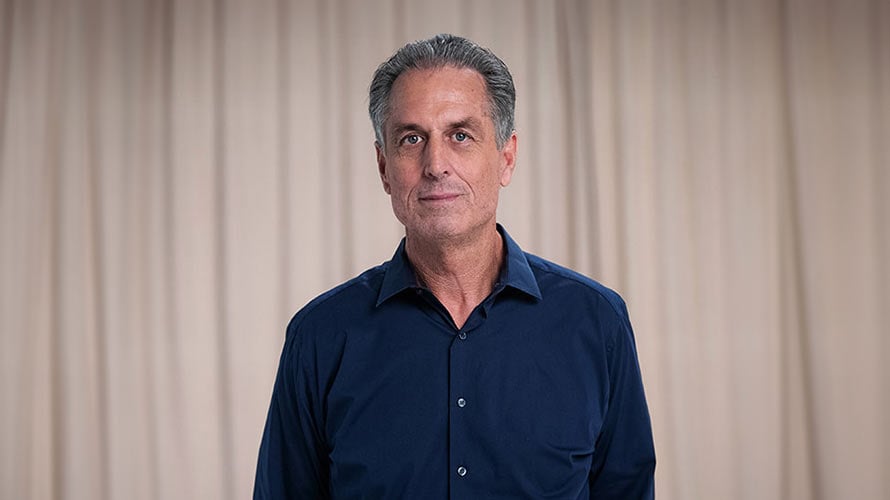
Greg Feldman: Cancer Was My Kryptonite
Greg Feldman, a resilient pancreatic cancer survivor, and his dedicated medical provider, Physician Assistant Tiffany Valone reveal the profound impact of their 9-year relationship, built on unwavering trust, compassionate care, and mutual respect. This powerful bond provided Greg with the strength and support he needed to navigate his challenging cancer journey.
Thank you to our Storyteller: Alex Dojcinovski
To our Narrator/Host: Loreen O’Brien
And to our Production Team: Kathi Barden (podcast project leader), Anne Bidelman, Heather Bistesto, Donna DiClementi, Robin Gordon (Patient Advisor), Randy Isaacson (Family Advisor), Loreen O’Brien, Terry Payton, and Cristina Perez
For more stories, search for "Pep Talks with Moffitt" wherever you get your podcasts, or tune in and subscribe via our show page.
Podcast Transcript
My name is Greg Feldman, and I was diagnosed with pancreatic cancer in February of 2012.
I'm Tiffany Valone. I'm a physician assistant in the GI department. I've had the privilege and honor to work at Moffitt for the last 16 years.
GREG
I was a big, strapping, physical man that worked out regularly and I thought I was Superman, and cancer proved to be my kryptonite. At 168 pounds from 265 pounds, I was a different person. I was so weak that my 120-pound wife had to open my water bottles at that point. Along with the physical side, the mental side, to be honest, was tougher. It was dark. It was the toughest thing I've ever done, and I'm not afraid to say that to other patients that I've talked to, because I kind of feel like you need to know that you know you're most likely going to have these issues when you go through your cancer treatment.
TIFFANY
With my patients, I try to treat the whole patient, and that's including I tell them how important not only is the physical aspect, you know, working in medical oncology, so getting them through the side effects of the chemotherapy, but also the emotional and kind of psychiatric component of it. And as Greg alluded to, that is a very big component for patient's cancer journey is the emotional aspect and how how are they dealing and coping with their whole illness?
GREG
You know, I always prided myself on being, you know, a strong individual. I would go walking in my neighborhood, and I knew that if I walked a quarter mile away from the house, that meant a half a mile total for the day. And you know, just the phone in my back pocket. There were some times I'd have to sit under a shady spot on my journey around the neighborhood and just sit down and wait for a few minutes till I got some more energy. And I was out that day, and I didn't know what was going on. All I know is I felt like my heart was coming out of my chest. I mean, I was in full panic mode and I dialed Moffitt and they answered. I was glad that they answered because I needed a life preserver.
And that's when I found out through Tiffany Valone about the help that was available across the street. You know, I was a little embarrassed to go in there. I don't know. I think it was more of the culture that I was raised in. I remember talking to the psychiatrist, which, you know, sharing your feelings although it was extremely necessary, it wasn't something that I was used to. They provided the help that I needed to get through that point, and it was unexpected for me, but I don't believe it was unexpected for the professionals that were treating me.
TIFFANY
So I will tell patients a lot of times it may take, you know, several attempts. But if I can sense in our visits some anxiety or perhaps some depressive symptoms, let them know that we do have those services available here at Moffitt. And I go into detail letting them know that, you know, it doesn't have to be medication management. We have great psychologists that can deal with meditation techniques, coping strategies, et cetera. You know, and it doesn't hurt to just have that initial evaluation in their department. So I tried to get that referral going pretty early on in their cancer journey. But for some patients, it does kind of take that, you know, again, trust and rapport over time of seeing them and meeting with them and bringing it up a couple of times before they'll accept that referral.
GREG
Tiffany Valone was the one constant I've had for nine and a half years.
You know, I've been here so many times and sat there waiting for her to come in to give me results from scans. You tend to be a little bit of a poker player because from the minute they open the door to come in, you're trying to read them. You know, if they've got bad news to relay to you, you know, I ought to be able to see it in their face when they come in the room. But, you know, I could never tell she would, you know, talk to me concisely if you're facing something that's very serious. There's nothing flowery about her approach, which I appreciated because it's so hard to disseminate all the information that you're receiving anyhow that the more clear and concise it is the more you appreciate.
TIFFANY
I would describe my communication style as direct and honest, but empathetic and optimistic. I would like to think that I encourage my patients. I definitely want them to be educated and informed about their care. I try to tailor the approach with each patient, as that might vary with their levels of education and the individual backgrounds.
GREG
She addressed both myself as the patient and my wife also who was always there to, you know, ask the questions that, you know, maybe I was missing. But you know, I just developed a really good rapport with her. When you have somebody like that that's always there, when you are there, then it gives you a comfort, you know? You know, it's not so much like you're in a revolving door.
TIFFANY
When I'm meeting patients for the first time, I try to get to know them on a personal level before I dove into discussing their cancer diagnosis. I may ask them where they're from or for them to tell me a little bit about their family or perhaps their job. I then like to review with them what I know so far about their cancer diagnosis. I feel that this helps them to understand that I've studied their case and gives them an opportunity to give me any additional information that I may not have gone over or ask any questions up front that they need to clarify to have a better understanding of why they are seeing me. I believe over time this develops good trust and rapport with my patients. For some patients like Greg, who have had the honor to treat for years, our visits will also be social visits. We'll talk about his health and cancer status at first, and then we'll talk about his family or maybe some upcoming trips that they have planned.
Greg was a superstar. He was determined to persevere through his treatments. His wife, Melissa, was by his side every step of the way. He achieved a huge milestone this past year when he hit nine years from his initial surgery and rang the bell in the GI clinic.
GREG
My last scan was back in July. It was the typical scan. You're nervous, even if you feel good because you you’re apprehensive about what they might find. And so at the end of her giving me a good prognosis on my scan, she said, I need you to go ring the bell where, you know, at that stage of your treatment. And so I wandered down the hall and there's a little brass bell on the wall, and I rang it and the building erupted. There were people cheering behind closed doors. It raised the hair on the back of my neck, And so I rang it a little bit longer because I was I was enjoying this attention. And so that was quite the moment that we had that day.
LOREEN
We asked Greg if he had something to say directly to our team members.
GREG
I just would like them to know how much I appreciated the teamwork that I saw. I mean, I felt like at Moffitt, everyone did their job. From the surgeons to the nurses to the people that were volunteering, I mean, janitors, I just felt like everybody was working towards the goal of healing patients. And I feel indebted to them often. They saved my life.