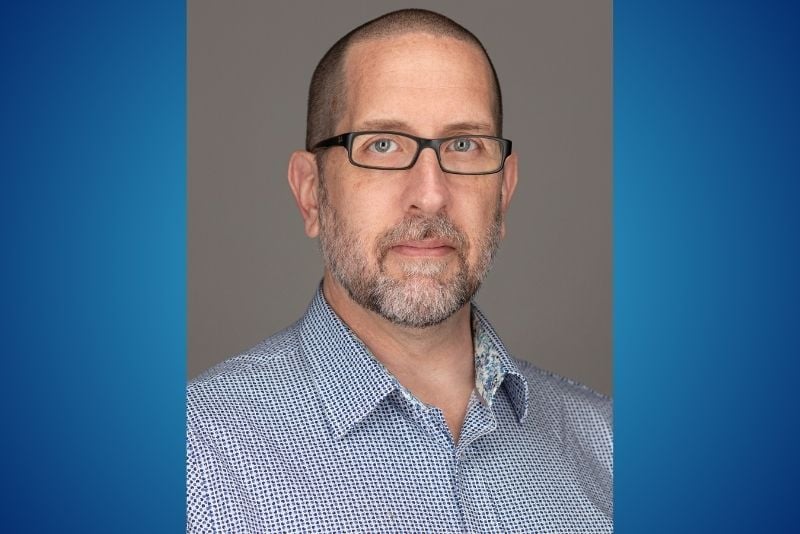
Jason Filippini: Moffitt Chaplain, The Intimate Stranger
Chaplain Jason Filippini from Moffitt Cancer Center shares what it means to bring compassion, presence, and humanity into every patient interaction. Drawing from his years serving in Moffitt’s ICU and PCU, Jason reflects on the sacred privilege of walking alongside patients and families in their most vulnerable moments.
Through his thoughtful insights on empathy, healing, and self-care, Jason reminds us that while cure isn’t always possible, healing always is. His words invite us to slow down, listen deeply, and rediscover the quiet power of simply saying “yes” to what’s possible.
What You'll Learn From Jason
-
The role of a chaplain in oncology isn’t just spiritual, it’s about tending to the mind and spirit as part of whole-person healing.
-
What it means to be invited into the most personal, sacred moments of a patient’s journey.
-
How empathy is essential in healthcare; you can’t do this work well without carrying part of it with you.
-
Why self-care must be intentional, not just a distraction
-
The importance of finding ways to say yes for patients and families, even when it means pushing boundaries.
-
How small acts of listening can bring deep connection and peace.
For more stories, search for "Pep Talks with Moffitt" wherever you get your podcasts, or tune in and subscribe via our show page.
Podcast Transcript
The Heart of the Story
- A reflection on how healing isn’t always about cure, but about connection, dignity, and love.
- Small moments of humanity bring peace and meaning.
- Listening and saying “yes” can bring healing even when cure isn’t possible.
- Compassion, creativity, and listening can transform even the hardest moments.
So I'm Jason Filippini. I am privileged to be one of the staff chaplains here at Moffitt Cancer Center, Magnolia Campus. Um, there's four of us here who cover the inpatient section of this hospital. I've worked at Moffitt for almost eight years. I had always known that I had wanted to work in oncology. I had always known that I wanted to work at Moffitt. It was a draw into this. I'm the chaplain in the ICU, PCU here, which is where I spend, um, I would say a predominant amount of my time. You know, you can give a soundbite as far as what a chaplain is. Um, the sales pitch that I give to all of my patients starts from the idea that, and this is not to disparage anything that we do. Being in here sucks. It does. Um, this is the most beautiful place. Nobody wants you. If we cure this disease tomorrow and we all had to find new jobs, nobody would complain. We're not there yet. We're not.
So it's a privilege to get to do this work. And just like our doctors and nurses and all of our medical teams are looking at all of the functions of the body, and, you know, we've got a team for everything. You know, we have these amazing professionals. But being here taxes the mind and it taxes the spirit. However you connect to that, whatever that means for you. And spiritual suffering is not religious suffering. It can be that Venn diagram overlaps. So, while chaplains are a representative of the spiritual and the religious, um, our privilege is to be able to check in on those parts of the journey, just like our doctors are checking in on the physical. So as a chaplain, my privilege is to be able to connect people to those healing modalities. Um, we know. All of us know that cure isn't always possible. When we say cure, we think of cure of the body. Right? Getting rid of this disease. Um. But healing always is. And sometimes that healing is just as important of the mind and of the spirit as it is the body for patients and their families on this journey.
So, while chaplains are a representative of the spiritual and the religious, um, our privilege is to be able to check in on those parts of the journey, just like our doctors are checking in on the physical.
So, yes, we have broad theological training and yes, we have counseling training, and yes, we go through residency. We don't just rock up off the street and start talking to people. Um, and, you know, that's a that's a privilege to be able to do that work and be invited into space. Um, uh, my colleague Laura here refers to it as being the intimate stranger. It's as humbling as it is uplifting to be invited into that environment by our by our patients.
I lost my mom in ninety-seven. So, um, to cancer. She was a patient at Sloan-Kettering in New York. Um, so I didn't you know, I don't I didn't realize that now that that's why I'm doing this. But, you know, you trace the steps backwards and you're like, oh, there it is. Um, but I think it definitely set the set the tone, you know, for me. And I can trace where I'm at now back to that. You know, it was a kind of a linchpin moment for sure, a tipping point.
Patients and families are, I think they're often shocked by the ways that Moffitt finds a way to say yes, rather than why we have to say no. Yes. Protocols are in place for a reason. There's of course, there's a myriad of reasons, from safety to, you know, decorum to protocol to appropriateness, to, you know, anything in between. You know, you have to have guardrails and structure. And sometimes we get to bend those. Push them. Broaden them. You know, I've been fortunate to attend a wedding in the ICU where the patient's dog was the ring bearer. Um, you know, we had a cow here last week. Uh, you know, just things. Things like that. Um, so, you know, one of my favorite things is, is to be able to, to really actively listen to someone's anxiety or something that, that they've presented and then be able to be like, well, actually, you know, maybe we can do something about that. Something they thought was hopeless. You know, we've had patients on, you know, literally on comfort measures only, um, you know, that we've been able to, you know, take out and have the sunshine hit their face for one last time. And, um, you know, that's powerful to to be part of that healing. Not cure, but healing.
Uh, so, uh, I was working on a Sunday. I'm not normally here on a Sunday. Had never met this patient in this family before and was rounding in the ICU, you know, and encountered this patient, a young woman, twenty-one at the time, actually turned twenty-two during her stay with us. And things were not going well, and family was bedside - her mom or dad, her aunt, a couple of other relatives, a significant other very, very well aware that this was not going well. And, in fact, there was a large chance that when I talked to them first on this first day, she was not coming out of the hospital. She was most likely going to die here in ICU.
So I just kind of, you know, as pleasant as I could, as lighthearted as I could, as open as I could. Walked into the patient's room, you know, met the family, and the mom was at bedside. Dad was at bedside and nursing, stepped into the room to do some procedure. And so we all kind of stepped out of the room. And I'm, I'm in the area outside the room with her parents and her aunt and, uh, dad, he says to me, look, I need you to not BS me. Um, have you been sent here because it's worse than they're telling us? No-that doesn't that wouldn't come from me. I'm just part of your care team. Part of this whole situation. We know how difficult it is. We know how there's these many factors. And I'm here to walk with you on that part of your journey.
We know how difficult it is. We know how there's these many factors. And I'm here to walk with you on that part of your journey.
So, we talked we talked through that. I said, you know, they live twenty minutes away. Do you? Is there stuff we can bring from home? Is there, you know, a blanket? Is there a stuffed animal? Is there, you know are there is. Does she have a dog? Does she have, you know, is there something that, you know, her favorite X, y, z pajamas, anything that can be comforting and soothing and human, um, in that moment. And her aunt says, she says, well, she says, I don't know if you could, you know, there's anything to be done about this. And then kind of tells me the story of this patient that, uh, she is a teaching major at USF, and the only thing standing between her and her graduation, uh, was her practicum. So she had completed all of her classes. She was just kind of waiting for this last kind of check mark. This kind of triggered mom. In that moment, we had been kind of calm and this realization that she had always wanted to be a teacher, and they had a story behind why she wanted to be a teacher. And it was just like, you know, it was this incredible thing that had been robbed from her. So I, I said to her aunt, I said, well, listen, here's what you should do. You know, contact her advisor.
I got back to my desk and I'm, I'm charting all my visits from the afternoon. And it just it just didn't sit. It just didn't sit with me. So, I got on the USF website, I found the dean of her school and just shot an email and, you know, explained kind of everything that I've, I've shared. And I said, listen, I don't know what the possibility is here. I basically wanted them, you know, to know that there was, you know, there was kind of a bit at stake here. And this is on a Sunday. Remember, this is middle of the day on a Sunday. So I was just expecting to kind of fire that off and, you know, into the, into the universe, I guess. And the dean wrote me back immediately, like, literally while I was sitting there on a Sunday, like amazed at the story, and she starts working on her end and she's like, this isn't my call. But I'm escalating this right now to the dean of the college, to the academic dean of the college, and like, jumped on it immediately. Um, back. And suddenly it's this email chain of five different people, um, that this was going to happen and I was like, oh, okay. So, I kind of got to go back to the family, you know, at the, at the end of the Sunday shift and, and say to them, I followed through on this, you know, I just, I didn't feel right just leaving it with you to follow up. So, I sent some emails and this and this is where we're at. And just at this point we weren't sure it was going to happen. So, we didn't want to tell the patient anything because we didn't want to, you know, open that up.
Things progressed over the next couple of days, both on the USF side and on the medical side, and we hit a window where we were going to be able to actually get her home. Uh, they only lived twenty minutes away. So, we're making sure she was stable enough to actually get her out of the ICU because she did not want to pass in our ICU. She wanted to pass at` home. Um, you know, she had some final bucket lists. Um, you know, I want to have this for the last time. And the big one, which, uh, which I think may have even been more important to her than the graduation which, by the way, had not come from her originally. She just wanted to have a beer with her dad. She had turned twenty-one and had just been sick and forever. So, um. And I can confirm that happened, which is which is awesome. And I was going to ask her mom, you know, I was like, should we tell her, you know. Should we tell her that this is that that USF is going to do this? And, uh, the dean had actually called them, so they got back to the family. Not only were they going to do it, but they were also going to go to her house with full regalia. And graduate her. Uh, so that was a Tuesday when she kind of shared all this.
And so I knew that USF was going there on Thursday. So, I called her mom on Friday, uh, to check in and see, you know, how everything went. And for whatever reason, whatever awareness. I did not start the phone call with “how did everything go yesterday?” Because that would have been a horrible mistake. So, uh, she passed Tuesday evening. She got to have a beer with her dad. And, uh, her mom said that she had, like, fifty plus people that have come to visit her at the house like friends. And she said, it was beautiful chaos. She said it was wonderful. And it was, you know, uh, as it should be. She was, uh, she was sorting, uh, photos for her memorial when I, when I spoke to her on the phone. But she told me that, uh, USF was still coming through. They were still going to deliver it that way her diploma would be on display, and they'd have it at her funeral, at the memorial.
I don't think you can do this work without, uh. I don't think you can do this work well without being empathetic. Um, I just I just don't, I don't I it's utterly impossible. And when I say this work, I mean healthcare in general, but certainly oncology. I can't tell you the times I've, uh, you know, held a team member in ICU. I can't tell you how many times that's happened, you know, crushed on the on the floor with providers. You can't. You can't. You cannot do this work at this, at this level of true empathy, true compassion, without it being emotional, without carrying some of it with you. I think, um, cliche as it is, you cannot pour from an empty cup. That's true.
You cannot do this work at this, at this level of true empathy, true compassion, without it being emotional, without carrying some of it with you.
The experience that I that I offer to patients, to families, to staff members, to anybody who's connected to any type of work like this, is that self-care has to be intentional. It can't be a distraction. If you go home and you're watching TV for hours on end, you know, numb, uh, that is not uplifting. That does not fill your cup. It fills time. Whatever it is, if I'm going for a walk, then this is why I'm going for a walk. I'm not just spatially wandering, you know, out in the universe. So, whatever you do, whether that's leaning into prayer, whether that's leaning into your faith, whether that is a sport, whether that is, you know, intentional time with family, whether that is a good meal, whether that is going home and changing your clothes and taking a shower. At the end of the day. I mean, you learn really quick how some of the simple joys of our existence can be healing. It has to be intentional. It just has. It has to be intentional. You have to engage with it personally.
Um, you know, music has been a huge thing throughout my life. So, listening to music, um, my, my spirituality, leaning into my spirituality, the practice of, you know, my, my spirit, um, I will share that not all chaplains are Christian, and I don't fit into that box. We serve everybody here. We're blessed and fortunate and privileged to serve everybody across all denominations or no denominations.
If I were to impart anything to team members here, uh, find a way to say yes. You know, when it comes down to it, we're here to take care of our patients and families. And if there's a way to do that, then we do that. Um, you know, ask. Yeah. The answer might be no. Right. But way better to have that happen than, you know what I wish we should have? Or. Oh, if I had only asked about that.
But man, if you just listen, people will tell you how to how to connect with them. It's as simple as that.
I had a patient who was, uh, involved in Major League Baseball for many years and, uh, you know, at an actual, like, working for, for a baseball organization. So we bonded a little bit about the Yankees and the history of baseball. This was a much older gentleman. And just in the middle of this conversation, he made this comment about the fact that we don't have Pepsi products here. He's like, I'm stuck drinking Coke. And he and he tells me this beautiful story about, you know, going to the ballpark and this Pepsi and a hot dog and like how it was just part of his youth, and he goes on this whole thing about like an ice cold Pepsi and doesn't taste the same as an ice-cold Coke. And I can immediately tell the difference. So, I brought him a Pepsi. It was like, you know, a day later and, you want to you want to watch a grown man on his on his in the last chapter of his book, as I would as I would say, brought to tears by a Pepsi? I'm laughing because part of it's funny because it's so just simple. But man, if you just listen, people will tell you how to how to connect with them. It's as simple as that. You know, taking a patient on CMO (comfort measures only) out into the sun. Having a cow here, having a having a dog, be officiating a wedding, helping somebody graduate from USF. It’s all the same. It's all the same. It's listening to what's on the hearts of our patients and realizing that you have an opportunity to be, some small, part of somebody's healing journey. You know, whether they ever remember your name, they remember what you do. Right? So, you know, suddenly it's not the Pepsi, suddenly it's not, oh, the chaplain, suddenly it's not the ICU, it's Moffitt.