
Elias Salloum, MD
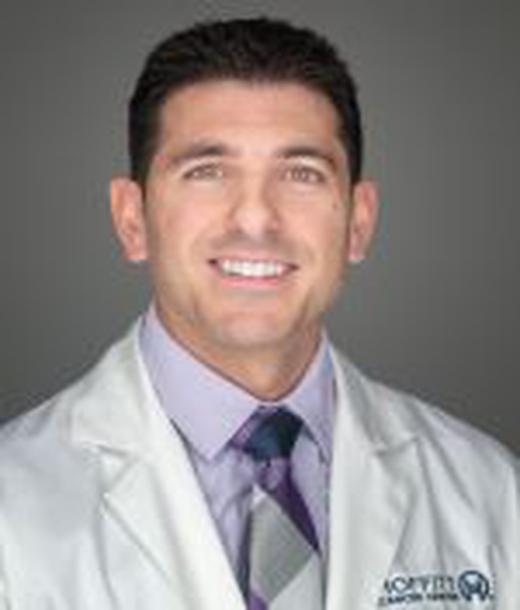
Elias Salloum, MD
Specialty: Interventional Radiology
Program: Diagnostic Imaging and Interventional Radiology
Language(s): English
-
Overview
Cancer Focus:
Cholangiocarcinoma (Bile Duct Cancer), Colon Cancer, Kidney (Renal Cell) Cancer, Liver (Hepatocellular) Cancer, Neuroendocrine TumorDr. Elias Salloum is an Assistant Member in the Department of Diagnostic Imaging and Interventional Radiology. His clinical expertise encompasses a broad range of minimally invasive, image-guided therapies, with a particular emphasis on transcatheter embolization techniques. In the field of interventional oncology, he specializes in radioembolization, chemoembolization, and percutaneous ablation for primary and metastatic liver malignancies, along with advanced biliary interventions, including cholangioscopy.
In addition to cancer care, Dr. Salloum also treats a variety of benign conditions, including uterine fibroids and adenomyosis with uterine artery embolization (UAE), enlarged prostate (BPH) with prostate artery embolization (PAE), and internal hemorrhoids with rectal artery embolization. These procedures are designed to reduce recovery time, improve outcomes, and enhance quality of life.
Dr. Salloum earned his medical degree from the Marshall University Joan C. Edwards School of Medicine, followed by a residency in Diagnostic Radiology at Case Western Reserve University in Cleveland, Ohio. He then completed a fellowship in Vascular and Interventional Radiology at Massachusetts General Hospital, Harvard Medical School in Boston, Massachusetts.
Education & Training
Fellowship:
- Massachusetts General Hospital - Vascular and Interventional Radiology
Residency:
- University Hospitals Cleveland Medical Center - Radiology
- St. Vincent Hospital - Radiology
Medical School:
- Marshall University - MD
-
Publications
- Jain R, Dallas A, Mina D, Gustainyte V, Salloum E. Herniated Bladder Diverticulum Through the Obturator Foramen Mimicking Pelvic Lymph Node on FDG-PET: A Case of Avoided Complication During CT-Guided Biopsy. Cureus. 2025 Nov.17(11):e97798. Pubmedid: 41458785. Pmcid: PMC12740963.
- Soliman S, Khoury J, Kocharyan H, Yeisley C, Salloum E, Al-Roubaie M. Selective Lymphatic Duct Embolization in Patients With Chylothorax and Thoracic Duct Side-Branch Injury. Cureus. 2025 May.17(5):e84754. Pubmedid: 40551912. Pmcid: PMC12185150.
- Salloum E, Altan A. Emergent Endovascular Management of Carotid Blowout Syndrome: A Case Report. Cureus. 2025 Mar.17(3):e81098. Pubmedid: 40271324. Pmcid: PMC12017741.
- Mina D, Mooney S, Salloum E, Kocharyan H, Al-Roubaie M. CT-Guided Percutaneous Cryoablation of a Renal Metastasis From Esophageal Adenocarcinoma. Cureus. 2025 Dec.17(12):e98808. Pubmedid: 41523399. Pmcid: PMC12784320.
- Sapell J, Al-Roubaie M, Salloum E, Kocharyan H. Minimally Invasive Management of Gastric Outlet Obstruction Secondary to Cholecystogastric Fistula With Gallstone Impaction: A Case Report. Cureus. 2025 Apr.17(4):e83250. Pubmedid: 40453277. Pmcid: PMC12124161.
- Alayli A, Ngo H, Sikaria D, Ahmed A, Salloum E, Strosberg JR, Al-Toubah TE, Kis B, Haider M, El-Haddad G. Safety and Efficacy of Peptide Receptor Radionuclide Therapy (PRRT) Following Bland Embolization for Metastatic Neuroendocrine Tumors. Cancers (Basel). 2024 Jul.16(15). Pubmedid: 39123431. Pmcid: PMC11311572.
- Khoury J, Li B, Zhu J, Lin T, Hasan E, Lamba A, Gustainyte V, Kocharyan H, Yeisley C, Salloum E, Ahmed A, Greben C, Al-Roubaie M. Diagnosis and management of radiation cholecystitis as a complication of Y90 radioembolization for hepatocellular carcinoma. Radiol Case Rep. 2024 Aug.19(8):3363-3366. Pubmedid: 38832339. Pmcid: PMC11145197.
- Salloum E, Kulkarni A, Al-Roubaie M. Management of severe non-cirrhotic portal hypertension through embolization of splenic arteriovenous fistula. Vis J Emerg Med. 2023 Jul.32:101775.
- Mathai SV, Kondray V, Salloum E, Kukreja K, Tavri S. Role of interventional radiology in the diagnosis and management of congenital extrahepatic portosystemic shunts: Two case reports. Indian J Radiol Imaging. 2019 Apr.29(2):219-222. Pubmedid: 31367096. Pmcid: PMC6639860.
- Shuler FD, Lycans D, Salloum E. Extraskeletal effects of vitamin D: potential impact on WV disease morbidity and mortality. W V Med J. 2012 May.108(3):56-62. Pubmedid: 22792657.
-
Patient Comments
52 patients rated this provider
The Provider Rating is an average of all responses to specific care provider-related questions from our nationally-recognized Press Ganey Patient Satisfaction Survey. Responses are measured on a scale of 1 to 5 with 5 being the best score.
Patients that are treated in outpatient or hospital environments may receive different surveys, and the volume of responses will vary by question.
Learn more about our patient satisfaction surveyComments
Comments are gathered from specific care provider-related questions from our Patient Satisfaction Survey . The comments are submitted by patients and reflect their views and opinions. Patients are de-identified for confidentiality and patient privacy.
Learn more about our patient comments
We post both positive and negative comments from the surveys. We do not post comments that are libelous, slanderous, profane, irrelevant or otherwise inappropriate or may risk the privacy of our patients. A “[…]” in the comments below indicates de-identified patient information or comments that are unrelated to the patient’s experience with the visit to the provider, such as comments related to another provider, about the survey itself, or otherwise completely off-topic.
Provider Ratings and comments are gathered from our nationally-recognized Press Ganey Patient Satisfaction Survey. If a provider does not have ratings or comments listed it can be for several reasons, including:
Learn more about our patient satisfaction survey, ratings and comments