
Infographic: 8 Warning Signs of a Brain Tumor
Brain cancer symptoms can develop in people of all ages and may vary widely from person to person. Many symptoms — such as headaches, fatigue or nausea — are often linked to less serious conditions. Still, it’s important to talk with a doctor if symptoms are severe, persistent or unexplained to rule out a possible brain tumor. Because many warning signs do not appear until later in the disease’s progression, being aware of common brain cancer symptoms can help prompt timely medical evaluation.
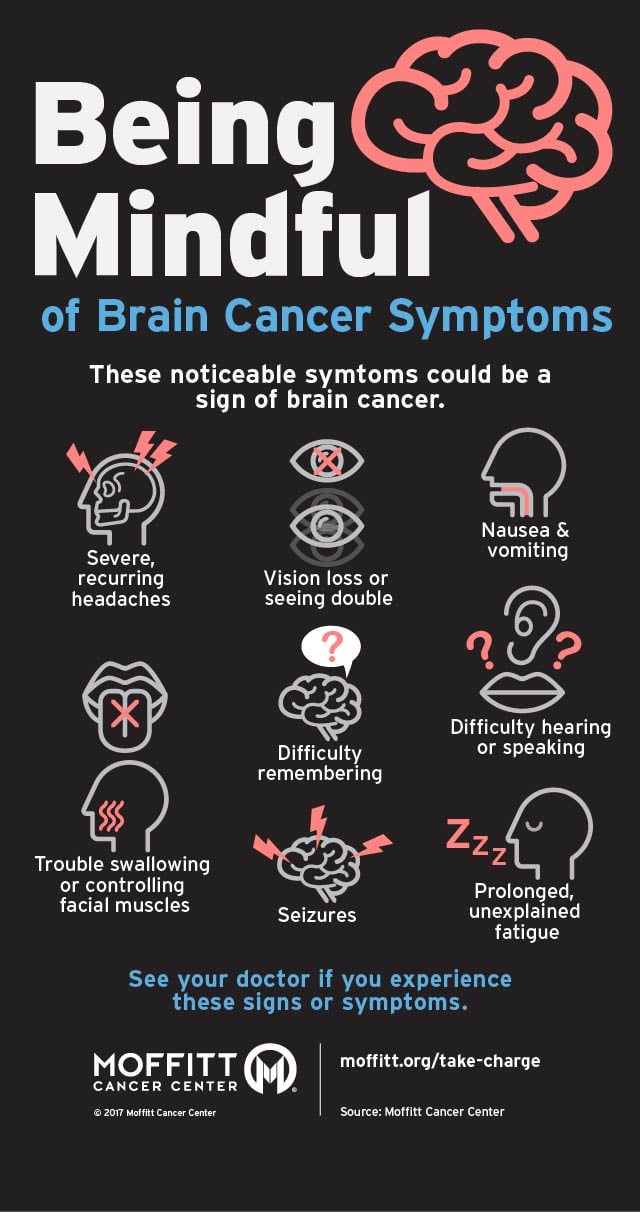
Common Signs and Symptoms of Brain Cancer
Common symptoms of brain cancer may include severe or recurring headaches, seizures, vision changes such as vision loss or double vision, difficulty speaking or hearing, memory problems, trouble swallowing or controlling facial muscles, nausea and vomiting, and prolonged, unexplained fatigue. These symptoms can occur alone or together and may worsen over time as pressure inside the skull increases or normal brain function is affected.
You should see a doctor if neurological symptoms are new, worsening or interfere with daily life — especially if you experience seizures, changes in vision or speech, increasing headaches, or unexplained changes in memory, balance or behavior. While most symptoms are not caused by brain cancer, early evaluation can help identify the cause and determine whether imaging or referral to a specialist is needed.