Stem Cell and CAR T Therapies Are Giving New Hope for Autoimmune Diseases
Autoimmune diseases such as multiple sclerosis (MS) and systemic sclerosis (SSc) affect millions of Americans, often striking during the most active years of life. These conditions occur when the immune system mistakenly attacks healthy tissues, leading to inflammation, pain and progressive organ damage.
For decades, treatment options were limited to medications that reduce symptoms or slow inflammation. While these drugs can help, they often can’t stop the disease entirely, and some patients eventually run out of options.
Now, thanks to advances in cellular therapy, physicians at Moffitt Cancer Center are offering a new path forward for patients whose autoimmune diseases haven’t responded to standard treatment.
What Is Stem Cell Therapy for Autoimmune Disease?
For certain patients, autologous stem cell transplant (ASCT) can act as a “reset” for the immune system. The process uses a patient’s own healthy blood-forming stem cells to rebuild a stronger, more balanced immune response.
The treatment involves several steps:
- Doctors collect healthy stem cells from the patient’s blood.
- A short course of chemotherapy helps remove the immune cells causing the disease.
- The stored stem cells are infused back into the body to help rebuild healthy immune function.
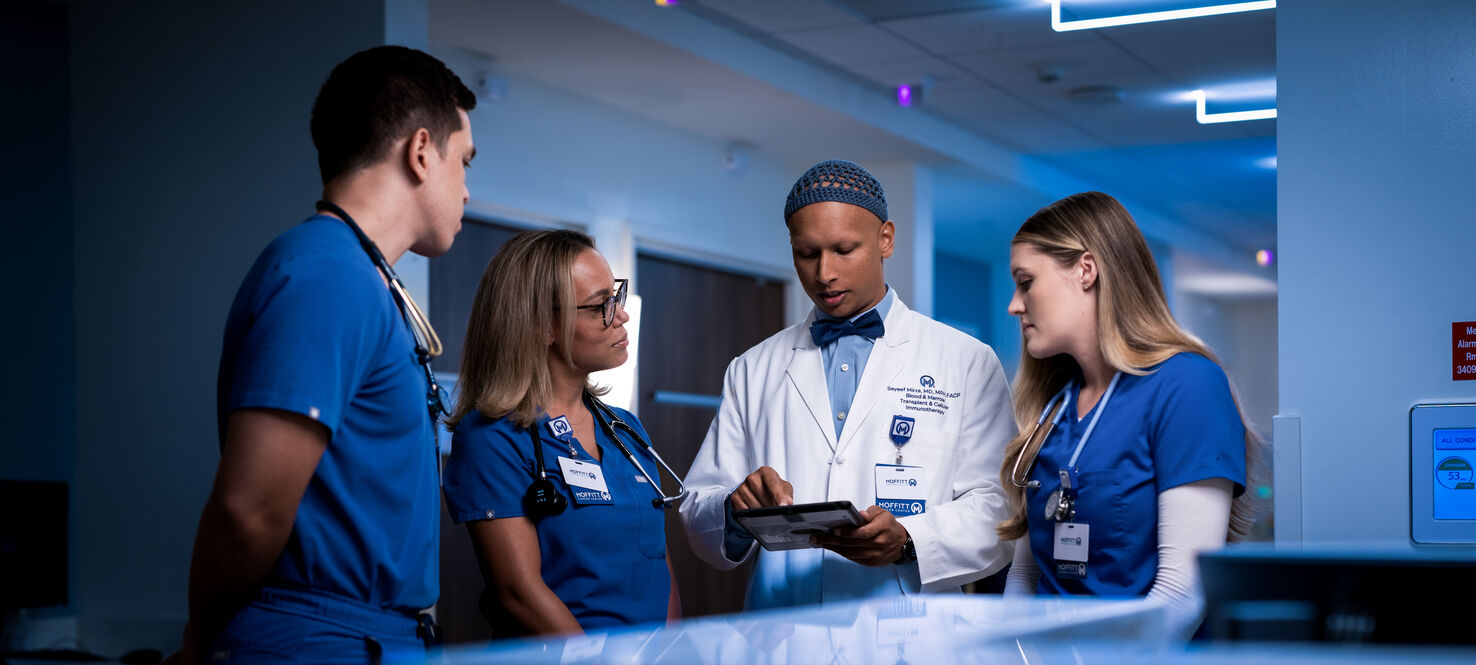
“This therapy is designed for patients who are not responding to currently available disease-modifying treatments,” says Dr. Sayeef Mirza, hematologist and faculty member in Moffitt’s Blood and Marrow Transplant and Cellular Immunotherapy (BMT-CI) Program. “For many, it can offer long-term remission and a meaningful improvement in quality of life.”
Moffitt is one of only two centers in Florida to offer stem cell transplants for select autoimmune diseases such as MS and systemic sclerosis. The procedure is recognized as a standard of care and is typically covered by insurance.
10,000th Transplant Milestone
Moffitt Cancer Center’s Blood and Marrow Transplant and Cellular Immunotherapy Highlights
- 10,000 transplants completed since the program began
- 400+ transplants annually, one of the highest volumes nationwide
- 78% one-year survival rate for allogeneic transplants (above national average)
- Access for adults up to age 70 and older, expanding eligibility
How CAR T Therapy Could Help People with Autoimmune Conditions
Moffitt’s research teams are building on the success of cell-based cancer treatments to help patients with other immune-related conditions. Beginning in 2026, Moffitt will open CAR T-cell clinical trials for patients with systemic lupus erythematosus (lupus) and myasthenia gravis.
CAR T-cell therapy works by collecting a patient’s own T cells and reprogramming them to find and eliminate the immune cells that drive disease. After a brief pause in immune-suppressing medications and a short course of chemotherapy, patients receive an infusion of their newly modified T cells.
This treatment approach has already transformed outcomes for many people with advanced cancers, and now it is showing promise in autoimmune disease.
As one of the first cancer centers worldwide to treat more than 2,000 patients with CAR T-cell therapy, Moffitt brings unmatched expertise in managing the safety and precision these therapies require.

2,000+ CAR T Patients Treated and Counting
Request an AppointmentWhy Specialized Cancer Centers Matter
Cellular therapies are highly complex and require specialized facilities, coordinated teams, and rigorous safety standards. That’s why it’s important to receive treatment at an NCI-Designated Comprehensive Cancer Center like Moffitt.
Moffitt’s FACT (Foundation for the Accreditation of Cellular Therapy) accreditation demonstrates the highest standards for quality, safety and patient outcomes. Research also shows that patients treated at NCI-designated centers experience significantly better long-term results for complex therapies.
“Experience matters,” Dr. Mirza says. “When it comes to cellular therapy, having a team that has treated hundreds of patients can make all the difference.”
When to Ask About a Second Opinion for Autoimmune Disease Treatment
If you’ve been living with an autoimmune disease and haven’t found relief with standard treatments, a second opinion could open the door to new possibilities.
Consider asking these questions:
- Am I a candidate for stem cell or cellular therapy?
- How many patients with my condition has your center treated?
- Is your facility FACT accredited for cellular therapy?
- Are there clinical trials available that might fit my condition?
Referrals are not required for autoimmune disease treatment at Moffitt, and the team regularly collaborates with community neurologists, rheumatologists, and primary care physicians to ensure ongoing, coordinated care.
Cellular therapy offers new hope
For patients with autoimmune diseases that don’t respond to conventional treatments, cellular therapy offers a new sense of hope. Whether through a stem cell transplant or emerging CAR T-cell therapies, these treatments are designed to do more than manage symptoms; they aim to reset the immune system itself.
By bringing cutting-edge therapies and research together under one roof, Moffitt is helping more patients move toward lasting remission and a better quality of life.