
What is a Robotic Bronchoscopy? The Best in Fiber Optics and Robotics for Lung Cancer Diagnosis
Lung cancer is one of the most common and deadly cancers worldwide. Early detection can significantly improve outcomes, but it’s often challenging, as early-stage lung cancer doesn’t typically present symptoms. This makes regular screenings crucial for people at high risk. That’s where robotic bronchoscopy comes in — a minimally invasive procedure that offers hope for earlier and more accurate diagnosis.
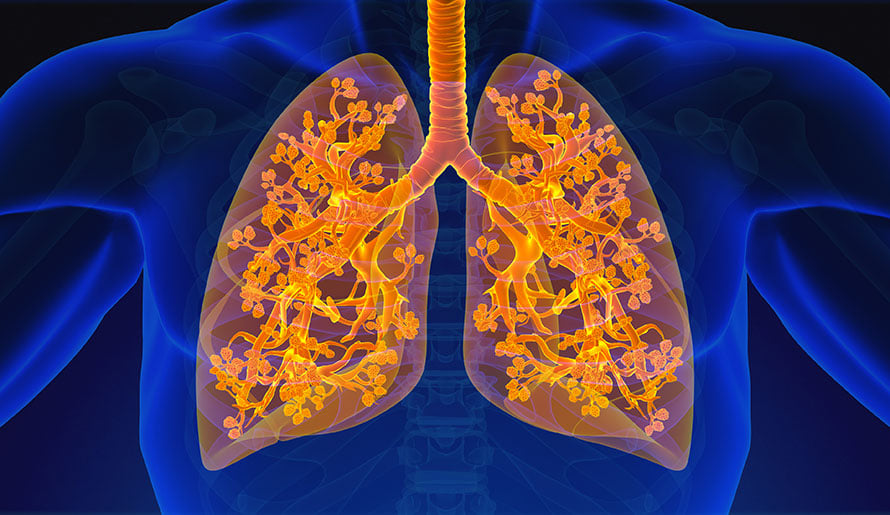
At Moffitt Cancer Center, patients benefit from this advanced technology as part of the Interventional Pulmonology Program. Robotic bronchoscopy combines the best of fiber optics and robotics to give our lung cancer experts unparalleled access to even the smallest or hardest-to-reach areas of the lungs. This can make all the difference in detecting lung cancer early when it’s most treatable.
How Robotic Bronchoscopy Works
So, how exactly does robotic bronchoscopy work? It’s a minimally invasive procedure that doesn’t require traditional surgery or incisions. Instead, a physician uses a robotic-assisted controller, similar to a handheld Xbox-like device, to guide a thin, flexible tube with a camera and light source (called an endoscope) into the patient’s lungs.
What makes this technology groundbreaking is the 3-D guidance system, which allows doctors to navigate the complex airways of the lungs with sub-millimeter precision. Think of it like a GPS system for the lungs — the robot gives the doctor turn-by-turn directions to pinpoint lung lesions or nodules, even in hard-to-reach spots.
The endoscope used in robotic bronchoscopy has flexible robotic arms that enhance the physician’s ability to see, reach and control every step of the procedure. With a crystal-clear view, the physician can perform a biopsy to obtain tiny tissue samples, which can be analyzed for cancer or other conditions.

Why Robotic Bronchoscopy Matters for Lung Cancer Diagnosis
The ability to diagnose lung cancer early can have a significant impact on survival rates. Traditionally, many patients don’t show symptoms until the cancer has advanced, making treatment more challenging. But with robotic bronchoscopy, doctors can reach tiny lung lesions that might have been missed with conventional bronchoscopy.
“We can go down into the airways, and the robot allows us to navigate and drive within the lungs. Imagine using a GPS in your car — it’s the same concept, but inside your lungs,” says Dr. Eduardo Celis, an interventional pulmonologist at Moffitt.
Early detection is key to improving the quality of life and outcomes for patients. When lung cancer is caught early, treatment options are often more effective and the chances of recovery increase.
The Moffitt Cancer Center Advantage
Moffitt Cancer Center stands at the forefront of this technology, offering robotic bronchoscopy as the standard of care for hard-to-reach lung nodules. With a team of highly trained specialists performing a high volume of procedures, Moffitt ensures that patients receive the most advanced, precise and effective care available.
“If you’ve seen 3D movies, you know how much more depth you get compared to regular 2D. The same thing happens in robotic surgery — it gives us a three-dimensional view, which improves the precision of the procedure,” says Dr. Eric Toloza, a thoracic surgeon at Moffitt, about the benefits of robotic surgery in treating lung cancer.

Rated High Performing in Lung Cancer Surgery
Schedule an AppointmentA New Hope for Patients
For patients with early-stage lung cancer, robotic bronchoscopy offers hope. The procedure allows doctors to diagnose the disease at an earlier stage when treatment options are more effective. If surgery is needed, robotic-assisted techniques can help remove tumors with greater precision, offering less risk and a faster recovery compared to traditional surgery.
“Lung cancer is one of the leading causes of cancer deaths worldwide,” says Dr. Toloza. “But with the help of robotic technology, we are able to offer more accurate diagnoses and better treatment options, all while minimizing the risks to our patients.”
At Moffitt Cancer Center, patients have access to this technology, as well as a multispecialty team of doctors who are dedicated to providing the best possible care. The robotic bronchoscopy platform opens the door to earlier, more accurate lung cancer diagnoses and offers precise, minimally invasive treatments to improve the outcomes and quality of life for patients.
Your Path Forward
If you or someone you know has been diagnosed with a pulmonary nodule and would like to talk to an expert about robotic bronchoscopy, please call 1-888-663-3488 or complete our new patient registration form online. We are committed to providing our patients with the latest advancements in care to ensure they have the best outcomes.