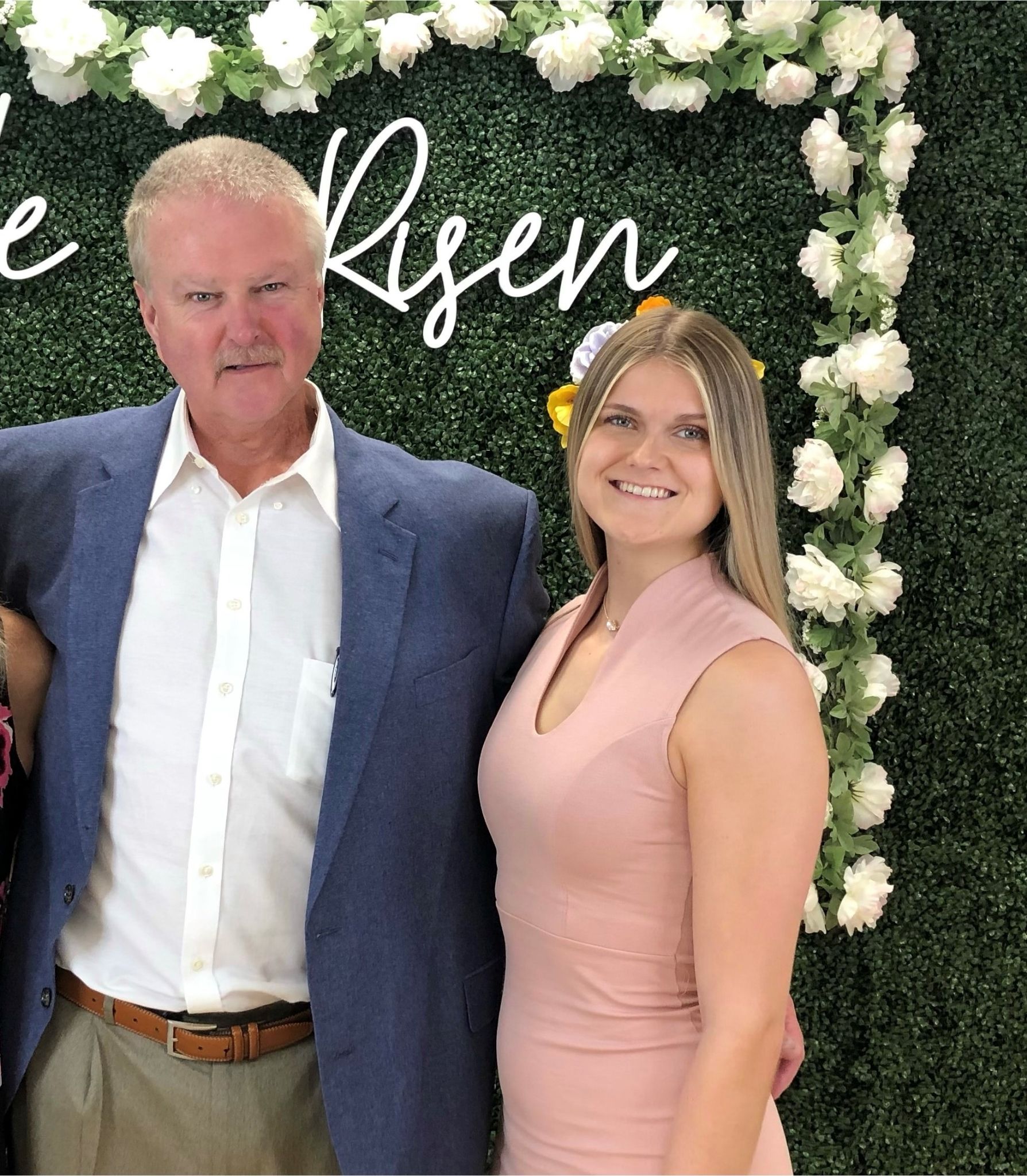
Let Me Take Care of YOU This Time with Brielle Humphreys
Brielle shares what it was like to care for her fiercely independent father as he battled cancer. She reflects on how the family dynamic shifted when the patriarch — who had always been a pillar of strength and support — now had to rely on his daughters for help. Brielle opens up about navigating this role reversal, the emotional weight of caregiving, and the lessons learned along the way.
What You'll Learn From Brielle
-
How caregiving shifts family roles, especially for young adults caring for a parent.
-
What it feels like to balance work, school, and daily caregiving responsibilities during a parent’s cancer journey.
-
Why communication among family members is essential when sharing caregiving duties.
-
How to approach difficult role reversals with patience and kindness.
-
The emotional and practical realities of supporting a loved one through a terminal diagnosis while still trying to care for yourself.
-
Insights into coping with anticipatory grief and maintaining connection and meaning in the time you have.
Thank you to our Guest: Brielle Humphreys
Host: Donna DiClementi
Production Team: Jackie Beaushaw, Randy Isaacson (Family Advisor), Donna DiClementi, and Karen Caraballo
Music by: Lloyd Goldstein
For more stories, subscribe to "In It Together: A Podcast About Caregiving" wherever you get your podcasts.
Podcast Transcript
The heart of the story
-
A young daughter finds herself caring for her father during his second, terminal cancer diagnosis, all while starting a new job, pursuing her master’s degree and supporting her mother and sister.
-
The family experiences a powerful role reversal: the “tough guy” father who always provided for his family now needs their help, and his daughters step in to give back the same care he gave them.
-
Love and teamwork anchor the family through difficult moments, with constant communication, gentle reminders, and a commitment to approaching each challenge with kindness and patience.
-
Brielle learns just how much of her parents' lives are within her: in the way she comforts others, handles responsibilities, and rises to challenges she never expected to face so young.
-
Despite exhaustion, fear, and grief, Brielle and her family focus on creating moments of joy: backyard grilling, golf cart rides, and simply being present with her dad during the time they had left.
-
At its core, the story is about honoring family bonds, finding strength in each other, and recognizing that no caregiver walks this path alone.
Donna DiClementi: Hi, this is Donna DiClementi, host of In It Together, a podcast about caregiving from Moffitt Cancer Center. I'm the manager of Outpatient Social Work, and I'm excited today to introduce you to Brielle Humphreys. Her podcast focuses on caregiving for a parent, and Brielle is a young woman who just started a job at Moffitt Cancer Center, and her dad was diagnosed for the second time with cancer. She was 24 years old. She'll talk about what it was like to start a new job while getting her master's degree, and then adding daily caregiving duties and sharing those duties with her mom and other family members. And she talks a lot about the role reversal of taking care of your parent, especially at an age when you're still relying a lot on your parent. And I thought that that was such a poignant part of her, um, discussion with me. She talks about grounding herself in the love of her family and just spending as much time as possible as she could with her dad, um, during his cancer diagnosis and ultimately his death. And so I, um, I'm really excited for you to hear this podcast with Brielle.
Donna DiClementi: Welcome to In It Together, a podcast about and for caregivers and the people they love. I'm Donna DiClementi, your host and manager of outpatient social work at Moffitt Cancer Center. In each episode, we'll dive deep with a wide range of caregivers to better understand the highs and lows of caring about someone with cancer. You'll meet the wives, husbands, partners, friends, children to hear what worked well and what didn't work well as they became a caregiver for their loved one with cancer. Our hope is that by listening to caregiver stories, you will learn valuable information plus feel supported, encouraged, and renewed. After all, we are in it together. Thanks for joining us.
Donna DiClementi: I am happy to welcome Brielle to the podcast. Brielle Humphreys is here today to talk with us about caregiving for her dad. Um, so Brielle is one of two daughters to her dad and her mom, and Brielle's dad died from cancer in 2023. And, Brielle, you work here at Moffitt, and you were also working on your graduate degree during your dad's cancer treatment. So in addition to working here at Moffitt, Brielle serves as a family advisor here at Moffitt as well. And I really appreciate all of the things that you give to Moffitt so that, uh, we have excellent patient care here. And I know that our listeners will find your story and experience as a caregiver inspirational. Um, we don't often talk about, uh, what it's like for young adults as they watch their parents live with a cancer diagnosis and help their parents. So, uh, I appreciate your willingness to share your experiences, and I welcome you to in it together.
Brielle Humphreys: Yes. Thank you. I'm excited, in a way, and happy to hopefully help someone in their journey, because I think that's the point that really grabs me with this is that no one's alone. And a lot of people think about the patient and we kind of neglect the caregivers and not in a bad way, but just because, you know, we're so in the zone, as I like to say. So I'm happy and hopefully I can help someone out there.
Donna DiClementi: That's great. I appreciate it. And that's why the podcast is called In It Together.
Brielle Humphreys: Yeah
Donna DiClementi: Because a lot of caregivers, I think when they're in that zone, they feel like they're alone.
Brielle Humphreys: Oh yeah
Donna DiClementi: But we're in it together and there are many people who share a similar journey. So I appreciate your courage to, um, sharing your journey with us. So tell us Brielle about your family and how you became a caregiver for a loved one with cancer.
Brielle Humphreys: Yeah. So, um, it actually started a while ago when I was young, probably around 10 or 11. My dad got diagnosed the first time with cancer. Um, it was in remission for a long time. And, you know, as a kid, being so young, I just kind of knew dad was sick. Didn't really know what cancer was. You know, it's not a good illness, but, you know, it was just simple enough to learn the terms, you know, mom's going with dad to the doctor. He's getting better, hopefully. Um, so that, again, was when I was pretty young. And then back in 2022 was when he got, uh, diagnosed again. And obviously now being older, I'm 23 at that time. And, you know, you obviously have a better concept of cancer at that time. So, um, and it just happened that he had come in for his yearly scan, as everyone should. Uh, you know, after you have cancer and you're in remission or whatnot. And so they found some alarming things. And it turns out that the same cancer he had had back when, you know, a while ago, it was the same kind, it just reappeared on the opposite side of his throat. So he had it in his throat. Um, and we learned at the time that his diagnosis was terminal. So, you know, already that's kind of tough going in and kind of knowing that. So that was definitely a different scenario than the first time. You know, the first time going through, we had hope and that hooray moment. You know, he beat it, he was in remission. And we were just so thankful that, you know, he had still been around that many years. So, um, this time it definitely was obviously different.
Donna DiClementi: Okay. Yeah. Um, thanks for sharing that. That had to be a rough time in your family's life. Um, what were those initial weeks like for you and your family?
Brielle Humphreys: It was tough. You know, it's never easy to hear those words. I feel like almost in a way, you don't really process it because at that point you just know, you know, it's going to get worse and you want to do everything in your power to not make it worse. So, um, for us, I think something we kept overall throughout the whole journey was just taking it day by day. I mean, that's all you could. And I feel like we really did a good job of trying to not let cancer define my dad, you know, knowing that it was terminal, but knowing that he can still fight through it because I think there was some hesitancy with him going through it before, you know, it's like, why would I want to battle that again? You know, like if this is my fate now. So I think, you know, he didn't say it a lot, but you could see the negativity. And, you know, rightfully so, I would… I don't know if I'd want to fight that battle again. So I think that was part of it, was taking it day by day and then also just wrestling with all those facts, you know, you hear you have cancer and that it is terminal. You know, the mind starts to wonder. Will I get my father daughter dance on my wedding, you know, will he meet my kids? Uh, you know, will he celebrate another anniversary with my mom? So those thoughts came naturally, and I just kind of brushed those aside because, again, it's not about me at that moment. It's about him. So definitely the fear was there. Um, but again, the focus shifted to that daily mindset of, okay, what are we going to do today?
Something we kept overall throughout the whole journey was just taking it day by day. I mean, that's all you could. And I feel like we really did a good job of trying to not let cancer define my dad.
Donna DiClementi: Yeah. Yeah. Thanks for explaining that. Tell us a little bit about your dad so that we have a good picture of the man he is.
Brielle Humphreys: Yeah. Oh, yeah. He was a character, so my dad definitely was one of those tough guys. A typical, you know, loved his tools, his boat, uh, his four wheelers. And that's what we bonded over. And, um, you know, we grew up in a very Christian household. And, you know, he always believed that he was the man of the house and, you know, take care of the family and that type of morale and, um, which he did well. And so I think that's why also there was a difficulty going into his cancer journey because, you know, cancer strips you away of a lot of those normal things and those hobbies and stuff that you like to do. Um, you know, you're no more Mr. Tough Guy when you're losing 20 pounds from chemo. Um, you know, you can't lift the things you used to, or you can't build the things you used to. So, um, that was definitely an adjustment. And I think that, you know, learning from him, though, also helped me in a way, because I watched him my whole life and my mom and the way they took care of the house or the way they took care of a tire, you know, whatever the scenario was, um, I learned those skills and it helped me take care of him in that same way. So, um, you know, it's kind of like we reversed it, you know, I had to. I had no choice where it was like the imperfect child, you know, wanting to learn from my parents. And now it's like, okay, I'm going to return the favor I'm going to do to you what you've always done to me. So that's how I kind of did it with him, and I hope he was proud. I think he is.
Donna DiClementi: It sounds like you had a great relationship with your dad, and you have a great relationship with your mom.
Brielle Humphreys: Mhm.
Donna DiClementi: Yeah. Um, the way that you describe it to me paints a picture of, um, you know, children who kind of just knew how to jump into action.
Brielle Humphreys: Yeah. And I feel like at, you know, at that point when you learn it's terminal and that this is basically the card you were given, you know, there's no other choice. It's kind of like you can sit there and accept it. And I mean, or you can just act on it and continuously try, you know, whether it's treatment or, you know, doing whatever we can for him. Um, you know, I don't think I would want it any other way, because, again, I look at the life that they've set me up for, and I wanted to do everything I possibly could to help him for the life he had left.
Donna DiClementi: Yeah. Yeah. Absolutely. Absolutely. And how about your, um, mom and your sister in all of this? What role did they play?
Brielle Humphreys: So mom was definitely. Well, she's always been dad's best friend. Um, they've been married or they were married for over 35 years, you know, close to that. So mom was always there with him, um, at appointments. And any chance she could be. Um, and my sister and I went to appointments, too, but I think in the way the roles shifted was, you know, my mom really became his number one supporter, and we became our mom's number one supporters, meaning, you know, we wanted to do those things that she couldn't do anymore or he couldn't do anymore because of his treatment. You know, like, I didn't want my mom worrying about making dinner. You know, my sister didn't want dad worrying about washing his cars. So it was like doing those things where we all pitched in and those roles really shifted from, again, you know, I'll take care of you. And it's like, no, no, let me take care of YOU this time around. So you know, being younger and being so-called active and, you know, healthier, um, that's where we could really lend a hand and shift those roles.
Donna DiClementi: Mhm. Mhm. How was your dad's reaction to that role shift. And seeing you and your sister take on a lot more of those responsibilities that were his.
Brielle Humphreys: Yeah. Um tough. You know again I think it comes back to one. You know, he wanted to be the one to protect his girls and be the provider. And, you know, in whatever way that meant. So, you know, it's kind of hard being able to realize or see that your girls are now having to do that for you. You know, I think as parents and, um, one of the things you always want to do is provide for your kids. You always want to be the person that can save the day. So I think that was definitely tough, um, for him to accept. But also, I think he felt proud in a way, um, you know, he wouldn't expect to see us fixing things at the house or, you know. he just it's things that he taught us that he was like, wow. Like, I did raise them right. And I'm like, yeah, you did. You raised me right. So, you know, it's it's those things where again, I think he was a little upset at first because he kind of had to let his guard down and then admit that, you know, admit he needs his girls, but also at the same time, you know, he'd sit back and look and he'd just get the simple joy of seeing, like, one of us on the grill or, you know, one of us cleaning out something in the house because he taught us that way. And, you know, in his words, we know better, which we do. And I think we proved better. Um, you know, with that saying.
I think he felt proud in a way, you know, he wouldn't expect to see us fixing things at the house. It's things that he taught us that he was like, wow, I did raise them right. And I'm like, yeah, you did. You raised me right.
Donna DiClementi: Mhm. Yeah. Yeah. You know, I'm thinking about caregivers that are listening and you know, in similar situations where they have to do things or they have to have other loved ones do things that the patient typically would do. And. And getting some negative reaction, maybe from the patient, like, “don't do that” or, you know, things like that. How did your family handle that from your dad?
Brielle Humphreys: It was yeah. It's not easy, especially when things are a certain way. Right? You know, if it's, you know, dad always drives or, uh, dad always mows the lawn. Um, and it's hard, you know, changing that. And to us, it's just like, well, who cares who mows the lawn. But to dad, it's a whole path. It's a whole structure. You know, what he does. So it's not easy. But again, it was always that constant reminder of time. You know, time is of the essence. And two, I think, us pitching it in a way where, you know, it, it didn't make him weak. It just made us want to help him more. You know, it didn't change that he liked that or didn't change his way of things. We just wanted to do his way of things for him, you know? And so I think approaching it with kindness was always a good way. And while there may have been some stubbornness, um, you know, it still worked itself out. And I think, again, he, he truly did appreciate it. And, uh, I like to say we made him proud. I mean, I never mowed the lawn. But, uh, you know, we figured out our ways, and we made it work, I think.
Donna DiClementi: Yeah. Yeah, I love the. When you said that, you approached it with kindness. Um, because I think it. That's true. The how you approach it with the patient is so essential.
Brielle Humphreys: Yeah.
Donna DiClementi: Um, do you have any other thoughts about ways other caregivers could use to, you know, I'm thinking kindness and respect and maybe getting their buy in. Like, what do you typically do when you start to mow the lawn? Which side of the lawn you start on? You know, like getting some instruction maybe?
Brielle Humphreys: Yeah, I think part of it is kindness. But I also think patience. Um, you know, because again, we can be told so many times how to do something, but at the end of the day, you know, it may not be to their standard and also too, you know, there may be some hesitancy at first. You know, and and it's just because that's who they are, you know, that's our parent, that's our whoever. Um, but I think being patient and trying to slowly and kindly bring out what you need from them is just a key part of it. Because also, what I've always had to remember was - the medications that they're on too, you know, the side effects, memory loss, um, you know, feelings of different emotions. You know, that's all part of it. So some of it where again where I'd be like, does he not understand what I'm saying? Or, you know, or like, why is he so upset? I just asked to do something simple and, you know, be my mom, my sister and I kind of reminding each other, like, he just had eight hours of chemo, like, you know, that medicine causes grogginess or that medicine causes fatigue. So it all kind of comes a part of it. So I think approaching it with kindness and patience is really an important part, because an answer will come and an outcome will always, you know, happen because of a choice. But the way it comes about may take longer given their, um, diagnosis.
Approaching it with kindness and patience is really an important part, because an answer will come and an outcome will always happen because of a choice. But the way it comes about may take longer given their diagnosis.
Donna DiClementi: Yeah, yeah. And, um, I just want to highlight that you also said that you and your sister and your mom would remind each other. So it's as if you relied on that team to, you know, remind everyone, you know, this is where we are and this is what's happening with dad. And, um, you know, understand that.
Brielle Humphreys: Mhm.
Donna DiClementi: So that you have more patience.
Brielle Humphreys: Yeah. And I think too, that's where, again, it kind of gives you a sense of that humble feeling of, again, like you're not alone, especially with other caretakers. Like, I could see it in my sister's face. You know, certain days where we would just give each other a look, like approach carefully the dad, because, you know, he's he's not feeling too good today or, you know, same with mom being like, tell your sister before she comes over, like, be very kind. So, you know, it's again there was that communication piece is so big. And I think that's where my family did a good job too. And especially, you know, trying to do so many things at once. I think that's where it gets chaotic. So communicating constantly amongst us caregivers was huge. So you know you can tag team it.
Donna DiClementi: Yeah. Share with us what was the most surprising thing to you about being a caregiver?
Brielle Humphreys: I think one of the most surprising things to me was learning how much I am like my parents. I feel like our parents always tell us, like, “you wait till you're older, you're going to end up just like me.” And I can't tell you the amount of times I was told that by my father. And I look back. I really am just like him. And, you know, whether that's in the way I would comfort my mom or the way I would like things in a certain order. You know, I think it was surprising to see again how much the morals you're raised with and the just the way you talk and the way you care for others is exactly, in my opinion, how your parents, you know, help raise you. You know, what you're taught, what you should do, what you shouldn't do. And so all of that comes into play when you become a caregiver. So for me, you know, I was having those moments of. Where again, I think of one of the examples I’d always make fun of my parents. You know, they’d always write things down all the time. And there's like pages of all these notes and I'm like, we're living in the digital age, like, use your phone, like, record it. And, you know, there I was writing stuff down all the time. And, you know, I get it now. And so I think that's where he's probably happy looking down on me right now like Brielle, I told you.
Donna DiClementi: Right.
Brielle Humphreys: Um, but that's definitely one of those things that was surprising. And I think the other thing that was surprising, too, was just. The exhaustion. You know, it's not something that ever quits being a caregiver. There were nights where we didn't sleep. There was nights maybe I got one hour of sleep or there were days too again where it's, you know, you work all day, you go home, you take care of him. Uh, you go to the gym, you do schoolwork, you pass out. Sometimes those things have to get replaced. You can't go to the gym or you can't hang out with friends. And it's just like this constant go. Um, and it's kind of a shock at first because, again, I wouldn't want to do anything else. I wanted to be there for my dad. But that fatigue really is just constant. And, you know, and I think that's one of the hard things that we have to try to battle as caregivers. And my dad was always tired because of the medicine he was on. Right? So his fatigue was completely different than mine. But it was so surprising how you're just in that zone and it's just nonstop, you know, going and you know, wanting to be there for your loved one.
It's kind of a shock at first because, again, I wouldn't want to do anything else. I wanted to be there for my dad. But that fatigue really is just constant. And, you know, and I think that's one of the hard things that we have to try to battle as caregivers.
Donna DiClementi: Mhm. What did you do to, um. Kind of take care of yourself?
Brielle Humphreys: Being honest, I didn't take care of myself that well. You know, I wasn't one to be like, all right, I'm going to do yoga or, you know, I'm going to take an hour to myself because I, I solely just didn't have the time. You know, being a full-time student, taking care of him and working here at Moffitt. Um, so that's one area I admit I could have done more for myself, in a way. But when I could, even if it was just five minutes or, you know, getting to hang out with my sister, um, it was just trying to be positive in any way, you know, because at that point, I think it's so sad. And also, you know, you get caught up thinking about the diagnosis and things going on that when you do have that downtime, it's important to remember the positive. Or I would choose my downtime to be with my dad, you know, and positive things like, again, if we're grilling in the backyard or we go on a golf cart ride, like that's just such a simple thing and it would take ten minutes, but it was just pure joy because he loved doing it and knowing he loved doing it made me love doing it. So, you know, again, I wasn't good at taking that Zen time or, you know, debriefing with myself. But when I did, um, it was finding that positive for sure.
Donna DiClementi: Um, you know, it's interesting because I'm hearing you and all the things that you were doing at the time, like all the things that were on your to do list, whether that be, you know, recorded into your phone or on paper.
Brielle Humphreys: Yeah.
Donna DiClementi: But you mentioned full time employment,
Brielle Humphreys: Mhm
Donna DiClementi: Full time student.
Brielle Humphreys: Mhm,
Donna DiClementi: And then, um, also on the caregiving team.
Brielle Humphreys: Yeah.
Donna DiClementi: For your dad.
Brielle Humphreys: Mhm
Donna DiClementi: And it seemed like an enormous amount of things that you were doing.
Brielle Humphreys: Yeah.
Donna DiClementi: So to be able to grab here and there some time for self-care, you know, that's miraculous to me, listening to everything that you were doing.
Brielle Humphreys: Yeah. And I think too, that's where, again, we're so hard on ourselves, especially, you know, when we're trying, knowing we have a terminal diagnosis. Right? You know, in some people's minds they may be panicking or thinking, you know, today could be the day. You really don't know. So I think that's where, again, it's so important that now looking back, you know, I wish I would have taken some time to really soak in some more moments or even take an extra ten minutes, whether it was when I'm in my bed thinking about what I'm going to do tomorrow or whatever that might have been, but I think that's where we all get so caught up. Um, whether it's a parent or grandparent or anybody really, but especially taking care of someone with cancer because, you know, again, it doesn't stop. Sadly, cancer grows and sometimes it grows fast, sometimes it grows slow. But for us, caregiving doesn't stop until you know they're in remission or sadly, their time passes. So I think that's where it's really hard. It's a, it's a constant battle. I feel like, you know, when you want to do good for yourself, but then you kind of feel guilty in a way because you want to be there for your loved one. So it's challenge.
Donna DiClementi: Sure. Yeah. Besides, you and your sister and your mom, were there other people on your caregiving team?
Brielle Humphreys: So we did have some good family friends. Uh, one of my dad's best friend. Always checking in and whatnot. And then we did have a couple family members that knew, uh, but we actually didn't have a lot of family that knew because a couple months before that my grandma had passed away, and we purposely, um, didn't really mention my dad's diagnosis or just the severity of it to the family, because at that time we were battling grief, you know, and that journey with someone else in our family. So. And that was on purpose with my dad. That was his wish. You know, he wanted to make the focus on his mom, you know, and celebrate the life she lived. And he didn't want to burden or worry the family even more. Like, you know, we just went through this with grandma. Are we about to go with this, through with this, with me.
Donna DiClementi: Mhm
Brielle Humphreys: So I think that in a way that was very heroic of my dad. I think it was also the right move at the time because. You know, while we don't want to hurt and keep a secret. Uh, we also don't want to burden our loved ones with anything else. So, you know, I think it was a very close knit group amongst myself, my mom and my sister for that reason. And, you know, once we told family, obviously the situation, they were understanding of it and again, knowing when my grandma had passed and stuff. So, you know, there was definitely a moment of like, I wish I would have known. But at the same time, it was also like, we understand why.
Donna DiClementi: Mhm.
Brielle Humphreys: And again that's for people too like if they don't have a big family or if they are battling something else and they don't want to worry others, finding that support even in just a few people, is still possible. And it doesn't take much to get the care going in that circuit we talked about.
Donna DiClementi: Mhm. And clearly you're, you were respecting your dad's wishes in in that way. I think that, you know, no caregiving journey isn't without a lot of “I wish I had done that” I you know “could have done this”.
Brielle Humphreys: Oh yeah.
Donna DiClementi: Um. When you when you look back, is there anything that you would have done differently?
Brielle Humphreys: Oh, that's a good question. I feel like there's like a thousand things I could have done differently. But I just probably would have taken advantage of, you know, the good moments more. Um, whether it was an hour longer stay at the house for family dinner or calling an extra time of day because, you know, those are all the things we take for granted that you know, when years pass, we eventually don't have that. Or you think of the moments again where I'd be like, oh, he's he's calling me again. You know, like typical stuff that our parents do that now once they're gone, it's like, man, I wish… I wish I heard more of that. Or again, you know, even just the small bickering I think about and I'm like, oh my gosh, that was so stupid. Like, why did we argue about that? And I’d do anything to go back and have those debates because, you know, you don't get them your whole life. And if you are and you're lucky to, you know, that's amazing. But it's the simple things now that we look back on and appreciate now too. Um, so I think if anything, I wish I would have soaked in those moments more.
Donna DiClementi: Okay. Um, are you comfortable sharing what it was like for you after your dad died?
Brielle Humphreys: Yeah. So I think, honestly, one shock is the first general, you know, emotion especially. They said he'd probably have about a month and a half left. You know, timeline wise, just what they could tell from his diagnosis. And then he ended up passing just a couple of weeks after that. So, you know, it's it's shock. And I think also too, your mind just starts going to all of the what ifs and the why me. And I think about that again being a Christian family. You know, we're taught that God has a plan. And in that moment and when he passed, you know, you wonder why. Why is this our plan? And I think dad wondered that, too, you know, going through his journey, but especially, you know, when you leave your loved ones behind and we're all sitting here like, why? And I think it's. it's a tough pill to swallow because you still want to be faithful and you still want to believe in a greater good. But in that moment, it's very hard to see that greater good. And you know, I'd be lying if I said I was just like, you know, we have “we all have a plan”. And, you know, “we're all going to do great things”. And it's like, no, like storm cloud over my head. That was definitely the vibe with everyone. I mean, even going through treatment, you know, you fear that day. You fear having to go to your parent’s funeral and it's like, it becomes a reality and it's just shocking.
Donna DiClementi: Mhm.
Brielle Humphreys: Um, and then at that point I think it's just all the emotions. So I think in that moment, after lots of moments actually. You know, you kind of have to shift the mindset of he's no longer in pain. I think that was such a big thing because, you know, you see your parent drop weight, you see them lose hair, you see them go from this happy working person to not being able to walk anymore. So at that point, you know, you have to rest with the fact that they were going through a lot, you know, and as much as you want them there, um, you know, I don't think that pain outweighs the want of them being here.
Donna DiClementi: Mhm
Brielle Humphreys: So it was very difficult. And again, being so young and losing a parent, you know, I sometimes I catch myself thinking like, well, now I'm only 26, but what am I going to think when I'm 46? You know, or there's so much more to life that I have that he's not going to see, and that just shock and panic when you first lose someone, all of that comes to you.
Donna DiClementi: Mhm.
Brielle Humphreys: So and I can say again that things have gotten better. You know it's been time. But truly time is all that we have. You know it's not taking away from my pain. It's not taking away from the physical loss of him being here. It's just simply time is needed. All we can get of it.
Donna DiClementi: Mhm. Mhm. I um like the way that you talked about grief there and grief is always there.
Brielle Humphreys: It is.
Donna DiClementi: And it, it changes form.
Brielle Humphreys: Yeah.
Donna DiClementi: And, and it changes form not just because time has passed but because people have aged and have different life experiences.
Brielle Humphreys: Yeah.
Donna DiClementi: And it sounds like you incorporate your dad,
Brielle Humphreys: Mhm
Donna DiClementi: And the lessons he taught you. And, uh, just the fun that you had together.
Brielle Humphreys: Mhm.
Donna DiClementi: Into your life.
Brielle Humphreys: Yeah.
Donna DiClementi: In a way that makes him alive for you.
Brielle Humphreys: Yeah. Yeah. And I think one of the things too, where I've kind of talked it through with people and my mourning goes away. That's my tears, my anger, my sadness, my nervousness, all of that. Most of it has gone away. It'll come back. Trust me. It'll come back if I hear a song or whatever it is. But my grief will always stay with me. And I don't think it's necessarily a bad thing. I think that's the other thing that caregivers sometimes think of the word grieving is such a negative word.
Donna DiClementi: Mhm.
Brielle Humphreys: But it really is just honoring and thinking of our loved ones and the life they lived. So. I've always tried to fixate on that concept, especially on when I do have my days, you know? We all do. But I think grieving is something we can take with us through everything. And it doesn't have to be bad. You know, it could be a tradition. It could be a funny memory. But I, you know, I'm happy in a way to grieve. And that seems so, like, weird to say. But I'm just lucky enough that I do have the memories and we can incorporate his life into mine still. And, you know, I think that's the point too where our mind shifts from “his person's gone” you know, that's all you see at first is this person's just not here anymore. So it's over that time that you kind of always have to train your brain to say, no, they're still here. You know, you are just now making a life out of their lack of physical presence here. So it's a challenge. It's not easy. And again, this is now a year and a half after he's passed. If I was sitting here in front of you three months after he passed, I probably couldn't even get a sentence out.
I think that's the other thing that caregivers sometimes think of the word grieving is such a negative word, but it really is just honoring and thinking of our loved ones and the life they lived.
Donna DiClementi: Right.
Brielle Humphreys: But it's again, that concept. That time helps. I know my dad wouldn't want me sitting here and upset or questioning, um, you know, the God that has given us and my family the life we have. And so I always try to think of it that way, too, of what he would want. Because again, my emotions set aside, you know, it happened to him. It was his life. And so I also have to honor that too.
Donna DiClementi: Mhm. You're sharing so much wisdom. Everything you just said there was there's so much to unpack there.
Brielle Humphreys: Thank you.
Donna DiClementi: That um, I think is so wise and helpful to people. Um. What resources did you find helpful during your dad's illness? Both the first diagnosis. Even though you were young.
Brielle Humphreys: Yeah.
Donna DiClementi: What do you remember? And the second time.
Brielle Humphreys: So the first time, um, I definitely remember the Moffitt Arts and Medicine program. I remember because, again, I was so young, I loved crafts and coloring at that time. So I remember making, like, the origami and stuff there, and, you know, it was just so nice. And I think my mom enjoyed it too, knowing that I was distracted by that type of stuff. So that was definitely one of the things that I loved growing up. And then this second time around I did a grief group with my church at the time of when that happened, and that was interesting in a way, to see that, again, multiple types of deaths, not just cancer related deaths. Really put things into perspective, too. Um, you know, hearing other people's journeys where they lost both parents in one sitting versus they may have lost a child. So that was definitely eye opening for me, too. You know, while navigating my own, it kind of helped put things into perspective. And I think for my mom and sister, too, they would say the same. And then I think for my other resource, I actually joined Moffitt's grief group. And that was helpful in the sense that it was all around cancer.
Donna DiClementi: Mhm.
Brielle Humphreys: So that really made me feel like, okay, we all know these medications are crazy. We all know the fatigue is something, you know, so we all kind of had those similar experiences. So that was comforting in a way where they could understand or same thing like, oh, I totally get that. I sat through an eight-hour infusion yesterday like, I'm with you. So that was a really good resource too, I think, because again, it helps if you're somewhat similar, but when you also helped care for someone with cancer too, it's like, okay, we get each other pretty well now.
Donna DiClementi: Right. Yeah. Yeah, yeah. So the two resources, uh, that you just shared that are Moffitt based was the Arts in Medicine program.
Brielle Humphreys: Yup.
Donna DiClementi: Which is here at the, uh, main campus, Magnolia. And we also have it at, um, the McKinley campus. So it's available to people over at the surgical hospital.
Brielle Humphreys: Yup.
Donna DiClementi: On occasion, it's available at some of the satellite clinics, there are visual artists in residents, musicians.
Brielle Humphreys: Beautiful.
Donna DiClementi: Yeah. That assist people in participating in art practices and listening to music as part of their cancer journey, as part of their healing,
Brielle Humphreys: Yup.
Donna DiClementi: Definitely if, um, if you're listening and you're here at Moffitt to, um, check all of that out. And then the second resource you talked about that was Moffitt. That's our bereavement support group.
Brielle Humphreys: Mhm.
Donna DiClementi: And that's a time limited group, and it's offered through social work.
Brielle Humphreys: Yup.
Donna DiClementi: And it's for caregivers whose loved ones had died being treated at Moffitt. And so like you said, it's a safe space where everybody shares a lot in common.
Brielle Humphreys: Yep, and it’s on zoom. So that's the other good thing you know, you don't feel pressured if you don't want to put your camera on or, again, if you need to miss a meeting, you don't have to attend all of them. You also get notes and a book and other tips from other people. So it was one of those things too, where I, I didn't feel pressured at all. You know, I just felt like, again, it's an open forum to talk to other people and hear about what they went through, too. And it was comforting in a lot of ways.
Donna DiClementi: For our listeners, more information about those two programs are on the In It Together podcast page, and you can get links to both of those programs. Excellent programs. I'm glad that you, um, participated in them because they're super helpful. Looking back on that time, what did you learn about yourself?
Brielle Humphreys: I'm a lot stronger than I thought it was. You know, facing all those things at one time. It looks and seems that, like, I could never do that. But when you're in it and you have such a heart and goal in mind, you just have to. There's so many other things in life that just seem so minute compared to what we went through. Just the simple things like, oh I had a really bad day at work. And I've learned now that those things, while they do stink and we may put up a fuss, they just don't matter. You know, or those simple conversations or just things like, oh, they're being dramatic. Or we just argued about who's driving who. Those things just don't even compare to some of the challenges we face. And I think I learned that and it really humbled myself. I also was just surprised, at how fast time seemed to go. And now I wish I had more time and you can't count your days. Again you don't know at diagnosis. We have no idea which route that's going to go. And that's the scary part. Um, but the days just keep going by and by. And I think of that movie Groundhog Day, and I watched that all the time with my dad, too. And that's what I kind of felt like every day. It was there's some type of treatment, there's some type of appointment. Okay. Next week, repeat.
I'm a lot stronger than I thought it was.
Donna DiClementi: Mhm
Brielle Humphreys: Looking back, I learned that, that schedule and that just rigidness of cancer and having to go through that, it's not something that should be taken lightly. And I think seeing your parent go through it. It's tough. You know, you… you want so much from your parents. You want the hug, you want the “I'm proud of you moment”, but you're then having to flip it on them. So I think it's… it's challenging, but I've learned so much about really what it takes to take care of someone. You know, I think that's thrown around lightly too like, “oh, I, I got them soup or I got them some Powerade because of a cold”, you know, like simple things like that. But it's just, it's, there's so much more to it and it's so complex.
Donna DiClementi: I'm reflecting on a lot of what you said throughout this whole podcast. And, uh, it's pretty apparent to me that you had this healthy, intact family structure where your parents instilled in you and your sister a lot of positive strength and resilience. And it sounds like that worked well for you in this situation. You know, and I think about other families that don't have that.
Brielle Humphreys: Mhm.
Donna DiClementi: You know, but I believe that there's ways to find that.
Brielle Humphreys: Mhm.
Donna DiClementi: Right. And family isn’t always the intact family that you're describing.
Brielle Humphreys: Yeah.
Donna DiClementi: It could be anybody who…
Brielle Humphreys: Yeah friends, whatever it might be. And again we, we're not the perfect cookie cutter family at all you know. And that's important too. But I think again that's where you can disagree on a lot of things with your family, your friends or whoever it might be. But I think if you have the same goal, at the end of the day, that's what unites you. You know, um, I think of so many times where, again, I would pick on my sister, whatever. And you think of getting in silly fights with your sibling, but at the end of the day, you know, we would come together because we're like, let's go see dad or let's go to dad's appointment and all of that just kind of goes away.
Donna DiClementi: Mhm.
Brielle Humphreys: So I do agree, I think that having that family and support and it doesn't have to be perfect because we are not perfect, let me tell you. But, um, but having those morals and that goal is what will get you there, I truly believe.
Donna DiClementi: Yeah. Brielle, before we end the podcast, is there anything you want to make sure that you mention that we haven't touched upon?
Brielle Humphreys: Caregiving looks different for everyone. I give so much credit to everyone out there who does take care of a loved one with cancer. You know, sometimes all of the strength and the hope and everything that we want is really within us. Again, it looks different for everyone. But the thing that brings everyone together is that love for that loved one and. I think it really does help everyone in the end, you know? Um, I never want cancer to define anyone again. Like, I don't want it to define my dad. And I don't think it should define the caregiver either in the same way.
Caregiving looks different for everyone. I give so much credit to everyone out there who does take care of a loved one with cancer. You know, sometimes all of the strength and the hope and everything that we want is really within us.
Donna DiClementi: Sure.
Brielle Humphreys: You know, because at the end of the day, my mom is still my mom, my sister is still my sister. So I can still pick on them. I can still call them when things get rough. But, you know, this is just part of, again, that journey. And unfortunately it wasn't the result we wanted. But we just honor dad and we continue on in life doing whatever we can to honor his legacy and do exactly as he wanted.
Donna DiClementi: Well, thank you so much. And, uh, I have to tell you that there were multiple times through talking to you that, um, I thought as a mom with, um, you know, adult children around your age, I thought, uh, and I don't know your dad.
Brielle Humphreys: Mhm.
Donna DiClementi: Right. But I would think to myself, oh my goodness, that man would be proud. That man would be proud I hope multiple times.
Brielle Humphreys: Thank you.
Donna DiClementi: I hope that that's, um, something you incorporate in your life on a daily basis.
Brielle Humphreys: Oh, yeah. Yeah, yeah. I'm wearing a necklace that says Love Dad with his handwriting in his thumbprint. So that's like my little reminder every day that he's with me and I physically have him on me. So I can't say he's not with me, so he's always on me. So, yeah, he's with me here.
Donna DiClementi: Well, there's no better way to end the podcast than with that. I have to say thank you so much for being on the podcast today.
Brielle Humphreys: Thank you. Thank you.
Donna DiClementi: Thank you for listening to In It Together: A Podcast About Caregiving. In It Together is brought to you by Moffitt Cancer Center's Patient Library and Welcome Center, in collaboration with our social work department. Special thanks to Lloyd Goldstein, musician in residence here at Moffitt Cancer Center's Arts in Medicine program for our music. And thanks goes to our producer Jackie Beaushaw, patient library supervisor, and Randy Isaacson, family advisor. For more information about the services mentioned in this episode, please view the show notes or visit the In It Together page on moffitt.org. Thank you for spending time listening and we hope that it was useful. Have a great day.